






10 Religious Places of Nepal You Must Visit
Nepal is a country full of religious places including temples, monasteries, and a sacred mountain where spirituality melds with nature. Religious places of Nepal are deeply rooted in antiquity which offer travelers the opportunity to explore Nepal’s rich culture and spirituality. These sacred sites are often surrounded by stunning scenery, enhancing the appeal of exploring Nepal.
As a multi-religious country, Nepal has several important religious sites The beautiful Pashupatinath Temple and Bouddhanath Stupa are among them, which are sacred spaces rich in mythology and devotion. Religious places of Nepal represent many centuries of spiritual or religious practice and cultural exchange through the embodiment of their unique architectural spaces.
Exploring religious places of Nepal is a rewarding experience because it involves both cultural and spiritual engagement. Whether you see the beautiful array of rituals, architecture, or festivals, you will be cultivated with deep knowledge of the people and culture of Nepal. However, for many, these religious places of Nepal may open avenues of understanding about the faith and history.
The spiritual or cultural spaces of Nepal offer options for pilgrims, spiritual seekers, or simply those wanting to explore and reflect on meaning in life. Sacred and religious sites are waiting for people: whether trekking to remoteness, or experiencing ancient temple sites, the religious places of Nepal offer visitors incredible engagements with faith, tradition, and natural beauty.
1. Pashupatinath Temple (Kathmandu)
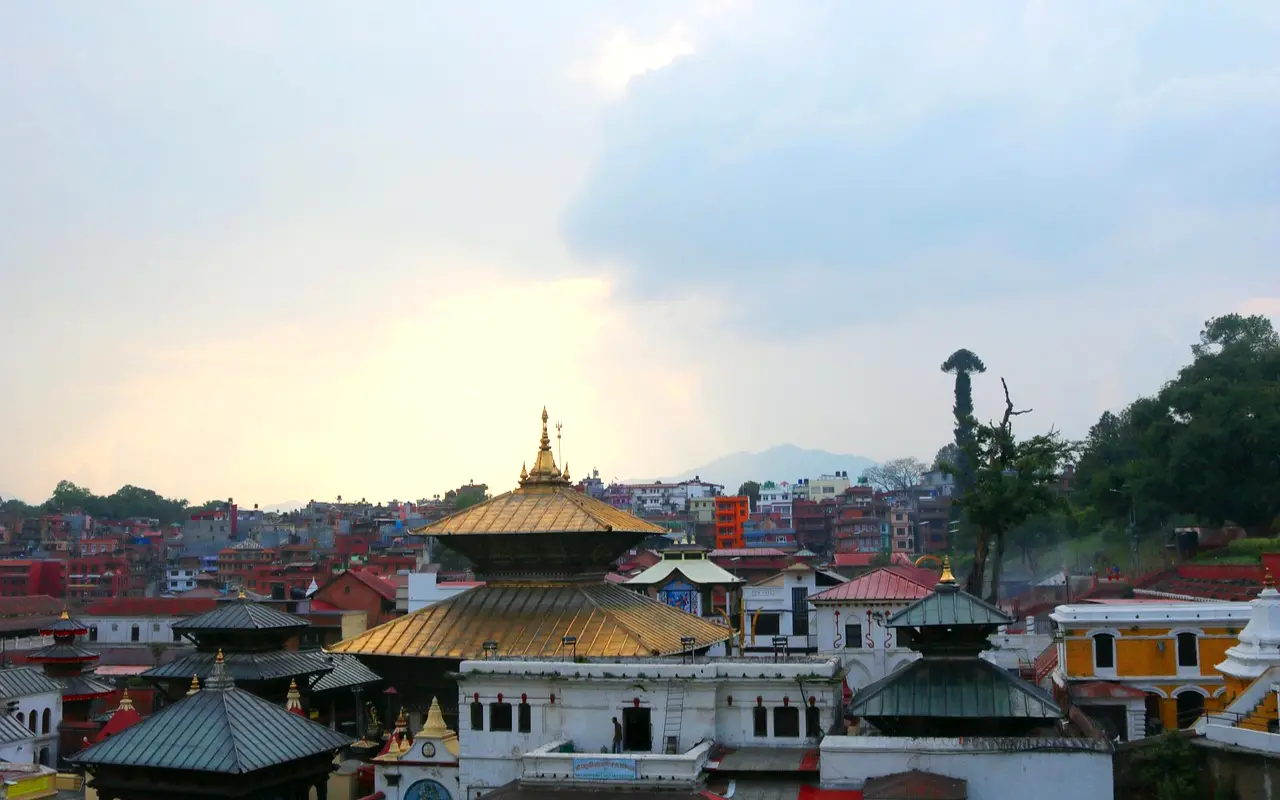
Pashupatinath Temple is one of the holiest religious sites in Nepal located in the center of Kathmandu valley. This temple is dedicated to lord shiva. This religious place in Nepal is said to be of great antiquity, as its establishment was around 400 CE. Pashupatinath is listed as a UNESCO World Heritage Site and is known to be the spiritual center of Hinduism in Nepal.
Pashupatinath is located on the riverbank of the Bagmati River, which also serves as a central space for funeral cremation practices for Hindus. These religious places of Nepal have over 500 shrines and are believed to bless those who visit with moksha.
Moksha is liberation from the cycle of rebirth and implies that Pashupatinath holds special significance to Hindu followers as an important pilgrimage site among other religious places of Nepal.
Pashupatinath Temple has Nepalese pagoda-style buildings that display traditional gilding and woodcarving. Pashupatinath is one of the most significant religious places of Nepal as it draws thousands of devotees and visitors each year, especially during Maha Shivaratri.
Pashupatinath Temple in Nepal is viewed as a landmark and has retained its cultural significance for centuries. Pashupatinath Temple offers a true representation of religious places of Nepal for both pilgrims and travelers. The temple offers both a spiritual experience and a cultural context in the vicinity of Kathmandu.
2. Swayambhunath Stupa (Monkey Temple, Kathmandu)
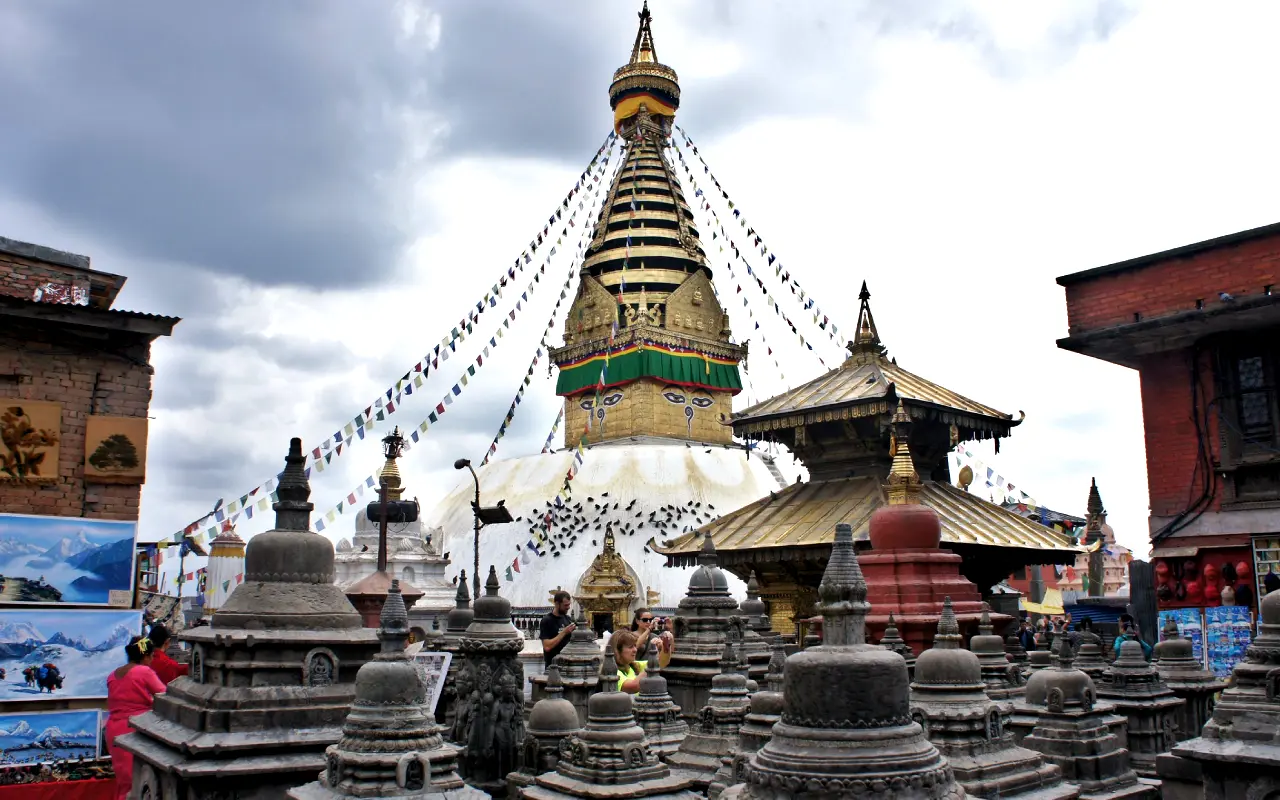
This religious place of Nepal is situated at the top of a hill in the Kathmandu valley. Swayambhunath Stupa symbolizes enlightenment and peace and is a meeting place for Buddhists to improve harmony.
Swayambhunath self-emerged when the Kathmandu Valley emerged as part of pre-history, when a lotus flourished out of a primordial lake, creating one of the most sacred spaces in our world.
This becomes suggestive of many forms of mythic and spiritual meaning in elevation and is what makes Swayambhunath distinct when compared to any of the other innumerable religious sites found throughout Nepal.
In addition to the magnificent view of the Kathmandu Valley, the stupa also represents the spiritual climb with a devotee who ascends the stairs surrounding the site.
Although this religious place of Nepal is often described as an excellent example of Nepalese and Tibetan architecture, the stupa collects, incorporates, and flourishes prayer wheels, shrines, and the iconic eyes of Buddha.
Swayambhunath represents the ties and balance between Hinduism and Buddhism and provides a site for pilgrimage, as well as a vision of spirituality, and an overview of one of the most meaningful religious places in Nepal.
3. Boudhanath Stupa (Kathmandu)
“Boudhanath Stupa,” located in Kathmandu, is one of the sacred religious places of Nepal and is an important pilgrimage location for Tibetan Buddhists because it supposedly contains remains of the “Kassapa Buddha.” The stupa has become a monumental structure symbolizing an embodiment of Buddhist faith and culture in the capital of Nepal.
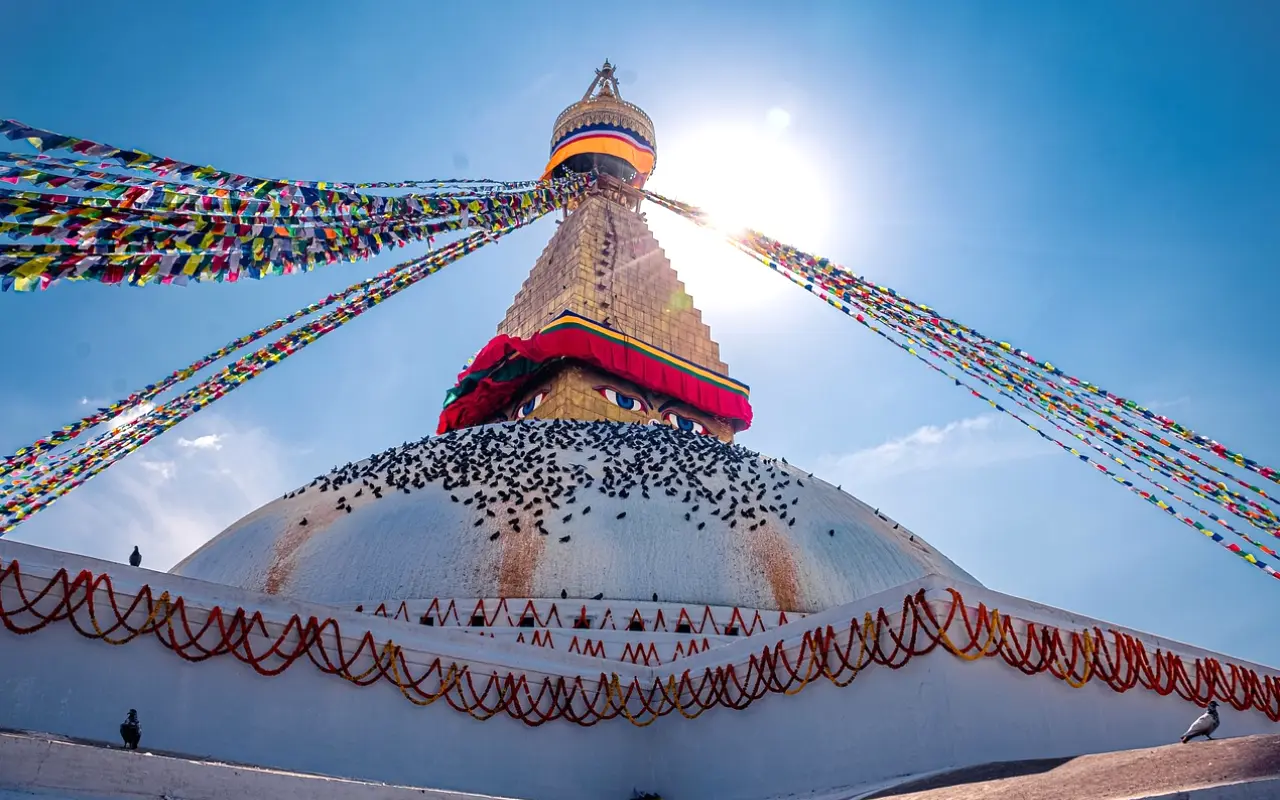
The enclave of the Boudhanath stupa is an ancient stupa built as far as the 5th century CE. The structure is famous for being a large spherical sight. It is the size of a large mandala and a stupa. Like many religious places in Nepal, Boudhanath Stupa is still a place for believers to pray, meditate, or spin prayer wheels.
Boudhanath stupa is also a cultural center, Tibetan refugees have built monasteries, guest houses, and shops that have created a reinforcement of a semi-spiritual community. As a UNESCO World Heritage Site, it is still important to the lay of the sights called the religious places of Nepal. Tourists and pilgrims visit the Boudhnath stupa.
4. Lumbini (Rupandehi)
Situated in Rupandehi, Lumbini is one of the esteemed religious places of Nepal because it is the birthplace of Lord Buddha. Lumbini is visited by many pilgrims each year and is known as an important pilgrimage site. Additionally, Lumbini is an important, revered center of spirituality in the whole Buddhist world.
These religious places of Nepal include the sacred Mayadevi temple, where Queen Maya Devi gave birth to Siddhartha. This place is significant among various religious places of Nepal because of the tranquil temple and gardens.
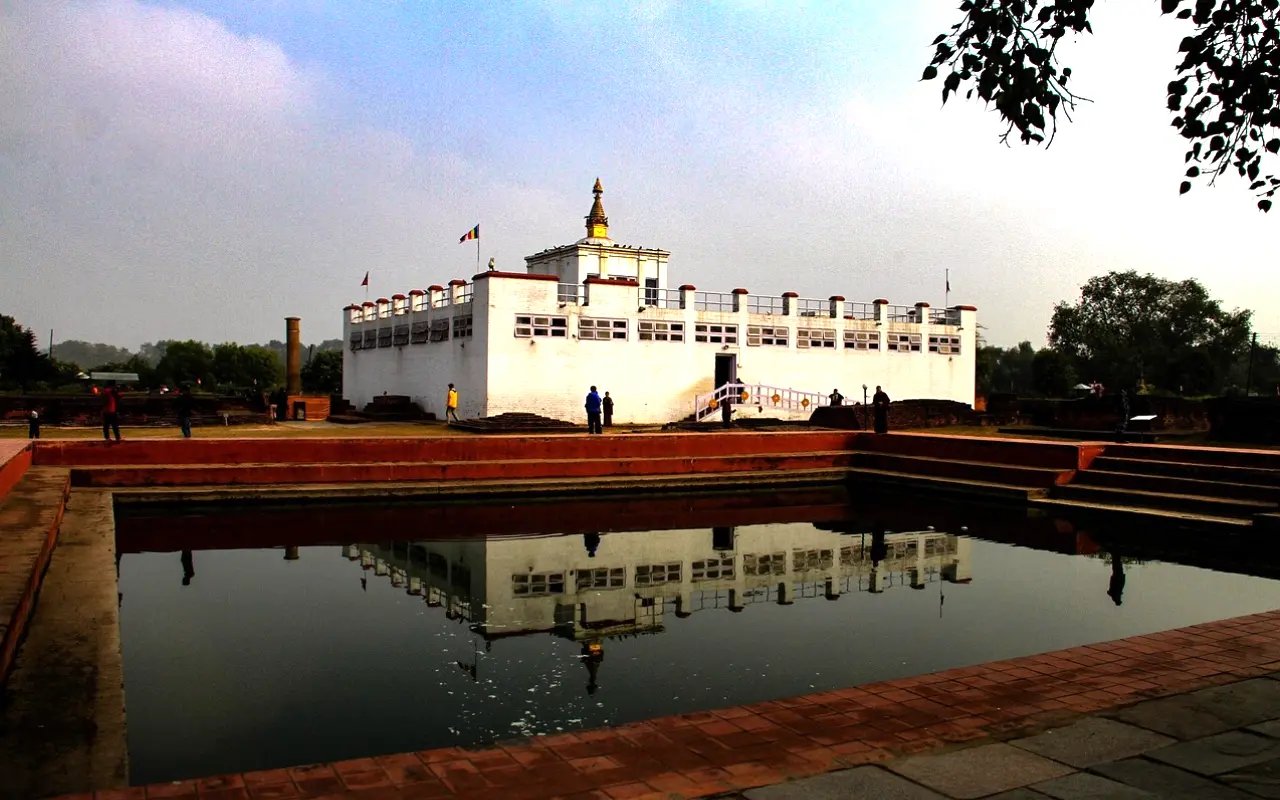
Lumbini has many monasteries built by different countries, demonstrating variations in Buddhist views and practices, as well as differences in architecture.
The establishment of the international monasteries has created a spiritual world in Lumbini, making it a special focal point amidst the countries of the world in this extensive sacred area in the religious places of Nepal.
Lumbini is often referred to as the “Mecca” for Buddhists throughout the world. People come here from all over the world to pray, meditate, and reflect which makes this place a deep spiritual location for spiritual seekers and travelers as one of the religious places in Nepal.
5. Muktinath Temple (Mustang)
Muktinath Temple is one of the holy religious places of Nepal for Buddhist and Hindu people. Hindus visit Muktinath Temple to worship Lord Vishnu, while Buddhists come to pray to Avalokiteshvara, which makes the temple a center of dual devotion and respect.
Many pilgrims visit this religious place in Nepal with the belief that bathing in 108 natural water spouts will cleanse their sins and purify their souls. This part of the temple signifies a holy and sacred site of religious renewal and cleansing among religious places in Nepal.
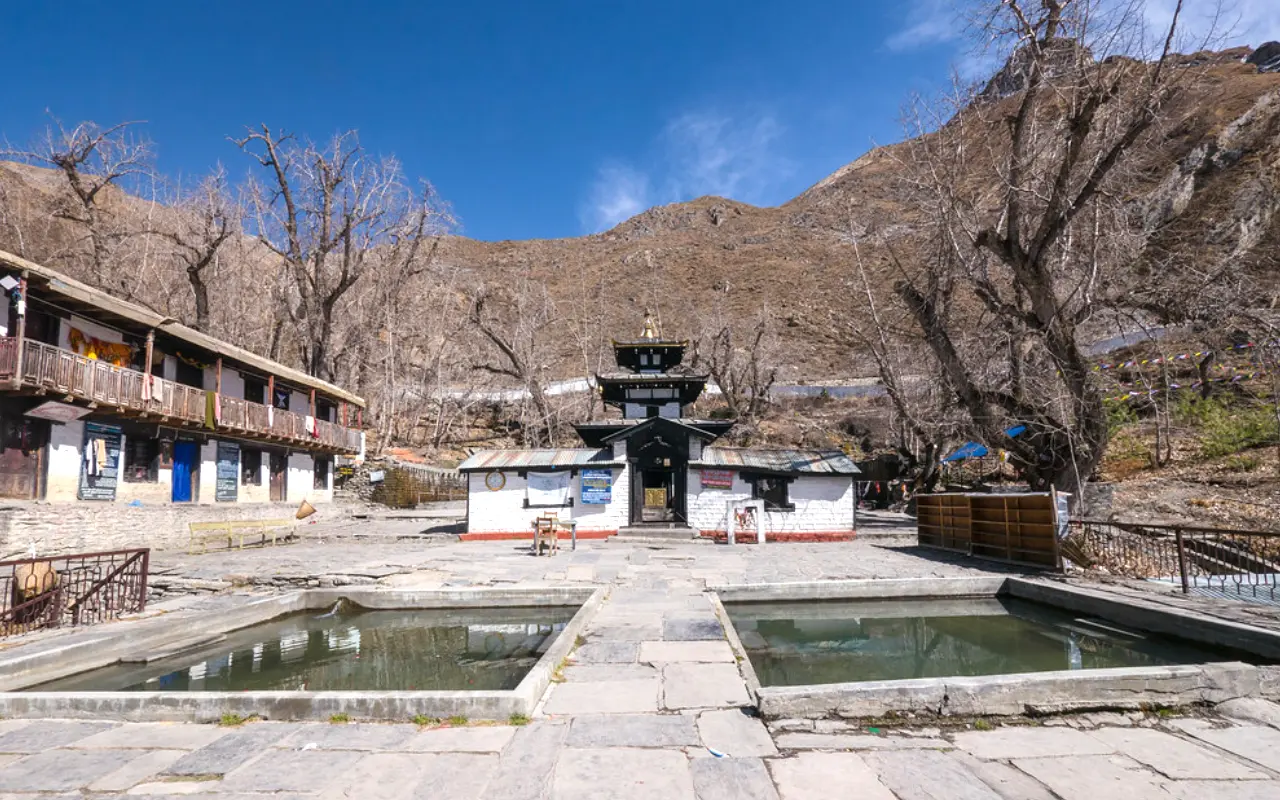
Muktinath Temple is presented with a flame that burns at the temple regardless of rain and snow. The eternal flame represents enlightenment. Its eternal flame represents the eternal quality of one’s soul. The existence of the flame helps solidify Muktinath as a place of devotion and worship among religious sites in Nepal.
Muktinath Temple is physically located at a high altitude and is a taxing pilgrimage. Muktinath is remote but offers a perfect blend of remote natural beauty and spiritual depth, making this devout religious temple in Mustang a stopping point for spiritual seekers to the religious places of Nepal.
6. Janaki Temple (Janakpur)
The Janaki Temple in Janakpur is one of the highly regarded religious places of Nepal and the place where Goddess Sita, the wife of Lord Ram, is said to be born. It has great religious significance and is visited by many devotees, mostly during festivals like Ram Navami and Bibaha Panchami.
Janaki Temple was built in 1910 AD (Bikram Sambat 1967). It is also called Nau Lakha Mandir and was created by the Queen of Tikamgarh Vrisha Bhanu. The temple has a great visual and cultural heritage that establishes it as an architectural jewel of Nepal’s Terai region among the religious places of Nepal.
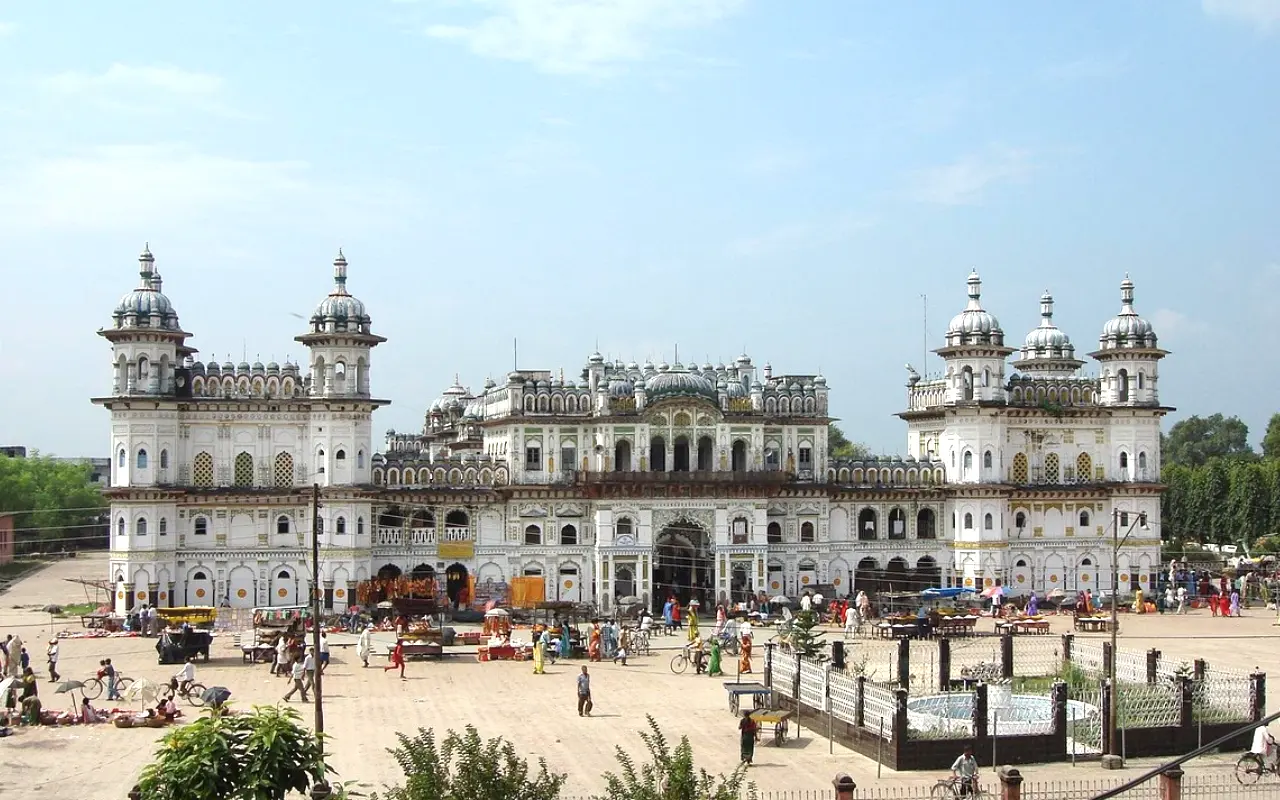
The Janaki Temple is a reminder of love and virtue, in memory of Sita and Ram. Pilgrims come to Janaki Temple to receive blessings and participate in the rituals that display the commitment of the two, communicating the importance of Janaki Temple among the religious places of Nepal.
As a main pilgrimage site, Janaki Temple provides a place to find peace or solace in prayer, but also an important place to display the traditions of the Mithila region, and ultimately one of the most relevant highlights of faith and culture that we consider when talking about religious places of Nepal. It is an especially essential site to visit for both religious and tourist purposes when traveling to religious places in Nepal.
7. Manakamana Temple (Gorkha)
The Manakamana Temple in Gorkha, a famous religious place in Nepal, is built to the Goddess Manakamana. The site holds deep religious and historical narratives, and traditions associated with the 17th-century Gorkha royal family, along with local traditions.
Devotees visit Manakamana to benefit from the blessings, making it one of the most important spiritual sites among many religious places in Nepal. The temple serves priests from the family line of Lakhan Thapa; he is well-known for establishing the shrine because of divine signs, and his signs brought meaning to the cave.
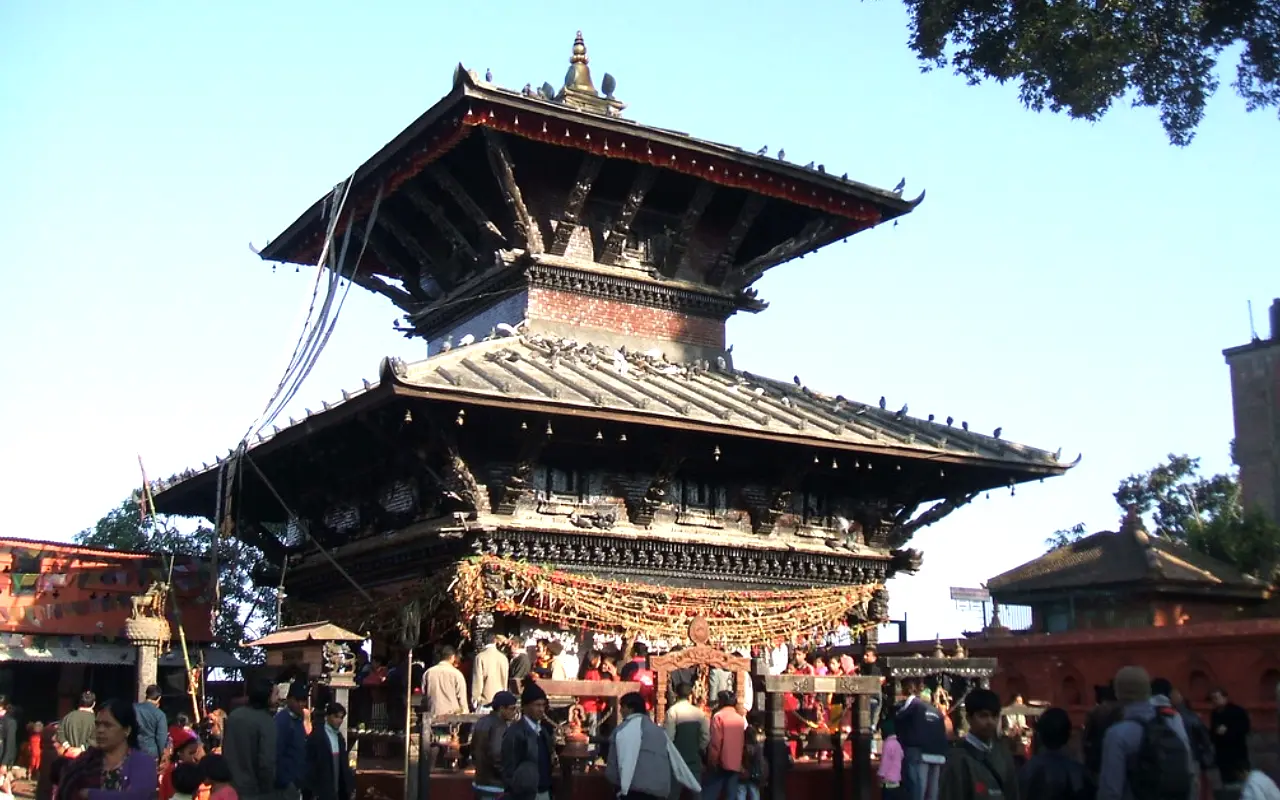
Due to its elevation of 1,302 meters, Manakamana Temple unveils breathtaking views of the Annapurna and Manaslu mountain ranges. The experience is also more enjoyable because the temple can be accessed with a scenic cable car ride that connects the pilgrimage to the broader network of spiritual places of Nepal.
Its spiritual significance and historical importance, beautiful natural views, essence of beauty, and greatness lead to faith and devotion that continues to inspire hundreds of pilgrims and travelers while granting them divine grace in return for fulfilling their wishes.
8. Budhanilkantha Temple (Kathmandu)
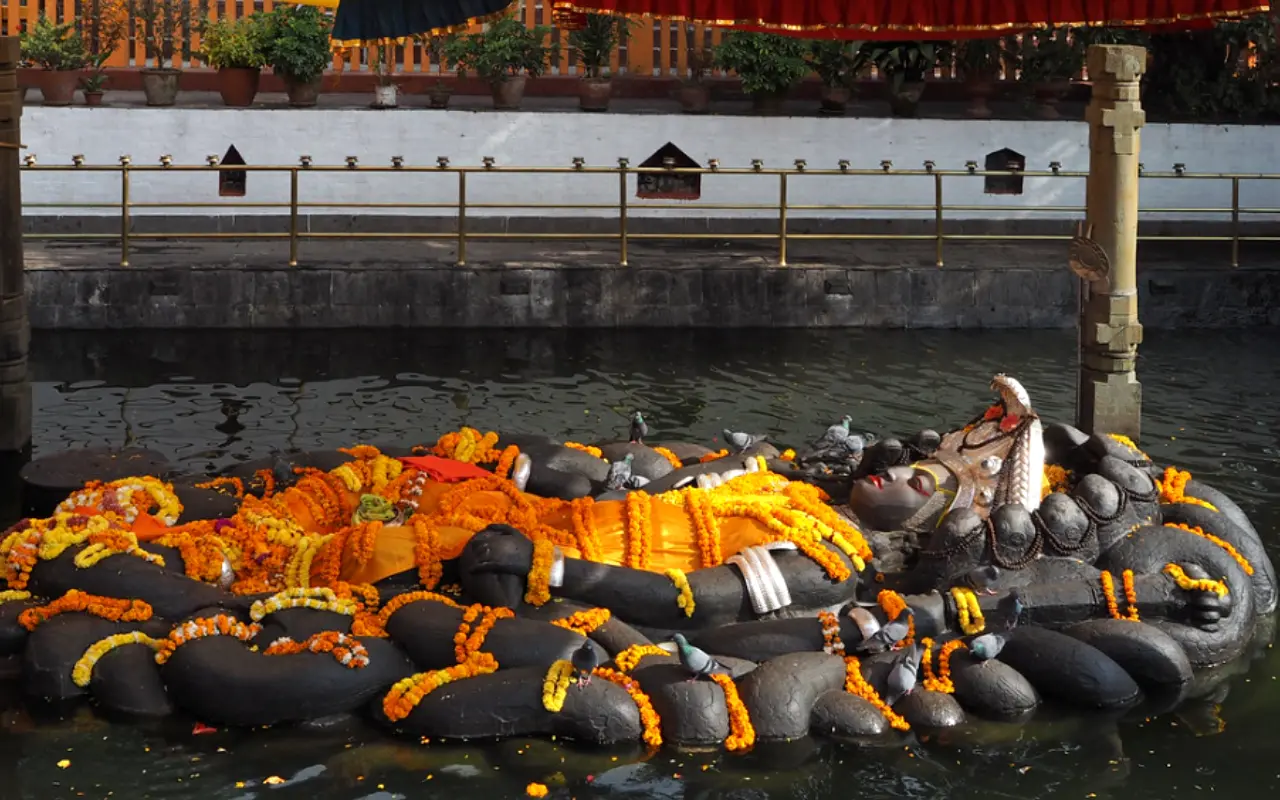
One of the important religious places of Nepal for Hindus is Budhanilakantha Temple, which is known for its representation of Lord Vishnu resting in the coils of the serpent Shesha.
The temple is an open-air structure and has evolved into one of the most powerful places of worship, primarily devoted to Lord Vishnu, both to the local population and visitors to Nepal.
The structure depicts Lord Vishnu’s Ananta-shayana facial posture. Many devotees come to pray in what they believe is a space that removes obstacles and invokes blessings. The idea that the statue floats above the water is a significant spiritual attraction in terms of Budhanilkantha’s role as a spiritual site in the large community of religious monuments in Nepal.
The temple is filled with myths resembling historical stories, one of them being that no Nepalese King has come to Budhanilkantha since the time of King Pratap Malla (the 17th Century) because of a fear of death foretold by their ancestors.
The legend built around the temple has helped create an element of mythology in the sacred space the temple holds as one of the notable religious sites of Nepal.
The statue sits in a serene pond that is naturally fed by the spring reputed to be connected to the sacred Gosaikunda Lake, providing the illusion that Budhanilkantha is floating on water, which is of great interest to researchers and visitors.
Overall, the Budhanilkantha Temple is an emblematic gathering space for religious places in Nepal and adds to the rich history of religiousness in the country.
9. Gosaikunda Lake (Rasuwa)
In the Himalayan region of Nepal, Gosaikunda in Rasuwa definitely ranks among the most sacred religious places of Nepal, believed to have been created by Lord Shiva to quench his thirst after swallowing poison.
Pilgrims visit Gosaikunda during the Janai Purnima festival. When devotees enter the cold waters of Gosaikunda Lake for ritualistic washing and bathing. Many believe even just dipping into the frigid water washes away one’s sins, and provides a significant site of purification among religious places of Nepal.
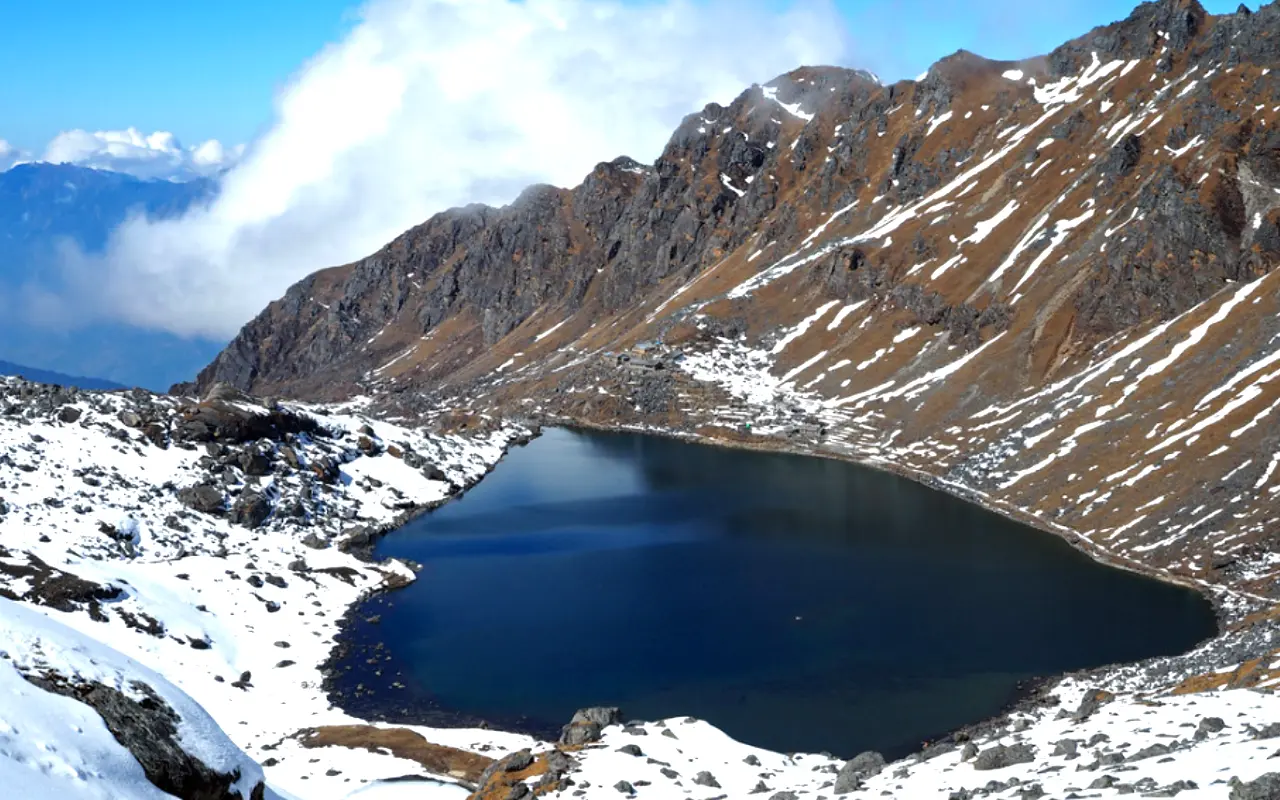
Gosaikunda is also a high-altitude experience. It provides pilgrims the opportunity to trek and hike to their place of worship, a challenging yet rewarding adventure that brings adventurous trekkers and spiritual seekers to the region.
Gosaikunda Lake and the surrounding areas present a vast and beautiful Himalayan landscape where people can pray and meditate while surrounded by the ice-cold mountain phenomenon.
Considered one of many religious places of Nepal, Gosaikunda is a prime spiritual destination, rich in scenic natural beauty and a sacred experience from a spiritual and cultural perspective.
10. Pathibhara Devi Temple (Taplejung)
Pathibhara Devi Temple in Taplejung is one of Nepal’s most important holy sites to worship Goddess Pathibhara, one of several powerful Shakti Peeths. Many devotees believe that she answers their prayers for children, wealth, and protection, among other things, so the temple is an important pilgrim destination for many, and thus an important part of the spiritual fabric of Nepal.
Pathivara is a popular destination for both Hindu and Limbu communities, although it holds a bigger cultural and religious significance to the Limbu community.
Pilgrims from Nepal and abroad visit Pathibhara as they seek to receive blessings and divine responses to prayers, which solidifies Pathibhara’s status as one of the many important religious places of Nepal.
Getting to Pathibhara involves trekking through the beautiful, lush green hills of Taplejung District, indicating the Hindi spiritual element of physical effort of devotion, and also locating the goddess in a religious place.
The journey of weaving physical activity and faith together, like sport in some subtle way, is part of the way many of Nepal’s religious places represent spiritual movements.
Although the holy atmosphere at Pathibhara is enhanced by the stunning views of the Himalayas, it’s still and sacred atmosphere offers pilgrims both the natural beauty and cultural richness of this part of Nepal, combined with its sacred energy, making it a must-visit religious place of Nepal.
Conclusion
The sacred sites of Nepal reveal the nation’s vast spirituality and cultural diversity. Visitors can scarcely understand the depth of spirituality and deep belief or the thousands of years of Hindu and Buddhist traditions embedded into each sacred site.
When visiting Nepal, it is a unique individual experience. As pilgrims, and during travel adventures, we are transformed, and able to connect spiritually, emotionally, and culturally, and belong even when not practiced as a faith. Therefore, meaning is expressed beyond just a practice.
Knowing and respecting local customs and traditions is important when visiting these areas. Responsible travel not only means preserving the sanctity of these sites; it also allows visitors to consciously engage with the sacred energy in Nepal’s religious places.
