








Animals That Live on Mount Everest: Life at the Roof of the World
Introduction
Mount Everest is one of the most extreme environments on the planet because it rises 8,848.86 meters above sea level. The rocky, steep climbs are very cold and thin, which makes survival almost unattainable. However, the animals that live on Mount Everest have surprisingly evolved to survive the climatic conditions.
The lower elevation area of the mountain sustains a host of strong animals, even though the mountain is known to be a frozen, cold beast of death. Snow leopards and Himalayan tahrs to tough birds and insects, Animals that live on Mount Everest demonstrate the strength of nature to survive in unpredictable climatic conditions and in the limited quantity of oxygen.
Glaciers are found at higher altitudes, whereas the lower slopes are covered by alpine meadows and forest, which give food and shelter. Life on Mount Everest is marked by the pictures of animals, which underscores the delicate but vivid ecology of this high Himalayan state.
Notably, Mount Everest is located in a UNESCO World Heritage Site called the Sagarmatha National Park. This designation ensures protection of the Animals that inhabit Mount Everest, promoting conservation and research. It is crucial to maintain this ecosystem as it is life living on the border of existence.
The Harsh Environment of Everest
Mount Everest is life-threatening at its extreme levels. The elevation is very high, and thus oxygen has been greatly depleted, making it hard to breathe for most species. Thin atmosphere, coupled with strong winds, makes it impossible to survive. Only specially adapted creatures manage to endure.
The year-round temperatures are dominated by freezing temperatures, as they can go way below zero during summer evenings. The environment is unforgiving because of the snowfall, glaciers, and icy terrain. To survive, animals here have to endure frost, save energy, and seek out rare-warm micro environments.
There is very little vegetation, which is confined to sturdy mosses, lichens, and alpine bushes at the lower altitudes. Having a limited food supply, animals in Everest can either reduce their metabolism, scavenging, or move seasonally to more resource-rich valleys.
With special adaptations, it is possible to survive in this hostile landscape. Animals are adapted to hypoxia and severe cold with the help of thick fur, fat, special lungs, and a good system of circulation. Such incredible adaptations guarantee the existence of the rare and strong wildlife in Mount Everest.
Iconic Animals of Mount Everest
Snow Leopard
The snow leopard is the king predator of the Everest mountains, perfectly adapted to icy cliffs and steep ridges. Its fur is dense and long, and its limbs are strong enough to enable it to hunt its prey secretly up the mountains, including bharal and Himalayan tahr.
Snow Leopard is extremely rare, elusive, and is a symbol of the pristine wildness of Everest. It is almost impossible to notice one of them because it is perfectly integrated with the rocks. Snow leopards demonstrate remarkable camouflage.
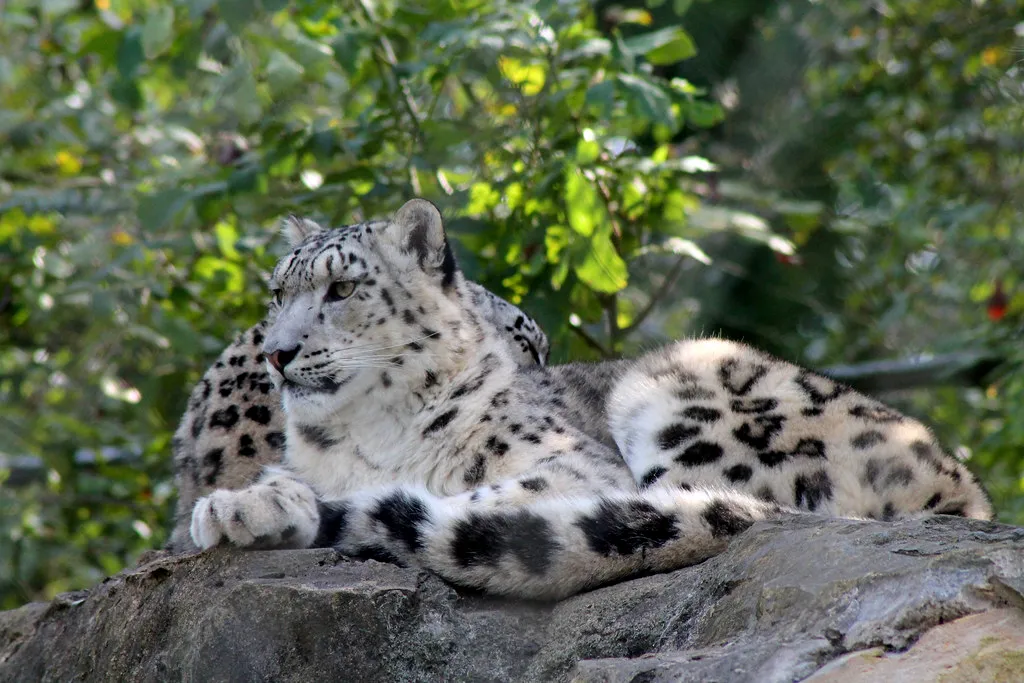
On the IUCN Red List, snow leopards are now threatened as a vulnerable species because of poaching and habitat destruction. This is taken care of by conservation initiatives within Sagarmatha National Park to maintain a balance between predators and their prey in this delicate ecosystem of the Himalayas.
Himalayan Tahr
Himalayan Tahr is a species of wild goat that thrives on the rocky mountains of Everest. They have thick fur, curvy horns, and muscular bodies, making them very strong. These herbivores feed on the alpine shrubs and grasses that are located at unbelievably high levels.
They are also great climbers and are commonly found climbing near-vertical cliffs. Mountain-dwelling animals, such as the tahr, which inhabit Mount Everest, show how animals adjust physiologically and behaviorally to live in a habitat that is constantly threatened by predators and unfriendly weather conditions.

Himalayan tahr are also threatened by habitat encroachment and hunting, although it is found in large numbers in the area. Safeguarding their numbers is the guarantee of the preservation of the natural predator-prey relationships and biodiversity in the Everest Himalayas.
Musk Deer
The musk deer lives in the lower slopes of Everest in forests (2,500-4,300 m). This is a little-known and timid creature with fang-like tusks and no antlers, which is best seen in the dark. Its heavy coat enables it to survive cold and high-altitude forests that have low vegetation density.
It is best known by its musk gland that produces a substance of great value in the past, both for use as perfumes and in traditional medicines. This has unfortunately resulted in high-pressure poaching. Animals inhabiting Mount Everest, such as musk deer, need immediate conservation.
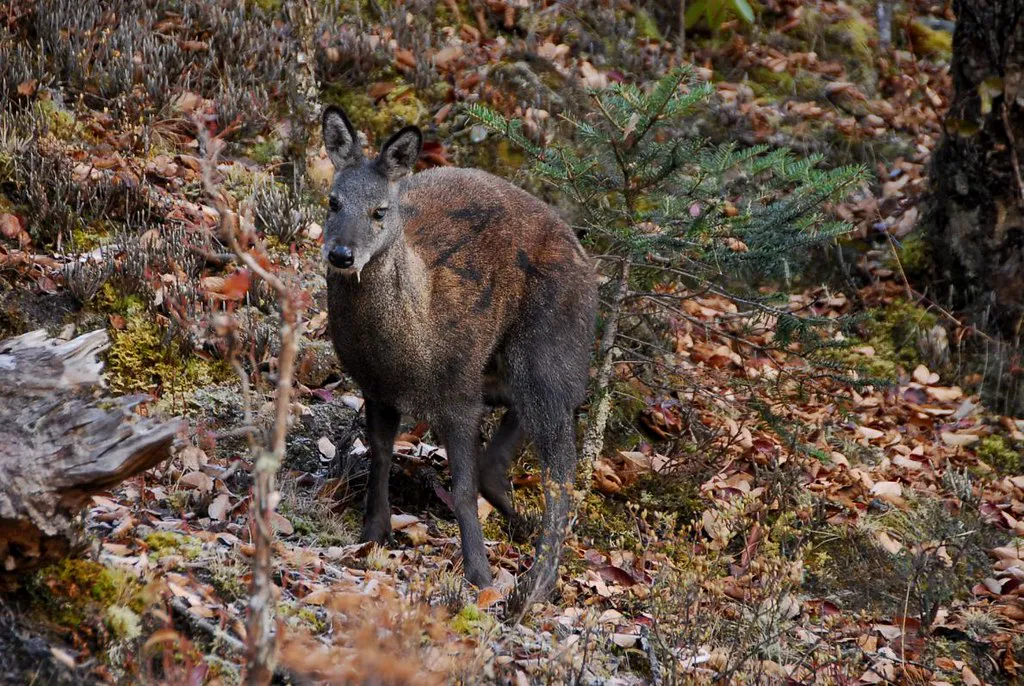
The musk deer is an endangered species today. Sagarmatha National Park and protection by anti-poaching patrols are needed to protect this unique species. The conservation activities are focused on minimizing illegal hunting and preserving the ecological balance in the Himalayan forests.
Red Panda
The red panda inhabits the temperate forest of the Sagarmatha National Park (2,000-4,000 meters). However, they are uncommon in Everest compared to eastern Himalayas. They have reddish fur, a masked face, and a bushy tail, and it is one of the most peculiar animals in Everest.
Red pandas are shy, nocturnal, and solitary creatures with the primary food composed of bamboo, fruits, berries, and small insects. The existence of animals that inhabit Mount Everest illustrates the delicate and intertwined forest habitats that maintain biodiversity under the snowy mountains.
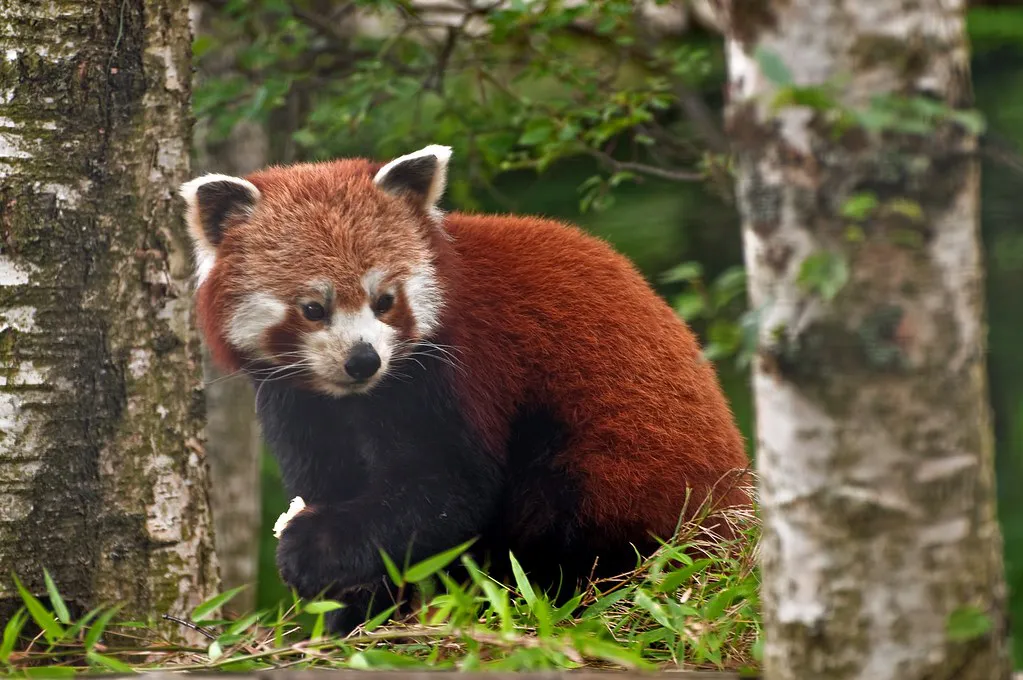
They are endangered and their population is dwindling because of habitat loss and deforestation. Nepal Community conservation and awareness projects are essential to conserve red pandas to stay as a living image of the Himalayas.
Wild Yak
Wild yaks are mostly in Tibet. On the Nepal side of Everest, domestic yaks are common. They have long shaggy hair, horns, and large lungs; therefore, they can survive in extreme cold conditions, inadequate air, and snowy landscapes at 4,000 meters.
The domesticated yaks are saviors to the trekkers and climbers who bring the loads. These animals are closely tied to the culture of Sherpas, exhibiting the human-animal bondage needed to survive in high-altitude societies.
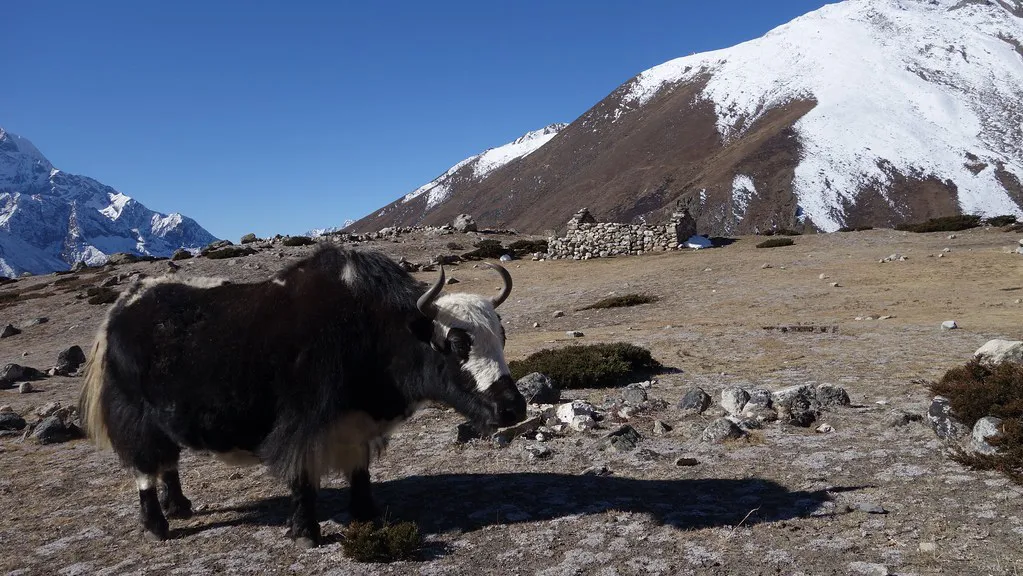
Domesticated yaks are widespread, but wild yaks are becoming increasingly rare. The conservation programs are aimed at ensuring that wild herds are not overhunted and their habitat is not disturbed. By conserving yaks, there is a high likelihood that the cultural practices and the environment will be healthy in the Everest area.
Birds of the Everest Region
The Himalayan monal is a national bird of Nepal that is a beautiful phenomenon in the Everest area. Its plumage shines under the sun in an iridescent purple color, representing Himalayan beauty. These birds are found in alpine meadows and rhododendron forests, among the animals that live on Mount Everest.
The Himalayan griffon vulture is the birds that fly the highest (6,000-7,000meters). They have enormous wings that enable them to ride thermals without any difficulty. These scavengers are critical in the cleaning of the environment since they feed on the carcasses of animals that have been deposited along mountain slopes.
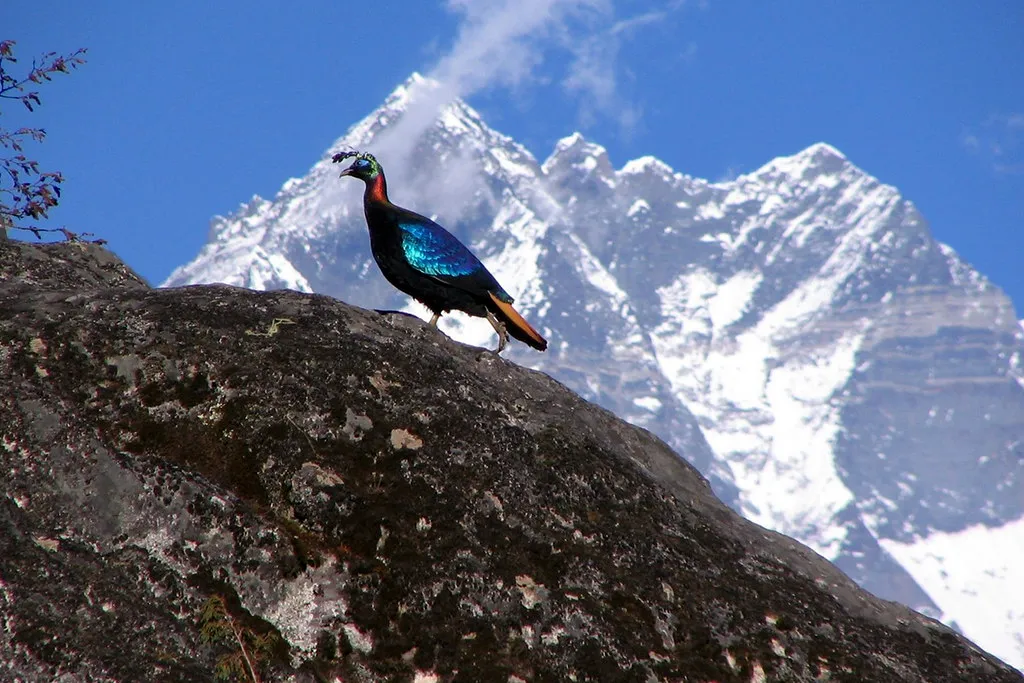
Other interesting species include the snow pigeon, blood pheasant, and Tibetan snowcock. Birds are uniquely adapted to cold ground, as they make nests on the cliffs or at the edges of forests. Alpine ecological diversity is exhibited by such animals as those found on Mount Everest, such as these birds.
Everest is also blessed with seasonal migratory birds. The species move at long distances, exploiting food availability by season. Their existence emphasizes the interdependence of the world ecosystem and reminds us about how Everest has been a significant habitat for the survival of birds.
Lesser-Known Creatures
The Himalayan black bear roams in forested regions in the lower valleys of Everest. It is omnivorous and feeds on the fruits, plant roots, and small animals. Mount Everest animals, such as bears, are a reminder that there is other wildlife even below the ice caps.
Pikas are also among the tiniest inhabitants; they are small rabbit-like mammals. They are found in alpine meadows where they gather grasses for the winter. Alongside them, evasive Himalayan wolves live in remote highlands, which adapt to thin air and low density of prey.
Even insects and robust amphibians are located at unexpected altitudes. Beetles, spiders, and some species of frogs survive the freezing point and insufficient oxygen. Those unknown Animals dwelling on Mount Everest present the strength of nature in the most adverse conditions on Earth.
Adaptations for Survival
The life of animals in Mount Everest is supported by amazing adaptations. To fight the cold and low oxygen, many evolve thick insulating fur, wide lungs, and efficient blood circulation. Some have slow metabolism and store energy when food and warmth are unavailable.
Another strategy is seasonal migration, where species relocate down the mountain during extreme winters. Others are based on the alpine flora and scavengers on the carrion. These adaptations point out how extraordinary resilience is needed to survive in the inhospitable, high-altitude environment of Everest.
Role of Animals in Sherpa and Local Culture
Yaks are used as an important part of Sherpa and local life. They do more than just transport; they give milk, meat, wool, and fuel. The ecosystem of high altitude survival and community living is based on the animals that live on Mount Everest, such as the yaks.
There is a profound meaning of birds and animals in Buddhist symbolism. Animals like vultures and deer depict innocence, empathy, and balance. The lives of animals on Mount Everest are not only appreciated because of their survival, but also as a source of spirituality.
There are also local myths that add to the culture. The Yeti or Abominable Snowman is the representation of the mysteries of Everest. Its sightings have become part of folklore, as people are amazed by Animals living on Mount Everest and the wild nature of the Himalayan region.
Conservation Challenges
The habitats are getting smaller over time due to the melting glaciers and the rise in temperature due to climate change. The animals living on Mount Everest are forced to endure with their reduced supplies of food and more adverse conditions to survive, thus they must evolve swiftly as part of already delicate alpine environments.
Anthropogenic interferences in the forms of trekking, mountaineering, and infrastructure development interfere with a wildlife pathway. The noises, the waste, and habitat invasion increase the loss of breeding area and survival of the Animals that live on Mount Everest.
Musk deer, red pandas, and other animals are endangered by poaching and deforestation in the lower valleys. Luckily, Sagarmatha National Park and the conservation organizations of the world encourage anti-poaching patrols, awareness campaigns, and restoration of the habitats of those Animals living on Mount Everest.
Best Chances for Visitors to Spot Wildlife
The Everest Base Camp Trek is the most frequented place to view wildlife because of the varying environments, such as trees and forests, meadows, and the alps. It is possible to frequently observe animals that live on Mount Everest, like musk deer, Himalayan tahr, and colorful birds.
The popular trails that are recommended are the forests around Namche Bazaar, Tengboche, and Pangboche, where red pandas and monals can be found. Using local guides and naturalists is very likely to get a glimpse of the Animals that inhabit Mount Everest and would help the community in conservation.
Conclusion
Mount Everest is not only about high mountains and the brave climbers, but it is also home to a wonderful biodiversity. Animals on Mount Everest illustrate endurance, as they survive in one of the most adverse environments on the globe.
Saving these species preserves the vulnerable habitats. From snow leopards to red pandas, they are all useful creatures. Conservation makes sure that Animals living on Mount Everest continue thriving for future generations to witness and appreciate.
The tourists play a role in ensuring the conservation of this wilderness. Through responsible and environmentally friendly trekking, admiration of habitats, as well as tourist contribution to conservation, enhances the behavior of Animals that inhabit Mount Everest.
