








Nepal Tea House Trek: Everything You Need to Know Before You Go
Nepal tea house trek has gained global recognition for its unique meeting of adventure with cultural experience. The breathtaking mountain scenery and nearby local communities of Nepal provide a great backdrop for tea house trekking, and therefore make it a likely favorite of many people who want to explore the Himalayas.
When embarking on a tea house trek in Nepal, trekkers will walk on established trails while staying in some basic lodging called tea houses. Camping-based trekking involves carrying everything you need, which is more demanding than tea house trekking. Unlike camping-based trekking, tea-house trekking involves enjoyable and comfortable overnight lodging, with meals included, which can be appealing to the wider trekking audience.

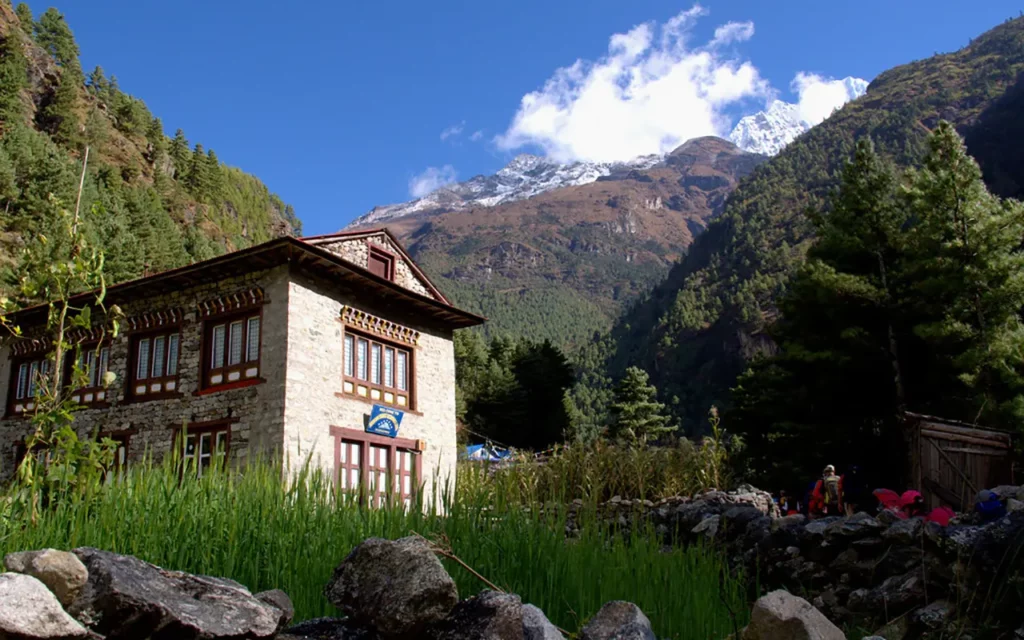
In Nepal, the tea house system operates as a series of family-run tea houses or lodges that can be found on the main trekking routes. The tea houses create a more relaxing atmosphere where trekkers can relax, socialize, and share trek stories during their Nepal tea house trek experience.
In order to immerse yourself into the culture and customs, it is vital to understand how the tea house system works. Understanding how the system works will help you set your expectations for cultural interactions, basic creature comforts, and makes it easy when exploring the stunning trails of Nepal on your tea house trekking adventure.
Top Regions for Nepal Tea House Trek
- Everest Region
The difficulty of the Everest Nepal tea house trek is moderately difficult, mainly due to being at a greater altitude and the subsequent challenges that come with it. This trek requires good fitness and a good trek training program before attempting the trek.
Trekking to Everest Base Camp usually sees many other trekkers. At busy times and peak season, it is popular and elite. Gokyo Lakes is a viable alternative as it draws fewer trekkers and offers some amazing views of glacial lakes.
- Annapurna Region
Annapurna is moderately challenging, depending on the route. Along the way, you will get amazing views of the Annapurna massif and varying terrain from lush valley to high passes. You will also find blooming flower scenery along the way.
The Annapurna Circuit trek is commercial, so you will encounter a large number of trekkers. However, the Annapurna Base Camp trek is less crowded, but you will encounter many trekkers in busy seasons.
- Langtang Valley
The Nepal tea house trek in Langtang is easy to moderately challenging. During the trek, you will be walking through lush rhododendron forests and many Traditional villages. On your journey, you will eventually arrive at a location where you may take in breathtaking views of Langtang Lirung.
Compared to the Everest and Annapurna treks, Langtang is less congested. You can get a rich cultural experience and stunning scenery in a short period.
- Manaslu Circuit
The Manaslu Nepal tea house trek is physically demanding due to the rough terrain and Narrow Mountain trails, which require good physical fitness to complete. It is less commercialized than Everest or Annapurna, with opportunities to experience remote, inaccessible Nepal.
Landscape includes dramatic mountain vistas and villages rich in cultural and local traditions. Manaslu receives less foot traffic than Everest and Annapurna, which is ideal for more advanced trekkers looking for solitude as well as adventure.
- Poon Hill for short treks
Poon Hill Nepal tea house trek is an easy trek and suitable for beginners, or trekkers with a limited time, offering the breathtaking panoramic sunrise view of the Annapurna and Dhaulagiri range.
This area can experience high foot traffic during peak season due to the short duration and accessibility, but it is still a popular choice for a quick Himalayan trip.
What to Expect in a Typical Tea House
A typical Nepal tea house trek will have a simple private or shared room that offers twin beds with blankets and pillows. Private rooms can be expensive; however, it is common to share a room with other trekkers because of the space limitations on popular routes.
The toilet facilities are mostly shared and can be Western-style or squat toilet style, especially at higher altitudes. Some tea houses have showers – maybe a cold shower and sometimes a hot shower with an added cost. You are advised to carry with you toilet paper and hand sanitizer.
Within the tea house, you will have a menu with traditional Nepalese dishes (dal bhat, momos, thukpa, etc.) and some western meals (pastas, pancakes), and your drinks will be tea, coffee, and hot chocolate with alcoholic beverages. Meals are often bundled with the accommodation.
Regarding electricity, it varies, and basically, most tea houses will have charging points for your devices for a fee. There are power outages for long periods. There is limited wi-fi, most of which is slow and typically has an added cost. There is no heating in your room, only heating in the common dining room, usually with a stove.
Cost per night on a Nepal tea house trek will generally be in the vicinity of $5-$15 per night, and likely differ based on the area and the season. Tea houses are hospitable with opportunities to engage with culture, experience with local hosts, and mix with other trekkers in a relaxing and cozy mountain setting.
Meals on a Nepal Tea House Trek
During a Nepal tea house trek, the typical food will be Dal Bhat, momos, fried rice, and various western-style options (pasta, pancakes) – there will be some filling, hearty options to choose from.
Most tea houses will certainly allow trekkers to boil, filter, or buy bottled water. It is sensible not to drink untreated water, and trekkers should consider carrying purification tablets or filters for extra measure during a Nepal tea house trek.
To remain healthy during a Nepal tea house trek, drink lots of fluid to stay hydrated, eat a balanced diet, and use caution with food choices at higher altitudes. It is also a good idea to carry some snacks to sustain your energy during the trek.
Personal hygiene is important while on a Nepal tea house trek. Always use hand sanitizer before eating a meal, and make sure you order food at the beginning of the day; you nearly always have time to rest after your meal and allow for digestion. All these little things will allow for an easier and safer trekking trip.
Packing Essentials for a Tea House Trek
On a Nepal tea house trek, a comfort loading backpack, between 10 and 15 kg, is a good pack weight for carrying all the essentials without being too much of a burden. The straps help equally distribute the pack weight, making it an easier trek on the longer hikes.
If you are on a Nepal tea house trek, pack layers of clothes, maybe thermal long sleeve and long pants base layers, a fleece jacket or 3-season to 4-season coat for a waterproof shell, hats and gloves, quick dry trekking pants, and hard shell pants to help you in the long walks on a Nepal tea house trek.
To stay warm as it gets very cold at night for sleeping, a sleeping bag rated for a 3-4 season is recommended, although some trekker choose to rent a sleeping bag instead of taking their own, as it can be a burden.
A toothpaste, toothbrush, travel-size toiletries, (eco-friendly) biodegradable soap, and plastic containers must be packed for a Nepal tea house trek.
Must-pack trekking gear include: comfortable sandal, good strong waterproof boots, trekking poles because they don’t have to be right choice size and have to adjust for stability if you require.
You have to pack a purification system for safety on your Nepal tea house trek, which includes tablets, drops, or a portable filter while trekking in remote areas.
Permits and Entry Requirements
For the most part, a TIMS card (Trekkers’ Information Management System) is required on all tea house trek routes in Nepal including the Everest Base Camp region. The purpose of the TIMS card is to ensure the safekeeping and management of trekkers while on the trekking routes, and it must be taken on person for the entire duration of your trek.
National Park or Conservation Area permit cards are required for most of the popular trekking areas of Nepal, including the Annapurna and Sagarmatha trekking regions. The cost of these permits supports the Conservation efforts in the area. All trek entry points will check your permits en route.
Restricted area permits apply to special trekking areas such as Manaslu, Upper Mustang, and Kanchenjunga areas, which have much steeper permit application fees and rules about going to these areas. Restricted area treks typically require trekking with licensed guides for the Nepal tea house trek.
Permits, including TIMS and conservation area entries, can be obtained from the offices of the agency or registered trekking agency in Kathmandu and Pokhara. Most trekkers will have permits arranged through trekking agencies since this will make the process easier and help ensure proper permitting.
Cost Breakdown & Budgeting
The average daily costs on a Nepal tea house trek are around $30 to $5wi0 for food and accommodation. Meals consisting of simple Nepali food, and lodges of different standards ranging from relatively basic to fairly comfortable.
Permit fees can consist of the TIMS ($10-$15) and national park permit fees ($20-$30), depending on which region you are trekking in. The cost of guides is about $25-$35/day; the cost of porters is normally $15-$20/day on a Nepal tea house trek.
In some places, you have to pay for Wi-Fi ($3 to $6) , hot showers, and charging electronics ($1 to $5). These costs vary by location. Although they are additional costs, they will add convenience to your Nepal tea house trek.
Tipping etiquette on a Nepal tea house trek involves appreciative trekkers providing gratuity to guides, porters, and lodge staff. This would be about 10-15 percent of total service cost, demonstrating appreciation and contributing to local livelihoods.
Do You Need a Guide for a Nepal Tea House Trek?
Having a guide or porter on a Nepal tea house trek will provide assistance, local knowledge, and safety. However, hiring this support will be an extra expense. A guide or porter will also make the trek dependent on them, which can decrease your feeling of independent adventure.
Independent trekking on a Nepal tea house trek will allow you the flexibility to decide what you want to do when you want to do it at your own pace. Whereas guided treks will have a set starting point, a clear outline for a daily itinerary, multiple cultural insights, and removed logistical hassles, which are ideal for inexperienced trekkers or those doing their first trek.
Mandatory guide support for a Nepal tea house trek occurs outside andd inside restricted areas like Manaslu and Upper Mustang. These are areas where the government regulates trekking support, which is on a list of more strict requirements to ensure trekkers’ safety, respect for local culture, and adherence to permits upon entering sensitive areas.
Best Time to Go for a Nepal Tea House Trek
The ideal time to undertake a Nepal tea house trek is in the spring (March–May) and autumn (September–November) when the weather is stable and skies are clear.
There are also the off-seasons, winter, and monsoon trekking. Winter trekking provides quiet trails and good visibility of the mountains, but cold conditions. Monsoon trekking provides plenty of rain, slippery trails, crowded trails, but stable conditions in the rain-shadow areas (like Mustang), where trekking is possible.
Spring and autumn have huge crowds on the trail with packed tea houses. The weather is nice and dry in the spring and autumn, but from winter to monsoon trekking weather, it can be very difficult and can affect the trails and the condition of your Nepal tea house trek.
Sustainable and Responsible Trekking Tips
To minimize your impact on a Nepal tea house trek, use a reusable water bottle and avoid single-use plastic products. Pack out all rubbish, respect nature, and stick to trails to protect fragile environments.
By choosing eco-lodges and good trekking companies, you are helping sustainable solutions for Nepal tea house treks. Many tea houses can operate solar, biogas, and/or buildings made of environmentally responsible materials that minimize the use of plastic and help local economies.
Consider supporting local communities on the trail by purchasing handicrafts, hiring local guides or porters, and respecting social norms. Supporting local communities creates paths to preserve community traditions, while also providing further income for people who are paid in little or no local currency.
Avoid single-use plastic on the Nepal tea house trek by bringing reusable bags and containers. Tea houses will help with sorting rubbish, and some will recycle plastic. Bringing biodegradable soaps and limiting rubbish will all contribute to making your experience more environmentally friendly on a trek. On the trail with packed tea houses.
Common Challenges & How to Prepare
Altitude sickness can be an obstacle during a Nepal tea house trek. Follow proper advice to stop it from happening by climbing slowly, drinking lots of water, resting, and acclimatizing. Take Diamox with you only if you were prescribed it and make sure to descend quickly if symptoms get worse.
Food and water hygiene are most important in a Nepal tea house trek. Only drink clean and boiled, filtered, or bottled water. Avoid raw foods entirely, and try to take hand sanitizer with you to avoid illness and stay healthy.
Basic fitness is also a must for a Nepal tea house trek because of the varied terrain and altitude. Train with cardio exercises for trekking, hiking, and strength exercises beforehand, so make sure you have both stamina and endurance, but also to help prevent injury.
Cultural etiquette is important on a Nepal tea house trek. Follow the customs of the locals, be sure to use the greeting of namaste, dress modestly, buy local goods, and be polite when engaging with locals to have a unique experience while ensuring that customs are respected.
Frequently Asked Questions
Is a tea house trek safe for solo travelers?
Yes, the tea house trek is safe for solo travelers because of the friendly hospitality of teahouses and well-maintained trails.
Can you charge your phone and use Wi-Fi?
Yes, you can charge your phone and use Wi-Fi, but some teahouses will charge you extra for that.
What kind of insurance do you need?
You need travel insurance that covers emergency medical evacuations and altitude sickness.
How far do you walk each day?
You can expect to walk around 10 to 15 kilometers a day.
Conclusion
The Nepal tea house trek offers the chance to have stunning mountain views, plus the chance to immerse yourself in local culture while being able to enjoy a modest level of comfort and convenience in the local lodges, while meeting friendly mates and locals on each step of your Nepal travelling adventure.
Trek responsibly by being respectful to nature, local antiques and practices, as well as eco-friendly ways. As long as you prepare properly for a Nepal tea house trek, you will be safe, healthy, and have fun while preserving the magnificent Nepal trails and communities for future trekkers.
Are you ready to explore? Maybe you should consider booking your guided Nepal tea house trek with you getting professional assistance, or you can download my complete checklist and plan your trip as efficiently as possible. Enjoy your Himalayan journey with care and confidence.
