







Tengboche Monastery: Where Himalayan Spirituality Meets Breathtaking Views
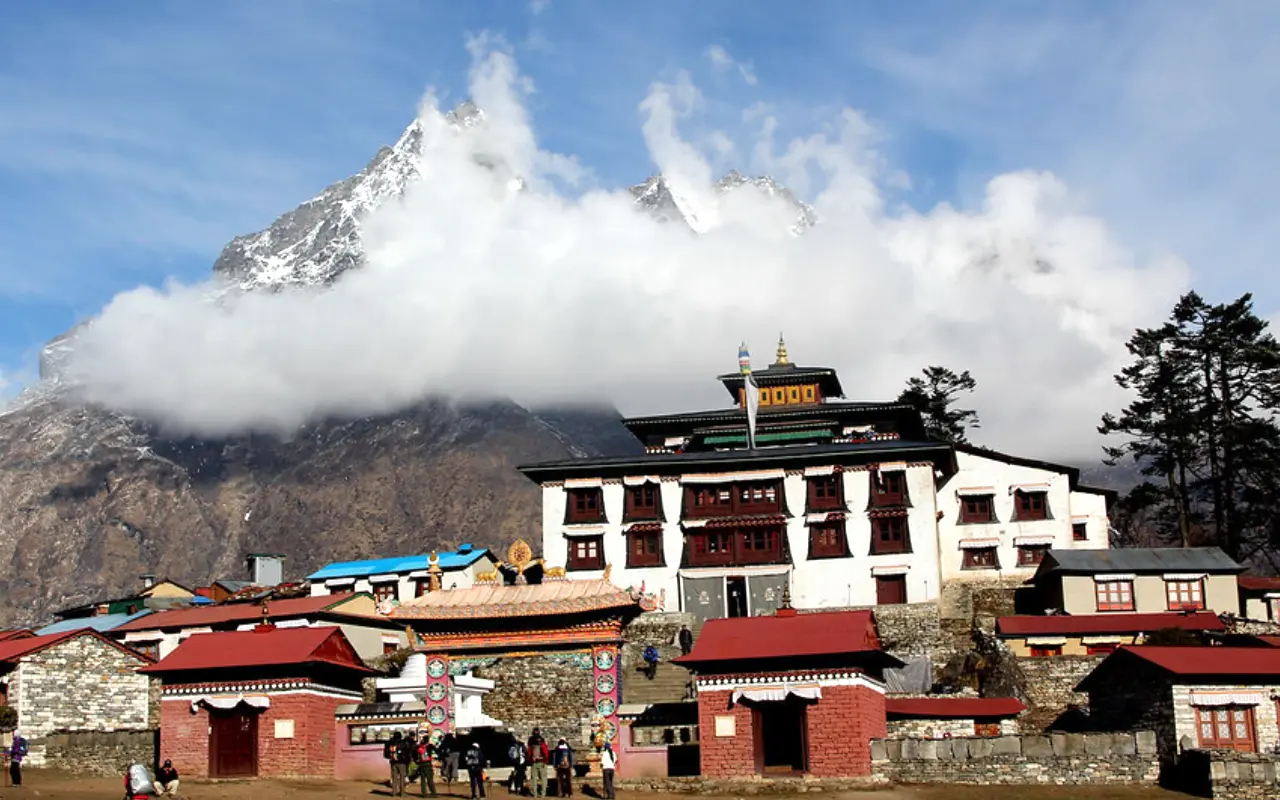
Tengboche Monastery, located at 3,867 meters in Nepal, is a vital spiritual center for Sherpa Buddhists. It holds religious values, being the biggest gompa in the region, captivating the visitors with its calm atmosphere and holy rituals.
Tengboche is an essential pit-stop in the Everest Base Camp trek because it gives trekkers a spiritual break from the strenuous trails. The location near Everest gives the hikers this cultural immersion and an enriching experience, other than just the physical satisfaction and putting oneself to the test with an adventure as such.
In Tengboche, the spirituality of the Himalaya region encounters panoramic mountain views of Everest, Lhotse, and Ama Dablam. The monastery harmonizes well with the rich Buddhist cultures and the magnificent natural beauty, thus making it an unbeaten cultural and scenic stopover on the Everest trail.
History and Cultural Significance
Tengboche Monastery was established in 1916 by Lama Gulu in accordance with the revelation of the Lama Sangwa Dorje and blessing by the Ngawang Tenzin Norbu fifth incarnate of Sangwa Dorje. It is the earliest of the celibate monasteries of the Nyingmapa lineage in the Khumbu region, constructed with the assistance of local Sherpas.
Monastery is a major key component of Sherpa Buddhism. It embraces religious activities and the religious teachings of Vajrayana Buddhism and serves as a cultural bridge between the Sherpa religious life and the general world. It houses hundreds of Buddhist monks who are engaging in the practices of Buddhist chanting and meditation.
Tengboche Monastery has survived natural disasters and was damaged by the 1934 earthquake and by a raging fire in 1989. Every single time, it has been constructed with the assistance of the local communities and foreign aid.
Tengboche, being the biggest monastery in the Khumbu region, is both a place of religious base as well as a religious center of festivals, including the popular Mani Rimdu. It is positioned in a strategic location and has cultural importance, making it a prototype of spirituality in the Himalaya.
Location and Scenic Beauty
It is located at an altitude of 3867 meters above sea level. Tengboche Monastery is one spiritual experience unique to a high altitude. It is geographically positioned to get the attention of trekkers on the Everest Base Camp track to increase its importance as a cultural tourism destination.
The spectacular panorama of the world’s highest mountains surrounds Tengboche Monastery, including Mount Everest, Lhotse, Ama Dablam, Thamserku, and Nuptse. It is a beautiful combination of impressive mountains that add spiritual and aesthetic beauty to the monastery.
Tengboche Monastery is situated at the center of Sagarmatha National Park, a World Heritage Site. In the park, this natural and cultural gem remains under the protection of this reserve, and one can get the experience of calm Himalayan beauty as well as deep religious customs.
Spiritual Experiences at Tengboche
Around Tengboche Monastery, prayer and monk chanting take place every day, and this arouses a spiritual feeling. Ringing of bells, sounds of drums and horns fill the mountains as people are welcomed to the religious practices of the ancient traditions of Buddhism in this holy land of the Himalaya range.
Trekkers will have a rare opportunity to witness the religious activities in the Tengboche Monastery. The performance of monks through sacred dances and rituals gives information about the culture and Buddhist faith of the people to make the trek even richer than the physical adventure.
You can experience peace and mindfulness while in and around Tengboche Monastery. Once inside the breathtaking Himalayas, the visitors are filled with a sense of composure that makes them pause and find inner peace and harmony, along with spiritual renewal in their journey.
Practicing in this spiritually rich and beautiful natural world, Tengboche Monastery is a transformational destination for many. It is another invitation to the harmonious relationship between the spirituality of human beings and the greatness of the high mountains.
The Mani Rimdu Festival at Tengboche
The most important Buddhist festival is the Mani Rimdu Festival at Tengboche Monastery in October or November. It is the concluding part of a one-month cycle of religious rituals and doctrine with wide appeal.
Monks wear colorful masks and perform ritual dances representing Buddhist deities and teachings. The dances marked by prayers and chanting establish a lively and holy environment with devotion and cultural diversity to their credit.
The Mani Rimdu Festival has a wide audience of trekkers and local communities- the Sherpa and pilgrims, both from Nepal and Tibet. The coming together sheds light on the significance of the festival as a religious as well as cultural event in the high Himalaya.
Trekking to Tengboche Monastery

Trekking to Tengboche Monastery from Namche Bazaar involves a 5 to 6-hour walk covering an approximation of 9 to 11 kilometers. The path winds along scenic pine and rhododendron forests, suspension bridges, and provides fantastic views of the mountains.
The Tengboche Monastery is a part of the Everest Base Camp and Everest Panorama treks. It gives trekkers a religious and spiritual resting point that makes their Everest voyage more worth the religious rituals and jaw-dropping Himalayan sceneries on the route.
Trek is moderately rated with a very gradual ascent and descent to enable acclimatization to high altitude. This serves to mitigate the possible altitude sickness, as well as allowing the trekker’s time to appreciate the changing view.
There are comfortable bed and breakfast stays in lodges and teahouses in the vicinity of Tengboche Monastery. Such accommodations serve food and heat, which makes the monastery a good and comfortable stop for trekkers who trek further to Everest Base Camp or other places in the region.
Best Time to Visit Tengboche Monastery
The Tengboche Monastery can be visited best during the fall season between September- November. The season is stress-free as the sky is clear and favorable. It also falls alongside the colourful Mani Rimdu ceremony, enhancing the enrichment of the spiritual and cultural facets in the monastery.
Another ideal time to visit Tengboche Monastery is in spring (March to May). The forests around the monastery are flowering rhododendrons, and the weather is pleasant. This is the period that trekkers relish the beautiful scenic nature and the silent spiritual environment.
The low number of tourists that visit Tengboche Monastery in the winter provides the place with a serene and calm setting. The hike will get tougher, however, with cold weather and possible snow. To trekkers, it is highly recommended that they prepare well for even blistering conditions in exchange for the peace of the winter scenery.
The monsoon also contributes to a heavy downfall of rain and, hence, becomes a burden to travel to Tengboche Monastery as the trails remain slippery and difficult to navigate. It is less busy, but the challenging trail conditions during this season may make it preferable to travel during autumn and spring.
Practical Travel Tips
● Visiting Tengboche Monastery, dressing modestly, and acting according to the local culture.
● Never wear shoes inside the monastery because this is a show of respect.
● Bring enough cash as one will not find any ATM at Tengboche.
● There is basic accommodation at lodges and teahouses available near Tengboche, and Nepalese food is served.
● Carry warm clothes, mornings and evenings.
● Sunrise and sunset are the best moments for photography, as the views in the mountains are spectacular.
● At Tengboche, please be considerate when photographing monks or religious rituals.
Why Tengboche Monastery is Special
Tengboche Monastery is one of a kind, as this place combines all of the culture, religion, and beauty of the Himalayas. The unique destination offers visitors the natural setting of magnificent mountains coupled with the wealth of Buddhist traditions that are ever present in a conducive ambiance that has both spirituality and nature coming hand in hand.
Spirituality, timed with adventure, comes in this monastery. Viewing high altitude Trekkers would discover that they are exposed to deep religious rituals and prayers at the Tengboche Monastery, which would add spirit and significance to their high altitude trekking experience. It gives a nice contrast to the physical difficulty that is presented by the Everest region.
The serene atmosphere of the Tengboche Monastery urges a contemplative and mindful approach. The monastery is flanked by breathtaking mountains as its scenic backdrop and offers a calm and tranquil place where one can connect with the spirit and find peace within their inner being, thereby adding some repose to their overall trek.
To a lot of people, what they witnessed at Tengboche Monastery remains a memory. Cultural immersion, awesome landscapes, and the spiritual feeling make the combination a memorable experience, still in the minds of trekkers even after they have finished their journey in the Himalaya.
Conclusion
Tengboche Monastery is one of the crucial spiritual and cultural points of the region of Everest. It is a hotbed of Buddhist culture, Himalayan beauty, and a hot destination of historical importance to the trekker and spiritual person alike.
To get in tune and experience the tranquil and silent moments in Tengboche Monastery, trekkers are invited to take a break at this place. This religious retreat provides a special opportunity to meditate and gain energy in the lavishness of the Himalayas.
Make sure you visit Tengboche Monastery while on the Everest trek. Live this spiritual adventure, allowing your soul to make everlasting memories and enrich your path and your soul.
