






How Deep Is the Khumbu Icefall and Why Is It So Dangerous?
The Khumbu Icefall is one of the most dangerous sections on Mount Everest. It is a glacier that constantly changes, as all climbers have to cross the glacier from the Nepal side to reach the summit. This is an interesting and dangerous area as ice blocks are very high, crevasses are deep and the ice is very unstable. Despite being just a few kilometres in length, it is one of the toughest obstacles on any Everest expedition.
A lot of people ask themselves how deep the Khumbu Icefall is and why experienced climbers are so careful when climbing it. The answer is much more than a mere measure. The glacier is continually changing, moving and evolving in form, depth and condition daily. By understanding how it’s formed and why it acts like that, one can understand why crossing it is one of the most challenging parts of climbing the world’s highest mountain.
Where Is the Khumbu Icefall?
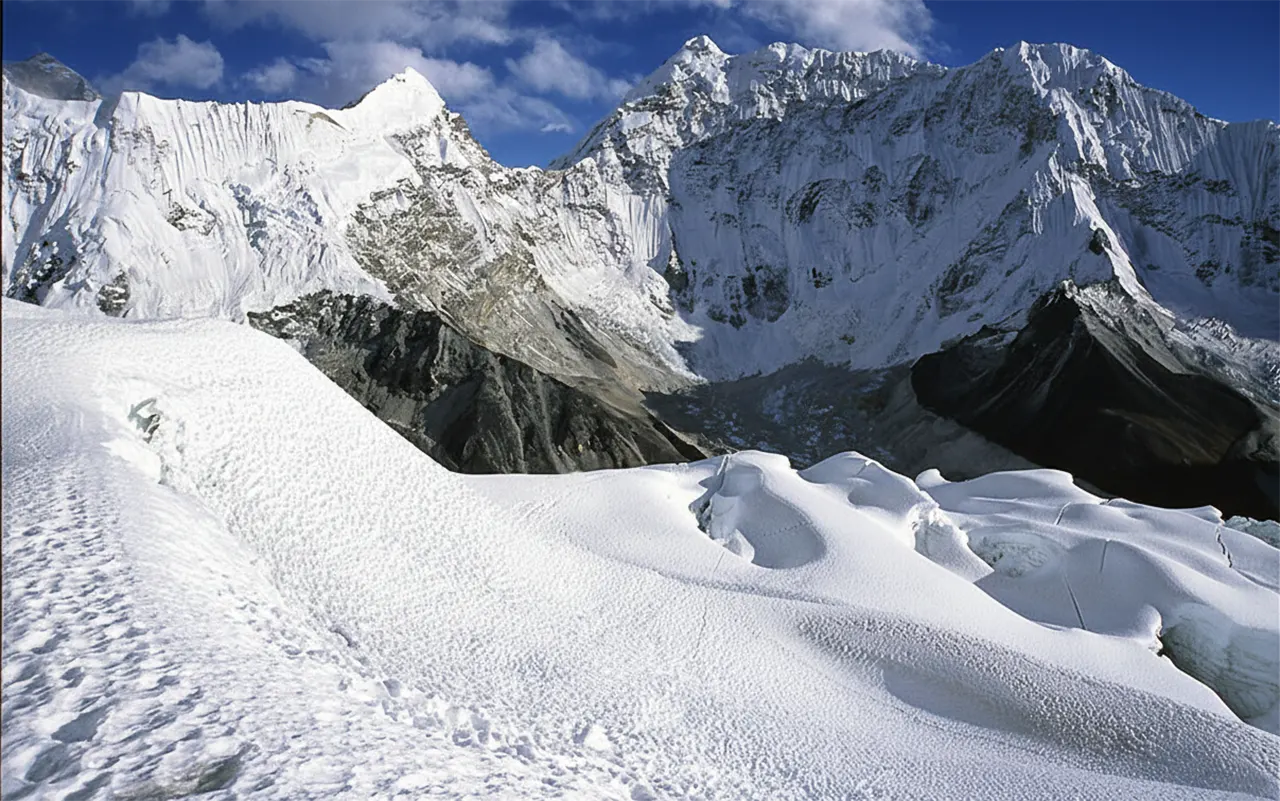
The Everest Icefall lies on the south side of Mt. Everest within the Sagarmatha National Park in Nepal. It starts just above the Base Camp of Everest (around 5364 m/17598 ft) and goes ahead to Camp I (around 6065 m/19898 ft).
This is a part of the Khumbu Glacier, which is the highest one in Nepal. The climbers on the South Col route will need to cross this glacier before entering the Western Cwm before reaching the summit. The icefall is thus the first significant obstacle upon leaving base camp and one of the most challenging parts of the trek.
How Deep Is the Khumbu Icefall?
The Khumbu Icefall is not a fixed depth as it is a moving glacier with crevasses, ice towers and uneven surfaces. The depth of some crevasses is only a few metres and others are over 45 to 60 m (148 to 197 ft) deep. In some areas, researchers think that a few crevasses extend deeper than the ones measured and that the depth of the crevasses cannot always be determined since the snow bridge may conceal the actual depth.
In many places, the glacier is several hundred metres thick. But the climbers’ primary worry is the depth of the crevasses they have to cross. One of these openings can often only be illuminated by darkness – since the bottom is not visible. Therefore, there is a constant need for caution and if someone makes a small mistake, it may have serious consequences.
The depth also varies with time. Old crevasse cracks heal as the glacier descends the hillside and new crevasse cracks form. Snow may sometimes fall across unsafe gaps and this will make them look solid when they are not.
How Was the Icefall Formed?
The Khumbu Icefall Route is possible because the Khumbu Glacier runs down an extremely steep part of the mountain. As the glacier flows downhill, the ice has to bend and break as it passes over the irregular surface.
Glacier ice moves like a very slow-flowing river, as opposed to solid rock. The outer parts of glaciers flow not at the same speed as the bottom, so there is stress within the glacier. This stress results in huge fissures and tall ridges of ice known as seracs.
There is no resting place for the movement. Changes occur within the glacier even in winter, but the rate of change is influenced by temperature. In warmer seasons, the terrain may be even more unstable when they melt and the ground becomes more active.
Why Is the Khumbu Icefall So Dangerous?
The Khumbu Icefall itself is deemed to be unsafe, as nothing in it will last long. As the glacier moves every day, cracks open and huge chunks of ice move. Climbers must not presume that a route that was safe yesterday is safe today.
The hazard from collapsing seracs is one of the greatest. They can remain safely and be a big tower of ice for weeks until they suddenly begin to break apart without warning. When they fail, they can drop large blocks of ice down the climbing route.
One of the major dangers is concealed crevasses. Snow bridges can form in deep openings, providing an illusion of safety for the individual, but collapse and cause the person to fall through. These gaps are crossed regularly by ladders held in place by ropes and demand full concentration of the climber.
In some areas avalanches pose a threat to climbers as well. Snow and ice may be blown up from the surrounding slopes, when there is heavy snowfall or higher temperatures. The icefall is compounded by several hazards so that when people cross it everyone has to be vigilant.
How Fast Does the Glacier Move?
The Everest Icefall is a surprisingly fast glacier. In the summer months when glaciers are in a state of flow, sections of the glacier may move about 0.9 to 1.2 m (3 to 4 ft) per day. This movement is continuous in changing the locations of crevasses and ice towers.
The safest crossing point can change even if one moves one meter laterally. Ropes that have been attached for one week might require adjustment the following week. Glaciers are always moving downhill and subject ladders to constant shifting across crevasses.
The constant motion is one of the reasons that it is not possible to just follow old maps or previous expedition tracks. The route is to be continually inspected and maintained during the climbing season.
Why Do Climbers Cross Before Sunrise?
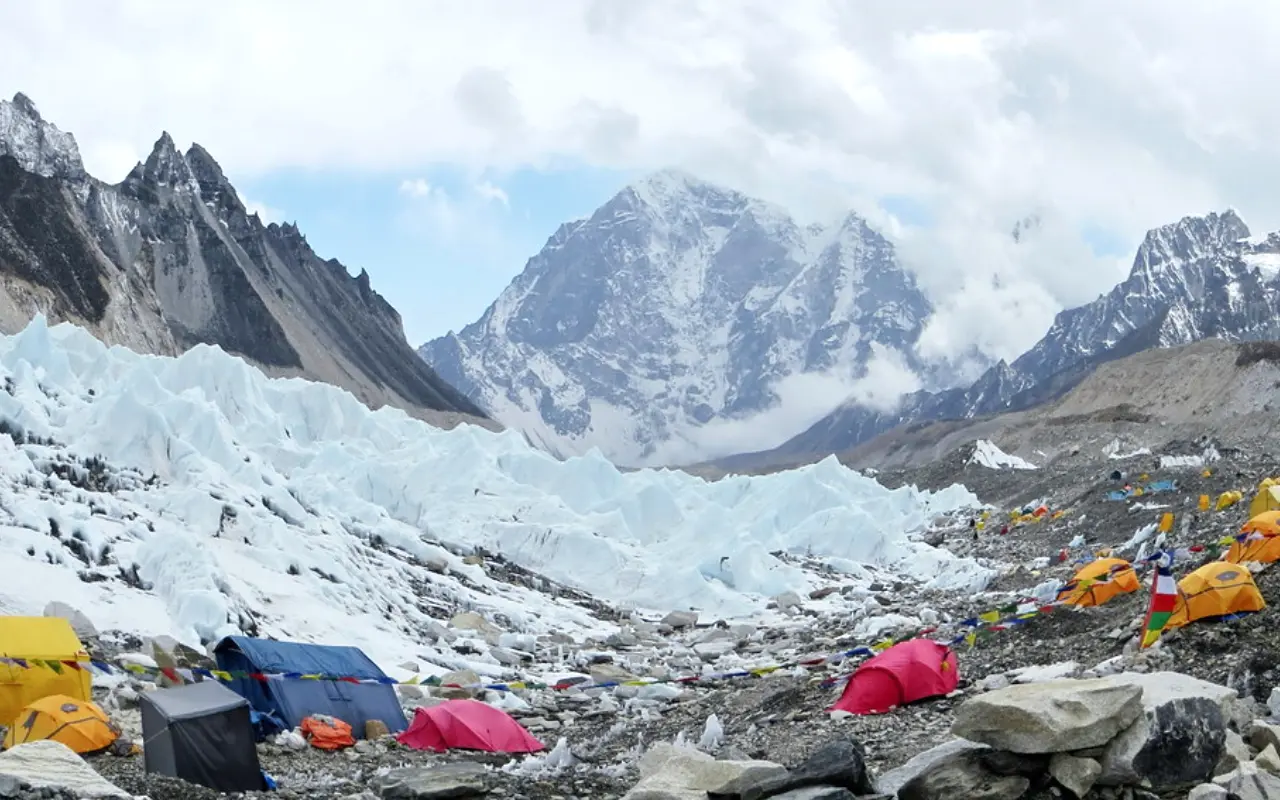
The Khumbu Icefall Route is typically traversed very early in the morning, typically at about 2:00 or 3:00 am when the weather is cooler and the ice is more stable.
When the sun is shining, it expands a little bit, the snow becomes soft and the risk of falling ice rises. While early morning crossing will not eliminate all ice movement, it will lessen the chances of significant ice movement.
So, most climbing teams depart Everest Base Camp well before dawn. Their goal is to arrive at Camp I ahead of the hottest sunlight on the glacier.
How Do Climbers Cross the Icefall?
The Khumbu Icefall is a challenging climb that requires the use of specialized equipment and careful planning. Crampons on the bottom and harnesses and carabiners holding fixed safety ropes to the ice.
Aluminum ladders are used across crevasses and sometimes multiple ladders are joined together to cross larger gaps. The openings below these ladders can be very deep, so crossing these ladders requires balance and confidence.
Before most of the parties on the expedition, the route is set up and maintained by experienced Sherpas, called Icefall Doctors. They regularly check ladders and replace broken ropes and adjust the route as the glacier evolves. If it wasn’t for their constant vigilance, it would be even more hazardous to climb the icefall.
What Are the Icefall Doctors?
A dedicated team known as the Icefall Doctors normally maintains the Everest Icefall each climbing season. The highly experienced Sherpa staff members are in charge of setting up the safest possible route through the glacier.
Their work starts before climbers arrive at the EBC of Everest. They determine the optimum line through the constantly changing landscape, set ladders over crevasses, place fixed ropes and anchor them in place.
Throughout the season, they keep an eye on the glacier’s condition as the way may become unsafe at any moment. When new cracks crop up or ice blocks move, they repair or move segments of the path. The work they do has a significant impact on the safety of all South Col expeditions.
Can the Danger Be Completely Avoided?
The Khumbu Icefall is unlikely to be completely safe. While some risks are mitigated by modern climbing gear, weather forecasting and route management, no danger can be completely controlled by man.
All climbers know that weather can turn rapidly. While all these factors help keep danger to a minimum, they can’t eliminate it.
For many experienced mountaineers, the icefall is the most challenging and stressful section of the climb to Everest, being a combination of technical difficulties and natural hazards that are not always predictable.
Climate Change and the Future of the Glacier
Climate change is impacting the Khumbu Icefall Route as well. The Khumbu Glacier is affected by rising temperatures, which has an impact across the entire Himalayas.
Glaciers have been seen to be shrinking, moving and melting over the past few decades. Some parts of the glacier may experience increased instability during warm years, while other parts may experience it during cool years; however, in all years, the conditions are unstable.
The area is still being studied in an effort to determine the implications for future trips to the summit of Mt. Everest. But climbers and expedition organizers also make adjustments to schedules based on changing weather and glacier conditions.
Has the Icefall Seen Serious Accidents?
There have been several unfortunate accidents that have occurred in Everest’s climbing history at the Everest Icefall. Despite the best of planning, injuries and fatalities have resulted from falling seracs and collapsing ice towers and hidden crevasses.
The biggest accident was in 2014, when 16 Sherpa climbers were killed during a large serac collapse. The tragedy raised awareness of the unpredictable behavior of the glacier and brought the discussion on climbing safety and route management back to the forefront.
Despite improvements since then, the icefall remains a place of great respect to all those who venture on an expedition to the mountain.
Why Does Every Everest Climber Respect the Icefall?
The Khumbu Icefall is more than just a natural barrier. Reminds the climber that despite all their efforts and precautions, the forces of nature cannot be overcome by anything else.
The crossing of the glacier can be a test of patience, teamwork and total concentration. Each crossing of the ice and each step up a ladder requires an equal balance of confidence and caution. Many climbers say that getting to Camp I is a big accomplishment because it is one of the most dangerous sections of the entire trip.
Conclusion
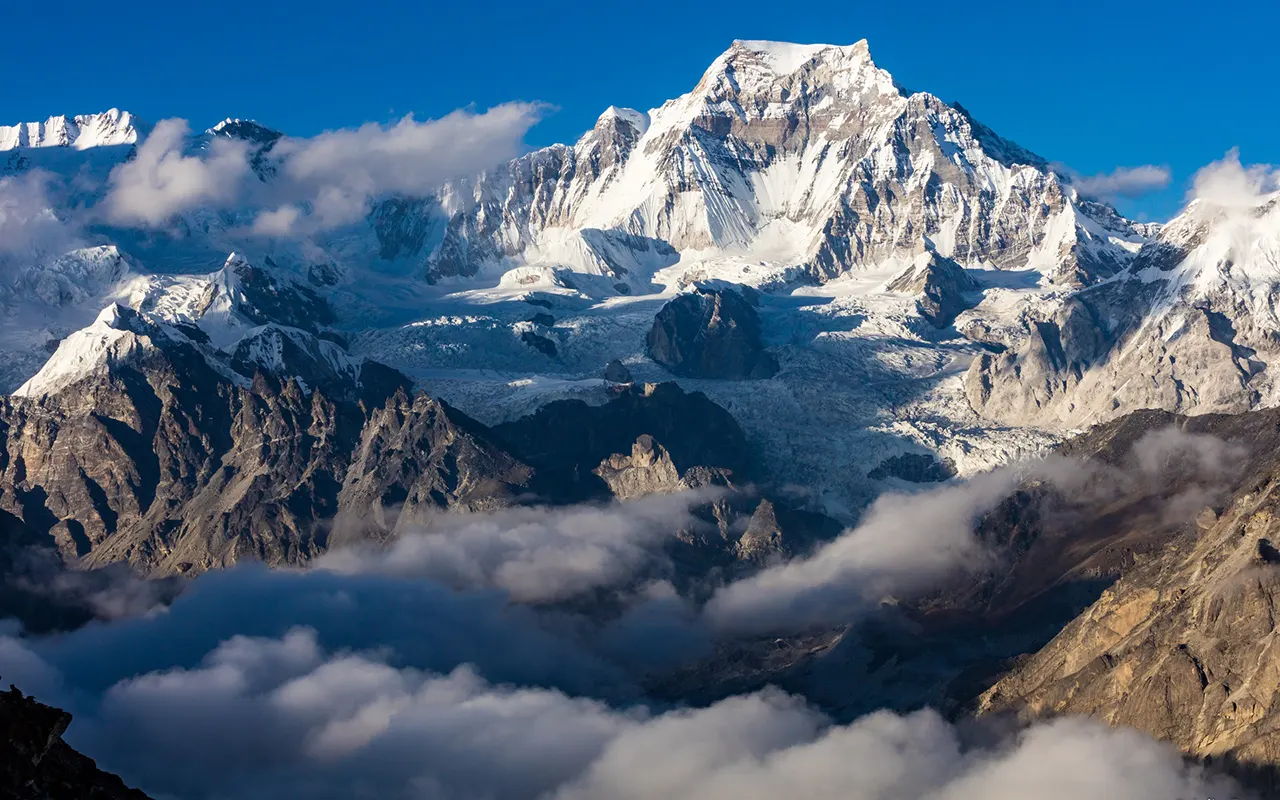
The Khumbu Icefall is known not just for its stunning beauty, but also for its ever-changing form. The deep crevasse fields, the tall seracs, the changing ice surface and unpredictable ice flow make it one of the most dangerous places on Mount Everest. Many crevasses are 45 to 60 m deep or more, but the real problem is the glacier’s ongoing movement, not a specific depth.
With the improvement of climbing gear and route management, the Khumbu Icefall is still a location where experience, preparation and careful judgment are crucial. It is one of the most remarkable and difficult portions of the way to the summit, with every successful Everest climb relying on a safe crossing of this glacier.
