





Pokhara to Ghandruk Distance by Road and Trek A Complete Guide
Ghandruk is a trekking village in the Annapurna region that has gained popularity for its great Himalayan views and Gurung culture. This village is an essential stop on trekking routes such as the Annapurna Circuit but also a launching off point for treks of shorter duration, like the Ghorepani Poon Hill trek.
The route to Ghandruk from Pokhara is a good option for short treks because of its ease of access and variety of scenery. In just a few days, trekkers can visit cultural villages, wander through lush forests, and enjoy spectacular mountain views, which is ideal for trekkers with time limitations.
This guide will focus on the Pokhara to Ghandruk distance by road and trekking and will present the travel options by private vehicle, bus, and jeep ride as well as trekking routes, including the typical Nayapul to Ghandruk distance. The guide will also include some general advice to help trekkers have a safe and enjoyable trip.
By understanding the Pokhara to Ghandruk distance and methods of travel, trekkers can begin to prepare their treks better. Whether you take a Jeep ride, which is around 42 to 52 kilometers, or a multi-day trek to Ghandruk depends on your interests. With the information in this guide, you have everything you need to prepare for your trip.
Where Is Ghandruk Located?
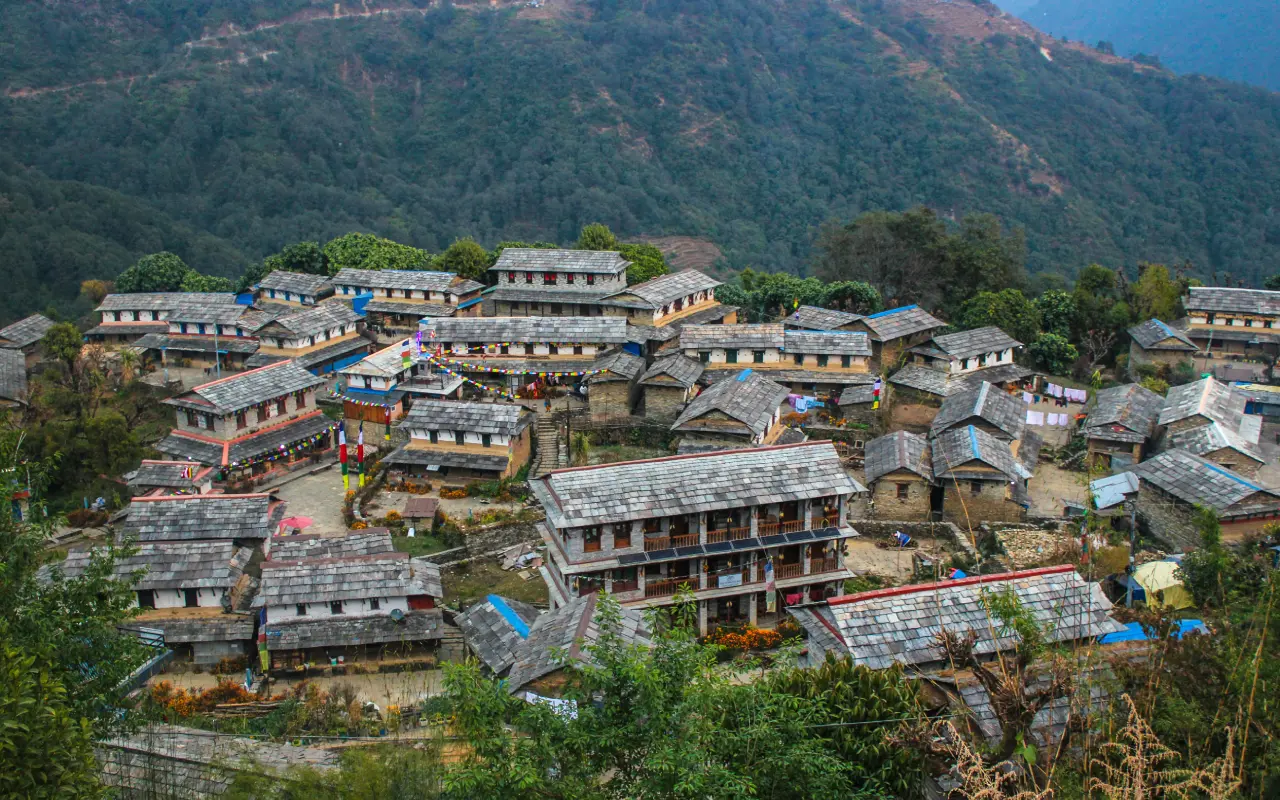
Ghandruk is a traditional Gurung village, located in the Kaski District of Nepal, and it has the characteristics of Villages found throughout the Annapurna region. Ghandruk is about 32 kilometers northwest of Pokhara via road and represents a manageable distance from Pokhara, to help the traveler digest the Pokhara to Ghandruk journey.
Ghandruk is located at about 2,012 meters, which contributes to the initial cool mountain climate and also gives trekkers some time to acclimatize to the altitude of the Himalayas, viewing experience.
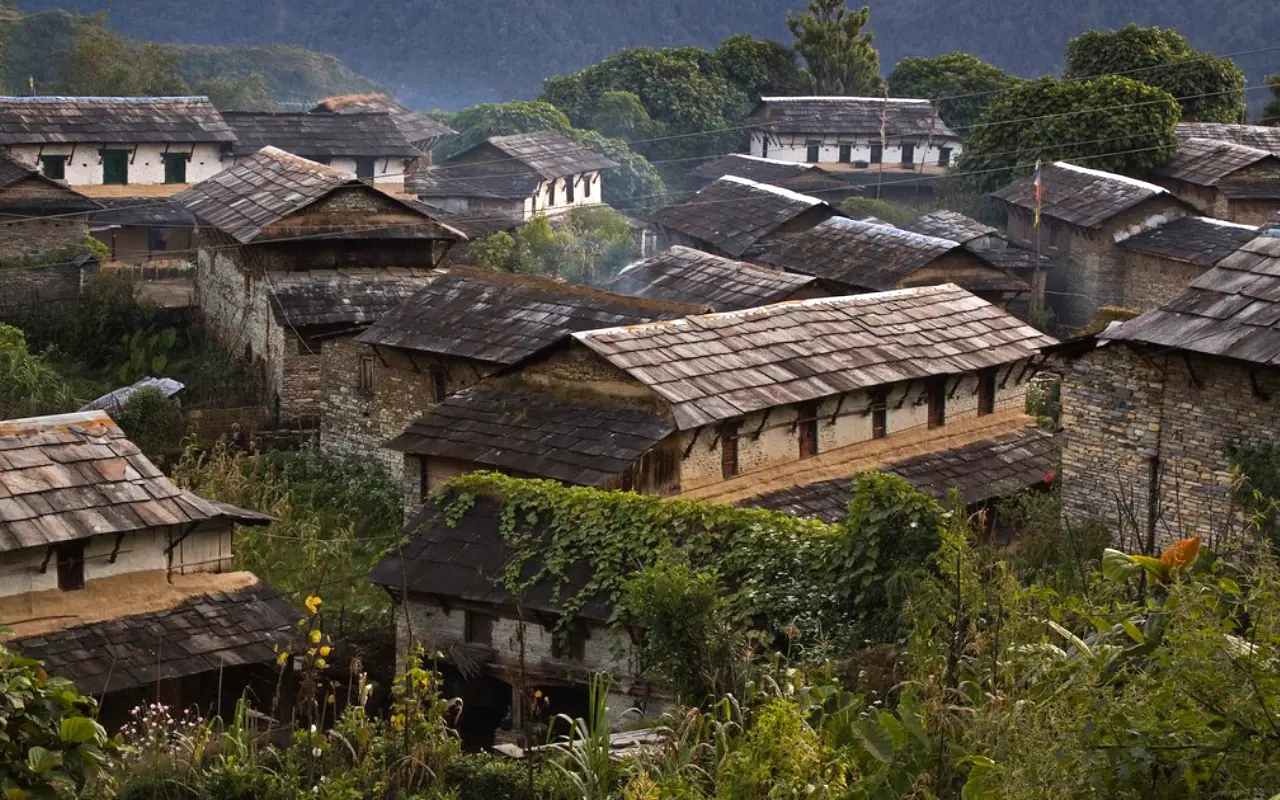
Ghandruk is known for its Gurung culture, unique stone-and-mud traditional houses, Gurung cultural museums, and thriving local traditions, providing trekkers with a cultural base to experience real mountain village life.
From Ghandruk, you can enjoy top scenic views of Annapurna South, Machapuchare (Fishtail), Gangapurna, and Hiunchuli; all of which give another reason to visit the village. Because of the easy distance from Pokhara, Ghandruk is a major destination for both short and cultural trekking options.
Distance from Pokhara to Ghandruk
The Pokhara to Ghandruk distance on the road is around 55 to 60 km in total, depending on road conditions. The jeep or private vehicle option takes about 1.5 to 2 hours, and buses take about 3 to 5 hours due to stops and slow progress.
For trekking distance, it would depend on where you start from. The trek generally starts at Nayapul and is about 9 to 15 km to reach Ghandruk. The trek from Nayapul to Ghandruk takes about 4 to 6 hours, depending on fitness and conditions.
There are different combinations of road and walking from Pokhara up to Nayapul or Kimche, which allows you the comfort of a Motor Vehicle with the adventure of starting a trek. You really can handle the Pokhara and Ghandruk distance in a day or two from Pokhara.
The Pokhara to Ghandruk distance will not be much different if you travel via road or trek. The jeep ride will give you access in a shorter time frame than the trek or foot, and give you the opportunity to observe some sense of nature and culture, so which option you select, the travel time is either 2 hours in a motor vehicle or a full day walking distance.
Pokhara to Ghandruk Distance by Road
Ghandruk is roughly 53 to 57 kilometers away from Pokhara via car. You will begin your journey in Pokhara and go to Ghandruk, Nayapul, and Kimche. This route is common among tourists going to the Annapurna region and has some nice mountain views along the road.
The road conditions vary. Access to the jeep to Kimche or Ghandruk depends on the weather and maintenance of the road. During monsoon or road construction, vehicles may only go to Kimche or Vikash Danda, which means you need to take a short trek into Ghandruk.
Transport options are private jeeps, shared jeeps, and public buses. Private jeeps are a lot quicker and more comfortable to travel in and usually take about 1.5 to 2 hours. Buses are cheaper but slower, taking between 3 to 5 hours, as the buses have to make many stops, not always in the best road conditions.
The length of the journey depends on the vehicle and the condition of the roads. A private jeep usually takes about 1.5 to 2 hours from Pokhara to Ghandruk, while a public bus will take longer, about 3 to 5 hours.
Overall, the distance by road from Pokhara to Ghandruk provides a good variety of travel options. Whether you take a quick ride in a jeep or a slower journey on a bus, you will always have an excellent jumping point to visit Ghandruk, which highlights its cultural and natural attractions and is a perfect opening point for trekkers and travelers.
Pokhara to Ghandruk Trekking Route Distance
While the Pokhara to Ghandruk trekking route is relatively straightforward, there are two regular choices for reaching this beautiful Gurung village. The first is a convoluted hike that leads to Ghandruk via Birethanti and Nayapul. This option will have trekkers walking approximately 9 to 15 kilometers before reaching their destination.
On the other hand, the second option is to drive by jeep or vehicle from Pokhara to Kimche and then trek for 1 to 2 hours to reach Ghandruk. This option is great for trekkers who want less stress of carrying a heavier backpack or can plan their time more wisely to enjoy the natural scenic trek without the long-haul hike.
Both trekking options are relatively easy to moderate for beginner trekkers and families. In terms of the distance from Pokhara to Ghandruk, both routes have easy walking terrain and gentle uphills.
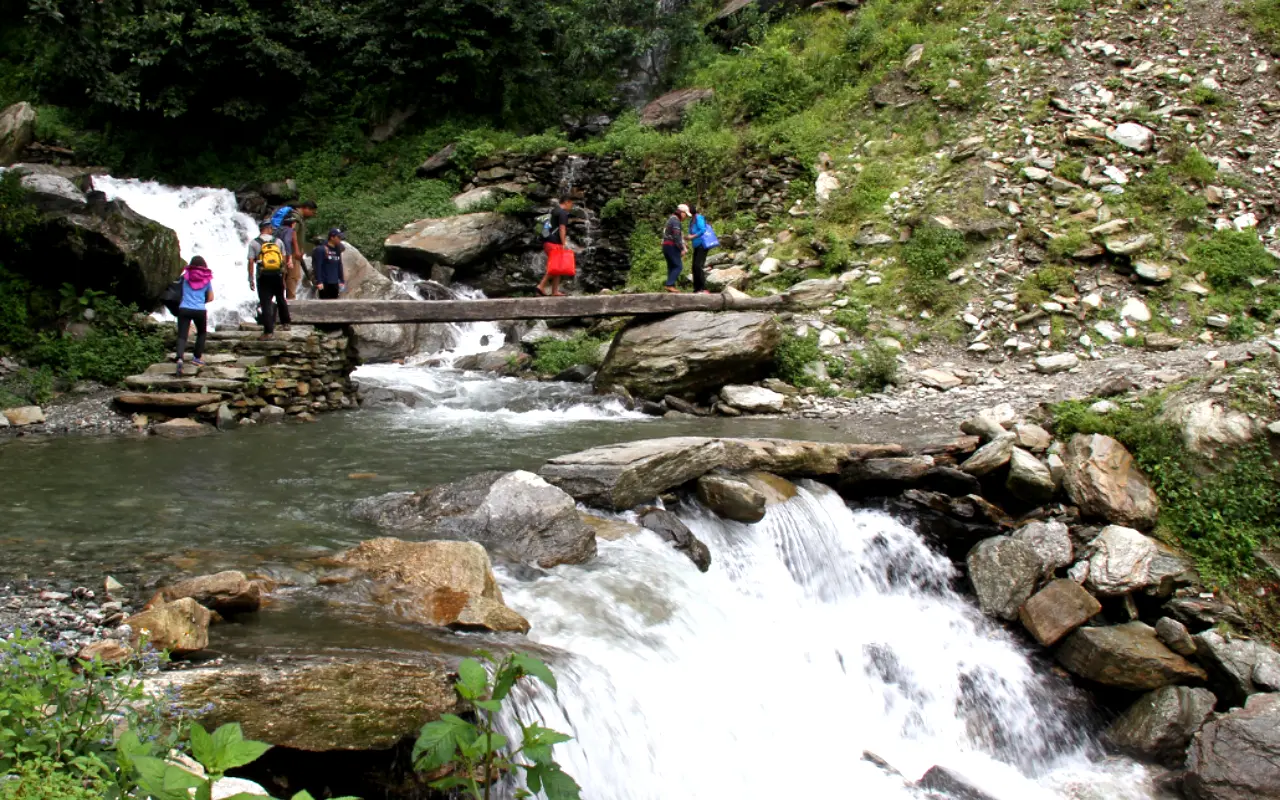
On both routes, trekkers will anticipate some great highlights such as natural cascading waterfalls, rolling terraced fields, and epic mountain views of Annapurna South and Machapuchare. The experience of walking through traditional villages and interacting with locals is appreciated too.
Finally, the Pokhara to Ghandruk distance by trekking is an amazing blend of culture, nature, and unbelievable landscapes. The longer trek from Nayapul or the Kimche route offers trekkers a memorable experience for sure when in the Himalayas.
Trekking Duration and Itinerary
The trek from Nayapul to Ghandruk takes 4 to 5 hours (8.6 kilometers in distance), and it is a pleasant trek for beginners and families. While trekking from Nayapul to Ghandruk you will see terraced fields, forests, and small villages along the way, and the trail is fun and interesting.
Trekking from Kimche takes less time and a maximum of 1 to 2 hours. Kimche is the closest point for a motorcycle ride to Ghandruk so many travelers will motorbike to Kimche and hike the remaining distance. This is a good option for those who want to enjoy a quick trek during the day with a light backpack.
You could also trek the Pokhara to Ghandruk distance in 2 days or 3 days as a short trek. This way you will have time to spend in Ghandruk village, enjoy the mountain views of the Annapurnas, and see how the local people live without feeling rushed. As a start for beginners or families wanting to go slow, this is a good option.
Overall, the Pokhara to Ghandruk distance trekking options are easy to moderate, and the trails are well-marked with beautiful views. It is also a nice combination of nature, culture, and manageable trek time. It is an ideal short trek for a popular destination in the Annapurna region.
Best Time to Visit Ghandruk
The ideal seasons to visit Ghandruk are the spring and autumn seasons, when the weather allows for clear, stunning views of the mountains. Since both seasons would be the best choices for the weather, depending on what overnight stays can be enjoyed the best, both seasons offer ideal weather conditions where trekking is pleasant and visitors can see nature.
Winter can still be a good time to visit for those who want to experience seeing Ghandruk covered in snow. Although winter can be cold, the crisp, conducive traveling air and beautiful snow can be an experience of its own for travelers.
It is not advisable to plan any trek between June to August based on the traction of trails and debris in the season, as it changes to journeys whereby the journey to Pokhara to Ghandruck looks like a potential risk.
Overall, spring and autumn are safe for trekking the Pokhara to Ghandruk distance, considering it is more than comfortable weather, the road conditions should remain stable, and witnessing the stunning views of the mountains is something for chirping visitors.
Where to Stay in Ghandruk
Accommodations in Ghandruk primarily consist of teahouses and guesthouses that are basic but comfortable for trekkers. Many of the teahouses and guesthouses in Ghandruk provide food, which is welcomed by trekkers.
Additionally, visitors can stay with the Gurung family through a local homestay program, where they can eat traditional local meals with the family and learn about the village traditions, and how to become engaged in village life, which enhances the trekking experience.
Firstly, nice and popular lodges like Hotel Gurung Cottage and Hotel Milan get excellent reviews for cleanliness, hospitality, and mountain views. Several lodges offer hot showers and cozy rooms after undertaking some of the Pokhara to Ghandruk distance trails.
If you are going trekking during peak seasons such as spring and autumn, it is highly advised to book your accommodation in advance to secure the lodging you want. Many teahouses and guesthouses will accept walk-ups, especially if you were to choose off-peak trekking, which allows for more flexibility for free-spirited travelers.
Permits Required for Ghandruk
To trek in the Annapurna region, including Ghandruk, you are required to obtain an Annapurna Conservation Area Permit (ACAP). This permit enables the conservation efforts and management of the area and is required for all trekkers entering the Annapurna Conservation Area (ACA).
In addition to the ACAP, trekkers must also obtain a Trekker’s Information Management System (TIMS) card. The TIMS card allows authorities to track the number of trekkers for safety and management purposes. Both permits are non-transferable and need to be on you throughout your trek.
You can obtain these permits in the Nepal Tourism Board office, the Department of National Parks and Wildlife Conservation, or the Tourism Board office. As permits can only sometimes be obtained at trekking entry points, it would be very strongly recommended to obtain permits before going on your trek, so there will be no delay or additional expenses.
At some trekking entry points, permits may be issued, but there will likely be an increased fee and an increased chance of delays. If we prepare documents such as passport copies, passport-sized photos, and the details of your trip, your application will be completed and submitted to facilitate the application for all routes in the Annapurna region.
Tips for the Journey to Ghandruk from Pokhara
As you set out on your journey from Pokhara to Ghandruk, don’t forget to take enough cash with you. There are a limited number of ATMs in Ghandruk and surrounding villages, so if you take enough cash with you, you won’t have to worry about paying for accommodation, food, or any permits.
Trekkers should travel light for maximum comfort along the way. Traveling in layers is a good option to be able to adjust for changes in temperature along the route. Warm clothing for cold mornings and evenings, and breathable short or long-sleeve shirts for during the day can be beneficial. Good trekking boots are also a good idea, along with a raincoat during unpredictable weather months.
Starting your travel early in the day is also recommended so you can avoid any possible delays because of traffic, unexpected weather, and poor road conditions. Early travel times will also ensure that you’ll arrive at your destination with enough daylight to continue your trek safely and enjoyably on the Pokhara to Ghandruk distance route.
Hiring a local guide or porter is optional but highly recommended for the added benefit of an enhanced experience on the trail. A local guide will share significant knowledge of the local Gurung culture and describe the local flora and fauna you will encounter. A porter is also recommended because they can help you carry some of your heavy loads, thereby allowing you to have an easier and much more comfortable trek.
Also, be sure that you take care of the weather considerations at a time of year when there may be significant showers, especially during the monsoon season when trails become slippery and potentially dangerous. Checking forecasts tells you what to expect, but planning your trek in the best trekking seasons will enhance your safety and enjoyment, which are much better in spring or autumn.
Finally, you should adhere to the practices of respect for local customs and for the environment. Ghandruk is a culturally rich village. It is important to respect the environment so that we preserve the natural state.
Conclusion
A traveler has a choice of whether to travel via road or trek in order to get to Ghandruk. The road travel will be quicker and more comfortable, as it will take around 3-5 hours to travel approximately 55-60 kilometers.
A traveler can also choose to travel via trekking, starting from Nayapul or Kimche. Trekking from Nayapul or Kimche provides a more immersive experience, and the various routes may range in distance from 9 km to 15 km, with the varying time being from several hours to all-day treks.
Ghandruk is a must-see and a must-experience place for people who love nature and culture. Ghandruk provides excellent views and the Gurung culture, which showcases everything this area has to offer. Nothing else compares to the unique scenic landscapes, the beauty of the architecture, and the authenticity of the Gurung community.
You will remember your experience with the exceptional hospitality and overall experience for a lifetime. Ghandruk is a great gateway to short treks and cultural experiences in the Annapurna region.
