



10 Days in Nepal Tour

Duration
10 Days

Max Altitude
2,175 m. / 7,136 ft.

Difficulty
Moderate

Group Size
2-10 Pax

Meals
- 9 Breakfast
- 8 Lunch
- 8 Dinner

Accommodation
- 3 Star Hotel

Transportation
Car/Jeep

Activities
- Driving
- Bike Riding
- Sightseeing
- Safari
- Canoeing
- Cultural Activities

- 1 - 1 personUS$ 1500
- 2 - 8 personUS$ 1350
- 9 - 14 personUS$ 1240
- 15 over 9999 US$ 1170
Total Cost:
US$ 1500
- Your safety, our no 1 priority
- Best price guarantee
- Experienced & dedicated team
- Easy booking, no hidden charge
- You can customize this trip



Talk to Travel Expert Samundra Rimal (+977-9843127084)
Introduction of 10 Days in Nepal Tour
Nepal is much more than just the Himalayas, although they are one of the best things the country has to offer, there are more things that you should experience. The 10 Days in Nepal tour is just a product of that idea. This tour takes you to all the major attractions of 3 different cities, Kathmandu, Chitwan, and Pokhara.
We will start the tour from Kathmandu and drive to Chitwan. Driving along the Mahendra highway, we will reach Chitwan accompanying the Narayni river. From Chitwan, we will head to Pokhara where a scenic treat awaits us. We will follow it up with a drive to Kathmandu and a day of sightseeing around the valley.
As the 10 Days in Nepal tour goes around different cities, you will get to taste a whole bunch of different regional dishes and drinks. We recommend you try them all at least once before we move to another city. This also indicates the different cultural experiences you will have.
The Valley of Kathmandu is largely inhabited by Newari people, and you can see the Newari culture and architecture all around.
The subtropical land of Chitwan is native to the Tharu people, who, unfortunately, are not the dominant demographics of the region given the rise of immigrants for business opportunity. Lastly, Pokhara is largely inhabited by Gurung and Magar families, but culturally it is more in tune with the West.
We have a set list of attractions to visit in each city but if you have your personal preferences, we can work it out. Just make sure that you let us know about your ideas before you book the 10 Days in Nepal tour with us. Our tour guide will let you know the updated itinerary or if the site is not taking in visitors at the moment.
There are a lot of things to consider before you book a tour, so to make things easy, here’s everything you need to know about the 10 Days in Nepal tour.
Trip Highlights
- Visit Baadhaour Stupa, Swaymabhunath Stupa, Pashupatinath Temple, and more as we take you around Kathmandu Valley for a day sightseeing tour.
- Travel to Chitwan and indulge in jungle safari, canoeing, bird watching, and elephant bathing.
- Drive to Pokhara and explore sites like Devi’s Falls, Sarangkot, Barahi Temple, World Peace Pagoda, and more.
- Get to taste the special traditional Tharu dish, the famous Snail curry.
- Experience a set of different cultural communities with different architectural styles.
Detail Itinerary of 10 Days in Nepal Tour

Day 1: Arrival at Kathmandu
Arriving in Kathmandu is an exciting moment as you will be able to view the mountain ranges of the Himalayan region as your flight flies over the valley.
After your flight lands in Kathmandu, a shuttle bus will transport you to the terminal, from where you will have to get to the immigration booth to work out your tourist visa. The government of Nepal offers a visa-on-arrival to hundreds of countries, with a handful of countries as exceptions.
Your visa application can also be applied for online; for this, you have to visit the official immigration website of the government of Nepal and fill up the online tourist visa application form.
You will get your visa barcode via email, a couple of business days following your submission of visa application. You have to print this barcode and carry it with you so you can present it at the immigration booth after your arrival.
If an online application is not for you, you can simply fill up the application form at the immigration desk, pay your visa fees at the bank counter nearby, and present it to the immigration officer. You also need to present your passport, proof of stay, return tickets, and two passport-sized photos.
At times, the Tribhuwan International Airport can be crowded since it is the major airport in all of Nepal. You need to be patient and work your way through the application, given the mass crowd. In times like these, an online visa application is the best way to go. So, if you are visiting Nepal in peak travel season, you’d better opt for an online tourist visa application.

Activity: Drive for 30 minutes

Max. Altitude: 1,400m/4,593ft. Kathmandu

Accommodation: 3 Star Hotel
Day 2: Kathmandu to Nagarkot and back
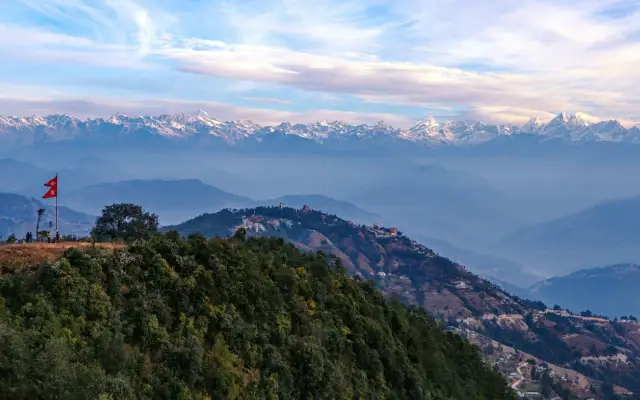
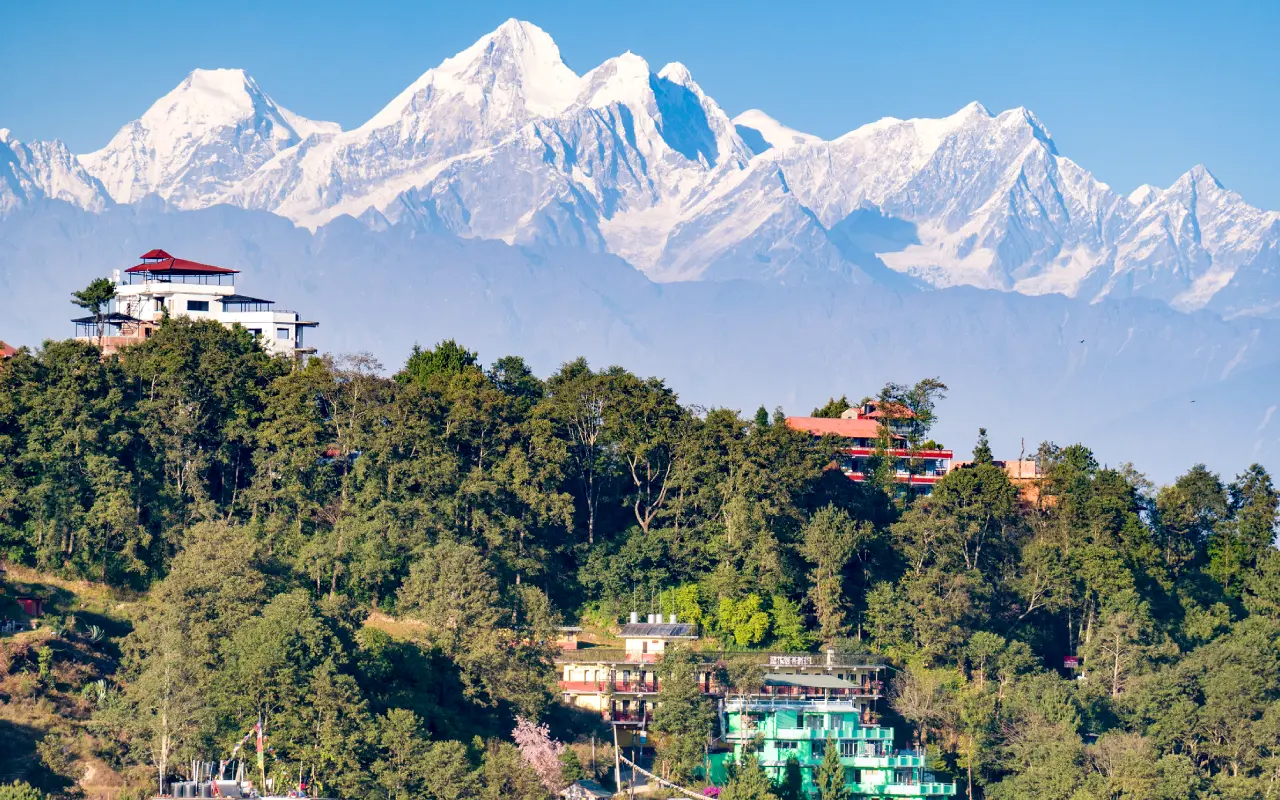
Approximately 32 km northeast of Kathmandu, there is the viewpoint of Nagarkot that offers the best expansive view of the Kathmandu valley. It also serves as a viewpoint for the Himalayan ranges in the north. It is often visited by locals, especially early in the morning, since it is a sunrise viewpoint as well.
There are multiple routes that lead to Nagarot, but we will be taking the shortest one as we do not want to spend more time traveling. For the most direct route, we will first get to Bhaktapur and go uphill via the Araniko Highway. Shortly after, we will leave the freeway and join the Nagarkot Road. This journey should not take more than 2 hours.
We will arrange a private jeep for your transportation, but if you are a solo traveler looking for vehicles, you can get on the bus to Nagarkot from Bhaktapur Bus Park.
If you are interested, we can also arrange a short hike to Nagarkot; nevertheless, we will have to take a jeep for the majority of the way.
A hike can be more scenic than a ride, but it will take more time, which you could instead spend roaming around in the Kathmandu valley. From the top of the hill, you can see peaks like the Annapurna Himalayan range, Dorje Lakpa, Lantang, Manaslu, etc.
After we are done with our visit, we will make our way back to the valley. This visit could take about 5 hours in total, including transport time, which leaves us with a handful of daytime hours to explore Kathmandu.
At Kathmandu, we will first get to Baadhapur Stupa, popularly known as Bouddhanath Stupa. This religious site is undoubtedly one of the most visited and most iconic sites, that also serves as a landmark. The exact date of its establishment is up for debate, while some claim its origin dates back to the 5th century, others claim that it is far older than that.
The most accepted story of its origin ties to a farmer woman who had a dream where god guided her to a location of purity, where a shrine should be built.
Given that she did not have enough resources to buy the land, she asked the king of the land for permission. She was initially denied the request, but something inside the cruel king made him grant the request eventually.
The Bouddhanath Stupa is the largest Mandala in all of Nepal. The massive size, the beautiful dome, and its religious significance attract millions of visitors each year.
The site hosts celebrations during the Tibetan New Year (Lhosar) and Buddha Jayanti (Lord Buddha’s birthday). We will spend the rest of the hours visiting the different shops and attractions around the Baadhapur Stupa.
Activity: Drive & Sightseeing for 5 hours
Max. Altitude: 1,400m/4,593ft. Kathmandu

Meal: Breakfast, Lunch, Dinner
Accommodation: 3 Star Hotel
Day 3: Day trip to Bhaktapur and Patan
On the 3rd day of the 10 Days in Nepal tour, we will drive to Bhaktapur and Patan for a day sightseeing trip around the city. Both the cities are historically rich, housing a bunch of world heritage sites that are hundreds of years old. It’s a walk to the past of Nepal, the sites that housed the important royal members and committees that thrived for centuries.
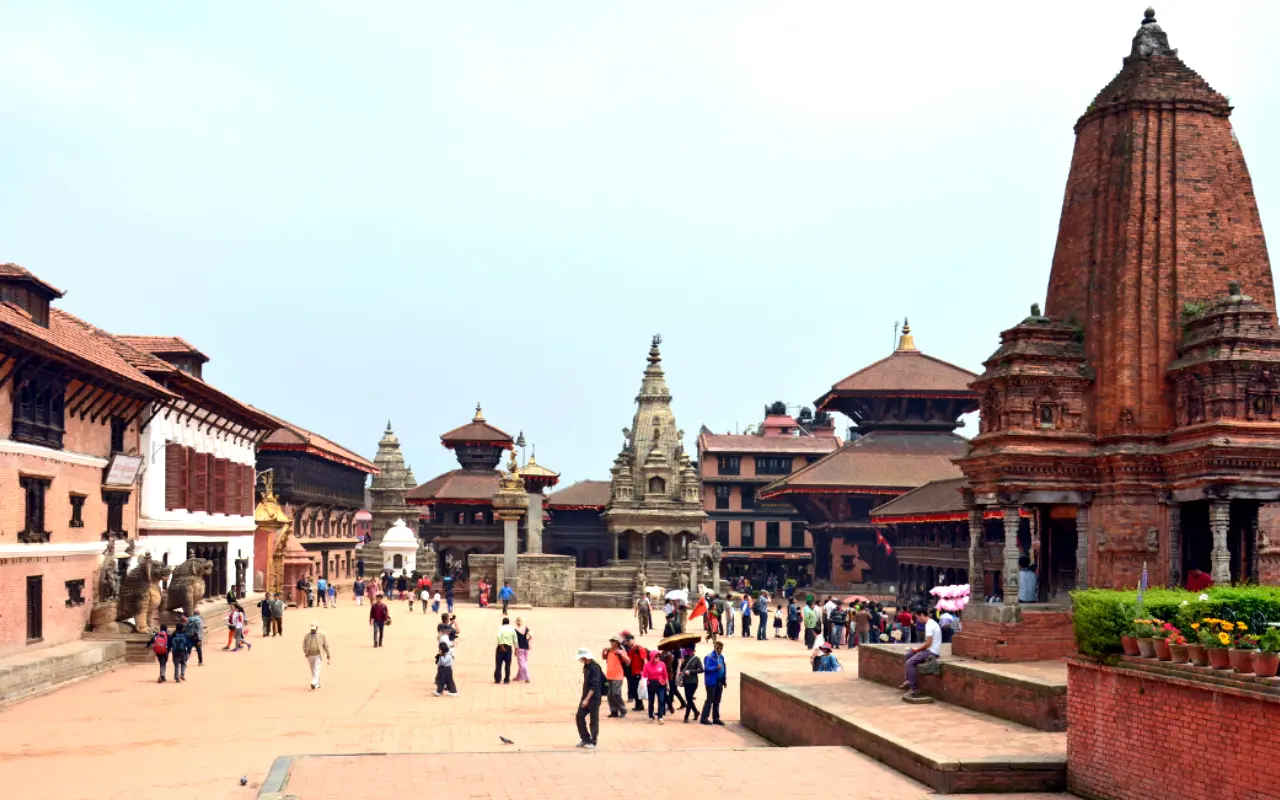
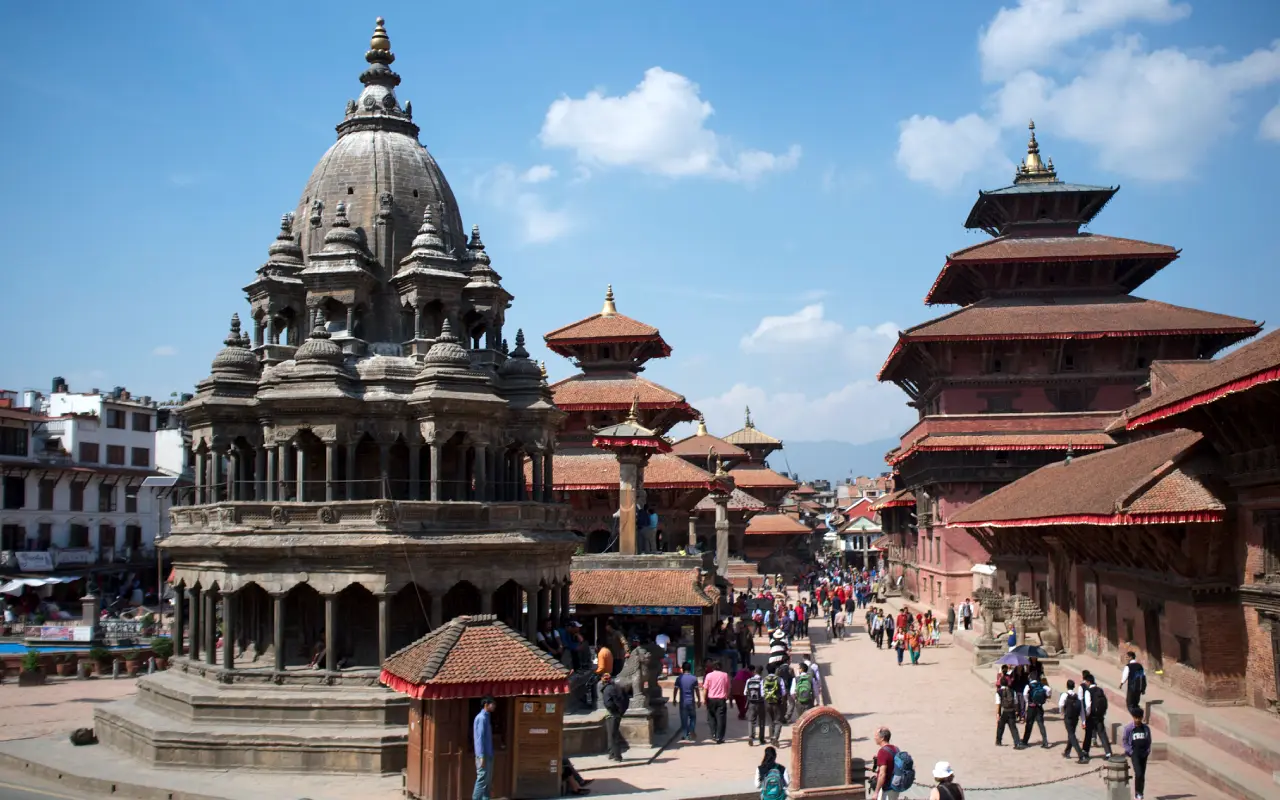
The city of Bhaktapur is a testament to Newari architecture; sites such as the Bhaktapur Durbar Square, Dattatreya Square, Pottery Square, Nyatapola Temple, and more showcase the intricate style of Newari architecture.
Starting the day tour in Bhaktapur, our main site of the day is definitely the Bhaktapur Durbar Square. This stunning building sits at the center of the city and has been indicted into the UNESCO World Heritage Site, one of many in the Kathmandu Valley.
The square is a conglomerate of the 55-windowed Palace, Vatsala Temple, and Nyatapola Temple. We will first visit the 55-windowed Palace, which was built back in the 18th century during the reign of Bhupatindra Malla.
After the commission was built, it served as a royal house for decades, housing multiple royal generations. At present, the building is used as the house for the National Art Gallery.
From there we will visit the Vatsala Temple, which is a temple made from stones, pledged to the goddess Vatsala. The woodworking (doors and windows) of the temple is very finely carved, which is a signature of the Newari style of architecture. It also has a silver bell, which is nicknamed “The bell of barking dogs”. Apparently, the bell is too loud, and dogs tend to bark wildly upon hearing it.
We will follow that up by visiting the Nyatapola Temple, which serves as one of the tallest temples of Nepal. It is 5 stories tall, built in pagoda style, and houses the statue of Siddhi Laxmi. The temple is a mix of Newari and Tibetan-style architecture.
Onto the next location, Dattatraya Square. This complex is home to the Dattatraya temple and the Peacock window, which is often said to be the most beautiful window in Nepal. Dedicated to Lord Vishnu, Shiva, and Brahma, the temple is said to have been built from a single tree, as per the legend. Again, the Newari architecture is as stunning as always.
Moving on, we will visit Pottery Square, Changu Narayan Temple, Siddha Pokhari, and more before we move on to Patan. Just like Bhaktapur, Patan is a city full of historic sites and a couple of UNESCO World Heritage site, such as the Patan Durbar Square. This site is the central attraction of the city, strategically located in the center.
The square is a complex that houses the Royal Palace, the Patan Museum, and Krishna Mandir. Once a royal house for the kings of Patan, the Patan Durbar Square is now a great site that showcases the excellent Newari architecture. The museum inside the palace displays traditional handicrafts and tools used by the then communities.
In addition to that, the Shikhara-style Krishna Mandir is a unique temple that dates back to 1637. It was commissioned by King Siddhi Narsing Malla and has gone a lot of changes over the centuries but the structure of the temple has remained the same since its establishment.
Next up, we have Mahabouddha Temple, which is simply one of the greatest artistic approaches carried out in Nepal. The site is nicknamed “Temple of a Thousand Buddhas” in response to the thousands of tiles that make up the cone-shaped roof of the temple.
Built in the 14th century, the Mahabouddha Temple is yet another Shikhara-style temple that houses approximately 9000 intricate engravings of Buddha.
After a day full of sightseeing, we will end the 3rd day of the 10 Days in Nepal tour with a traditional Nepalese dinner.
Activity: Sightseeing for 6-7 hours
Max. Altitude: 1,400m/4,593ft. Kathmandu
Meal: Breakfast, Lunch, Dinner
Accommodation: 3 Star Hotel
Day 4: Drive to Chitwan National Park
The following day of the 10 Days in Nepal tour, we will drive to Chitwan. The total distance we will cover today is around 180 kilometers and since the road conditions of Nepal are below average, it will take a while to get there (about 7 hours).
First, we will get out of the Kathmandu Valley heading west and joining the Prithivi Highway. Making our way through the windy roads, we will get to Nagdhunga, Naubise, and eventually to Mugling, our lunch stop. From Mugling, we will head south to Chitwan, going along the Trishuli River.
After we get there, we will have a tropical bicycle ride in the evening hours, going through the lush greens of Tharu villages while the calming Rapti River flows on the side.
Since we will have some time to kill, a bike ride through the local communities of Sauraha is a great activity. If you are up for it you may explore the neighborhood even after we are done with the bike ride.
A stroll through the Tharu settlements showcases the lives of the Tharu people, the indigenous people of Chitwan. The traditional houses made from mud and clay, with thatched hut roofs, the simple lives of the locals, and the majestic sunset scene by the Rapti River make it quite an experience.
You might also get to see a few wild animals, including deer, monkeys, gharials, etc. In addition to that, there are a plethora of species of birds in Sauraha since it is a tropical climate.
After a couple of hours of a slow bike ride, we will return to the rented bicycle and get to our accommodation for the night, which also serves some local cuisine. Traditional Tharu dishes lean towards aquatic beings like fish, water snails, etc.
Fish curry and snail curry are the two main dishes we recommend you try at least once while you stay there. In addition to that, traditional Nepalese dinner (Dal Bhat) is also available.
Many eateries in Sauraha have their own set of performers who dance, sing, and play traditional music. The traditional Tharu dance is the most popular form of entertainment in the region. Performers wear traditional Tharu costumes and a pair of sticks, which is a part of their dance ritual.
Activity: Drive & Bike Ride for 8-9 hours
Max. Altitude: 415m/1,362ft. Chitwan
Meal: Breakfast, Lunch, Dinner
Accommodation: 3 Star Hotel
Day 5: Explore Chitwan National Park
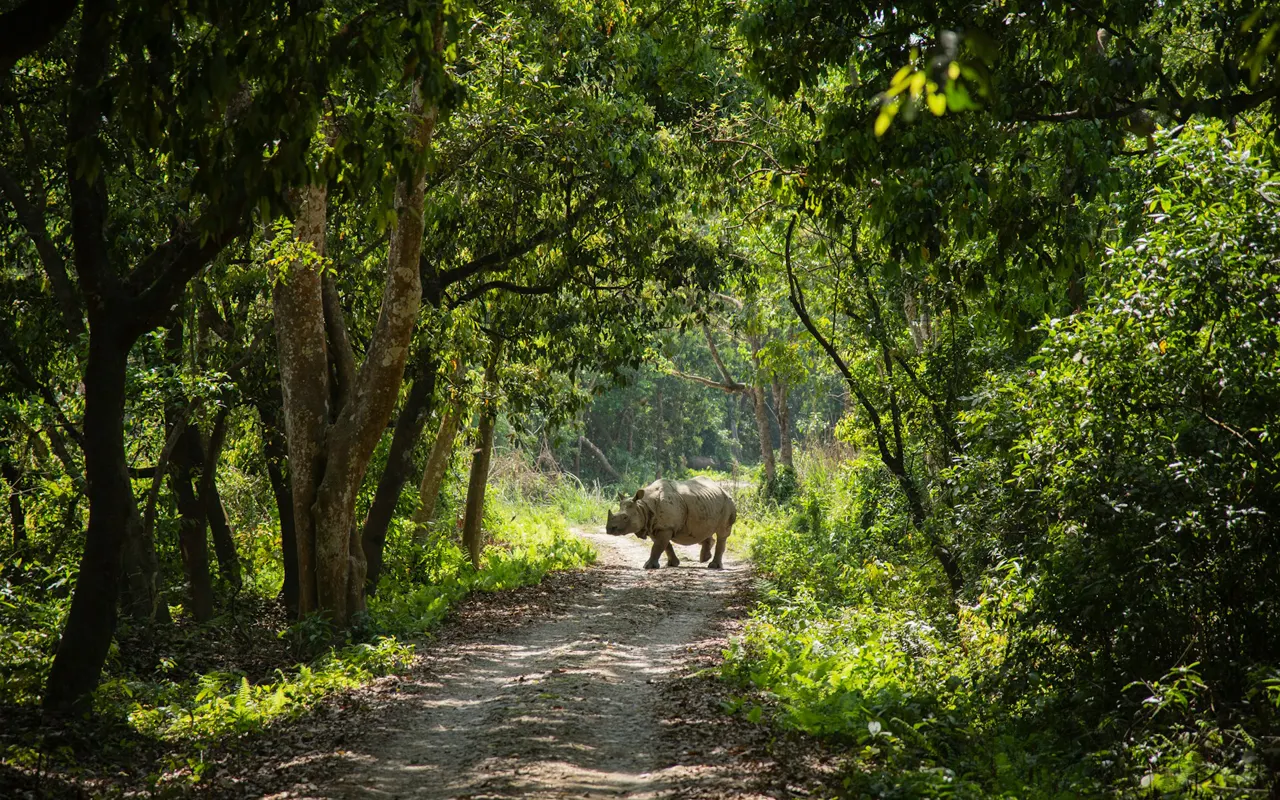
Chitwan National Park is the go-to wildlife reserve in Nepal and is the first officially established nature park. Since 1973, Chitwan National Park has been attracting visitors from far distant lands as well as from within the country. Covering over 930 sq. km. this national park is a subtropical humid land offering a memorable jungle experience.
First things first, the jungle safari within the national park is the best thing one can go for. You can choose from a walking jungle safari, jeep jungle safari, or Elephant jungle safari where you ride on the back of an elephant. The elephants in the region are highly taken care of, they are loved and well-fed so no need to worry about animal exploitation.
Walking on a jungle safari is a great way to get close to nature, you will be on your foot strolling through the park but since you are on foot the safari guide will take you to a safer part of the park where predators are non-existent. Jeep safari and elephant safari, on the other hand, offer higher chances of encountering Bengal tigers. Either way, visitors are likely to see Deer, Monkeys, Rhinos, birds of different kinds, Gharials, etc.
Canoeing is another great experience you can do in Sauraha. Rivers are a great part of life for the Tharu community and so is the Rapti River. Canoeing in Rapti River is not a thrilling experience but rather a calming one. It’s a great bird-watching session while the Gharials on the river bank soak in the sun. You can also try the traditional Tharu boats that are made of wood, some are made from a single tea trunk by carving.
Elephant bathing is also a fun activity that was recently introduced. Basically, you bathe with an elephant in the Rapti river and the elephant occasionally showers water from his long trunk. It’s a fun activity to cool off after you have been cooked by the hot subtropical climate of Sauraha.
We will end the Chitwan National Park session with a bright orange sunset view at the banks of the Narayani River. After that, we will move to one of the Tharu settlements nearby for a Tharu Cultural Experience. As a part of this program, visitors are offered the chance to engage in traditional dance performances wearing traditional attire, cooking sessions, and staying in a homestay for the night.
After an exciting and eventful day in Chitwan National Park, we will have some traditional Nepalese or Tharu food and end the 5th day of the 10 Days in Nepal tour.
Activity: Safari, Canoeing, and Cultural Activities
Max. Altitude: 415m/1,362ft. Chitwan
Meal: Breakfast, Lunch, Dinner
Accommodation: 3 Star Hotel
Day 6: Drive to Pokhara
Pokhara and Chitwan are almost 160 km apart and it takes quite some time to cover this distance. Thanks to the potholes-filled road, it can take up to 7 hours to cover just 160 km of distance. We will start the journey by heading south on the Mahendra highway, after reaching Mugling, we will turn west and join the Prithivi Highway.
We understand that some people would like to take a flight and save hours of road trip. This is why we offer upgrades that get you on a flight from Chitwan to Pokhara that lasts 20 minutes instead of a 7-hour long road ride.
Following the Narayani River, we will make it out of the plain lands, and following the Trishuli River from Mugling, we will head towards Pokhara. There will be plenty of stops along the way for refreshments and food. The highway restaurants can often be unsanitary but rest assured that we will only stop at clean restaurants.
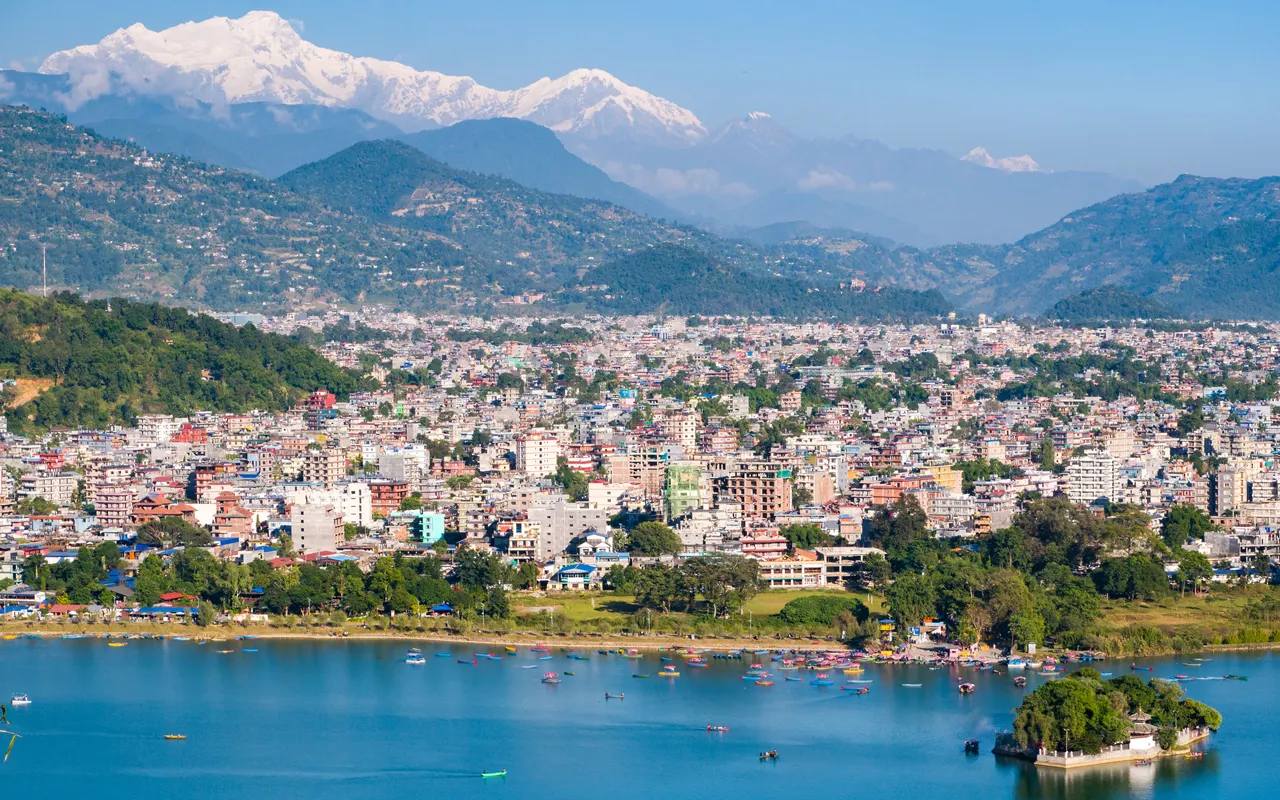
Once we get to Pokhara, we will first go to our hotel rooms. We will freshen up, leave our bags there, and go on a short trip around Pokhara. As per the schedule, we will make it to Pokhara around 5 in the evening which is time for the daily worshipping ritual on the shore of Phewa Lake. This ritual named Tal Barahi Sandhya Arati takes place at Barahighat every evening.
It is an aesthetic ritual with flaming oil lamps lighting up the dark and the sacred aura of the ritual filling the air with warmth. The priest of the ritual offers blessings and puts a red colored Tika on the foreheads of the visitors. You are supposed to reciprocate this with a donation.
Religious people such as monks, temple priests, sadhus, gurus, etc. do not work for a living, their only task at hand is to study the religious texts and pray to god. This is why people donate to them all the time. Donation comes in the form of money, and edibles such as fruits (non-veg food is prohibited in temples).
After a short stop at the Tal Barahi Sandhya Arati, we will go for a short walk along the foot track that goes around the lake. The nightlife in Pokhara is vibrant, the lake shore comes to life as the sun sets in and locals gather around the shore to unwind.
Activity: Drive & Sightseeing for 9-10 hours
Max. Altitude: 822m/2,697ft. Pokhara
Meal: Breakfast, Lunch, Dinner
Accommodation: 3 Star Hotel
Day 7: Day sightseeing in Pokhara
The 7th day of the 10 Days in Nepal tour will be a day to remember as we go around Pokhara and visit a bunch of different attractions.
As we will stay near the lake, on the morning of the 7th day, we will go on a boat ride to Barahi Temple. This amazing temple sits in the middle of the Fewa Lake. It seems as if someone built a temple, and a lake formed around it somehow.
The Tal Barahi Temple is based on the Hindu goddess Barahi, who is believed to be a form of goddess Durga. The locals and followers of Hinduism regard this temple very highly since its establishment in the 18th century.
Back then, Nepal was not a unified nation, and the region of Kaski (Pokhara’s district) was ruled by King Kulmandhan Shah. The king commissioned the building of this temple after he had a dream of the Goddess Barahi. As per the legend, Goddess Barahi ordered him to construct a temple in the middle of the lake in her name.
The temple has a pagoda-style roof, is 2 stories tall, and follows the traditional pagoda-style architecture all around. Over the years, the temple has been reconstructed several times, at present, the temple is made of cemented walls and wooden doors and windows.
But before Tal Barahi, we have one place we must visit for a sunrise view, Sarangkot Hill. About 40 minutes away from Lakeside, the Sarangkot Viewpoint is the best sunrise and sunset viewpoint in Pokhara.
You can also hike to this location, but it’s all asphalt road to the top, which will feel more like a roadside walk. So we do not recommend trying to “hike” to Sarangkot. From the viewpoint tower, you can see a panoramic view of the entire Annapurna Himalayan range.
Sarangkot is also the take-off spot for paragliding. Extreme adventure sports are one of the strong suits of Pokhara, sports like bungee jumping, paragliding, canyoning, rafting, etc. are available. In addition to that, ultra-light flights and hot air balloon rides are also popular activities.
We will take a lunch break after visiting Barahi Temple. Afterward, we will take you to Devi’s Falls, a place named after a Swiss woman with the surname “Davis”. Since it was difficult for locals to pronounce Davis, the place was named Devi’s Falls. Devi translates to Goddess in Nepali. However, the local name for the place is Patale Chhango, which translates to underground waterfall.
Back in the early 60s, a couple from Switzerland visited the place and decided to swim despite the dangerous raging waterfall. Soon enough, Mrs. Davis was overpowered by the raging water flow and was swept away into the dark underground waterfall. She was nowhere to be found for the first 2 days, on the 3rd day, her body came up atthe Fusre River, a couple of kilometers from Devi’s Fall.
Nearby this waterfall lies the Gupteshwar Mahadev Cave, which is also a good visit, but we will not be including it in the itinerary unless you want to go inside the cave. There is not much to see there; it’s mildly lit, and a temple is built a couple of hundred meters from the entrance.
From there, we will visit the old bazaar of Pokhara, bazaar refers to the marketplace. This part of the area is where time stands still, the houses there are over 70 years old, traditional Newari architecture. The area of the old bazaar was established over 300 years ago and has been the major trade hub of Pokhara for ages.
A temple dedicated to Lord Bhimsem is also present there with a history of over 200 years. It’s a sudden mix of modern houses and old traditional architecture. It might feel a little unsettling looking at traditional houses on one and modern houses on the opposite side of the street. Nonetheless, the site is very pleasing, especially when the clear skies drop a background of the Annapurna Himalayan range.
Continuing the 10 Days in Nepal tour, we will visit more places like the International Mountain Museum, Gurkha Museum, World Peace Stupa, and more. It will be a day full of appealing scenes, so make sure that you are ready with your camera.
Note: Some of the sites, such as museums, charge an entry fee, which will not be covered by the tour package.
Activity: Sightseeing for 8-9 hours
Max. Altitude: 822m/2,697ft. Pokhara
Meal: Breakfast, Lunch, Dinner
Accommodation: 3 Star Hotel
Day 8: Drive from Pokhara to Kathmandu
On the 8th day of the 10 Days in Nepal tour, we will get back to Kathmandu via tourist bus or jeep. A bus ride from Pokhara to Kathmandu lasts for 8 hours, covering a distance of 200 kilometers over windy, rough roads.
Needless to say, it’s a long rid,e and we do not expect you to have the will to go around the streets of Kathmandu after we reach the valley. We will call it a night and get to bed soon after we reach Kathmandu.
Activity: Drive for 7-8 hours
Max. Altitude: 1,400m/4,593ft. Kathmandu
Meal: Breakfast, Lunch, Dinner
Accommodation: 3 Star Hotel
Day 9: Explore Kathmandu
Day 9 is yet another day of exploration in the 10 Days in Nepal itinerary tour. Since we have visited both Bhaktapur Durbar Square and Patan Durbar Square, it makes sense to visit the Kathmandu Durbar Square. All of these 3 sites are UNESCO World Heritage members.
The Kathmandu Durbar Square is a collection of royal palaces, gardens, and temples that is almost 1000 years old, dating back to the 12th century. Buildings such as the Hanuman Dhoka Palace and the Kumari Ghar are popular spots visited by hundreds every day. The Kumari Ghar is the house of the only living Goddess in Nepal, the Kumari.
Swayambhunath Temple is another great tourist attraction that sits on a hilltop overlooking the city of Kathmandu. On the way up there, you will see many monkeys swinging and jumping beside the stairs.
The hill is home to many monkeys, and they practically live in the temple, which is why it is nicknamed the Monkey Temple. The stupa is a religious spot in addition to being a great viewpoint.
Going on a religious run, Pashupatinath Temple is up next on the list. Considered to be one of the most sacred Hindu temples, this site is among the most visited temples in Nepal. Annually, millions of people visit the temple to seek salvation and blessings from Lord Shiva. The temple comes to life during the night of Maha Shivaratri.
Pashupatinath is not a single temple but a collection of many; it is also a crematory site. As per the Hindu rituals, the dead are burned on the river banks and their ashes are swept away by the current.
Activity: Sightseeing for 6-7 hours
Max. Altitude: 1,400m/4,593ft. Kathmandu
Meal: Breakfast, Lunch, Dinner
Accommodation: 3 Star Hotel
Day 10: Departure from Kathmandu
Day 10 is the final day of the 10 Days in Nepal tour. After you are ready to move, we will say our goodbyes and drop you off at the Tribhuvan International Airport.
Meal: Breakfast
Trip Route Map
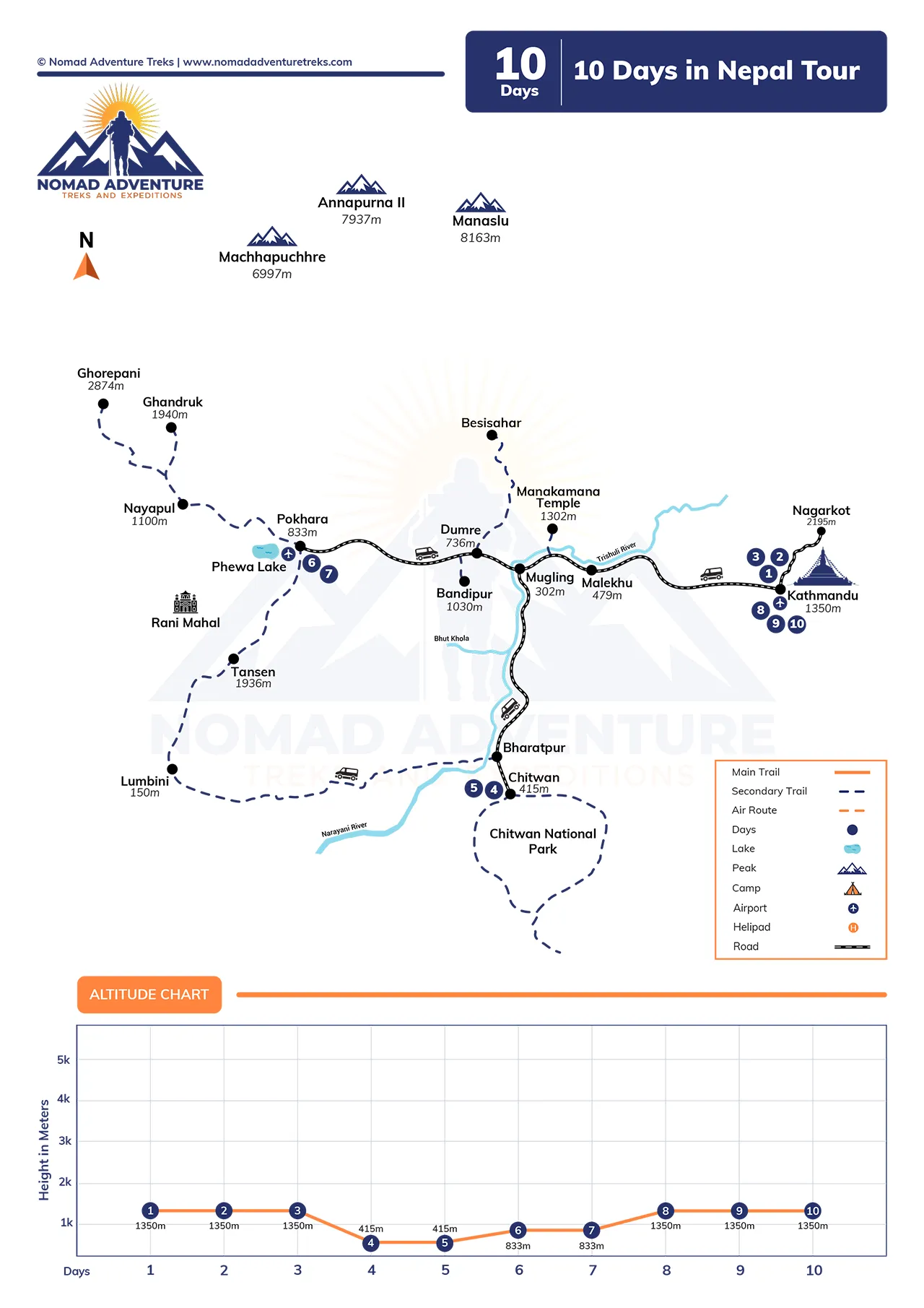

Note:
If you have a private group and prefer a personalized experience, we can organize a custom trip tailored to your requirements and group size, running it any day you choose.
Detail Information about 10 Days in Nepal Tour
How does our trip start?
The 10 Days in Nepal tour starts in Kathmandu. On the first day of the tour, you arrive at Kathmandu, one of our reps receives you and takes you to your accommodation for the night before taking you out to visit a couple of sites nearby.
Best seasons
The 10 Days in Nepal tour can be done throughout the year with some exceptions. While spring, autumn, and summer are great for views, winter, and monsoon do not possess the same qualities. The days are mostly gloomy and the air quality is below average during the latter seasons.
Accommodation, Food and Drink
You will be staying in 3-star hotels throughout the 10 Days in Nepal tour. These hotels will provide all the basic facilities with a few additional services and most of all a comfortable stay. Accommodations are a part of the tour package along with food (breakfast, lunch, and dinner) and drinks.
As the tour progresses you will have the opportunity to taste all the different regional dishes in Kathmandu, Chitwan, and Pokhara.
Transportation
Transportation requirements as per the 10 Days in Nepal tour itinerary are managed and arranged by us, as your travel partner. We will arrange a jeep or bus travel as per the size of the group. Transportation costs are a part of the tour package.
Cost & Budget
Keeping in mind all the costs and expenses throughout the 10 Days in Nepal tour, we have come up with USD ______ per head. Your bill will have a breakdown of the total expenses incurred throughout the tour.
Your Extra expenses
Things like laundry expenses, travel, and medical insurance fees, tips for the crew members, extra meals, any kind of beverages, additional services at hotels, etc. are not a part of the 10 Days in Nepal tour package.
Things to Remember for your 10 Days in Nepal Tour
- Do not forget to pack all your essentials such as meds, proper clothes, light wear, shades, cameras, etc. Sure, you can buy these things here but it’s better to use that time for exploration.
- Dress modestly while visiting temples and do not engage in rituals unless you are sure it’s fine to take part.
- Respect the cultural norms and traditional values of the local communities. Most people are forgiving so they will not make a big deal but it’s better to not make a mistake in the first place.
- Some places might not allow cameras, ask your guide to let you know if that is the case.
Frequently Asked Questions
Is it safe to travel in Nepal?
Yes, Nepal is among the safest country to travel in Asia. The crime rates are very low and crime against tourists is practically non-existent. There might be a petty thief here and there but you will not encounter them given the standard of our accommodation and transportation.
Is it child-friendly?
Yes, our 10 Days in Nepal tour is very kids-friendly, you can bring along your kid as long as they are at least 10 years of age. By that age, they are very understanding of what’s happening, they will love the tour as kids are very observant. Even old people can join our tour as we do not have to walk much for the tour.
What type of food can we expect?
In Kathmandu, the Newari dishes overshadow all the other cuisines, you should try a couple of items and see if they are to your liking. In Chitwan, fish curry and snail curry are the most desired options as they are the traditional dishes of the local Tharu people. While in Pokhara, the Thakali dinner/lunch set is pretty popular but you can try lots of different Asian cuisines and European cuisines as well.
How many people can join a group?
The maximum number of people in a single group is 10. We keep a limit to make sure that the guide is capable of handling every traveler. In a large group, some travelers might feel neglected or unheard of which is not how we want your 10 Days in Nepal tour to go.
Reviews on 10 Days in Nepal Tour
 Write a Review
- 1 - 1 personUS$ 1500
- 2 - 8 personUS$ 1350
- 9 - 14 personUS$ 1240
- 15 over 9999 US$ 1170
Total Cost:
US$ 1500
- Your safety, our no 1 priority
- Best price guarantee
- Experienced & dedicated team
- Easy booking, no hidden charge
- You can customize this trip
Talk to Travel Expert Samundra Rimal (+977-9843127084)
Related trips you may like