





Ama Dablam Expedition

Duration
27 Days

Max Altitude
4,570 m. / 14,993 ft.

Difficulty
Difficult

Group Size
1-16 Pax

Meals
- 13 Breakfast
- 13 Lunch
- 13 Dinner

Accommodation
- Hotel
- Guest House
- Lodge

Transportation
Flight/Jeep

Activities
- Trek
- Expedition

- Your safety, our no 1 priority
- Best price guarantee
- Experienced & dedicated team
- Easy booking, no hidden charge
- You can customize this trip



Talk to Travel Expert Samundra Rimal (+977-9843127084)
Introduction of Ama Dablam Expedition
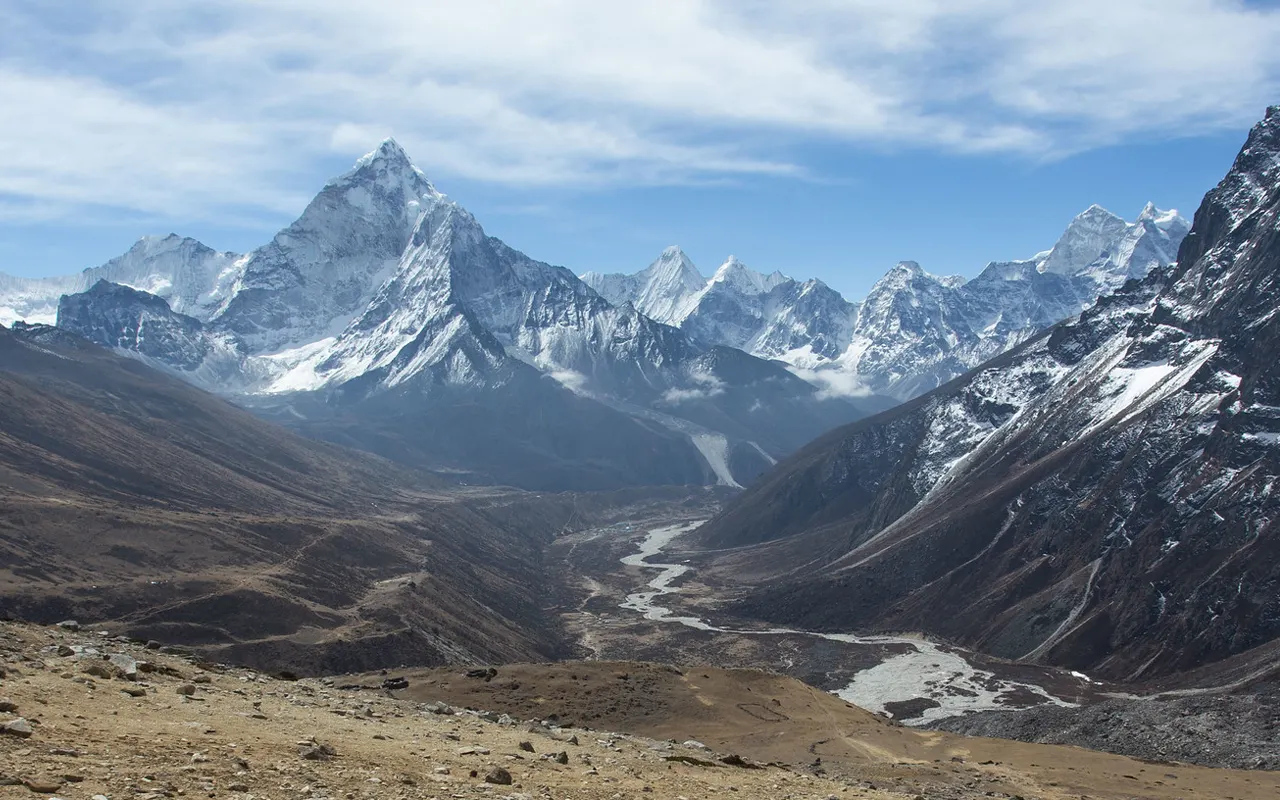
Located within the Khumbu region of Nepal, the Ama Dablam Expedition is a part of the Sagarmatha National Park, a conserved area that offers a great range of vegetation and wildlife. The Ama Dablam peak is located south of Everest, offering a fantastic view of the entire Everest range, following the standard Everest Base Camp itinerary in its initial trek days.
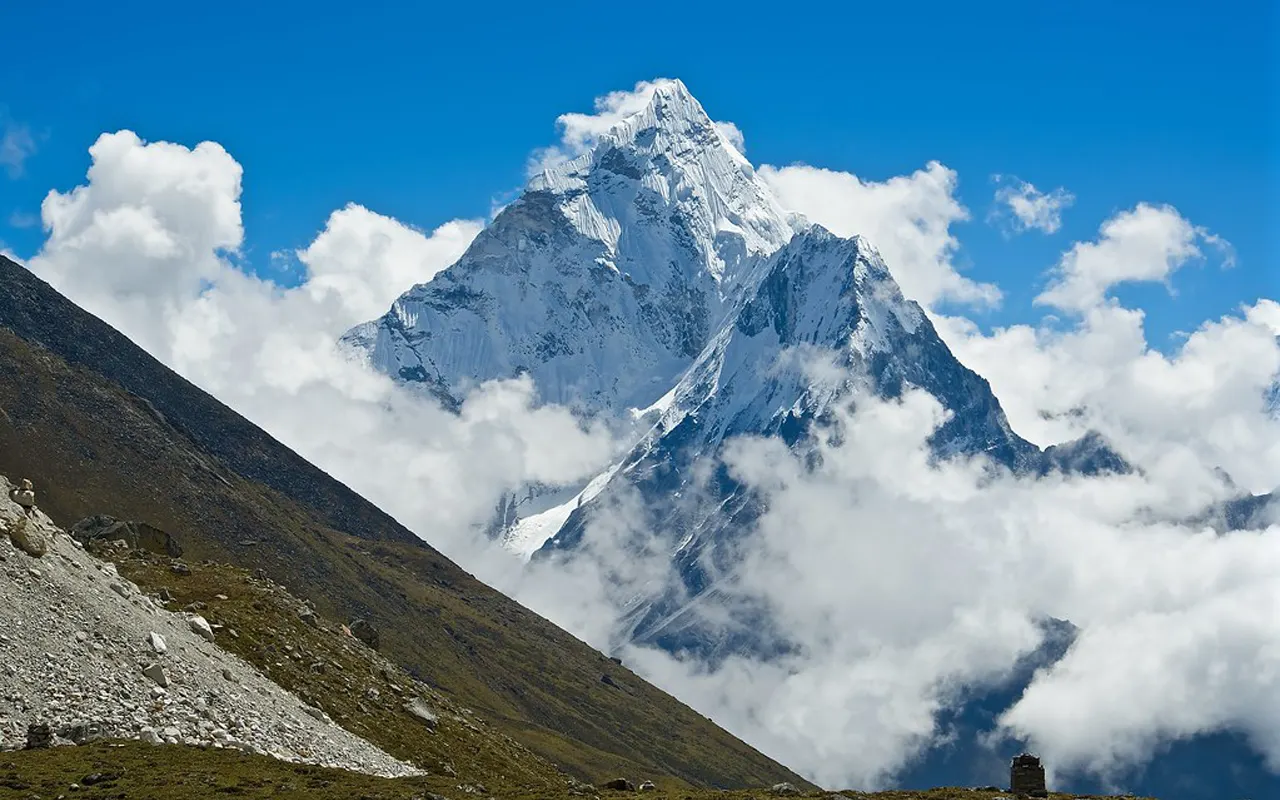
The pyramid-shaped peak of Ama Dablam is also sometimes called the “Matterhorn of the Himalayas”. It is also said to be the most beautiful peak in the world, but that is a subjective matter. The name Ama Dablam translates to “Mother’s Necklace.” The peak’s extended ridges and the glacier that hangs from it mimic the stretching arms of a mother. Hence the name Ama Dablam.
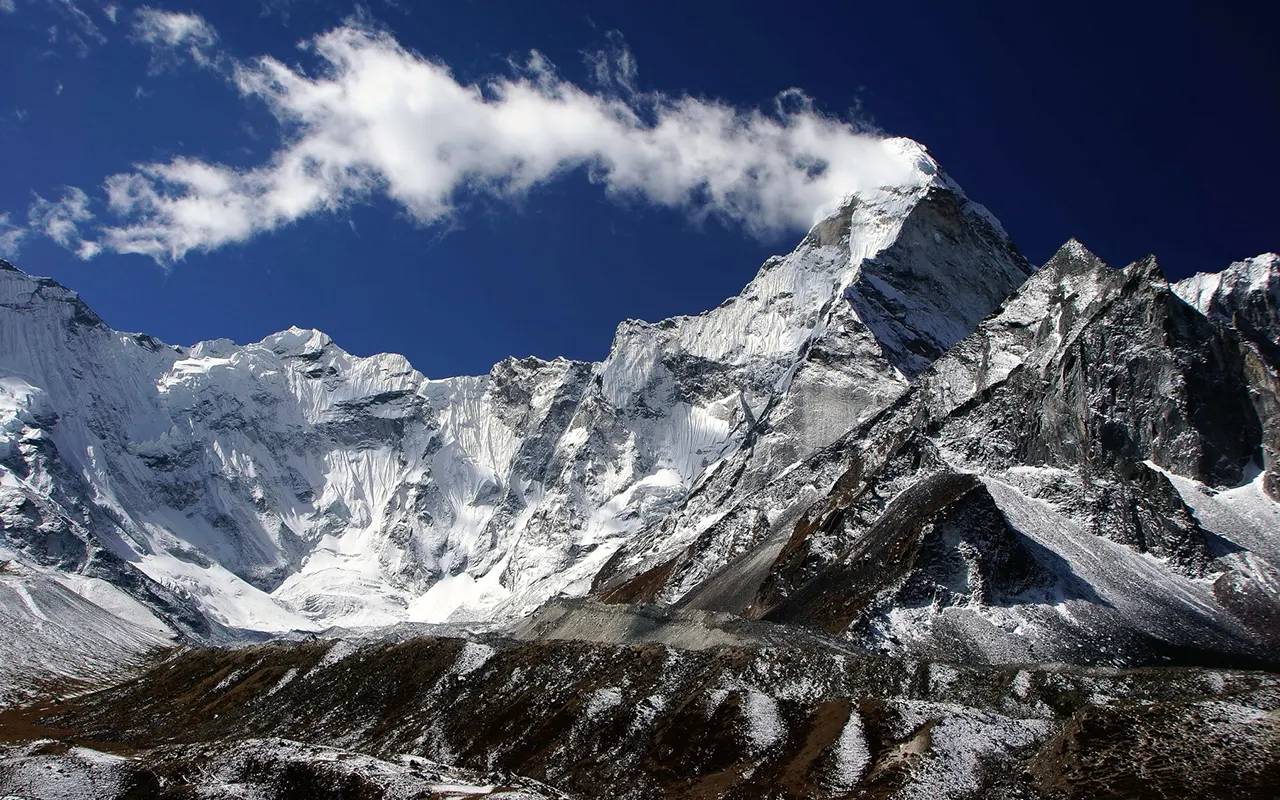
The first successful Ama Dablam Expedition was done back in 1961, taking the Southwest Ridge, which is now the standard route for climbing this peak. This path is rocky and often covered in ice and snow. However, with the help of Nomad Adventure’s climb guide, you will make it to the top of the peak.
The general route includes stopping and acclimatizing at three different camps, namely Camp I, Camp II, and Camp III, sitting at 5700 meters, 6000 meters, and 6300 meters, respectively. This climb is prone to altitude sickness, which is why we have included many acclimatization days before the start of the climb and during the peak climbing days. We have also included many contingency days since weather conditions can render us unable to progress further.
In addition to the scenic beauty, you will also get to experience the traditional Sherpa culture as we will spend many days and nights in authentic, remote villages in the Khumbu region. You have likely heard about Sherpas being incredibly strong and resistant to the harsh climate of the Himalayas. In addition to that, they are extremely friendly and welcoming.
Ever since its official opening, this peak has been summited by over 6000 mountaineers, which speaks a lot about its success rate. In recent years, this peak has gained a bit of popularity, but not too much, making it a secluded Himalayan journey. To learn more about this awesome peak climbing journey, stick with us till the end as we discuss all the different aspects.
Trip Highlights
- Visit a number of ancient monasteries, including the ones at Tengboche, Pangboche, and Khumjung.
- Reach the 6,812-meter-high summit of Ama Dablam for a panoramic view of Everest, Lhotse, Makalu, Cho Oyu, and many more peaks.
- Experience the UNESCO World Heritage Site of Sagarmatha National Park with chances of encountering wild Himalayan animals.
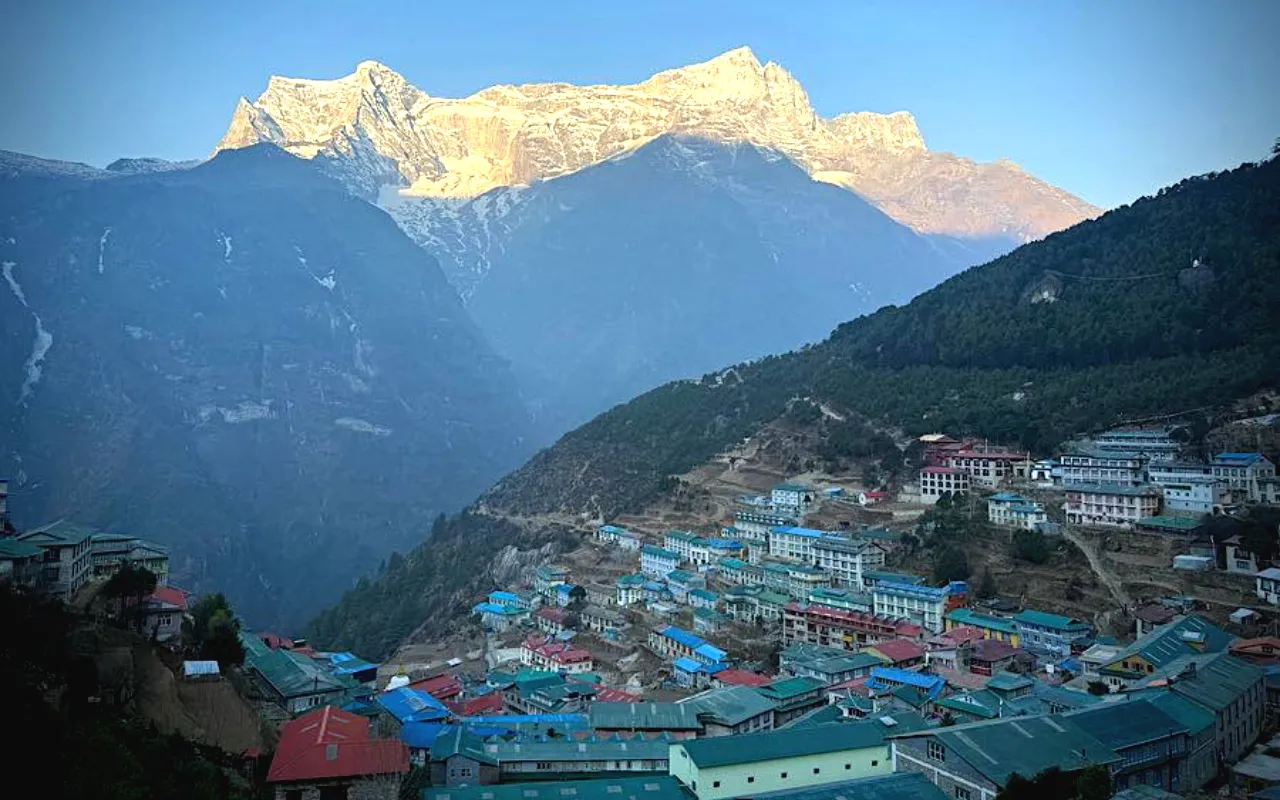
- Experience the vibrant life in Namche Bazaar, offering a haven in the middle of high hills and the Himalayas.
- Tour the valley of Kathmandu for a historic sightseeing day, visiting many ancient buildings, stupas, and temples.
Detail Itinerary of Ama Dablam Expedition

Day 01: Arrival in Kathmandu
Your very first day of the Ama Dablam Expedition requires you to arrive at Kathmandu, the administrative capital of Nepal, and also the historic capital of the country. At the airport, you will have to get your tourist visa approved before you are allowed to leave and explore the beautiful country. At the immigration booth, you will have to fill out your visa application form and pay the visa fees at a nearby counter; you will get a receipt for it.
Following that, you have to submit your passport, proof of accommodation, two passport-size photos, return tickets, a visa application form, and a visa fee receipt to the immigration officer. They will validate your details and grant you the tourist visa. This whole process will take about an hour to complete, but it can be longer in peak travel season.
To avoid waiting in long lines, you can simply apply for a tourist visa from the government’s official site. After filling out the digital visa application form, you will have to wire the visa fees, after which you will finally get a barcode. This barcode is essentially your tourist visa, you must print it out and present it to the immigration officer at the airport. They will then stamp your passport and welcome you to the country.
As you get out of the airport terminal, one of our representatives will be out there waiting for your arrival. He will guide you to the vehicle and take you to your hotel room for the night. Along the way, you can ask him general questions about the country, and some questions about the trek as well.
After you check in at the hotel and get some rest, we will have a short introductory meeting, introducing you to the crew members who will tag along on this Ama Dablam Expedition. Without Nomad Adventure’s porters, guides, and drivers, this journey would not be possible at all.

Max. Altitude: 1,350m/4,429ft. Kathmandu

Meal: Dinner

Accommodation: Hotel
Day 02: Trip Preparation Day and Sightseeing around Kathmandu.
The 2nd day of the Ama Dablam Expedition will be full of sightseeing, different attractions, and understanding the essentials about the journey. The trek guide will explain the itinerary in detail, discuss the safety measures and emergency procedures, list the gear needed for the journey, and point out the climbing techniques needed.
We expect trekkers to pack their bags according to the briefing and rent all the essential equipment. You can also use your own equipment, but packing it into your luggage and bringing it all the way to Nepal can be a hassle, and the extra weight it adds to your luggage might have you pay more. It is always a better option to rent than to use personal gear.
After the briefing, we will start our day tour around the valley. First, we will visit the Pashupatinath Temple, a highly revered Hindu temple complex that is dedicated to Shiva. This UNESCO World Heritage Site is a two-story pagoda-style temple with highly detailed woodwork, featuring a crematory site by the banks of the Bagmati River.
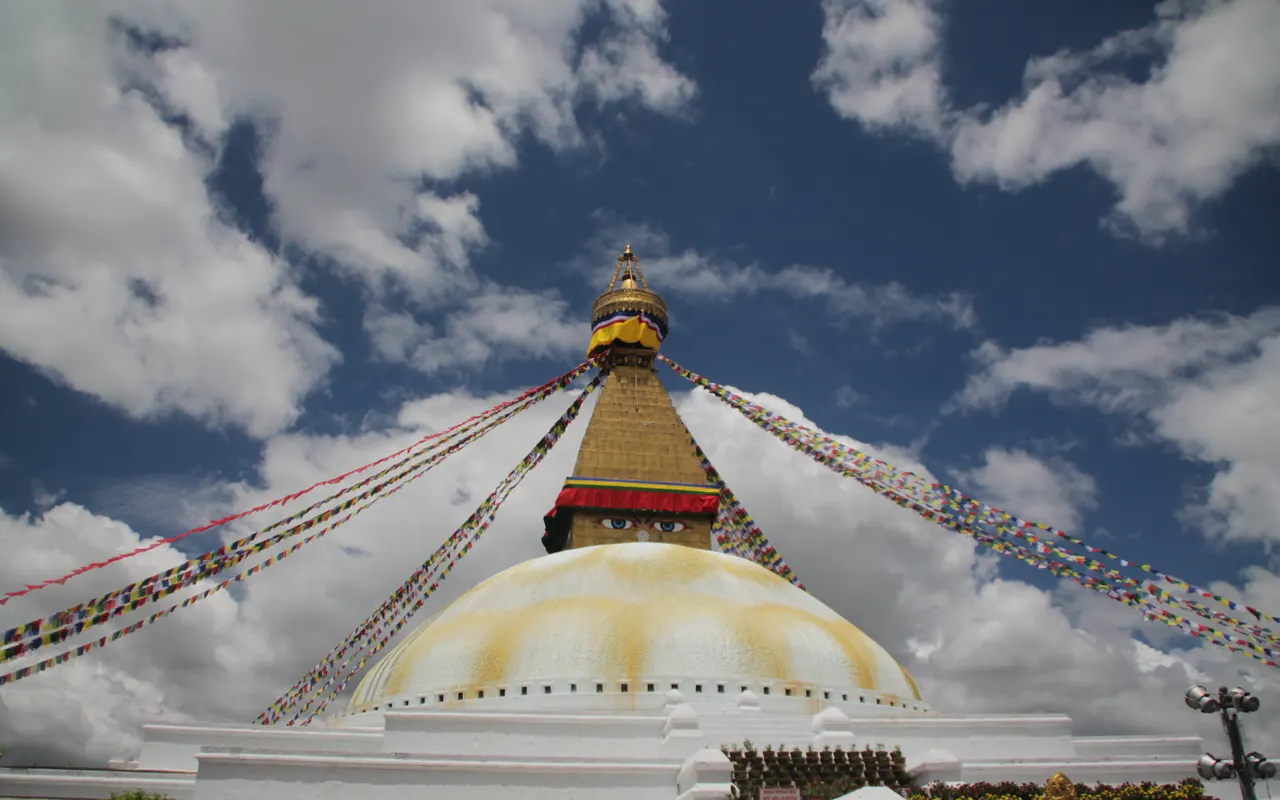
Our next visit will be to the Bouddhnath Stupa, yet another UNESCO World Heritage Site. This gompa is encircled by 108 images of Buddha, features a mandala structure, and is a center of Buddhism in Kathmandu.
Likewise, we will visit sites like Kathmandu Durbar Square, Swayambhunath Stupa, Patan Durbar Square, Pottery Square, Bhaktapur Durbar Square, and a couple more if we have more time. After calling it a day, you should go over your luggage and check if you have packed all your important stuff.

Activity: Sightseeing
Max. Altitude: 1,350m/4,429ft. Kathmandu
Meal: Breakfast, Lunch
Accommodation: Hotel
Day 03: Fly to Lukla and trek to Phakding
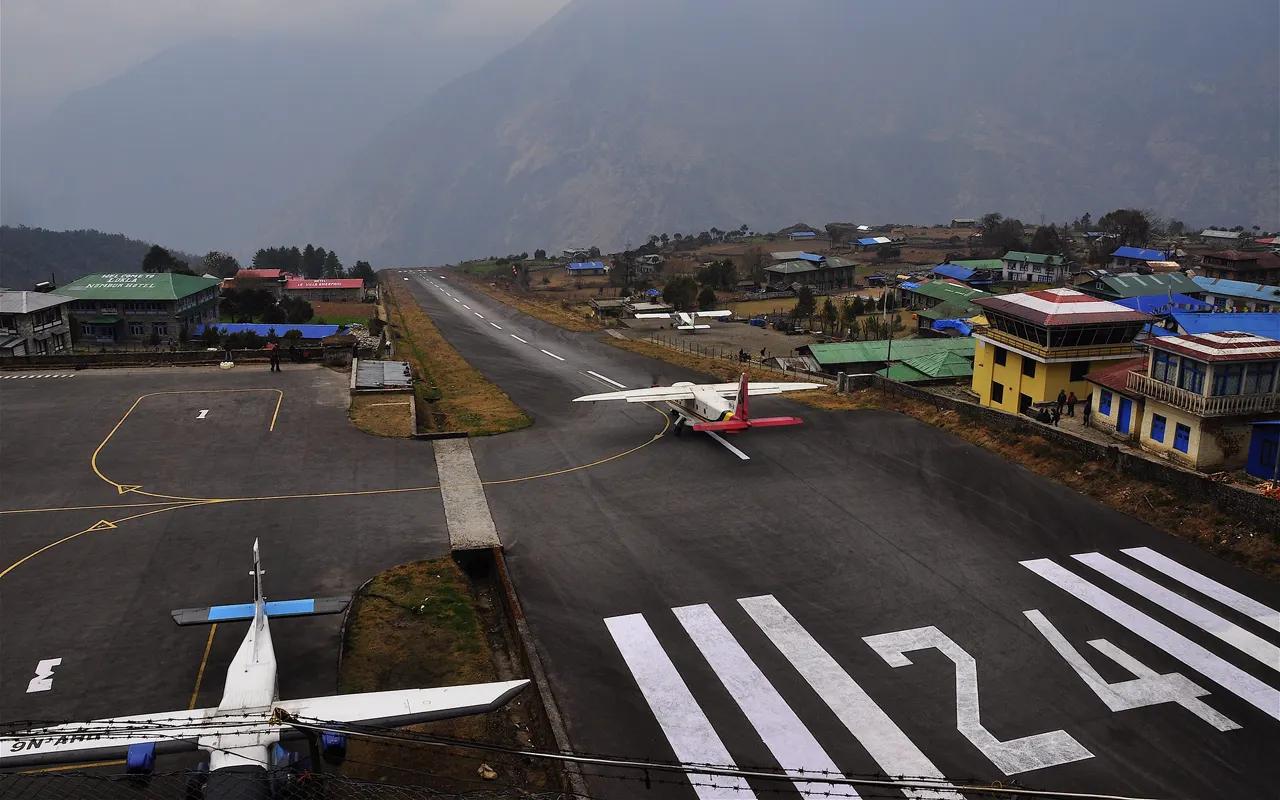
Today will be our first day of trekking on the Ama Dablam Expedition itinerary. We will start the day with a short and scenic flight to Lukla. This ride lasts only 35 minutes, but the scenes will leave you wanting more.
After we land at the Tenzing Hillary Airport, the porters will get ready to carry your bags while you have to prepare your trekking gear and a light daypack with all the essentials such a trekking poles, water bottles, energy bars, gadgets, etc.
We recommend trekkers keep their expensive gadgets in their daypacks, since they might get damaged if they are packed within the heavy luggage carried by the porters. Every two trekkers will share a single porter, and the maximum weight of each person’s luggage is 8.5 kg.
Starting the first trekking steps of the Ama Dablam Expedition, we will leave the airport and head out of Lukla. The total trek distance is just 7.5 km with a final elevation loss of 250 meters. However, the trail is full of ascents and descents, making us gain elevation at times, which is great for acclimatization, since we will be sleeping low. This short trek can be completed in just 3 hours.
Leaving Lukla, we will walk past the main bazaar, featuring lines of eateries, tea houses, cafes, and shops. After 30 minutes of trekking, we will reach Chheplung, a traditional Sherpa village. Moving on, we will follow the Dudh Koshi River and pass Thado Koshi, enjoying a scene of Mt. Kusum Kanguru. After crossing many suspension bridges, we will get to Ghat village, which indicates the final stretch leading us to our destination of the day.
Activity: Trek
Max. Altitude: 2,850m/9,350ft. Phakding
Meal: Breakfast, Lunch, Dinner
Accommodation: Lodge
Day 04: Phakding to Namche Bazaar
The 4th day of the Ama Dablam Expedition gains us 830 meters of elevation with a total trek distance of almost 11 km. This trek has an estimated duration of 6 to 7 hours, featuring many ascents and descents, dirt trails, stone-paved sections, and suspension bridges. Our final elevation will be 3440 meters above sea level, beginning with a gradual uphill section and crossing a suspension bridge after about 15 minutes of trekking.
After 30 more minutes of trekking, we will reach Zamfute village, where a small hydro power project is located. 10 minutes from there, we will reach the village of Toktok, where a gorgeous waterfall can be seen. Making our way through a pine forest, we will cross yet another suspension bridge to get to Benkar village. This part of the route offers a clear view of the Thamserku peak.
From Benkar, we will pass the Chhumuwa village and reach the entrance to Sagarmatha National Park at Monjo village. The checkpost officials will check our permits and let us proceed. Passing through the park, we will shortly reach Jorsale, our lunch spot of the day. After the meal, we will cross a couple of suspension bridges and get to the long ascent to Namche Bazaar.
The final climb gains us 600 meters of elevation as we make our way through forests of pine and oak. We will also cross the Hillary Suspension Bridge, the highest of its kind in the region. This final part of the day’s trek takes about 2 hours on its own.
Activity: Trek
Max. Altitude: 3,440m/11,286ft. Namche Bazaar
Meal: Breakfast, Lunch, Dinner
Accommodation: Lodge
Day 05: Acclimatization day at Namche Bazaar
Acclimatization refers to adapting the body to changes in the environment. Letting the body adapt is the key to the Ama Dablam Expedition adventure; trekking high and sleeping low is considered a great approach to preventing altitude sickness. So, we will go on an acclimatization hike to Hotel Everest View, reaching 3880 meters above sea level. This trek is just 4 km long round trip, with an elevation gain of 440 meters, and an estimated duration of 2 to 3 hours round trip.
We will start the hike through a steep climb, taking us to Syangboche Airport, which was once one of the highest airstrips. At present, it is no longer functional but serves as a base for a helicopter bringing in people and goods. Moving on, we will reach Hotel Everest View shortly after, where a wide view of Lhotse, Ama Dablam, Thamserku, and Everest peaks awaits us.
Your other acclimatization hike option is a hike to Khumjung and Khunde villages. This hike is a bit longer in comparison, but does not include much ascending. The estimated trek duration is 4 to 5 hours round trip, reaching 3790 meters above sea level. From Hotel Everest View, we will descend to the village of Khumjung, where the ancient Khumjung Monastery lies. After spending some time there, we will head towards the Khunde village.
Leaving Khunde, we will take a different route to reach Namche, resulting in a scenic tour, almost like a circuit hike. If we start this trek from Namche, it will take us 4 to 5 hours, but starting with a descent from Hotel Everest View, it will take us about 2 to 3 hours to explore and get back to our accommodation.
Activity: Rest
Max. Altitude: 3,440m/11,286ft. Namche Bazaar
Meal: Breakfast, Lunch, Dinner
Accommodation: Lodge
Day 06: Namche Bazaar to Debuche
Day 6 of the Ama Dablam Expedition itinerary requires us to cover a little over 10 km and reach 3820 meters above sea level to get to Deboche village. This trek can be difficult for most since it involves high ascents and deep descents all over. We will gain 800 meters of elevation and lose about 500 meters throughout the route. The estimated trek duration is 6 to 7 hours, featuring steep sections, suspension bridges, dirt tracks, and sharp drops.
From Namche, we will first go over a gradually ascending trail through a forest of pine to pass the village of Kyangjuma. From there, we will descend over 300 meters towards the Dudh Koshi River, passing by a rhododendron forest. After the descent, we will cross a suspension bridge and reach the village of Phunki Tenga. Our lunch will be served there, before we get on the sharp ascent to Tengboche.
Following a satisfying lunch, we will hit the road and ascend over 600 meters all the way to Tengboche. This part of the trek features a series of switchbacks passing through a dense rhododendron and pine forest.
After about 2 hours of trekking uphill, we will finally reach the Tengboche village, where we will visit the largest gompa in the entire Khumbu region. This will also serve as a rest break for us since we have just climbed a difficult ascent.
After visiting the Tengboche, we will get on a descending trail to Deboche. This will take us about 20 minutes. We can also spend the night at Tengboche, but trekkers generally prefer Deboche as it is more secluded and quieter.
Activity: Trek
Max. Altitude: 3,820m/12,533ft. Debuche
Meal: Breakfast, Lunch, Dinner
Accommodation: Lodge
Day 07: Debuche to Pheriche
Today’s Ama Dablam Expedition itinerary has us cover almost 10 km, gaining 550 meters, and reaching 4371 meters above sea level. The total estimated trek duration is 5 to 6 hours, featuring gentle ascents, crossing suspension bridges, and rugged trails.
Leaving Deboche, the initial segment is a gradual ascent via a forest of pine and rhododendron. Soon enough, we will cross the Imja River over a suspension bridge and reach the village of Pangboche.
This village is the highest permanent settlement in the entire Everest region; every other village we pass moving forward is inhabited seasonally. Pangboche also has a monastery, an ancient one dating back 300 years, that we will visit before moving on. This gompa houses ancient artifacts and relics of religious significance. Continuing the trek, we will gently keep ascending, passing by alpine meadows to get to Shomare. This village will be our lunch spot for the day.
After our meal, we will head towards Orsho village. This part of the trek is steep and features a rocky trail as we are not gaining considerable elevation. This small settlement has a couple of tea houses and very limited amenities; not suitable for a night’s stay. From Orsho, we will cross the Khumbu River over a small wooden bridge to get to the final climb of the day.
Activity: Trek
Max. Altitude: 4,371m/14,341ft. Pheriche
Meal: Breakfast, Lunch, Dinner
Accommodation: Lodge
Day 08: Acclimatization at Pheriche
This is our 2nd acclimatization day on the Ama Dablam Expedition itinerary. Our acclimatization hike today takes us to the Nangkartshang Peak, also known as Dingboche View Point. The total distance we need to cover is just 4 km round trip with an elevation gain of 712 meters. This hike requires about 3 to 4 hours of ascent and 1 to 2 hours of descent.
We will begin the hike with a sharp ascent over a well-kept trail. This trail follows a ridgeline featuring a great scene of the surrounding and distant peaks in the north. On a clear day, we will be able to view a bunch of peaks, including Lhotse, Makalu, Ama Dablam, Taboche, Cholatse, and Island Peak. The summit of the peak offers a beautiful scene of the northern Himalayas.
Activity: Rest
Max. Altitude: 4,371m/14,341ft. Pheriche
Meal: Breakfast, Lunch, Dinner
Accommodation: Lodge
Day 09: Pheriche to Ama Dablam Base Camp
Day 9 of the Ama Dablam Expedition itinerary features an 8-km trek with an estimated trek duration of 5 to 6 hours. This trek has an elevation gain of 200 meters, taking us to a final elevation of 4570 meters above sea level.
Leaving Pheriche, we will first descend gently through alpine settings and pass the village of Shomare. This village is tiny, housing only a few teahouses. We will take a short rest break there.
Continuing the trek, we then descend gradually all the way back to Pangboche. From there, the ascent to the base camp begins. We will cross the Imja River over a small bridge and hit the climbing trail, gaining us 600 meters of elevation.
This trail involves a series of switchbacks, ascending through rocky terrain and alpine vegetation. We will shortly arrive at the Ama Dablam Base Camp, where the giant peak can be seen in full glory, and the surrounding peaks make up the rest of the scene.
Ama Dablam is often considered to be the most beautiful peak in the world, and you will be able to see why. There are no physical structures at the base camp, just a plain area where mountaineers have to set their tents for the night.
Nomad Adventure’s guides and porters will help you set up the tent and also cook some food for dinner. This base camp is a great place to acclimate oneself, and so we will spend quite some days here before we climb all the way to the summit.
Activity: Trek
Max. Altitude: 4,570m/14,993ft. Ama Dablam Base Camp
Meal: Breakfast, Lunch, Dinner
Accommodation: Guest House
Day 10: Acclimatization and Pre-climb training at Ama Dablam Base Camp
This day is dedicated to acclimatizing, our 3rd acclimatization day of the Ama Dablam Expedition itinerary. Starting the day, you will have breakfast prepared by the porters and guides, and do some light activities such as walking around, stretching, and so on. This will help in the acclimatization process.
The climbing guide will hold a short briefing session and provide you with insights on how to safely and efficiently climb the Ama Dablam peak.
After lunch, the climbing guide will have you test out your gear and equipment, a short technical skill training session. He will showcase the proper way to use ascenders, descenders, ladders, crampons, ice axes, and other gear.
You will also be briefed on the emergency procedures in case anything goes wrong, which is a rare scenario. As the evening sets in, we will pack our bags to prepare for the next day’s climb.
Activity: Training
Max. Altitude: 4,570m/14,993ft. Ama Dablam Base Camp
Meal: Breakfast, Lunch, Dinner
Accommodation: Guets House
Day 11-24: Ascending and Descending of Ama Dablam
Taking the standard climbing route, the Southwest Ridge, we will begin the ascent to Camp 1, sitting at 5700 meters above sea level. Days 11 to 25 seem like a long time, but it is necessary. This 15-day period features climbing days, acclimatization days, and contingency days in case the unpredictable weather of the Himalayas stops us from progressing.
From the base camp, it is a 3-km walk to Camp 1, which features an elevation gain of 1130 meters. It will take us about 5 to 6 hours to get there. But we will not be spending the night there as it is too risky; we might get altitude sickness. At this high of an elevation, getting altitude sickness is probably the end of the journey. The path to Camp 1 involves climbing a ridgeline that steepens as we cover distance.
We will descend back to the base camp and spend the night there. This climb will be on repeat for 3 days, after which, we will finally climb to Camp 2. Starting the day at Camp 1, we are in for a 1.5-km climb that takes about 4 to 5 hours to complete. This will gain us 300 meters of elevation and features expose ridgelines that require using fixed ropes. This section is famous for the “Yellow Tower”, a 15-meter-high rock that is almost vertically inclined. We will repeat this climb a couple of times as well.
On day 17 of the Ama Dablam Expedition itinerary, we will finally reach Camp 3. Today’s ascent distance is 1 km with an elevation gain of 300 meters. This will take about 4 to 5 hours to cover and features the “Grey Tower”, a long, steep section that requires us to climb over ice, rocks, and snow-covered trail. We will have to pass the “Mushroom Ridge”, a narrow path with a 600-meter drop on both sides of the ridge.
We will spend a couple of days at Camp 3, acclimatizing our bodies well. On day 19 of the Ama Dablam Expedition, we will finally reach the summit. This 1-km climb takes about 5 to 6 hours, gaining us 512 meters of elevation. Descending back down to the base camp will take about 5 to 6 hours. The rest of the days are reserved for contingencies.
Max. Altitude: 4,570m/14,993ft. Ama Dablam
Meal: Breakfast, Lunch, Dinner
Accommodation: Guest House
Day 25: Trek to Namche
Starting from the base camp of Ama Dablam, we will be covering over 16 km today, with an elevation loss of 1130 meters. The final standing elevation will be 3440 meters, which takes about 7 to 8 hours to reach.
Leaving the base camp, we will first get down to Pangboche village, crossing the Imja River over a suspension bridge. After a short resting break at Pangboche, we will descend further down to Tengboche, reaching 3860 meters.
Leaving Tengboche, the trail takes us all the way down to Namche Bazaar. The descent is initially steep, requires crossing the Dudh Koshi River once again, and features a little ascent at the end.
Activity: Trek
Max. Altitude: 3,440m/11,286ft. Namche
Meal: Breakfast, Lunch, Dinner
Accommodation: Lodge
Day 26: Trek to Lukla
Trekking from Lukla to Namche is the longest distance of the entire Ama Dablam Expedition itinerary. This 19.5-km trek will lose us 580 meters of elevation over a period of 7 to 8 hours. First, we will reach Monjo and leave the Sagarmatha National Park area. This descent is steep and crosses the Dudh Koshi River once again.
From there, we will make our way to Phakding, our last stop before Lukla. From Phakding, a gradual ascent to Lukla, with some ups and downs sections.
Activity: Trek
Max. Altitude: 2,850m/9,350ft. Lukla
Meal: Breakfast, Lunch, Dinner
Accommodation: Lodge
Day 27: Fly back to Kathmandu
This is the ultimate day of the Ama Dablam Expedition journey. We will take an early morning flight back to Kathmandu, which takes only 35 minutes. After reaching Kathmandu, we will drop you off at the 3-star hotel we have arranged for you.
Activity: Flight
Max. Altitude: 1,350m/4,429ft. Kathmandu
Meal: Breakfast, Lunch, Dinner
Accommodation: Lodge

Note:
If you have a private group and prefer a personalized experience, we can organize a custom trip tailored to your requirements and group size, running it any day you choose.
Detail Information about Ama Dablam Expedition
How does our trip start?
The Ama Dablam Expedition starts in Kathmandu on the day of your arrival. The following day, we will take you out on a day tour around the Kathmandu Valley and also hold a briefing session. On the 3rd day of the journey, we will finally fly to Lukla from Kathmandu and trek to Phakding, the first trekking day of the adventure.
Difficulty
People often mistake the Ama Dablam climb to be highly technical, which is a common misconception. In reality, the climb is mostly done with the help of fixed ropes, which is not a walk in the park, but nowhere near a highly technical climb.
The aspects that make it difficult are the high altitude, rugged trail, long trekking days, slippery climb, narrow ridges, and more. On a scale of 10, the Ama Dablam Expedition is considered to be an 8.
Best seasons
The best seasons for visiting the Khumbu region are spring and autumn. Both of these seasons offer great trekking conditions, such as mild daytime temperatures, clear visibility, and minimal chances of rain.
The only difference between the two seasons is that spring appears more vibrant and lush, while the autumn season is generally dry, with a hint of yellow as tree leaves begin to fall.
Altitude Sickness
The risk of altitude sickness is a major concern on the Ama Dablam Expedition. We will be reaching a maximum elevation of 6812 meters above sea level, which is an extreme height that is prone to altitude-related sickness. However, we have included many acclimatization days just to accommodate this.
Keeping yourself well hydrated throughout the journey, maintaining a safe ascending pace, and practicing “climbing high and sleeping low” should keep you safe from altitude sickness. Emergency evacuation services are available throughout the route in case you need immediate medical attention.
Accommodation, Food and Drink
As per the standard, the accommodation arrangement during your time in Kathmandu will be at 3-star hotels, while the trekking days call for tea houses. Any kind of arrangement we make will be on a twin-sharing basis, meaning that a single room will be shared by two trekkers of the group. Private accommodation can be managed at a price.
Traditional Sherpa dishes like Rildok, Tsampa, Shyakpa, Thukpa, and others are prominent throughout the route, along with common Western dishes. Food options such as pasta, sandwiches, spaghetti, noodles, etc., will be available at most of the eateries along the way.
However, during the peak climbing days, we will have to rely on packaged and canned food options that are easy to prepare.
Transportation
Our Ama Dablam Expedition requires climbers to fly to and from Lukla and pick up and drop off at the Tribhuvan International Airport. These transport expenses will be covered by our standard package.
Permit
This expedition requires only two permits: a climbing permit and a Sagarmatha National Park entry permit. All the expenses related to permits will be covered by the Ama Dablam Expedition package. Our guides will help you obtain your permits in Kathmandu.
Trip preparation and fitness
In order to prepare for this journey, we recommend that climbers start their physical training at least 12 to 14 weeks before the scheduled start. This gives you enough time to physically get stronger and build your endurance. You can do some cardio, jogging, running, swimming, cycling, and other cardio exercises. Sticking to the routine 4 to 5 times a week is the optimal way.
Cost & Budget
This Ama Dablam Expedition is priced at USD ______ per person. This package will cover your daily meals during the trekking and climbing days (three meals per day), breakfasts in Kathmandu, permit expenses, transportation costs, entrance fees during the sightseeing tour, and more.
Gadgets charging & Internet
Charging your electrical devices should not be an issue for the most part; however, internet connections are not that great during the trekking days. You can buy an Everest Internet Card to get a more stable and reliable internet connection. This will cost you around USD 30, which is not a part of the Ama Dablam Expedition package.
Also, if you want to use a roaming internet service in Kathmandu, you should know that e-sims’ roaming services are far more expensive in comparison to physical SIM cards.
Your Extra expenses
The extra expenses during this Ama Dablam Expedition include extra meals, additional accommodation, upgraded rooms, lunch and dinner in Kathmandu, emergency evacuation services, tips for the crew members, and more. Anything that is not mentioned to be included in the package can be considered your extra expenses.
Things to Remember Before Climbing Ama Dablam
- You need to have a minimum rock climbing proficiency of 5.10a/b/c; however, it is not a mandatory aspect.
- Ice climbing skills are a huge plus point since we will have to ascend ice walls using ice axes and crampons.
- Make sure that you have packed all the essentials before you leave Kathmandu. You can buy trekking and climbing gear at Namche and Lukla, but it will cost you significantly more.
- Follow the preventive measures of altitude sickness as per the briefing by our expert guide.
- Pack layers of clothing to combat the cold, and a weatherproof outer jacket to keep yourself safe from rain and snow.
- Mental preparation is equally important as physical preparation. You will spend days in remote highlands without any signs of modernity.
Frequently Asked Questions
Are the three different camps a mandatory stop during the peak climbing days?
Yes, all three camps are important stops since they allow our body to acclimate well to the extreme Himalayan climate. Skipping any one of the three camps can result in severe altitude sickness, which is highly likely to end your Ama Dablam Expedition.
Can this journey be done without a guide?
No, the state laws of Nepal require trekkers and climbers to be accompanied by a licensed guide while visiting any conserved region. In this case, you will be entering the Sagarmatha National Park, which is a highly protected and conserved area.
Our guides are not only there to show you the right way, but they also make sure that you are safe from altitude sickness and bridge the communication gap between you and the locals.
Should I rent or bring my own gear and equipment?
You can bring your personal gear, but packing it in your luggage will be a massive extra weight, which is not really a practical approach. Instead, you can rent gear from a local shop and return it after the completion of the Ama Dablam Expedition.
Is travel insurance mandatory for this journey?
Yes, since we will be reaching extremely high altitudes, travel insurance is a must; without it, we will not be taking you on this journey. Make sure that your insurance policy covers medical services at elevations over 6000 meters.
Reviews on Ama Dablam Expedition
 Write a Review
- Your safety, our no 1 priority
- Best price guarantee
- Experienced & dedicated team
- Easy booking, no hidden charge
- You can customize this trip
Talk to Travel Expert Samundra Rimal (+977-9843127084)