




Druk Path Trek

Duration
9 Days

Max Altitude
4,210 m. / 13,812 ft.

Difficulty
Moderate

Group Size
2-20 Pax

Meals
- 8 Breakfast
- 7 Lunch
- 8 Dinner

Accommodation
- Hotel
- Tent

Transportation
Private Vehicle, Flight

Activities
- Trekking
- Camping
- Sightseeing

- Your safety, our no 1 priority
- Best price guarantee
- Experienced & dedicated team
- Easy booking, no hidden charge
- You can customize this trip



Talk to Travel Expert
Samundra Rimal (+977-9843127084)
Introduction of Druk Path Trek
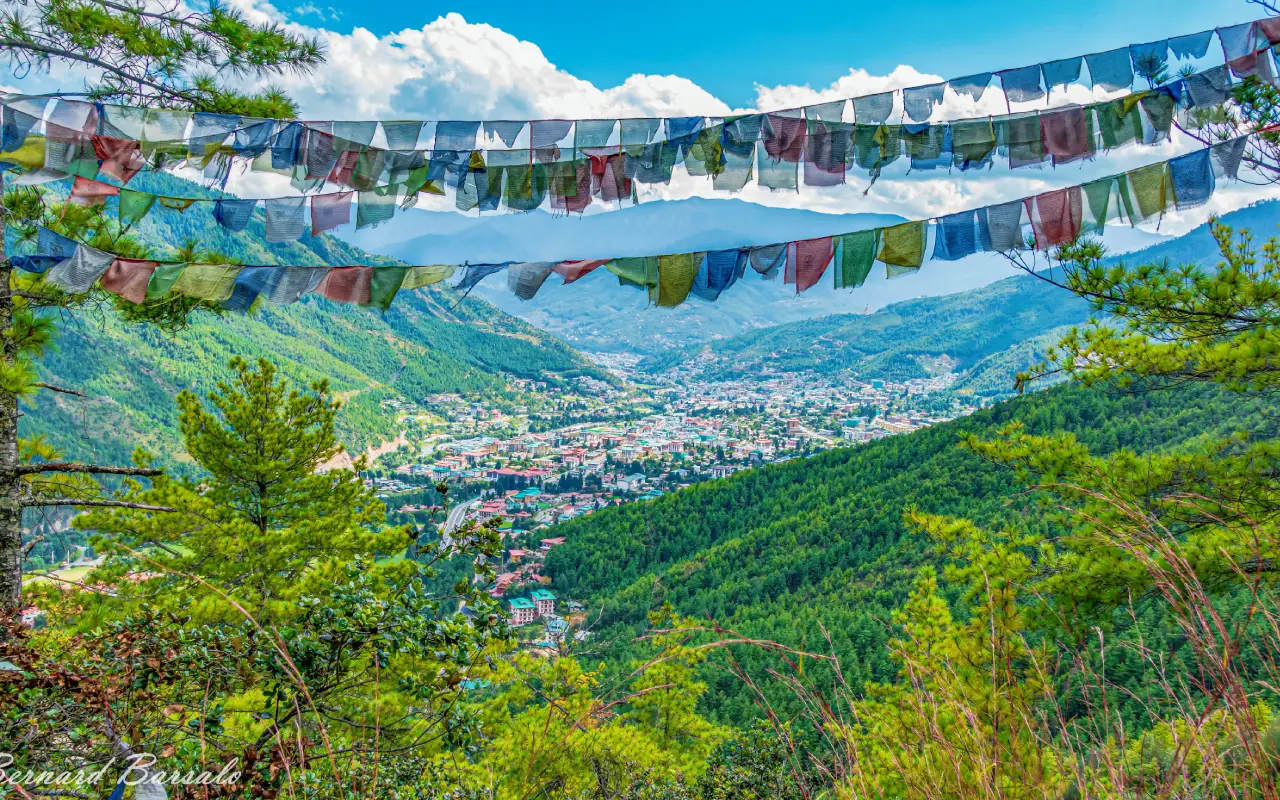
The Druk Path Trek is a short high altitude trekking journey that connects the valleys of Paro and Thimphu in Bhutan. Enjoy a walk through pine and fir woods, open mountain slopes, traditional villages, alpine meadows and some high altitude lakes. It’s a suitable choice for those who wish to enjoy the mountains of Bhutan without embarking on a lengthy trek.
After visiting Paro and its cultural landmarks, the trail starts near Paro. The walk gets steadily steeper as it heads up towards the high ridges of the Druk Path as walking days extend. The changing landscape is easily visible, as the forest thins out and the trail takes you up to open mountain. The path can be 4.2 km (4200 m or 13,780 ft) high in any direction and on any campsite.
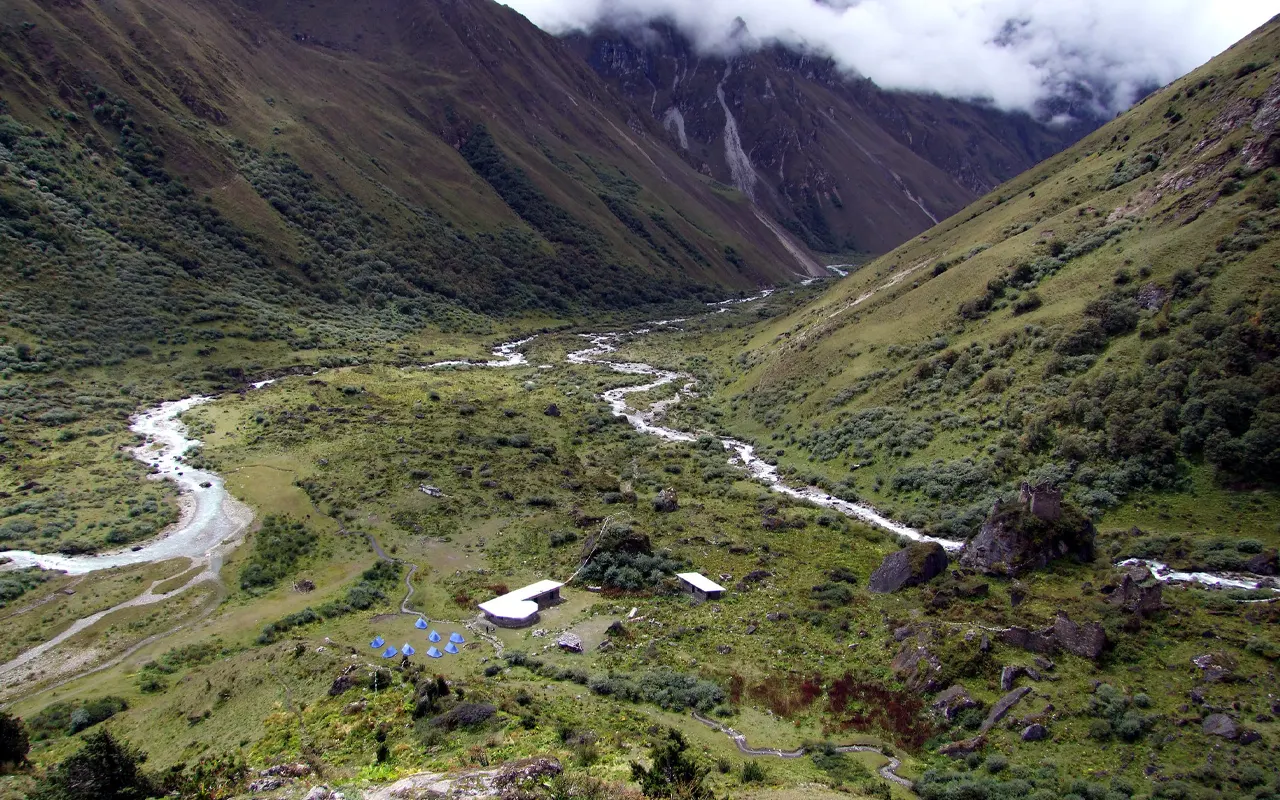
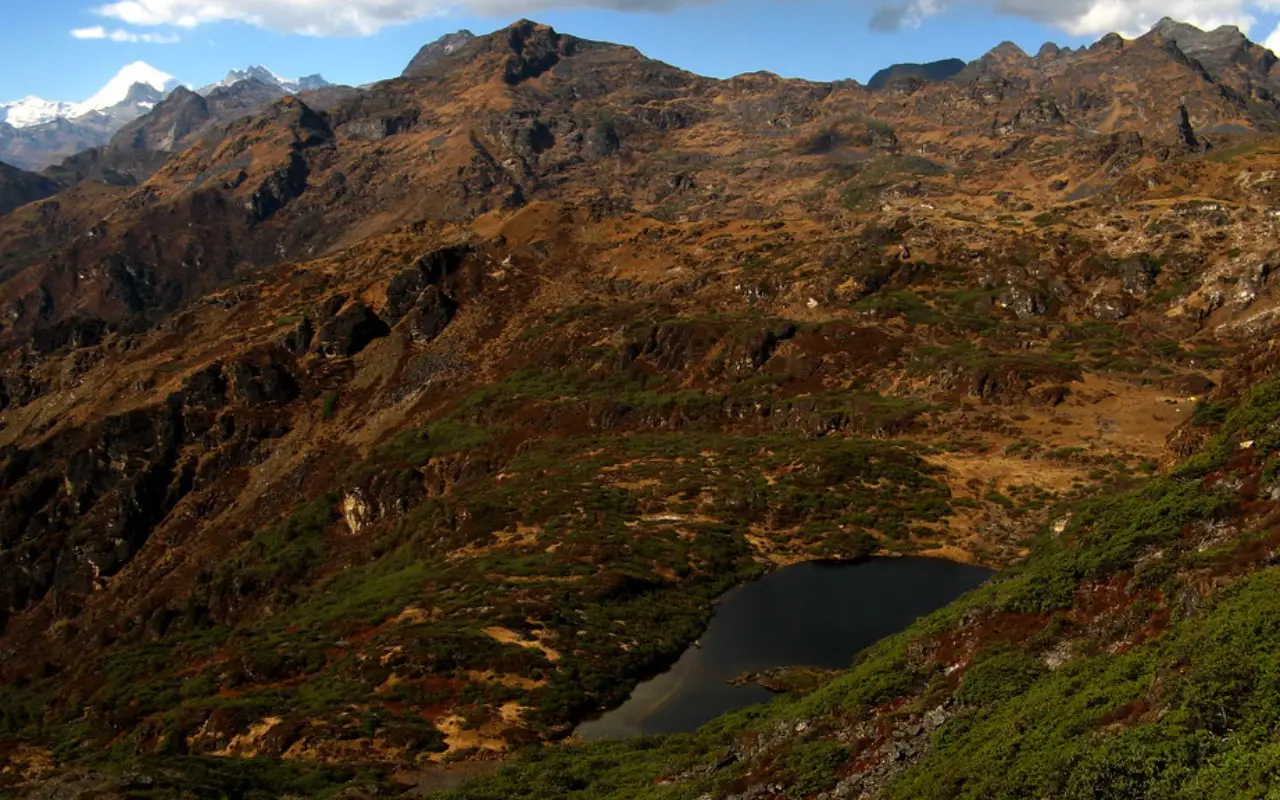
Along the way on the Bhutan Druk Path Trek are several interesting natural and cultural elements. A significant one is Jimilang Tsho, where one can find clear mountain views along with trout. There is also a bit of high-altitude lake scenery on the route, added by Janey Tsho and Simkotra Tsho. In clear weather from the higher areas, trekkers can also catch a glimpse of distant peaks of the Himalayan Mountains.
The walks are considered moderate, but some days are more challenging due to the altitude. The first section is a few occasions where you have to climb and then a longer descent towards Thimphu. Expect several hours of walking on most trekking days, so good fitness and some previous experience in hiking are advantageous. It is not a technical climb, as such, normally.
Camping is involved and nights are spent at mountain camps. The facilities are simple, in comparison to those of the hotels in Paro and Thimphu, so warm clothes and a good sleeping bag are essential. Depending on the arrangements, a variety of local and familiar foods are made here by the trekking support team.
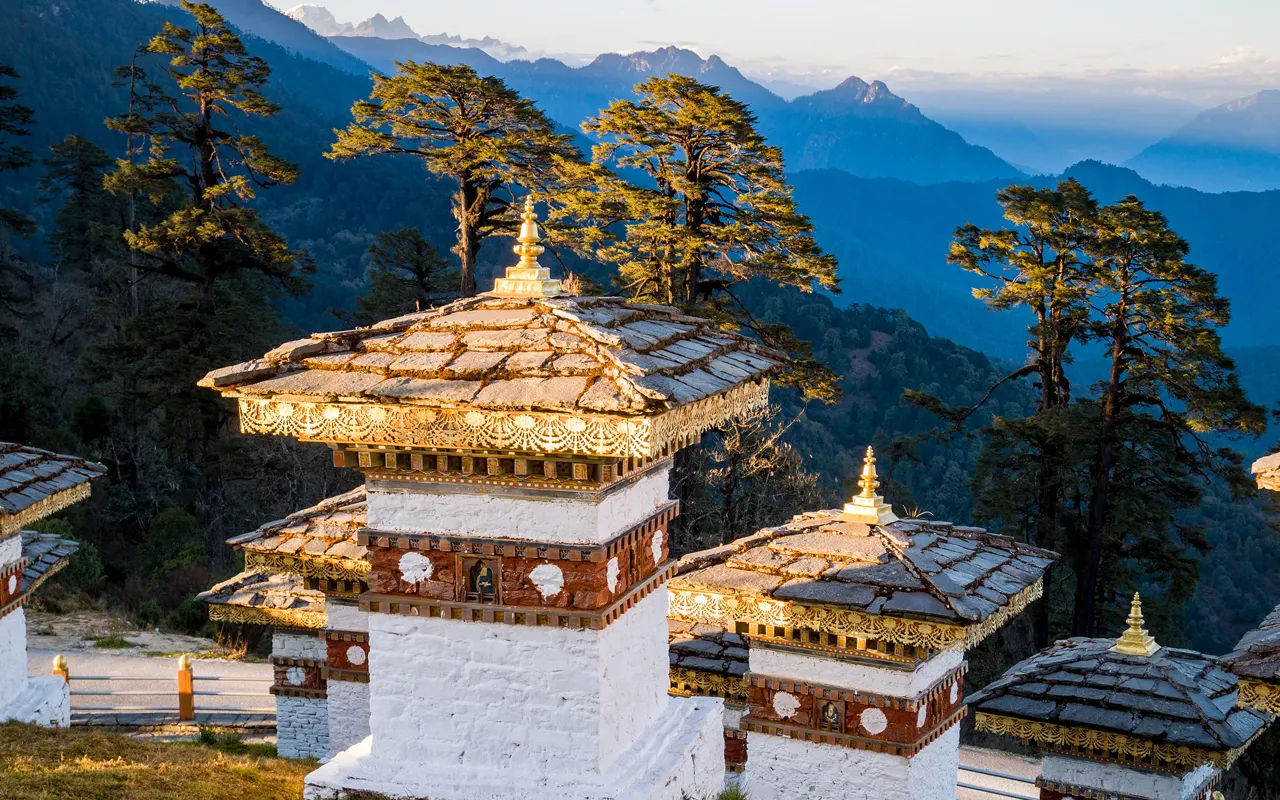
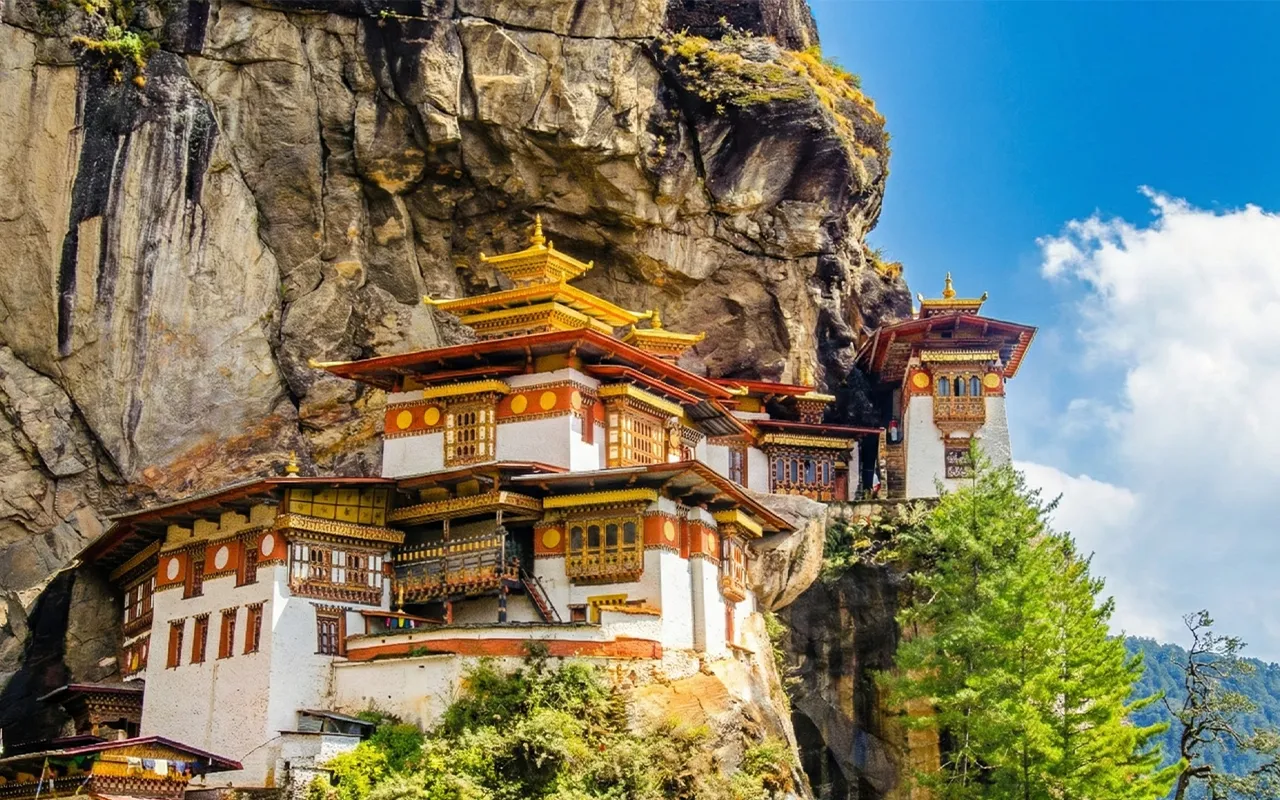
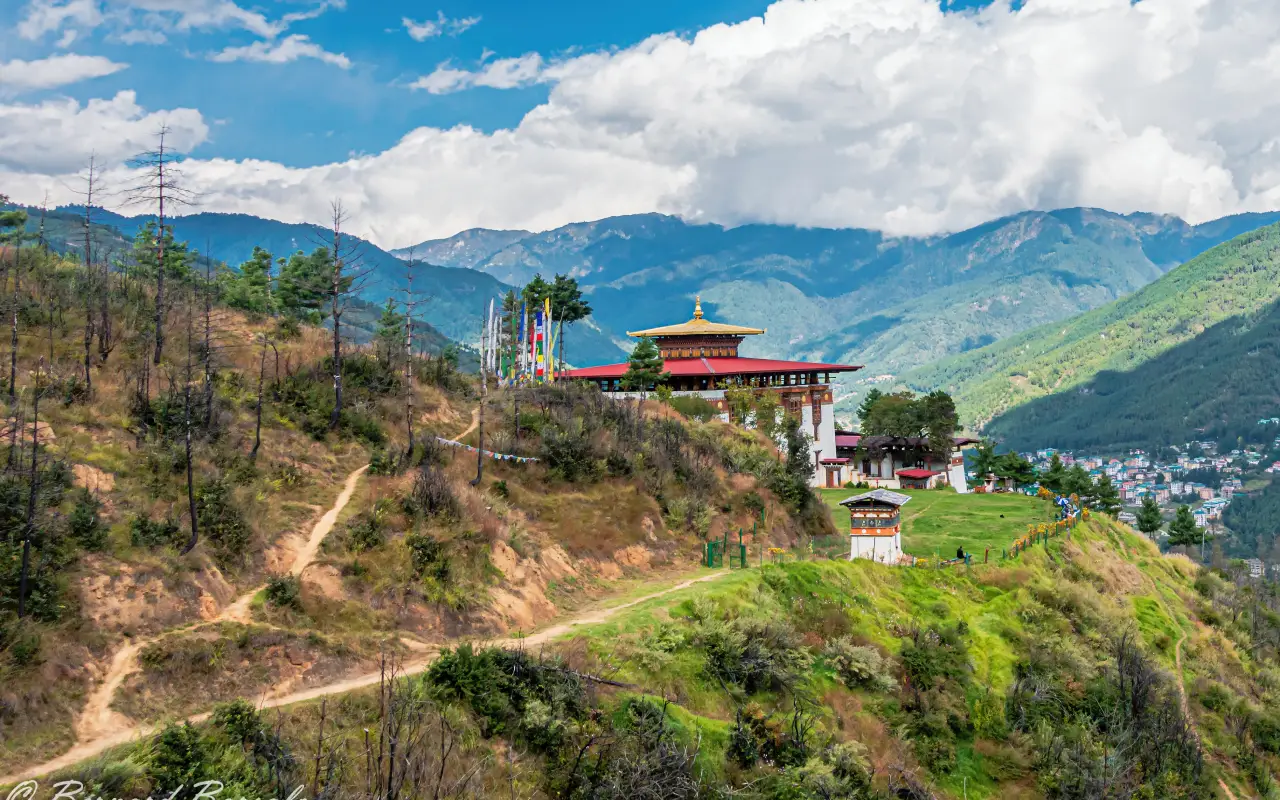
Another highlight of the Druk Path Trek in Bhutan is the opportunity to enjoy Bhutanese culture outside the town. It features visits to religious sanctuaries such as monasteries, temples and other religious landmarks and the path passes through the pasturelands of the local nomadic herdsmen. Respect for local customs, religious sites, wildlife and the natural environment is important throughout the trip.
Once you have finished the walk, you’ll stop at Thimphu to visit the town and then head back to Paro for your flight home. Nomad Adventure Treks will organise the necessary trekking support, transportation, accommodation and other related activities as part of your Druk Path Trek package.
Trip Highlights
- Spend the day hiking through pine, fir and rhododendron forests between Paro and Thimphu.
- Climb to the top of high ridges to see Bhutan’s mountains.
- Enjoy the picturesque alpine lake of Jimilang Tsho
- Walk the high-altitude trail with Janey Tsho and Simkotra Tsho.
- Cross the higher parts of the Druk Path (approx. 4,200 m / 13,780 ft))
- Camp for a few nights in a peaceful mountain setting
- Visit to visit traditional monasteries, temples and religious sites of Bhutan.
- Take in the vistas of both the Paro and Thimphu Valleys.
- Get to know local herders & see traditional life in the hills
- Take an additional cultural tour of Thimphu and Paro.
Detail Itinerary of Druk Path Trek

Day 01: Paro Arrival and City History Tour
Welcome to Bhutan. The crew will pick you up at the Paro International Airport and drive you to your hotel. We will check-in and rest some and then embark on a cultural tour of Paro.
The first visit should be to Ta Dzong, the former watchtower now home to the National Museum. Then we will head to Rinpung Dzong, commonly known as Paro Dzong, where you will catch a glimpse of the traditional Bhutanese architecture and views of the Paro Valley.
We will later visit Kyichu Lhakhang, one of the oldest temples in Bhutan, which is located just a short drive from Paro town. It is traditionally believed to have been built in the 7th century and continues to be an important place of worship.

Activity: Arrival, sightseeing and cultural tour.4–5 hours sightseeing

Max. Altitude: 2,802m/9,193ft. Paro

Meal: Dinner

Accommodation: Hotel
Day 02: Trek from Ta Dzong to Jili Dzong
We will drive to Ta Dzong, National Museum after breakfast and start the first day of the Druk Path Trek. The path slowly moves out of the Paro valley and moves through the blue pine and fir forest.
Today is a steady but moderately strenuous climb and it is essential to have one’s stride at a comfortable level. The path gets to the Jili La before heading to Jili Dzong. The first night is usually around 3,400- 3,500 m. Above sea level, depending on the exact campsite. Published routes provide around 7km (approximately) and four-fifths of an hour of walking for this section.
Once we arrive at camp, we will have some time to rest and take in the mountain surroundings before dinner.
Activity: Trekking and camping, 4–5 hours
Max. Altitude: 3,480m/11,417ft. Jili Dzong
Meal: Breakfast, Lunch, Dinner
Accommodation: Tent
Day 03: Trek from Jili Dzong to Jangchulakha
After breakfast, we will head east from Jili Dzong to Jangchulakha. The trail will be mostly easier than the first day of trekking; we will be moving at a steady pace against the rising altitude.
The path goes through alpine forest, rhododendron and open mountain. The terrain then opens up and you can see yak herders and their animals around their highland pastures.
The traditional camping ground of yak herders in the warmer season is called Jangchulakha. The camp is usually located at about 3,770m. The walk is approximately 10 km and will usually take four to five hours depending on the nature of the trail and speed of walking.
Activity: Trekking and camping, 4–5 hours
Max. Altitude: 3,770m/12,369ft. Jangchulakha
Meal: Breakfast, Lunch, Dinner
Accommodation: Tent
Day 04: Trek from Jangchulakha to Jimilang Tsho
Today we will head up the high ridge towards Jimilang Tsho. The path runs through alpine vegetation and through a mix of gentle upward and horizontal gradients to the area of the lake.
The lake Jimilang Tsho is locally known as ‘Sand Ox Lake’ and is noted for its trout. The trail also offers a view of other mountains like Jichu Drake on a clear day. The path then heads down towards the lakeside campsite, passing through the higher part of the track.
This walk is approximately 11 km in length and takes 5-6 hours. Overnight stay in a campsite close to Lake Jimilang Tsho and rest.
Activity: Trekking and camping, 5–6 hours
Max. Altitude: 4,180m/13,714ft. Jimilang Tsho
Meal: Breakfast, Lunch, Dinner
Accommodation: Tent
Day 05: Trek from Jimilang Tsho to Simkotra Tsho
Upon getting up for breakfast, we shall head out of Jimilang Tsho towards Simkotra Tsho. The trail is in dwarf rhododendron and it traverses a series of high mountain sections. Another small alpine lake we will pass is Janey Tsho.
The scenery gradually turns out to be more open as we rise. In this area, it is possible to occasionally see yak herders and their tents, especially in the right season. There are a few climbs before reaching Simkotra Tsho campsite on the trail.
This part of the section is about 11 km and should take about 4 – 5 hours. Its campsite will be located at approximately 4,040 – 4,110 m, depending on the specific location of the campsite employed by the trekking company.
Activity: Trekking and camping, 4–5 hours
Max. Altitude: 4,110m/13,484ft. Simkotra Tsho
Meal: Breakfast, Lunch, Dinner
Accommodation: Tent
Day 06: Trek from Simkotra Tsho to Phajoding
This time, it is another gradual ascent to the more elevated part of the Druk Path today. The track climbs up to c. 4210m before descending a long distance towards Phajoding. This is the highest point of the trek.
The track offers views of Bhutan’s highest peak, Gangkhar Puensum, on clear days. Once over the high pass, we will drop down through alpine terrain and head on to Phajoding Monastery.
The descent eventually brings us to the monastery area at around 3,700 to 3,870 meters. We will be close to Phajoding Monastery, where we will be able to rest after a day’s walk. It takes approximately 4 to 5 hours for this section, depending on the route taken.
Activity: Trekking and camping, 4–5 hours
Max. Altitude: 4,210m/13,812ft. Phajoding
Meal: Breakfast, Lunch, Dinner
Accommodation: Tent
Day 07: Trek from Phajoding to Motithang and Drive to Thimphu
Following breakfast, we will head down from Phajoding towards Motithang for our last day of trekking. We are mostly downhill on most of today’s trail, cutting through forested areas as we descend down the hill.
This walk is much easier than the previous high-altitude hikes, but the downhill section of the trail may not be the easiest. From the Motithang trailhead, we will reunite with the vehicle and head towards Thimphu, the capital of Bhutan.
The trek is in the vicinity of 10-12 km and typically requires 3-4 hours, depending on the specific trailhead that is chosen. The last stretch of the Druk Path trail is about 10-12 km before the road transfer to Thimphu.
Activity: Trekking and drive to Thimphu, 3–4 hours trekking plus drive
Max. Altitude: 3,870m/12,697ft. Motithang
Meal: Breakfast, Lunch, Dinner
Accommodation: Tent
Day 08: Thimphu City Sightseeing and Drive to Paro
Following breakfast, we will visit some of the key sites of Thimphu. The sites of the National Memorial Chorten, Motithang Takin Preserve and Zilukha Nunnery are included in the sightseeing programme. The takin is Bhutan’s national animal, which can be found in the Motithang Preserve and the Zilukha Nunnery overlooks the Thimphu Valley.
Following lunch, departure from Thimphu to Paro. The road trip is about 50 km, but some Bhutan travel sources mention that it is about 65 km based on the different definition of road trip. The drive typically takes 1-1.5 hours.
Upon arrival in Paro, we will check in to our hotel, where you will have time to rest or take a short stroll around town.
Activity: City sightseeing and drive to Paro, 4–5 hours sightseeing and drive
Max. Altitude: 2,350m/7,710ft. Paro
Meal: Breakfast, Lunch, Dinner
Accommodation: Hotel
Day 09: Fly from Paro to Your Onward Destination
Following breakfast, we will check out of Bhutan. Transfer to/from Paro International Airport will be arranged by our guide based on your flight time.
Bhutan’s primary international airport is Paro International Airport and is the flight hub for international flights. Once airport formalities are done, you are able to board your flight to your next destination.
These are only approximate and the distance and time of flight will depend on the destination and the airline timetable, without knowledge of the onward flight. No day trips or sightseeing are scheduled for the last day.
Activity: Airport transfer and international departure, According to flight schedule
Max. Altitude: 2,235m/7,333ft. Paro
Meal: Breakfast
Includes & Excludes
What are included with package?
Transportation
- Airport pick up/drop off in Paro
- Scheduled sightseeing (private transport)
- Transfer to the trekking trailhead
- Road transportation from Paro to Thimphu.
Accommodation
- Paro accommodations are available in hotels.
- Overnight accommodation on the trek.
- Twin sharing accommodation (where applicable)
Foods
- Breakfast, lunch and dinner on the trek
- The meals listed in the itinerary
- A basic breakfast of tea and coffee on trekking days
Guide and Porter
- Licensed local tourist guide.
- Trekking support staff
- Porter service as per agreed luggage arrangements
Trek Permits and Expenses
- Required trekking permits
- Existing local trekking fees will be applied.
- Camping fees
- Government and local fees for the journey
Medical Support
- Basic first aid kit
- Gear and Services
- Camping tents
- All Dining and Kitchen Equipment
- Cooking services
- Essential camping equipment
- Sleeping arrangements
Others
- Airport assistance
- Sightseeing referred to in the program
- Applicable local taxes
- Standard service charges
What are not included with package?
International Flights
- Round-trip airfare from and to Bhutan.
- Flight change and cancellation fees.
- Excess baggage charges
Accommodation
- Additional hotel nights
- Room upgrades
- Any accommodation resulting from a change in the itinerary.
Foods
- Any meals not stated in the itinerary.
- Snacks and personal refreshments.
- Alcoholic beverages
Visa
- Visa fees, if required, will be paid upon application
- Sustainable Development Fee
- Other immigration charges not included in the package
Travel Insurance
- Travel insurance
- Medical treatment costs
- Emergency evacuation and rescue expenses; and
- Trip cancellation coverage
Personal Expenses
- Laundry
- Telephone and internet charges
- Personal shopping
- Souvenirs
- Personal medication
- Tips and gratuities
- Room service
Others
- Personal trekking equipment
- Emergency transportation
- Rescue expenses
- Extra expenses due to unexpected events.
- All services that are not included.

Note:
If you have a private group and prefer a personalized experience, we can organize a custom trip tailored to your requirements and group size, running it any day you choose.
Detail Information about Druk Path Trek
Weather and Best Time for Druk Path Trek
There are significant variations in the weather throughout Bhutan, depending on the altitude and the summer monsoon. For trekking, the main recommended months are March to June and September to November. When planning for a trek in Bhutan in March, April, May, June, September, October and November, Druk Path Trek is a trek that is considered suitable for the season.
| Month | Weather | Trail Conditions | Mountain Views | Trekking Suitability |
| January | Cold and generally dry | Snow and frozen sections possible at higher camps | Often clear on suitable days | Limited |
| February | Cold with possible snow at high elevations | Snow can remain on upper sections | Generally good when skies are clear | Limited |
| March | Cool, dry spring conditions begin | Lower trails improve, higher areas can still have snow | Good and improving | Good |
| April | Mild days with spring vegetation | Generally good | Clear mornings are common | Very good |
| May | Mild to warm at lower elevations with occasional showers | Mostly suitable, some wet sections possible | Good, especially earlier in the day | Very good |
| June | Warmer with increasing rain | Trails can become muddy and slippery | More cloud cover | Moderate |
| July | Monsoon influence becomes stronger | Wet, muddy and slippery conditions possible | Views can be limited by clouds | Less suitable |
| August | Monsoon conditions continue | Frequent rain can affect high trails | Mountain views are less reliable | Less suitable |
| September | Rain gradually decreases | Conditions improve during the month | Views usually become clearer | Good |
| October | Generally dry, mild and clear | Stable trail conditions | Excellent visibility is often possible | Excellent |
| November | Cool and mostly dry | Good, with colder nights | Clear mountain views are common | Very good |
| December | Cold and dry | Snow and ice possible at high camps | Clear days can provide good views | Limited |
Spring and autumn are the best times for the Bhutan Druk Path Trek. September to November generally brings clearer conditions after the monsoon, while March to May brings spring vegetation and comfortable daytime temperatures.
October and November will call for heavier clothing due to a drop in temperatures after sundown at the higher camps. High sections may be more challenging in conditions of snow and cold in the winter season, but it is possible to trek there in some instances. During the winter period, snowfall is observed above 3000 m according to Bhutan Tourism.
Druk Path Trek Difficulty
The Druk Path Trek is considered an intermediate-level trek in Bhutan by the Bhutan Tourism official. The track is a link between the valleys of Paro and Thimphu and attains altitudes of around 4200m.
| Factor | What to Expect | Difficulty |
| Overall grade | Multi-day high-altitude trek | Medium |
| Typical trekking days | About 6 to 7 days depending on itinerary | Moderate |
| Daily walking | Generally several hours each day | Moderate |
| Highest point | Around (4,200 m / 13,780 ft) | High altitude |
| Ascents | Several sustained climbs | Moderate to demanding |
| Descents | Long downhill sections, especially toward Thimphu | Moderate |
| Trail surface | Forest paths, rocky sections, meadow trails and uneven ground | Moderate |
| Altitude gain | Gradual but significant over several days | Demanding |
| Weather | Conditions can change quickly at high elevations | Important factor |
| Camping | Several nights in remote mountain camps | Basic |
| Technical climbing | No technical climbing normally required | Low |
| Fitness requirement | Regular walking and hill fitness recommended | Moderate |
| Altitude experience | Previous high altitude trekking is helpful but not essential | Useful |
| Best preparation | Walking, stairs, hills and longer weekend hikes | Recommended |
Unlike other treks in the Himalayas, the Druk Path Trek in Bhutan does not require any technical climbing skills. The most significant physical difficulties are the uphill walking, the terrain, the high altitude, the long distances walked and the consecutive days of this.
Trekkers should be able to walk for several hours and have a small personal daypack. This is especially beneficial, as there are some steep inclines and long downhill sections along the way.
Altitude and Acclimatization
Of particular importance within the Druk Path Trek is the trek’s elevation, as the journey begins in the Paro Valley, ascends into high mountain regions and then descends to the Thimphu Valley. Bhutan Tourism specifies the lowest point is approximately 2,400 meters and the highest is approximately 4,200 meters.
It takes time for the body to adapt to higher altitudes. Slow walking is important, drinking sufficient water and good sleep routines. Trekkers should also communicate to their guide if they experience: Headache, unusual tiredness, dizziness, nausea, or breathing difficulties
- Do not rush; walk at a steady pace.
- Consume water frequently throughout the whole day.
- Don’t do unnecessary physical activity after arriving at camp.
- If you don’t feel like eating, eat still.
- Notify your guide of any unusual symptoms.
- Stick to the route; don’t try to get to the next campsite too fast.
- Be prepared for colder temperatures at higher camps.
This Bhutan Druk Path Trek goes to the high mountain regions in fairly short distances, so it is important to listen to your body. If weather or trail conditions and/or elevation begin to pose a problem, a guide can keep an eye on the group and make choices accordingly.
Permits and Entry Requirements
Visiting Bhutan requires immigration documents, as well as trekking arrangements. The Bhutan visa is required for the majority of visitors to the country, while travelers from India, Bangladesh and Maldives have their own visa and/or permit application processes. The fee for applying for a visa for eligible overseas visitors is currently $40 and the Sustainable Development Fee is $100 per person, per night for adults.
As part of the trip arrangements, for the Druk Path Trek package, Nomad Adventure Treks will arrange for the necessary permits and travel documentation. The correct passport and travel details will have to be submitted within the stipulated time frame.
Visitors visiting Bhutan must have a locally certified guide. Bhutan Tourism says tourists do not need to apply for permits to travel in and out of the country with a certified guide.
Permits for the National Park are issued where necessary as part of an appropriate travel plan.
Camping and Accommodation
One of the factors that makes Druk Path Trek a valuable experience is that there are some parts of the trek that are in remote mountain regions where hotels are not found. Typically, the nights spent during the trek are spent in organised camps and not permanent mountain lodges.
The sleeping area is the tent and the other sleeping area is the dining area. The trail gets more basic the further it gets away from the towns. The toilet facilities at camps are usually basic and hot shower facilities may not be available during the trekking part.
Accommodation before and after the trek is usually in approved hotels in Paro and Thimphu. Bhutan Tourism has the official standards and certification for hotels and tented accommodation.
Your trekking party will set up the camp and assist in the organisation of meals and basic camp services. A warm sleeping bag, appropriate sleeping garments and insulated clothing are essential as nights can be very cold at high camps.
Food and Drinking Water
Typically, the Druk Path Trek support staff is responsible for preparing the meals during the trek. Food should be rich in energy for several hours of walking and as such, people usually eat rice, vegetables, noodles, potatoes, eggs, dal and other simple dishes.
Some Bhutanese cuisine can be added, such as chilli and cheese dishes. Those who wish to have less spicy meals should discuss this with the guide/cook beforehand.
It is important to have safe drinking water throughout the course. While untreated natural water cannot be trusted, water sources may be nearby camps. Water should be properly treated or purified water for trekkers.
Bring a water bottle or water system to drink water regularly while walking. Water purification tablets, a filter, or another approved water purification process can be useful when needed.
Packing List for Druk Path Trek
When preparing for the Druk Path Trek package, it’s important to make sure you’re warm enough at high camp while also not loading up your daypack too much. Climate is unpredictable, so clothing should be appropriate for warm daytime and cool night temperatures.
- Waterproof (with good grip) trekking boots
- Warm jacket or insulated layer
- Jacket and trousers should be waterproof.
- Thermal base layers
- Warm mid layer such as fleece or similar.
- Trekking trousers and comfortable walking clothes
- Wear a warm hat, gloves and a sun hat
- A pair of excellent UV-filter sunglasses
- Apply sun cream and lip balm.
- Water bottles or hydration bladder that can be reused.
- Personal medicines and basic first aid items
- Headlamp (extra batteries)
- A duffel would be a wise choice for a sleeping bag for freezing nights in the mountains.
- Trekking poles
- Small towel and personal toiletries
- Power bank and charging cables.
- Travel documents required (passport)
- A small daypack that is used for walking around during the day.
Only bring what is necessary for the trek. The lightweight daypack makes the hilly parts of the hike easier to handle.
Mobile Network, WiFi and Charging Facilities
Mobile connectivity can be found in the towns of Bhutan, but is less reliable in the more remote mountain areas of the Druk Path Trek. Mobile coverage and internet access are more generally available in Paro and Thimphu than at the trekking camps.
The coverage along the trail is intermittent. Some peaks can have a signal and other sections can have no connection. If communication is necessary, your guide will be able to help you.
Most hotels in Paro and Thimphu offer WiFi and the connection can be fast or slow. Don’t assume that you can always connect to the internet in a mountain camp.
The camping section also has limited electricity. Take a fully charged power bank and charge all critical equipment before leaving the hotel. A universal travel adaptor is useful because Bhutan uses several plug types, including British, European and Indian style sockets.
Safety, Travel Insurance and Emergency Support
Preparing, keeping on time and following the guide’s directions is important for safety on the Druk Path Trek. This is a medium-level trail, but can be challenging due to altitude, weather and irregular terrain.
- Don’t rush and take the time to walk at a comfortable pace.
- On steep and exposed areas, follow the guide’s instructions.
- Keep warm and dry when weather conditions change.
- Drink water often and eat an adequate amount of food during the hike.
- Report altitude symptoms/illness at once.
- If trekking poles can help maintain balance, use them on steep descents.
- Bring personal meds and paperwork.
- Have emergency contact details handy.
- Review insurance coverage before travel.
Travel Insurance is highly recommended for trekking since, if medical treatment, trip interruption and emergency transport occur, it can cause significant expense. So far, according to the Bhutan guides, travel insurance is now optional, though recommended.
In case of an emergency, Nomad Adventure Treks can arrange for contact with the local trekking team, but liability for insurance is the responsibility of the traveller.
Bhutanese Culture and Responsible Trekking
Buddhist customs and traditions are still a significant aspect of everyday life in the Bhutan Druk Path Trek. The trekkers should respect the monastery, the temple, the prayer flags, chortens and other religious sites.
- When going to temples and monasteries, dress modestly.
- Take off hats and shoes as required by local customs.
- Please ask before taking photos of people or religious ceremonies.
- Don’t handle religious objects without being asked to.
- Walk around stupas and chortens in the appropriate direction.
- Don’t disturb the wildlife or livestock.
- Carry rubbish until it can be disposed of properly.
- Never take plants, stones, or cultural objects off the trail.
- Wherever possible, use reusable bottles.
- Respect local communities and trekking staff.
Preservation of the environment and cultural values is a key priority in Bhutan’s tourism policy. The Sustainable Development Fee funds programs such as environmental conservation, cultural preservation, infrastructure and local development.
Transportation and Trailhead Access
In the Druk Path Trek in Bhutan, walking is required before and after the valleys of Paro and Thimphu. The trailhead may change depending on the approved trail and trail conditions.
The trekking part of this tour starts from Paro town to the Ta Dzong area. Upon completion of the trek near Motithang, a vehicle transfer is available to head to Thimphu.
In addition, Paraguay is the primary international air hub for visitors. The trek is followed by a visit to Thimphu and then back by road to Paro.
Nomad Adventure Treks can arrange the necessary vehicle transfers as per the planned itinerary. Travel times may vary due to road conditions, traffic, weather and scheduled sightseeing stops.
Luggage, Porters and Weight Limits
For the Druk Path Trek, it is important to take only what is required for each walking day to make the trek more comfortable. A small daypack should contain water, rain protection, warm layers, snacks, personal medication, documents and other essentials.
Larger luggage can be managed throughout the trekking plans and transfers normally. The exact type of luggage and weight limit will be determined with the tour operator before departure, as requirements may differ depending on group and transportation accommodations.
Don’t overpack equipment and clothing. It’s easier to layer a few garments than to carry a bunch of separate outfits.
Before the first walking day, your trekking group can let you know how objects are to be used. Don’t put passports, cash, electronics, medication, etc. in bags being transported.
Trekking with Children and Older Travellers
The Druk Path Trek is a medium-level trek with high-altitude sections which are around 4200 meters. Children and elderly travellers should be treated as individuals and not simply on an age basis.
- Take previous hiking experience and fitness into consideration.
- Find sufficient time for frequent rests.
- Maintain an appropriate pace for walking.
- Be aware of symptoms associated with altitude.
- Wear suitable trekking shoes with a good grip.
- Bring warm and waterproof gear with you.
- Talk with a qualified health care professional about the medical issues.
- Ensure planned trekking activity is included in travel insurance.
- Keep daily walking expectations realistic.
The road is safe for active families and older hikers who are ready for a hike in the mountains, but that doesn’t mean the elevation shouldn’t be taken into consideration. The final decision should take into account each traveller’s fitness, experience and medical advice.
Other Treks in Bhutan
Bhutan offers other well-trodden treks that you may want to consider if you’re looking for a longer or shorter trek. Bhutan Tourism categorizes its trekking routes into easy, medium and hard categories and provides a list of the routes ranging from short cultural walks to long treks at high altitude.
| Trek | Approx. Duration | Maximum Elevation | Difficulty | Main Character | Listed Trekking Season |
| Gangtey Trek | 4 days | (3,120 m / 10,236 ft) | Easy | Forests, villages and Phobjikha Valley | April, May, September to November |
| Bumthang Cultural Trek | 3 days | (3,120 m / 10,236 ft) | Easy | Villages, forests and cultural sites | May |
| Bumthang Owl Trek | 3 days | (4,000 m / 13,123 ft) | Easy | Forests and Bumthang landscapes | March to June, November, December |
| Dagala Thousand Lakes Trek | 6 days | (4,270 m / 14,009 ft) | Medium | High lakes and mountain scenery | April to June, September, October |
| Merak Sakteng Trek | 7 days | (4,100 m / 13,451 ft) | Medium | Eastern Bhutan and local communities | March to May, September to November |
| Jomolhari Trek | 10 days | (5,000 m / 16,404 ft) | Medium | High mountain valleys and Himalayan scenery | September to November |
| Jomolhari Laya Gasa Trek | 13 days | (5,005 m / 16,421 ft) | Hard | High passes, remote valleys and Laya | May, June, September to November |
| Duer Hot Spring Trek | 9 days | (4,700 m / 15,420 ft) | Hard | Remote mountain terrain and hot springs | March, April, September to November |
| Snowman Trek | 26 to 28 days | (5,320 m / 17,454 ft) | Hard | Extended high-altitude wilderness | June to October |
The Druk Path Trek is a middle-ground trek, neither too short nor too long, between the shorter easy routes and the more adventurous high altitude treks. Bhutan Tourism rates it at seven days, 4,200m maximum and moderate difficulty.
Others may prefer to go on a shorter cultural hike like Gangtey or Bumthang. If you want more of a challenge and a longer trek, then try Jomolhari, Laya Gasa, or the Snowman Trek. Please always check season and route conditions before booking.
Frequently Asked Questions
Is Druk Path Trek for first-time trekkers?
Yes. The route is recommended for those who are reasonably fit and is perfect for beginners who have some experience walking at high altitude, as the days involve climbs to high altitudes.
What are some of the types of trails you will encounter along the way?
The path is through forest, meadows, rocks, ridges and uneven terrain and varies with weather.
Can I see Gangkhar Puensum in the trek?
Transitions to higher areas may offer views of Gangkhar Puensum on a clear day, but weather and cloud conditions may impact visibility.
Do there exist any villages on the path to the trek?
Trails are not in the midst of many villages or settlements, but rather in areas of remote mountains and may occasionally meet with local herders and their animals.
What animals could be seen on the path?
Birds, yaks and other mountain wildlife can be spotted, including highland grazing areas and forests, along the trekking route.
What temperatures does it get as cold as when camping?
At higher camps, temperatures drop significantly after dark, especially in the spring and autumn and sleeping bags and layers are necessary.
Will there be dietary needs met on the journey?
The dietary requirement should be made known before the trip and the trekking team arranges for appropriate meals based on availability and the group’s requirements.
Can photos be taken at monasteries and temples?
The rules for photography differ from place to place with religious sites. Before taking pictures of the interior, ceremonies, religious items, or local people, the trekkers should ask their guide for permission.
What if the weather on the trek changes?
Walking arrangements may be modified in the trekking team as per the weather and track conditions depending on the prevailing situation in the area.
Is there an opportunity to adjust the trip itinerary?
Depending on the route conditions and services available, changes to walking days, accommodation, sightseeing and transfers may be possible during private trekking.
Reviews on Druk Path Trek
 Write a Review
- Your safety, our no 1 priority
- Best price guarantee
- Experienced & dedicated team
- Easy booking, no hidden charge
- You can customize this trip
Talk to Travel Expert
Samundra Rimal (+977-9843127084)
Related trips you may like