



Everest Mani Rimdu Festival Trek

Duration
12 Days

Max Altitude
3,860 m. / 12,664 ft.

Difficulty
Moderate

Group Size
2-16 Pax

Meals
- 10 Breakfast
- 8 Lunch
- 9 Dinner

Accommodation
- Hotel
- Teahouse

Transportation
Tourist Bus, Flight

Activities
- Trekking
- Sightseeing

- 1 - 1 personUS$ 1300
- 2 - 3 personUS$ 1150
- 4 - 6 personUS$ 1100
- 7 - 10 personUS$ 1000
- 11 over 9999 US$ 900
Total Cost:
US$ 1300
- Your safety, our no 1 priority
- Best price guarantee
- Experienced & dedicated team
- Easy booking, no hidden charge
- You can customize this trip



Talk to Travel Expert Samundra Rimal (+977-9843127084)
Introduction of Everest Mani Rimdu Festival Trek
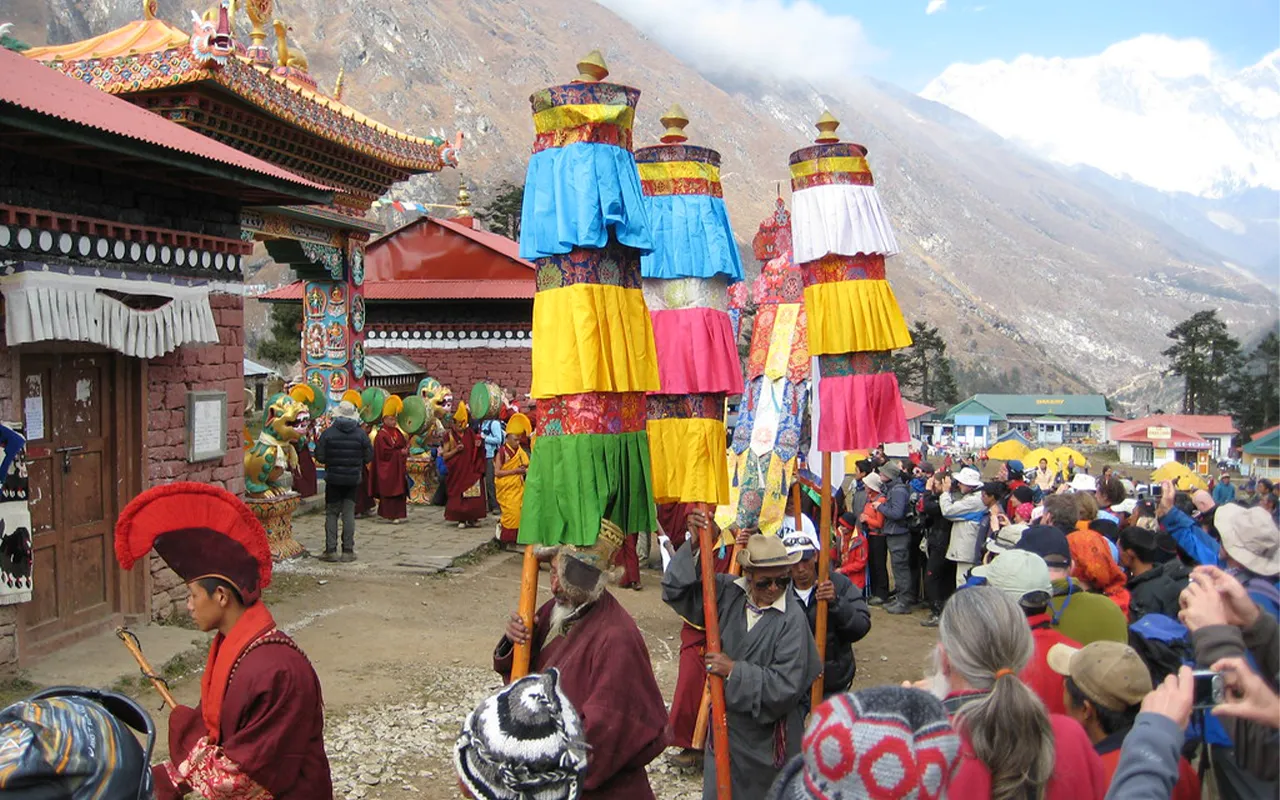
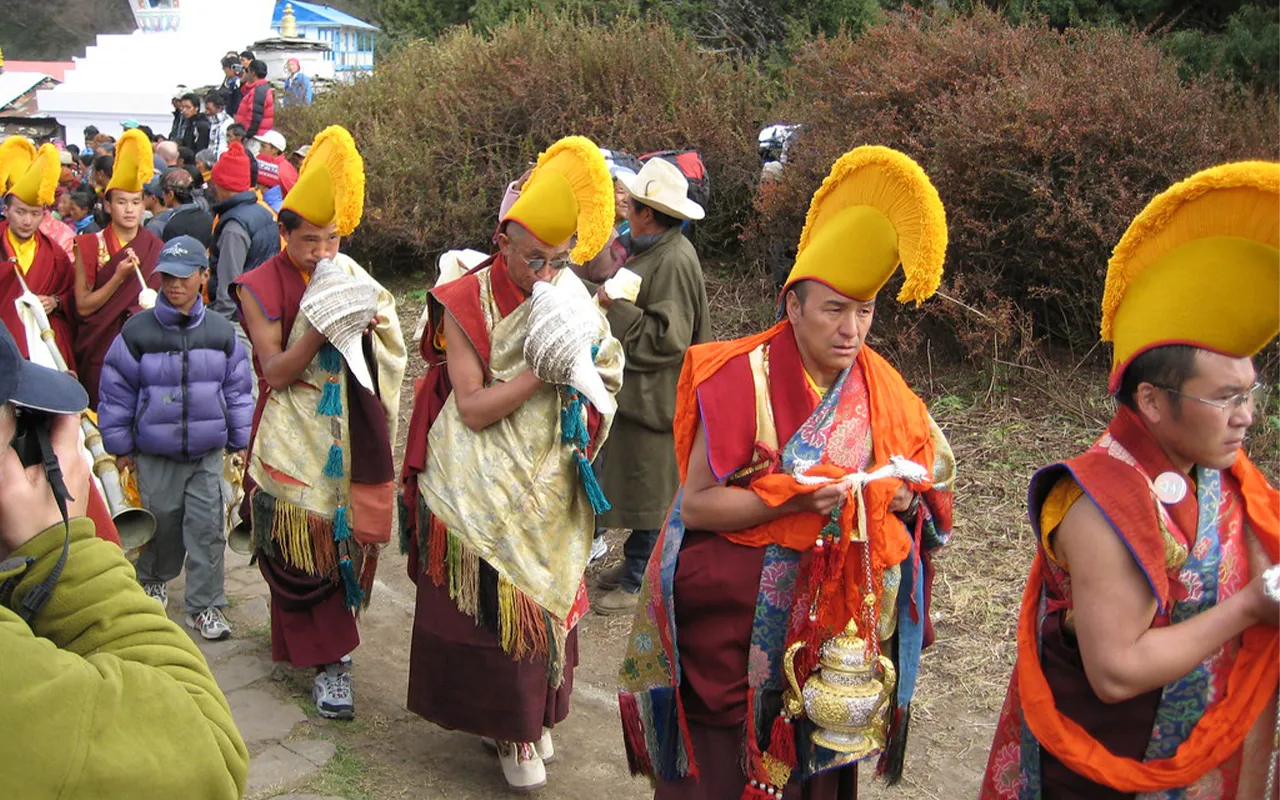
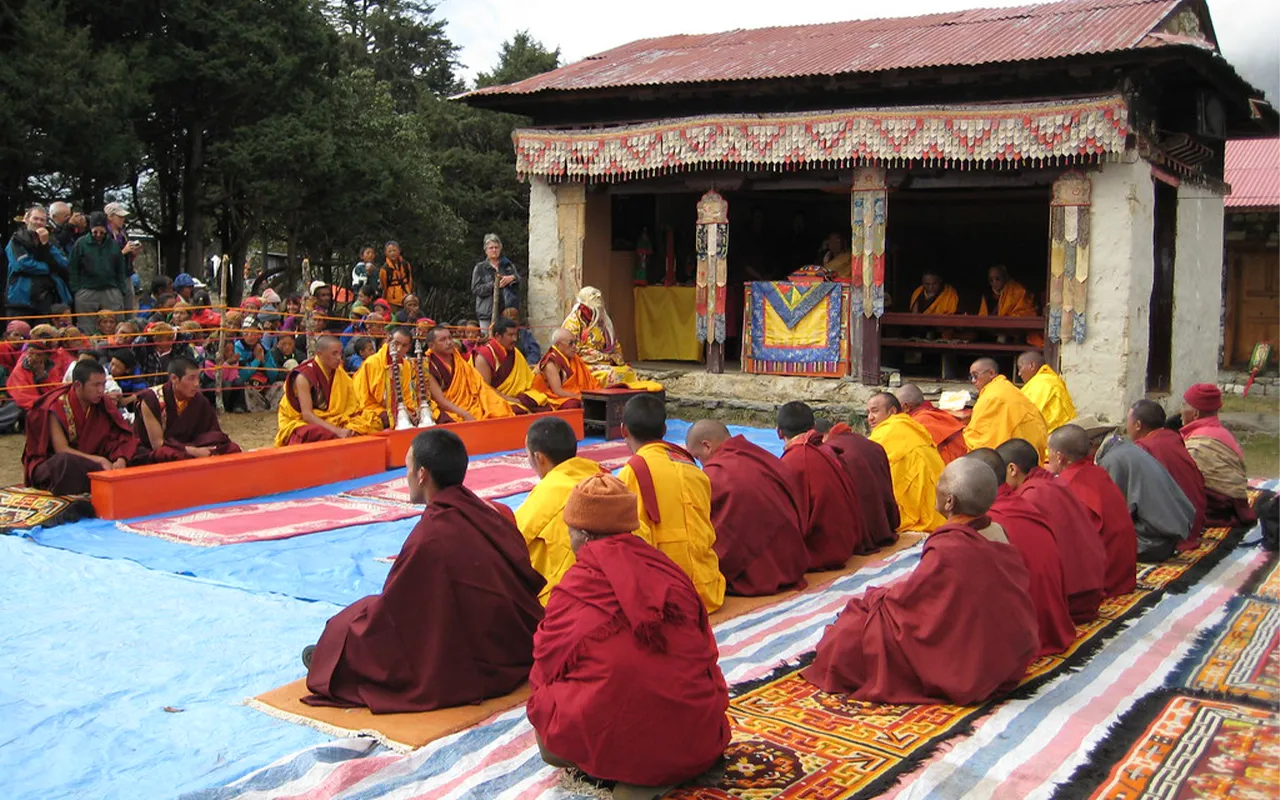
The Mani Rimdu Festival Trek in the high Khumbu region of Nepal is a unique combination of culture, spirituality, and mountain adventure. Each fall the Sherpa people convene at Tengboche Monastery to celebrate Mani Rimdu, a three-day festival which emphasizes the victory of compassion and wisdom over ignorance and evil. It is followed by the construction of colorful sand mandala and blessed pills (Mani Rilbu), the Fire Puja, and the purification of the perimeter. To trekkers, it is an invitation to the very core of Sherpa Buddhist culture, against the panoramic Himalayan backdrop.
Mani Rimdu Festival Trek is a traditional trek through the Sagarmatha National Park to the village of Tengboche. Starting from Lukla, you walk down along the Dudh Koshi River past Sherpa villages and rhododendron trees. You slowly climb to Namche Bazaar, a large trading post at 3,440 m; you further climb to 3,860 m to the ridge-top monastery of Tengboche.
Here you also spend three days in the Mani Rimdu celebrations. The trek takes the same path down to Lukla and back to Kathmandu after the festival. As you climb, you will start to see more and more Everest, Lhotse, Nuptse, Ama Dablam and Thamserku peaks pierced by high snow-white mountains.
It is not just the masked dances. You will enjoy Sherpa welcome in the teahouses of Phakding, Namche Bazaar and Monjo. Guides will tell tales of Tibetan Buddhism and local fables and hot tea and delicious meals will refresh your body after a day of trail. This is to allow your body time to acclimatize to higher altitude and the itinerary will prepare you to attend the festival.
Even though the maximum altitude of the trek is less than 4,000 m, the terrain is rough, but there are steep ascends and downs. There must be good physical fitness and positive attitude. It also includes sightseeing in Kathmandu to visit UNESCO-listed temples and prepare to be on the trek.
By choosing this trek, you help local people and support time-honored traditions. Annually, the festival occurs during the full moon of the Tibetan lunar calendar in the month of October or sometime in November.
There is no better time than during festival time to join the trek and observe the grand rituals, that are meant to extend blessings to every living creature, listed as Wong (public empowerment), Chham (mask dance), Ser-Kyem, and Fire Puja. This exceptional fusion of cultural immersion, mountain-gazing, and religious celebration transforms Mani Rimdu Festival Trek into an unforgettable adventure.
Trip Highlights
- Enjoy a breathtaking flight to Lukla and take a walk along the valley by the river to Sherpa villages.
- Visit the vibrant center of the Everest area – Namche Bazaar.
- Experience the empowerment ceremony and sand mandala.
- Relish the mask dances that celebrate the victory of good over evil.
- On the last day, participate in the dismantling Fire Puja.
- Appreciate the breathtaking views of Everest, Lhotse, Nuptse and Ama Dablam.
- Aid in the remote area development and experience Sherpa culture in comfortable tea houses.
Detail Itinerary of Everest Mani Rimdu Festival Trek

Day 01: Arrival in Kathmandu
A representative will greet you upon arrival at Tribhuvan International Airport and will take you to your hotel located in Thamel. After you check in, you will meet our guide who will prepare you for the upcoming Mani Rimdu Festival Trek.
In the afternoon, you are free to navigate the streets of Kathmandu. Please head to the Asan and Thamel markets. Have a seat in one of the relaxed-atmosphere cafés. For the first dinner of the trip, you will be presented with a variety of traditional Nepali foods while a show is performed for you. In the evening, you will be staying in Kathmandu.

Activity: Arrival, hotel transfer, trek briefing

Max. Altitude: 1,350m/4,429ft. Kathmandu

Meal: Dinner

Accommodation: Hotel
Day 02: Kathmandu sightseeing and trek preparation
As part of your guided trek, we will go to UNESCO World Heritage Sites including Swayambhunath Stupa (the Monkey Temple) and Boudhanath Stupa. Wonderful valley landscape will be seen at Swayambhunath Stupa, and then go to Boudhanath Stupa to see one of the largest Tibetan Buddhist stupas. We will also visit and spend a little time at Pashupatinath Temple where Hindu cremation ceremonies are performed along the Bagmati River.
We will then go to Thamel after lunch and you will be given some time to make your final purchases on trekking gear. Your guide will have some time later in the day to go over the day and check equipment, as well as to outline the day trekking program.
Activity: 4–6 hrs sightseeing
Max. Altitude: 1,400m/4,593ft. Kathmandu
Meal: Breakfast
Accommodation: Hotel
Day 03: Fly Kathmandu to Lukla (2,840 m) and trek to Phakding (2,610 m)
A direct flight will take us from Kathmandu to the mountain airstrip at Lukla. Take note that the flight will last for approximately 35 minutes. In the course of the flight, we will have the chance to see Himalayan peaks and the Everest region from the air. Once the flight is done, the porters will provide you with some guidance that will help you on your trek along the Dudh Koshi River.
Whenever we trek through villages or farmlands, we will see the colorful prayer flags strung above mani walls, which are inscribed with prayers. As we continue our trek, we will notice that certain tracks have been made through the thick clusters of pine and the large clusters of rhododendrons. This portion of the trek will take us to Phakding, the location of the village by the river, where we will have the opportunity to visit the tea houses. In the evening, we will have the chance to wander the village or relax beside the river. Our lodgings will be in Phakding.
Activity: 3–4 hrs trek / 35‑min flight
Max. Altitude: 2,840m/9,318ft. Lukla
Meal: Breakfast, Lunch, Dinner
Accommodation: Lodge
Day 04: Trek Phakding to Namche Bazaar
As Phakding becomes a distant memory, one follows the trail along the banks of the Dudh Koshi River, passing through a number of forests, as well as some suspension bridges. Beyond that, the trail extends towards the small town of Monjo, the official border of Sagarmatha National Park. From here, Monjo serves as the first checkpoint, where permits are checked.
The trail then ascends through a line of pine, along with rhododendron, all the way to Tope Danda’s viewpoint. These are among the first vantage points from which Mount Everest is visible. Further on, the trail, upon reaching Namche Bazaar, offers a picturesque scene of the largest Sherpa settlement along with a major trading center of the Khumbu region. Many vibrant pubs, bakeries, outdoor equipment shops, and a lively marketplace fill the town. We spend the night in teahouses around Namche Bazaar.
Activity: 6–7 hrs trek
Max. Altitude: 3,440m/11,286ft. Namche Bazaar
Meal: Breakfast, Lunch, Dinner
Accommodation: Teahouse
Day 05: Acclimatization day in Namche Bazaar
Acclimatization is an important aspect of the Mani Rimdu Festival Trek. Today we will go on a short walk which goes to the Hotel Everest View (3,880 m) or culminates in Khumjung village so that our body may start adjusting to more altitude. The walk passes through snow-covered slopes from where one can have stunning views of Everest, Lhotse and Ama Dablam.
While in Khumjung, we can visit the Sherpa Culture Museum and the Hillary School established by Sir Edmund Hillary. While the others enjoy the day to have coffee at one of the coffee shops, we will return to Namche to relax. We will spend the night in Namche.
Activity: 3–4 hrs
Max. Altitude: 3,880m/12,730ft. Hotel Everest View
Meal: Breakfast, Lunch, Dinner
Accommodation: Teahouse
Day 06: Trek Namche Bazaar to Tengboche
From Namche, you’ll see views of Everest, Lhotse, Nuptse, and the Ama Dablam spire along the path. As we gently descend and cross the suspension bridge over the Imja Khola, the trail climbing through the magnificent juniper and rhododendron forests is a dream come true.
The trail winds through pretty mani walls and chortens, followed by the steep ascent of stunning Tengboche Monastery. We then can admire the richly decorated monastery which is the focus of the area and observe the monks going about their day in peace. The teahouse in Tengboche is a perfectly nice place to stay overnight.
Activity: 5–6 hrs trek
Max. Altitude: 3,860m/12,664ft. Tengboche
Meal: Breakfast, Lunch, Dinner
Accommodation: Teahouse
Day 07: Tengboche: First day of Mani Rimdu Festival
This morning we are accompanying the villagers along with the monks to the courtyard of the monastery to observe the initiation of Mani Rimdu. Preparation of the sand mandala, in the middle of the mandala the monks place a vase filled with spiritual medicine pills and a Mani Rilbu.
The leading lama carries out the Wong empowerment by singing mantras and offering the devotees blessed holy water and sacred pills. All day we watch devotees pray over the mandala, which monks create each year, as they whisper prayers for a harmonious world. We will stay in Tengboche at night.
Activity: Sand Mandala, empowerment ceremony
Max. Altitude: 3,860m/12,664ft. Tengboche
Meal: Breakfast, Lunch, Dinner
Accommodation: Teahouse
Day 08: Tengboche: Second day of Mani Rimdu Festival
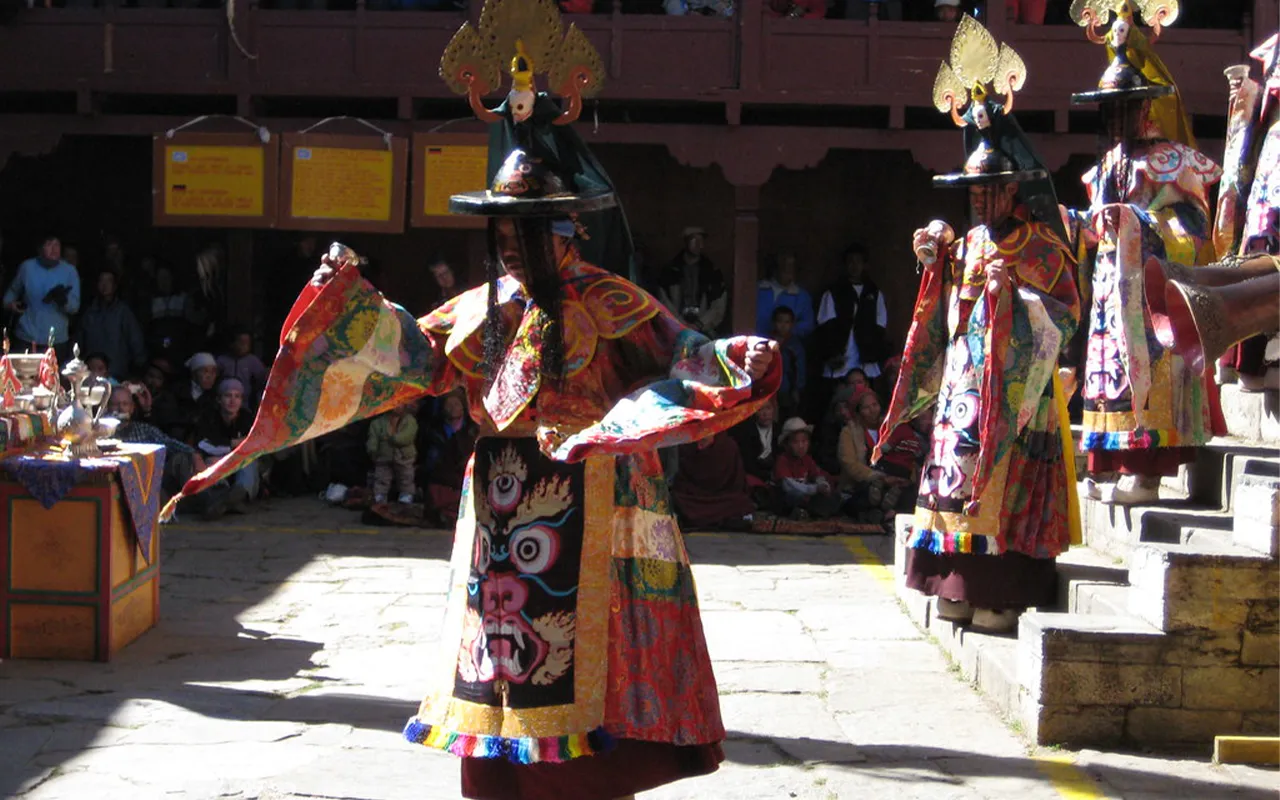
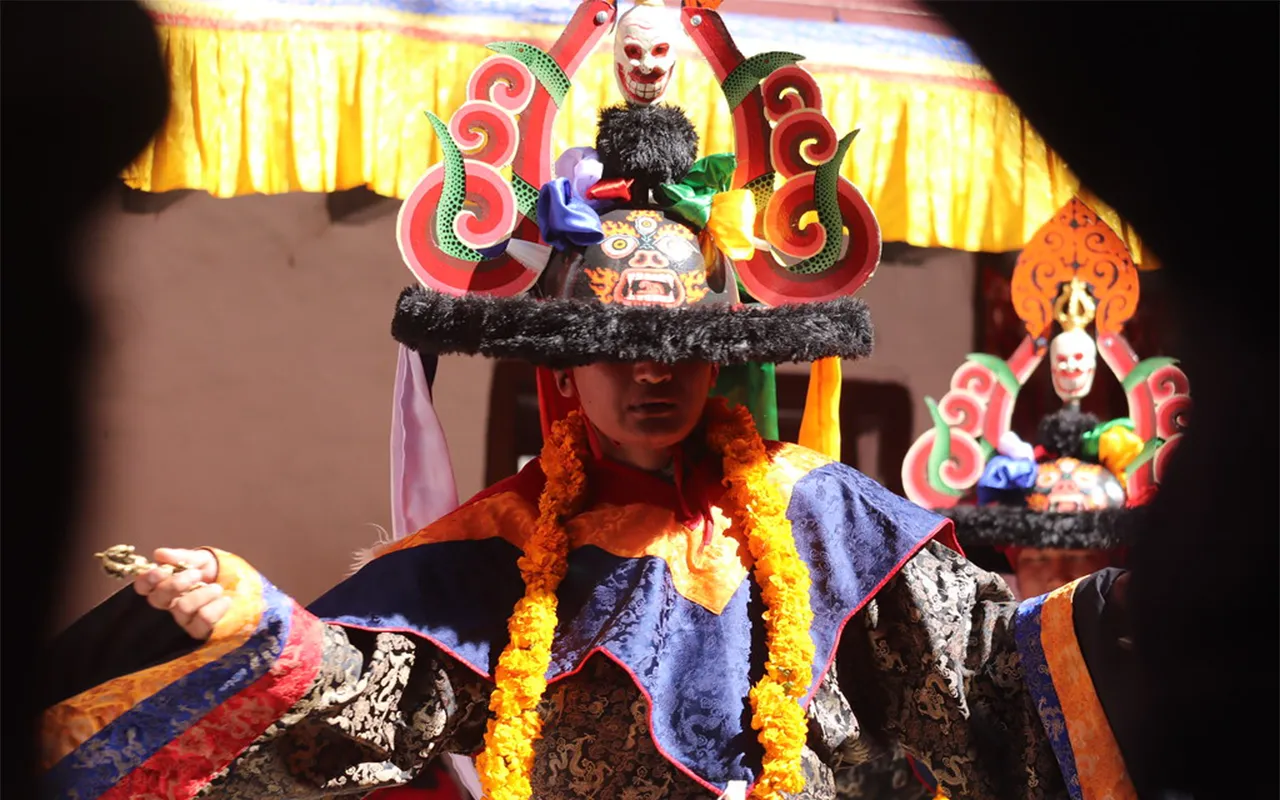
During the festival’s second day known as Chham, the trekkers have the opportunity to observe a variety of traditional mask dances. Also quite stunning is the colorful attire of the monks who are portraying the triumph of good over evil. What is particularly interesting is the trance-like beating of the drums, horns, and cymbals, which seem to accompany the dancers as they float.
Once they have completed the dance, the performers who were once dancers are now lamas who grant the devotees the privilege of receiving blessings inside the monastery. The interval from dance completion and the blessings is also quite enjoyable and is spent by festival attendees enjoying cups of rhododendron tea. While staying overnight in a tent is also an option, we feel more at home in the teahouse.
Activity: Mask dance ritual, blessings
Max. Altitude: 3,860m/12,664ft. Tengboche
Accommodation: Teahouse
Day 09: Tengboche: Third day of Mani Rimdu Festival
The last day of Mani Rimdu involves participating in the Fire Puja together with other concluding activities. At the monastery, a huge fire is kindled. Monks in a trance repeat mantras and offer butter, grains, and spices to the fire deity.
Upon completion of the mandala, the monks deconstruct the artwork, offering the colored sands to the river while bestowing their blessings to all sentient beings. The closing ritual which is performed with much gravity but at the same time gentle joy, heralds the conclusion of the festival.
Activity: Fire Puja, dismantling mandala
Max. Altitude: 3,860m/12,664ft. Tengboche
Meal: Breakfast, Lunch, Dinner
Accommodation: Teahouse
Day 10: Trek Tengboche to Monjo
After bidding farewell to Tengboche, we will go down through rhododendron forest and juniper forest to the Imja Khola and then go uphill to Sanasa. Starting there we move back to Namche Bazaar. There we have lunch. Starting the descent at Namche, we go through the forest, across the Dudh Koshi River and the village of Jorsale.
Keep a watch on musk deer and Himalayan tahr grazing on the hills. Towards the end of the afternoon we come to Monjo. There we can spend the night in a nice teahouse where we can relax with a warm cup of butter tea and wonder at the scenery of Ama Dablam and Kongde peaks.
Activity: River valley walk, wildlife spotting
Max. Altitude: 2,835m/9,301ft. Monjo
Meal: Breakfast, Lunch, Dinner
Accommodation: Teahouse
Day 11: Trek Monjo to Lukla
The last day of trekking will take us along the river valley back to Lukla, and the trail takes us through terraced fields and delightful villages such as Benkar, Ghat and Phakding. We will travel along suspension bridges adorned with prayer flags and through birch and juniper woodlands.
We will have lunch in Phakding or Chheplung (Cheplung) around midday before the last climb to Lukla. After we arrive, we can spend some time walking along the busy streets or have a drink to celebrate with our trekking team. We will spend the night in Lukla.
Activity: Final trekking day
Max. Altitude: 2,840m/9,318ft. Lukla
Meal: Breakfast, Lunch, Dinner
Accommodation: Teahouse
Day 12: Fly Lukla to Kathmandu and departure
We take a very early morning flight back to Kathmandu after our breakfast at Lukla. The flight takes about 35 minutes, take a last look at the Himalayas as you say goodbye to the Everest region. On arrival in Kathmandu you get transferred to your hotel. Unless you are in a hurry, visit Kathmandu Durbar Square or go shopping in Thamel. This is the end of your Mani Rimdu Festival Trek, as later in the day our representative takes you to the airport to board your flight.
Activity: 35‑min flight
Max. Altitude: 1,400m/4,593ft. Kathmandu
Meal: Breakfast
Includes & Excludes
What are included with package?
Accommodation
- Twin-sharing/double accommodation in a 3-star hotel for 2 nights in Kathmandu including breakfast (Private room accommodation can be organized at an extra cost)
- Twin-sharing guesthouse accommodation during the treks.
Meals & Drinking Water
- All your standard meals during the trek 3 meals a day (Breakfast, Lunch & Dinner) in a guest houses.
- A farewell dinner on the last night in Nepal
- Purified drinking water during the trek using Water Filter or water purification tablets.
Transportation
- All (international and domestic) airport transfers on a tourist vehicle
- Round-trip airfare between Kathmandu/Manthali and Lukla
- Kathmandu – Manthali – Kathmandu transportation by shared tourist vehicle
Guide and Staff
- Experienced, first-aid trained, government licensed, English speaking, and locally recruited Nomad Adventure’s trekking guide (2 guides for group size more than 7 people)
- Porters during the trek for carrying luggage (1 porter for every 2 clients)
- Wages, accommodation, meals, gear, insurance and medications for all staff
Medical Assistance
- Assistance in arranging rescue operations in case of complicated health conditions (funded by your own travel insurance)
- Medical kits, including an oximeter to monitor blood oxygen saturation levels in high altitudes
Permits
- Sagarmatha (Everest) National Park Permit
- Pasang Lhamu Rural Municipality fee
- TIMS (Trekkers’ Information Management System) card
Benefits and Takeaways
- Sleeping bags and down jackets, duffle bag (one for every two trekkers) if you do not have your own to be returned after trip completed
- company’s T-shirt & Cap
- Trip completion certificate
Administrative & Taxes
- All administrative expenses and government taxes
What are not included with package?
Price Excludes
- Lunch and dinner in Kathmandu (except farewell dinner).
- International flight fare and airport departure tax
- Nepal Entry Visa (Visa can be acquired easily after your arrival at Tribhuvan International Airport in Kathmandu with a fee of USD 30 for 15 days visa, USD 50 for 30 days visa and USD 125 for 90 days visa)
- Guided tour in Kathmandu (Private car + tour Guide), Monument entrance fees while sightseeing in Kathmandu
- Extra night accommodations in Kathmandu due to early arrival or late departure, early return from the trek or other itinerary changes
- Travel insurance along with high-altitude emergency evacuation coverage
- Medical check-ups, vaccinations, or medications required for the trek are not included.
- Any beverages including bottled and boiled water
- Tips to trekking staff and driver
- Personal trekking gear and equipment
- Personal expenses (shopping, snacks, boiled bottle water, hot (Tea/ Coffee) and cold drinks, hot shower, alcohol, Wi-Fi, telephone call, battery re-charge fee, extra porters, etc
- Personal clothing and gear
- Any Additional cost due to Nature calamity and Unforeseen Circumstances etc.
- Any expenses other than the Price Include section

Note:
If you have a private group and prefer a personalized experience, we can organize a custom trip tailored to your requirements and group size, running it any day you choose.
Detail Information about Everest Mani Rimdu Festival Trek
Trek Difficulty & Fitness Tips for Everest Mani Rimdu Festival Trek
The Mani Rimdu Festival Trek is said to be of moderate difficulty. Despite daily distances of between 8 and 16 km and a sleeping altitude of 3,860 m, there are still a great number of elevation gains and losses. Though it follows well worn pathways, there are also suspension bridges, descents over jagged rocks and pathways.
To get the most from the journey, the trekkers should possess a good amount of stamina and cardio exercise. It is advised to start training at least 2 months prior to the trek by doing the following: carrying a small day pack, completing stair climbing or hill training, and leg and core strengthening workouts. Endurance training, even while maintaining flexibility is necessary in the form of jogging, cycling, or swimming.
Load-bearing pack walks are of a predictable difficulty level and are beneficial in the adjustment of day pack displacement. During the trek, management is key: slow and purposeful movements, ritualized intersections of stillness, and a conscious effort to remain within corporeal temperature thresholds serve to reset the system.
Breathing management and water replenishment are essential to help the body acclimatize to higher altitudes. Most people, even the beginner trekkers, should be able to strive to find positivity within the trek in order to reach the end.
Acclimatization & Altitude Strategy
Altitude sickness is a real risk when trekking on high‑Himalayan routes, and this is why the Mani Rimdu Festival Trek schedule builds in a day for acclimatization in Namche Bazaar. The path then steadily climbs so your body can catch up before going any higher. Stay hydrated—aim for 3 to 4 litres of water daily, skip booze and caffeine, and walk at a comfortable, steady pace.
Acute Mountain Sickness, or AMS, can hit with headaches, nausea, tiredness, and a lost appetite. If you notice any of these symptoms, tell your guide right away and rest until you feel better. Some trekkers use Diamox (acetazolamide) to speed acclimatization, so check with your doctor before the trek. The acclimatization day includes short uphill climbs to spots like the Hotel Everest View at 3,880 m and then you drop back down to sleep—the “climb high, sleep low” method.
For an extra safety buffer, you may spend an extra night in Namche if your group’s pace allows. Guides always have a first-aid kit and a pulse oximeter to check oxygen levels, so any serious drop can be noticed quickly. If your symptoms get worse, don’t go higher. With the right approach, you can enjoy the trek to the festival without serious altitude difficulties.
Best season for Everest Mani Rimdu Festival Trek
The Mani Rimdu festival is celebrated according to the Tibetan lunar calendar, typically from late October to early November, lapsing neatly into the conclusion of the principal autumn trekking season in the Everest region. Autumn, persisting from early September through late November, is popularly considered the optimal period for trekking, affording stable barometric conditions, crystalline skies, and invigorating, frost-tinged air, all of which together create superb visibility for distant peaks and superb conditions for photography.
Daytime mean temperatures at lower altitudes stay in the range of 10 to 15 degrees Celsius, while night-time minima descend to sub-zero levels. A second, and often cited, trekking period is spring (March to May), characterized by the flowering of rhododendron thickets and milder temperatures. Winter (December through February) leads to severe cold, compelling the intermittent closing of teahouses at altitudes above 3000 meters, whereas the summer (June through August) monsoon brings excessive rainfall, rendering trails risky and air travel unpredictable due to frequent cancellations.
To minimize uncertainty, it is essential to verify the confirmed festival dates before making trek arrangements. In addition, we advise trekkers to schedule arrival in Kathmandu or Ramechhap (Manthali) one or two days before the festival in order to buffer against the recurrent delays that bother domestic air schedules.
All seasons require layered clothing to account for quick changes in temperature due to changes in elevation. Make sure to carry a poncho to stay dry during the short, yet spectacular, downpours that often occur in the afternoons.
Accommodation and Facilities on Mani Rimdu Festival Trek
While trekking Mani Rimdu, the tea houses have very rustic, family-run accommodations with a few private/shared bedrooms furnished with a mattress, and blankets. These tea houses contain designated warming areas with stoves/ fire places, a kitchen that provides freshly prepared food, and a a communal dining area. They have communal Western (commode-style) toilets, usually outside the rooms and while some bathrooms may be attached, most of these toilets are shared.
Showers that depend on gas/ solar energy are available for a small fee; guests sometimes pay to charge their phones. Wi-Fi is limited or unavailable in places like Tengboche, Monjo, and Phakding.
Guests can enjoy a variety of food that locals prepare in teahouses, like Nepali cuisine such as dal bhat, in addition to Western delicacies such as pancakes. During events like the Mani Rimdu, teahouses surrounding Tengboche tend to sell out very quickly, and as a result, people are encouraged to pay and book their stay in advance.
By spending time in teahouses, you not only help local livelihoods but also gain an authentic glimpse into Sherpa culture and daily life.
Guide and Staff
The services of a certified guide and support staff are crucial for the trek of the Mani Rimdu festival. Certified guides and support staff are essential for the Mani Rimdu Festival Trek. Our guides are fluent in English and familiar with Sherpa culture. They manage logistics, secure permits, arrange accommodation and meals, and monitor the health of trekkers.
The porters manage and carry the main luggage of trekkers, which weighs about 10–12 kg, enabling the trekkers to carry a light day pack. Each trekking team normally has a guide for 4-6 trekkers and 1 porter per 2 trekkers. Some of the companies supply assistant guides who support the lead guide to ensure that no trekkers are left behind. During the festival, the guides explain the significance of each ceremony and allow you to interact politely with the monks and citizens.
Is This Trip Beginner‑Friendly?
The Mani Rimdu Festival Trek is equally fascinating as it is challenging. While those with little to no experience should not face any issues as long as they possess some degree of fitness, participants with a rich trekking background will advance in their skill-set even further. The trek tends to cover an average of five to seven hours of walking a day, with an altitude gain of nearly 1,000 meters between Lukla and Tengboche.
This is the main reason why we recommend that first-time trekkers prepare both mentally and physically through regular hikes and cardiovascular training. Even though the routing does include an entire day of acclimatization at Namche, during this stage participants need to take it slow, steady, and hydrated to acclimatize properly. Trekking at this altitude is not too problematic, though altitude sickness can strike with or without a warning, and therefore proper attention and communication with your guide is paramount.
Please do not ask trekkers to handle heavy bags / medical issues / logistics on their own, as it tends to become increasingly challenging. Though these are rare extremes, with the proper preparation, active seniors and older children can trek without issues.
Altitude Sickness on Everest Mani Rimdu Festival Trek
Altitude sickness, which is also called Acute Mountain Sickness (AMS), is when you go up high too quickly and without acclimatization. You may develop symptoms such as a headache, dizziness, fatigue, nausea, and shortness of breath. The AMS condition may infrequently, but especially in extreme cases, develop into life threatening HACE (High-Altitude Cerebral Edema) or HAPE (High-Altitude Pulmonary Edema).
Our mani rimdu festval trek itinerary helps reduce this risk with planned low altitude rests. To avoid AMS, it is necessary to drink large amounts of water, avoid vigorous exercise, and get enough sleep and rest. Meals should have more carbohydrates and you should avoid smoking as well. If you feel sick, you should go directly down to a lower altitude and check with your guide.
That’s why many trekkers use Diamox (acetazolamide), but you should consult a doctor first. Travel insurance is also necessary and should also cover helicopter evacuation. Guides also carry first-aid kits and monitor oxygen-saturation levels. Mostly, take altitude sickness into consideration and use preventive measures to have a smooth trek to the goal.
Gadgets Charging and Internet
Electricity generation in the Everest region is restricted to micro hydro plants, solar panels and diesel generators. Each tea house charges a fee (approximately NPR 200-300) for charging phones, cameras and power banks. During power outages and in bad weather, charging facilities may not be available.
Carry a solar charger or a backup battery to power your devices. Some tea houses in Lukla and Namche Bazaar provide internet access through Wi-Fi and Everest Link cards, but the connections are slow and unreliable. The same goes for other places like Phakding, Tengboche and Monjo. Mobile coverage (NTC/Ncell) is patchy, especially around Tengboche; expect weak or no signal at times.
It is best to disconnect and immerse yourself in the culture and nature during the trek. For navigation or informing family members, it is possible to buy Everest Link data cards and rent a satellite phone. To prevent your devices from running low on battery, most importantly, put them in flight mode; use them sparingly for essential communication or photographs.
Permit Essentials & Restricted Area Rules on Everest Mani Rimdu Festival Trek
In order to trek in the Everest region and participate in the Mani rimdu festival, you require multiple permits. The first, the Sagarmatha National Park entry permit, costs NPR 3,000 (around USD 30) for foreigners. This permit can be secured in Kathmandu or at the park entrance at Monjo. In addition, you require a Khumbu Pasang Lhamu Rural Municipality permit (also called a local government permit) which costs NPR 2,000 and can be obtained at Lukla or Monjo.
The TIMS card (which stands for Trekkers’ Information Management System) is not needed in the Everest region, as the local permit serves as a replacement. It is important to keep your permits handy, as checkpoints in Monjo and Namche Bazaar will require you to show them. There are no restricted area permits for this trek unless you extend to Nangpa La; may require additional permits.
When you go to Tengboche Monastery during the festival, you should observe the proper conduct: you must take off your shoes as you enter the prayer hall, do not take pictures of the monks or the ceremonies unless you are given permission, and do not touch any of the holy objects. It is customary to leave a donation at the monastery as a show of appreciation. It is important that you observe local protocol and dress modestly to avoid any disrespect.
Your Extra Expenses
In general, the package comprises the accommodation, meals on the way, permits, and the services of the guide and porters. With respect to expenses, we suggest you allow for international flights, visa expenses, travel insurance, gratuities as well as personal expenses. In Kathmandu, you might spend on meals not covered during the trek, souvenirs, and optional tours.
On the trek, you might spend on extra hot showers (NPR 300–500), device charging (NPR 200–300 each), bottled or boiled water (NPR 100–200 a liter), and Wi-Fi (NPR 500–1,000 for very limited access). Once in a while, you might like to treat the porters and guides to a cup of tea or, even, a light snack as a simple sign of respect. It is customary to tip USD 80–100 for the guide and USD 50–70 for the porter for the whole trek.
During the festival, you might also wish to make a donation to the Tengboche Monastery. After Namche Bazaar, there are no ATMs, and it is best to carry a sufficient amount of Nepalese Rupees in small denominations. Finally, set aside some funds for the renting or purchasing of down jackets, sleeping bags, or poles, as it is likely you will need them.
Photography Hotspots & Best Sunrise Views during Everest Mani Rimdu Festival Trek
There are multiple photographic opportunities to be enjoyed while on the festival trek. In Lukla, the striking mountain backdrop while the planes are taking off and landing at the busy airstrip provides an excellent photographic opportunity. Along the Dudh Koshi River, capture the prayer flags on suspension bridges and yak caravans carrying supplies.
In Namche Bazaar, the Panorama Viewpoint which is situated above the village provides a postcard-like view of the four towering mountains which are Everest, Lhotse, Nuptse and Ama Dablam. The terrace of the Hotel Everest View also provides an excellent sunrise view. In Tengboche, the courtyard of the monastery provides excellent festival photography opportunities.
The colourful dancing monks with swirling masks provide striking images. For mountain landscapes, at sunrise or sunset, walk slightly to the outside of the village to photograph Ama Dablam and Thamserku. During the Fire Puja on day nine, photograph the flames and smoke with a fast lens and high ISO. Always ask permission before taking close-up photographs. Also, be mindful of flash photography inside the monastery. For low-light photography, a small tripod or monopod is helpful. Also, bring spare batteries and memory cards due to limited charging availability.
Wildlife & Natural Highlights on Everest Mani Rimdu Festival Trek
Sagarmatha National Park is known for its varying ecosystems which include river valleys as well as alpine meadows and rhododendron forests. On such trails, majestic Himalayan tahr and stealthy musk deer can be seen grazing from the steep hillsides. Monkeys known as langurs can be seen clowning and having fun in the trees around the Phakding and Monjo areas, along with the numerous pheasants.
One of which is the National Bird of Nepal, the Monal (known as the Danphe). During spring season, the areas of rhododendron are so dense that the entire forest is covered in shades of red, white and pink. At the higher levels of the forest, bearded vultures and the elusive snowcock can be seen soaring around. On the other hand, the trek also provides views of some of the biggest mountains within the Himalayas, such as Everest, Lhotse, Nuptse and Ama Dablam, with Thamserku and Kangtega also in view.
The Dudh Koshi River valley features several cascading waterfalls along with prayer wheels and other beautiful sights. The crossing of the fast, sometimes dangerous streams is via suspension bridges. At night, the sky is crystal clear which provides an unhindered view of the stars with little light pollution. During the nighttime, the calm of the Khumbu area can be felt and the views of nature can be truly appreciated.
Attractions of Everest Mani Rimdu Festival Trek
Certainly, the most important attraction in this case is the annual Mani Rimdu festival, which takes place at the Tengboche Monastery. This is an event that is appreciated culturally and spiritually, and takes the better part of three days. Monks are engaged in the creation of ritualistic sand mandalas, mask dances, and and the Fire Puja.
The sight of fellows reciting mantras and spinning prayer wheels provides a glimpse at the interconnected nature of Tibetan Buddhism and the Sherpas. Aside from the monks, the monastery also attracts many of the local people. This adds to the laughter and the prayer meals that are shared. Aside from the locals, tourists also come to partake in the ritual offerings, and to immerse themselves in the ecstasy that fills the monastery.
Aside from the festival surroundings, the trek deals with numerous Sherpa settlements such as Phakding, Namche Bazaar, Khumjung, and Monjo. These communities consist of traditional stone-built homes, terraced farming fields, and colorful prayer flags and intricately fashioned mani stones. Namche Bazaar serves as a cultural and trading hub and it is also the site of the Sherpa Museum, which gives insight into the history of the Sherpas and Himalayan mountaineering.
The trail winds through cedar, pine, and rhododendron forests, crosses bubbling streams on swaying footbridges, and climbs to viewpoints with sweeping panoramas. Sightings of wildlife, from Himalayan tahr to Danphe pheasants, add interest to the journey. And of course, the constant presence of towering peaks, including Everest, Lhotse, Nuptse, and Ama Dablam, makes every step along the Mani Rimdu Festival Trek feel amazing.
Frequently Asked Questions
What does the word “Mani Rimdu” mean?
The words “Mani” and “Rimdu” have their origin in the Tibetan language. Tibetan people use the word “Mani” to refer to a sacred chant and “Rimdu” to a sacred pill and/or a form of blessing. The purpose of Mani Rimdu festival is to pray and offer blessed pill to the devotees.
How is the Mani Rimdu festival celebrated?
Mani Rimdu festival moves according to the Tibetan lunar calendar so, it takes place from late October to early November. Every year the date of the festival is set and communicated to people by the head monk at the Tengboche Monastery.
How hard is the Mani Rimdu festival trek?
The trek is considered moderate in its difficulty level. It feels demanding because you walk for 3 to 7 hours each day and have to ascend and descend steep gradients. The Namche acclimatization is helpful for your acclimatization and it is a journey that anyone with fitness and the right attitude can enjoy.
Will I need to have done any trekking before?
Having some trekking experience will help you with this one but it is certainly not a requirement. Training and taking appropriate guidance will help a lot to people with no experience. The trekking is less than 4,000m so the chances of extreme altitude sickness are lower but not eliminated.
What type of permits do I require?
You will need an entry permit for Sagarmatha National Park (cost – NPR 3,000) along with a Khumbu Pasang Lhamu Rural Municipality permit (cost – NPR 2,000). These permits are purchasable in Lukla or Monjo, or in Kathmandu. For this trek, TIMS cards are not a necessity.
Is there comfort in accommodations?
Accommodation is in simple tea houses with twin beds, basic bedding and a commons area for meals. Some villages do offer a hot shower, the ability to charge electronics, and Wi-Fi for a charge, however those services are often inaccessible in places like Tengboche.
Is it possible to view Mt. Everest during the trek?
Yes. There are spots on the trail, especially around Namche and Tengboche, where Everest along with Lhotse, Nuptse, Ama Dablam, and other mountains can be viewed very well.
What items do I need to pack with me?
You need to pack layered clothing (base layer, fleece, down jacket, and a waterproof shell), trekkers’ boots, a warm hat and gloves, water purification tablets, a first-aid kit, sunglasses, and a power bank. For much colder nights a sleeping bag is required which can be rated to -10°C.
Is there internet access on the trek?
In Lukla and Namche Bazaar, there is some Wi-Fi for a fee. Beyond these areas, there is little to no internet. You may want to buy an Everest Link card for internet access or simply enjoy a digital detox on the trek.
How do I respect local culture during the festival?
You should dress modestly, do not talk too loudly, and take off your hat and shoes before entering the prayer halls. You may photograph monks and ceremonies, but you should always ask permission. Donations to the monastery help pay for its maintenance.
Reviews on Everest Mani Rimdu Festival Trek
 Write a Review
- 1 - 1 personUS$ 1300
- 2 - 3 personUS$ 1150
- 4 - 6 personUS$ 1100
- 7 - 10 personUS$ 1000
- 11 over 9999 US$ 900
Total Cost:
US$ 1300
- Your safety, our no 1 priority
- Best price guarantee
- Experienced & dedicated team
- Easy booking, no hidden charge
- You can customize this trip
Talk to Travel Expert Samundra Rimal (+977-9843127084)