



Everest Panorama Trek 11 Days

Duration
11 Days

Max Altitude
3,880 m. / 12,730 ft.

Difficulty
Easy

Group Size
2-10 Pax

Meals
- 10 Breakfast
- 7 Lunch
- 7 Dinner

Accommodation
- Guest House
- 3 Star Hotel

Transportation
Car/ Plane

Activities
- Trekking
- Scenic Flight

- 1 personUS$ 1375
- 2 - 3 personUS$ 1275
- 4 - 6 personUS$ 1225
- 7 over 9999 US$ 1175
Total Cost:
US$ 1375
- Your safety, our no 1 priority
- Best price guarantee
- Experienced & dedicated team
- Easy booking, no hidden charge
- You can customize this trip



Talk to Travel Expert Samundra Rimal (+977-9843127084)
Introduction of Everest Panorama Trek 11 Days
For many, climbing Everest is a test of endurance, willpower, and pushing yourself to the limits. Tens of thousands of people every year try to conquer Mt. Everest by reaching the top, but not everyone has the same idea of fun.
Maybe you are someone who would instead go exploring around the Everest region, which is why we have created this adventurous Everest Panorama Trek 11 Days.
The mountains in the Everest region are as majestic as Everest itself, and seeing them from a high viewpoint is the purpose of this trek. Throughout the trek, you will have plenty of chances to taste the local dishes such as Rigi Kur, Tsampa, Rilduk, and Thukpa.
These foods fuel the locals with the energy to work in such an extreme Himalayan environment without any central heating unit in their houses.
Along with food, you will also get to experience their daily lives and their tradition. Despite modern civilization reaching the top of Everest, the villages in the region are still lagging behind in technology, and they still dress up in traditional attire. The locals seem to care less about the comfort of technology and more about putting food on the table and serving the trekkers.
Being out of touch with the modern world, these villages are a perfect getaway from the daily hustle. There are no sounds of vehicles, no construction noises, it’s just you and the sounds of nature. The cold winds, the freezing river water, and the snowy tracks make up a special adventure in the Nepalese Himalayas.
Going around villages like Phakding, Namche Bazaar, Tengboche, Khumjung, and more, you will explore the Everest region of Nepal with our guide’s help and our porter carrying all your heavy stuff. Without them, a trek to the Everest region becomes twice as difficult, and you may even get lost if the tracks are covered by snow.
Trip Highlights
● Spend a whole day in Namche Bazaar, exploring its beautiful attractions.
● A full-day sightseeing in Kathmandu visiting places like the Golden Temple and Garden of Dreams.
● Experience the culture of the people of Everest and get a taste of their daily lives, unfiltered.
● Explore the Everest region with an expert guide to help you learn about the region.
● Taste a bunch of local dishes and drinks to your heart’s content.
Detail Itinerary of Everest Panorama Trek 11 Days

Day 1: Arrival at Kathmandu(1324)
On the first day of your Everest Panorama Trek 11 Days, you will arrive at the Tribhuvan International Airport. There, you have to get your tourist visa to get out of the airport and start your journey with us.
To obtain your tourist visa to Nepal, you will need to have your passport, 2 passport-sized photos, proof of accommodation, a bank receipt of visa fee payment, and return tickets.
Nepal offers a visa-on-arrival to most international visitors, with the exception of a few countries. This means you do not have to worry about getting your visa approved before you get to Nepal.
However, during the seasons of spring and autumn, many international trekkers visit Nepal to go to a Himalayan trekking destination, which makes the airport crowded. In such times, you should apply for a tourist visa online.
Fill up the online visa application form, and send the form with all your other documents required by the visa office, and proof of payment of visa fees. This method takes a couple of business days to complete.
Your visa clearance slip will be sent to you via email. You are supposed to print it out and bring it along to present it at the immigration booth within the airport.
One of our representatives will be waiting for you at the terminal with your name on the board. Once you find each other, he will guide you to your 3-star accommodation for the night.

Activity: Drive for 35 Minutes

Max. Altitude: 1,324m/4,344ft. Kathmandu

Accommodation: 3 Star Hotel
Day 2: Explore Kathmandu
Day 2 of the Everest Panorama Trek 11 Days will be spent exploring the different sites of Kathmandu.
Kathmandu Durbar Square
Back in the 8th century, the base of Kathmandu Durbar Square was established by the Lichhavi rulers of the time. Fast forward to the 12th century, the Mallas were in control of the nation, and they did their best to grow this foundation into something meaningful.
They added multiple temples in the surroundings, built a royal palace (the Hanuman Dhoka Palace), and added gardens. It was a significant makeover to the previous generation.
The Mallas ruled Nepal back then, and they belonged to the Newari caste. Back then, Newari architecture was in full bloom, being the caste of the king of then-Nepal, their culture and tradition took off and are still well preserved in the valley of Kathmandu. The Kathmandu Durbar Square is one of them.
The buildings in the complex are typical pagoda-style architecture, while the main palace is entirely Newari style. The detailed woodworking on the doors and windows is one of the traits of Newari architecture.
There are over 50 different temples within the complex, and each and every one of them has its own importance, religiously speaking. The Taleju Temple, Jagannath Temple, Kasthamandap, etc. are some of the dominant temples in the complex, religiously, of course.
Kapan Monastery
The duo, Lama Thubten Zopa Rinpoche and Lama Thubten Yeshe, are credited with the construction of Kopan Monastery. They were both refugees who fled Tibet and traveled all the way to 1959’s Kathmandu.
Even amidst their life being turned upside down, their only mission in mind was to preserve the tradition of Tibetan Buddhism, which they could only do by establishing a monastic center in Kathmandu, a bustling city even back then.
Their efforts of perseverance gave birth to the Foundation for the Preservation of the Mahayana Tradition, which resulted in the construction of the present-day Kopan Monastery, the foundation’s first project. As you can tell by now, the Kopan Monastery follows traditional Tibetan architecture.
Over a decade after its inauguration, the Kopan Monastery started an annual event where devotees would take part in a month-long meditation program that focused on the teachings of Lam Rim and Tibetan Buddhism. International tourists who come to Nepal seeking tranquility often end up taking part in this program or at least visiting the monastery.
Unlike most of the monasteries that are only monks or nuns, Kopan Monastery is a mix of both; there are over 380 monks and over 350 nuns who live there currently. In the local community, the monastery is known for organizing community efforts towards cleaner and healthier living quarters.
Narayanhiti Palace Museum
The name Narayanhiti comes from the name of a Hindu god, “Narayana”, who is regarded as an incarnation of Lord Bishnu, and the Newari word “Hiti”, which translates to spout. So, the name Narayanhiti refers to a sacred spot that has been associated with Lord Narayana.
Under the commission of Bir Sumsher, the then-prime minister of Nepal, the Narayanhiti Palace was built the year was 1886. It was used as a royal palace for years until the end of King Prithivi Bir Bikram Shah’s regime.
However, the present standing building was built by King Mahendra Bir Bikram Shah, who called in an American architect named Benjamin Polk to redesign the building. That is why the building has a modern feel to it, in addition to retaining the traditional Nepalese architecture.
The interiors of the building are influenced by the late Victorian era design, while the wooden part within it retains the detailed Newari architecture. The reception hall and the main throne hall are the best-designed rooms in the building; Chandeliers, intricate and stylish furniture, and tall pagoda-style roofing make them unique among all other palaces in Kathmandu.
Garden of Dreams
Escaping the heat of the bustling streets, we will enter the Garden of Dreams, which is one of the recent attractions in Kathmandu, not as in recently built but recently renovated to cater to the current trend.
The first foundation of this garden was laid out by Kaiser Shumsher Rana in the late 1920s. At the time, it was named “Garden of Six Seasons” since it was themed in a way that represented the 6 prominent seasons in Nepal.
Designed by Kishor Narsingh, this garden covers 4 acres of land and features six huts that are supposed to represent the 6 seasons as well. The design of the garden is a blend of Western gardening traits and those of Nepal.
There are plants and equipment that are not typically used in Nepalese gardens, which is what gives it a unique twist. The courtyards, the European-style fountains, and the birdhouses all add to the appeal of the garden.
After Kaiser Shumsher died, the garden fell into a state of carelessness. Turns out that only his authority kept the garden alive, and no one actually cared for the garden. Fast forward to 2007, the site was renamed to “Garden of Dreams,” and it was once again open to the public.
The local government made efforts to re-establish it while the Austrian government offered monetary support.
Today, the Garden of Dreams is a hip place. Hundreds of people visit the garden daily and spend hours looking at the beautiful plants, flowers, and birds.
Golden Temple
The concept for this temple was first introduced back in the 12th century. They started the construction soon after, but the present-day building was built in 1409. It was built under the commission of King Bhaskar Varman and has since been a religious hotspot for followers of Buddhism.
The architectural style of the temple is once again Newari, with a 3-story pagoda to top it off. The spire is made of copper, and under the light of the sun, it gives off a radiating golden glow, which is what sparked the name Golden Temple. The main temple is located in the center and is dedicated to Shakyamuni Buddha.
The temple houses a silver statue of Buddha that is covered in ornaments, and there’s also an 800-year-old Buddhist scroll that holds information on different teachings. As one would expect, the scroll is very fragile since it has lived multiple centuries.
Highly skilled artisans have been given the task of restoring it to its original texture. During festivals, monks from the local regions recite the mantras in the scroll.
In order to participate young people in religious activities, the Golden Temple elects an under-12-year-old boy to be the head priest of the temple for a month. He is accompanied by a young male or another teen boy to perform his daily duties.
Note: Some of the sites we visit require tickets that are not a part of our Everest Panorama Trek 11 Days package.
Activity: Sightseeing for 4-5 Hours
Max. Altitude: 1,324m/4,344ft. Kathmandu

Meal: Breakfast
Accommodation: 3 Star Hotel
Day 3: Fly from Kathmandu to Lukla (2860m) then trek to Phakding (2610m)
The flight to Lukla leaves early in the morning since afternoon winds in the hills bring in clouds, which are not suitable for take-offs and landings. Around 8 AM, we will leave our hotel room and travel to the airport.
The flight lasts around 35 minutes and takes us to 2860 meters above sea level at Lukla. A private helicopter ride to Lukla is also an option that offers flexible timing and a scenic flight.
Another option is a trek to Lukla, while not that popular, it is a viable option that takes you on a 2-day trek to Lukla. The trek starts from Jiri, and we make our way through several villages before reaching Lukla. However, since this option requires 2 additional days and lots of trekking, people usually go for a flight.
After reaching Lukla, we will look around us, take in the scene, grab our gear, and get on the road to Phadking. Our porters will have your luggage on their backs, so you do not have to worry about the heavy things at all.
From Lukla, we will travel 7.6 km to reach Phakding. This day trek takes about 3 hours to complete. Today’s trek does not have any ascents, in fact, we will lose 230 meters of elevation by the time we reach Phakding.
The trail starts with a plain trail through several Sherpa villages and terraced farmlands. We will also cross a suspension bridge over the Dudh Koshi River.
Activity: Fly & Trek for 4-5 Hours
Max. Altitude: 2,610m/8,563ft. Phakding
Meal: Breakfast, Lunch, Dinner
Accommodation: Guest House
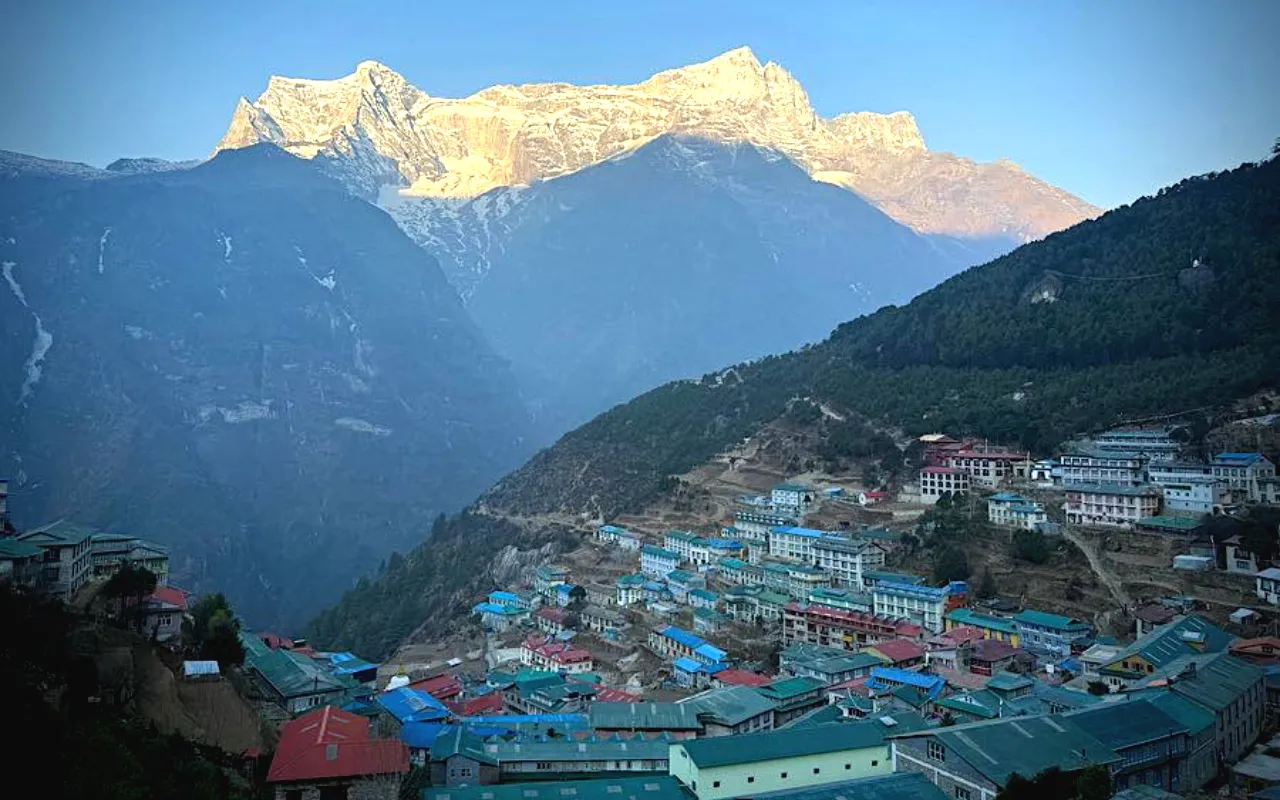
Day 4: Trek to Namche bazaar ( 3440 m)
Day 4 of the Everest Panorama Trek 11 Days takes us to the famous Namche Bazaar, the vibrant hotspot of the Himalayas. It’s a 6-hour trek to Namche, covering a total distance of 7.5 km.
Unlike yesterday’s trek, the trail today ascends most of the time, and we will cross multiple suspension bridges. These hanging and swaying bridges are an inseparable part of any Himalayan trekking journey.
Starting the trek, we will follow the Dudh Koshi River upstream and cross over it several times via sturdy suspension bridges. Crossing Zamfute and Tok Tok, we will reach Monjo, also known as Jorsalle, the gateway to Sagarmatha National Park. There, we will have our permits checked before we continue the trek. The entrance gate is decorated with traditional Buddhist scripts and prayer flags.
The Sagarmatha National Park is a UNESCO World Heritage site, a protected area of the Everest region. This means entry without the company of a licensed guide is strictly prohibited.
As we make our way through the park, we might get to see a couple of wild animals such as the rare red panda, monkeys, deer, etc. One thing you will surely see is the view of the Himalayas.
After crossing the Sagarmatha National Park, we will come across the Tenzing-Hillary Suspension Bridge, which stands to be one of the longest and highest hanging bridges in the region. Crossing this bridge is definitely a highlight of the day. By the end of the day, we will gain over 800 meters of altitude.
Following the crossing of the bridge, we will arrive at the final leg of the trek to Namche Bazaar. This section is deemed to be difficult as we have to climb a sharp ascent named the “Namche Hill”.
The climb is tough and hard to navigate, but with the proper instruction from our guide, it is very doable. We will take several breaks to rest our bodies and gather our breath.
After crossing this difficult passage, the colorful and charming town of Namche brings us a sigh of relief, knowing that all we do now is eat and rest.
Activity: Trekking for 5-6 Hours
Max. Altitude: 3,440m/11,286ft. Namche bazaar
Meal: Breakfast, Lunch, Dinner
Accommodation: Guest House
Day 5: Acclimatization Day in Namche Bazaar (acclimatization hike)
Following a safe trekking pace, drinking enough water throughout, and taking rest days are the keys to keeping yourself away from altitude sickness.
Although we do not really have to worry about altitude sickness, it’s better to play it safe in such inaccessible regions. An acclimatization day lets our body adapt to the change in atmosphere and environment.
Sitting at an altitude of 3440 meters above sea level, Namche Bazaar offers several sites to explore and a couple of short acclimatization hikes to the nearby viewpoints. Among the several options to spend our rest day, our main priority is to hike to the Everest View Hotel. It is the most popular option and the most scenic one as well.
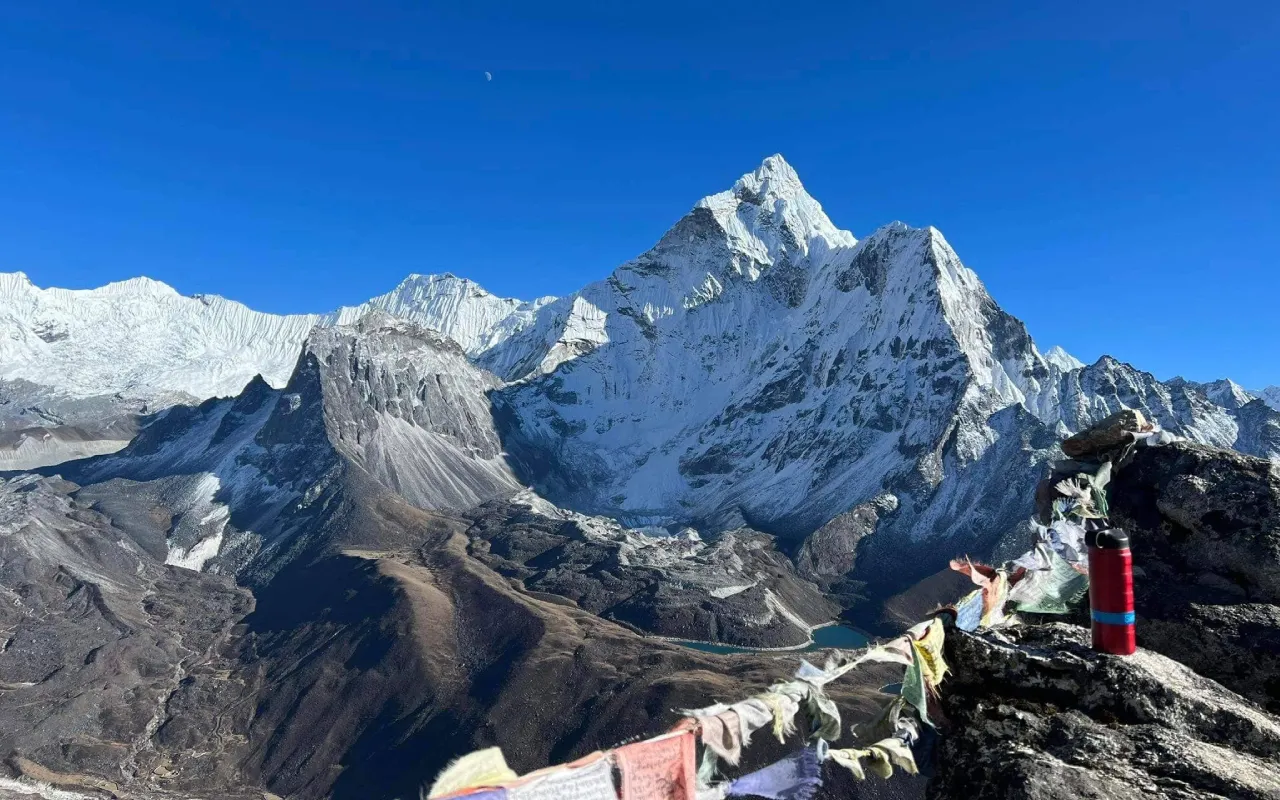
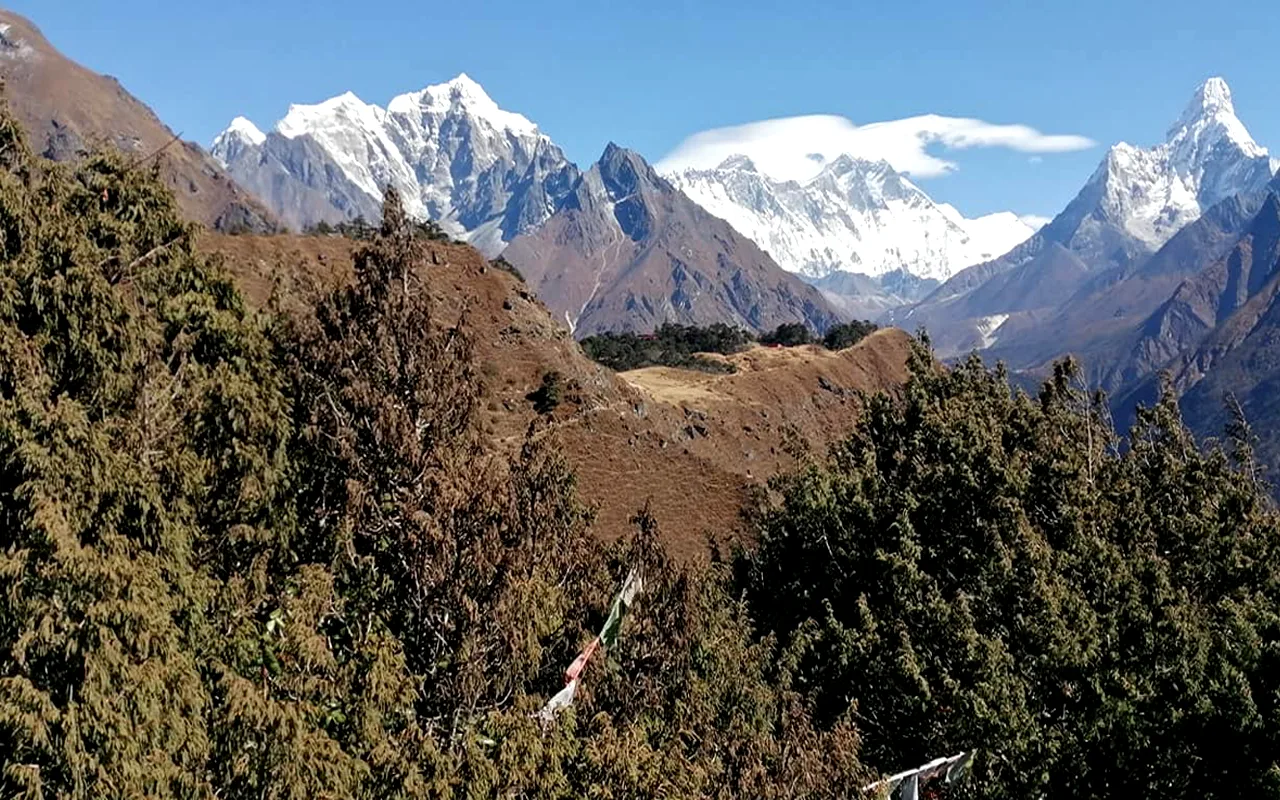
From Namche, we will trek a steep trail, passing pine forests and ultimately reaching the Everest Hotel in about 2 hours. Once we get there, we get to see a clean, wide, panoramic view of the Everest region Himalayas, including Ama Dablam, Everest, Lhotse, and more. The trek back to Namche takes about an hour, so in total, will take about 3 hours.
Another great option is to hike to Thame village. It is a less popular option but equally rewarding as the Everest View Hotel hike. The trek starts with a slight ascent following the Bhote Koshi River upstream. The trail is pleasant and we pass through pine and rhododendron forests with sightings of Himalayan pheasants if we are lucky.
The village of Thame is the oldest settlement in the region, and it’s home to Tenzing Norgay Sherpa, one of the first people to reach the top of Mount Everest. Tenzing was the guide who led Sir Edmund Hillary to the summit of Everest, the first one to reach the top.
There’s a century-old monastery in the village that offers a peaceful aura of Buddhist chants. In total, we will spend about 7 hours getting to Thame and returning.
A hike to Kyangjuma viewpoint is yet another great option. This one is the easiest acclimatization hike you can choose, taking only 3 hours in total. The trail to Kyangjuma is not steep at all, in fact, we only gain about a hundred meters of elevation.
The viewpoint offers scenes of Everest, Lhotse, and Ama Dablam peak, and there are several tea shops at the viewpoint offering hot beverages.
After returning to Namche Bazaar, we will have plenty of time to explore the town. We will start the exploration by visiting the Sherpa Culture Museum. This establishment is located on top of a hill, offering a great visual insight into the culture of the local Sherpas.
There are historic items related to mountaineering pioneers, ancient Sherpa tools, and samples of different herbal plants in the region. Connected to the museum is a photo gallery that displays the best profiles of the Himalayas in the region.
Next up is the local monastery of the town. The Namche monastery follows the teachings of the Tibetan Museum and offers an insight into the local tradition. In addition to being a place of prayer, it also houses several monks who have dedicated their lives to Buddhism. It’s a relaxing site to visit, away from the eventful town of Namche.
Activity: Hiking for 3-4 Hours
Max. Altitude: 3,440m/11,286ft. Namche Bazaar
Meal: Breakfast, Lunch, Dinner
Accommodation: Guest House
Day 6: Trek to Tengboche (3,860m)
Day 6 of the Everest Panorama Trek 11 Days is a long trekking day as we cover a distance of 10 km. From 3440 meters at Namche Bazaar, the trail follows a leveled path for about 2 hours until we reach a steep descent down to the Dudh Koshi River. We will descend about 300 meters, passing a forest of rhododendron and pine. The trail can be muddy sometimes so be careful where you step.
Descending down also means that you will have to ascend to recover the elevation you lost. Most of the time, you have to ascend twice the lost altitude.
After we reach the Dudh Koshi River basin, we will arrive at Phungi Thenga (3250 meters), which will be our lunch stop. After lunch, we will cross a hanging bridge to pass over the Dudh Koshi River.
Sometimes these bridges are packed with yaks and other cattle passing in a line; at such times, you should step aside and let them pass through first before you get on the bridge. Sometimes, porters with a huge haul of goods on their backs also do the same.
After crossing the suspension bridge, we are up for an exhausting ascent to Tengboche. This is the last leg of today’s trek and covers about 4 km with an elevation gain of 617 meters. This section will definitely test your endurance and overall physicality.
At the end of the climb, we will reach Tengboche, sitting at an altitude of 3867 meters.
Activity: Trekking for 5-6 Hours
Max. Altitude: 3,860m/12,664ft. Tengboche
Meal: Breakfast, Lunch, Dinner
Accommodation: Guest House
Day 7: Trek to Khumjung (3,790m)
As the morning prayer fills the air with a relaxing vibe, we will have our breakfast and get ready for a day of descent. Day 7 of the Everest Panorama Trek 11 Days is our first day of descent as we trace our steps back to Khumjung.
Leaving Tengboch, we will first drop down to Phungi Tenga, losing over 600 meters of elevation. From there, we will cross the Dudh Koshi River over a suspension bridge and get on the road to Sanasa village, a divergence from our original route.
The trail now ascends for hours until we reach Sanasa at 3600 meters, a popular village of the region, given that it incorporates the Gokyo Lake Trek and the standard Everest Base Camp Trek.
From Sanasa, we will follow the EBC trek route and head to Khumjung village. It’s a combination of ascents and descents that takes us to Mong La Pass, a great viewpoint at an altitude of 3975 meters above sea level.
Prayer flags and chortens decorate the viewpoint. After a short break there, we will descend down till we get to an ascending trail that leads us to Khumjung.
The village of Khumjung is one of the biggest settlements in the region. The base of Khumbila Peak is where the village sits, and the traditional stone houses are very appealing. This village also has a school, which is unheard of in most remote villages.
The Hillary School was commissioned by Sir Edmund Hillary after his successful climb to Everest. Ever since this school has been operational, providing education to the children of the Himalayas.
Activity: Trekking for 5-6 Hours
Max. Altitude: 3,790m/12,434ft. Khumjung
Meal: Breakfast, Lunch, Dinner
Accommodation: Guest House
Day 8: Trek to Monjo ( 2835 )
Day 8 of the Everest Panorama Trek 11 Days takes us back to Namche Bazaar and eventually to Monjo. The trek starts with a descent to Namche Bazaar with beautiful scenes of the Kongde Ri and Thamserku peaks.
From Namche, the trail goes downhill yet again taking us from alpine vegetation to sub-alpine region. Following the downstream Dudh Koshi River, we will cross it over once at the Hillary Suspension Bridge to get to Monjo.
Activity: Trekking for 4-5 Hours
Max. Altitude: 2,835m/9,301ft. Monjo
Meal: Breakfast, Lunch, Dinner
Accommodation: Guest House
Day 9: Trek to Lukla (2,860m)
Day 9 of the Everest Panorama Trek 11 Days is the last day of trekking. From Monjo, we will get down to Lukla which takes about 5 hours covering a distance of 13 km. By the end of today’s trek, we will have lost 420 meters of altitude.
Activity: Trekking for 4-5 Hours
Max. Altitude: 2,860m/9,383ft. Lukla
Meal: Breakfast, Lunch, Dinner
Accommodation: Guest House
Day 10: Fly back to Kathmandu (1324)
After a week in the highlands of Everest, we will get back to Kathmandu via flight. Make sure to take a good last look at the Everest highlands from your plane.
Activity: Fly for 35 Minutes
Max. Altitude: 1,324m/4,344ft. Kathmandu
Meal: Breakfast
Accommodation: 3 Star Hotel
Day 11: Final Departure
Day 11 is officially the last day of the Everest Panorama Trek 11 Days, we will have one last breakfast, carry out any unclosed transactions, and drop you off at the Tribhuvan International Airport.
Meal: Breakfast
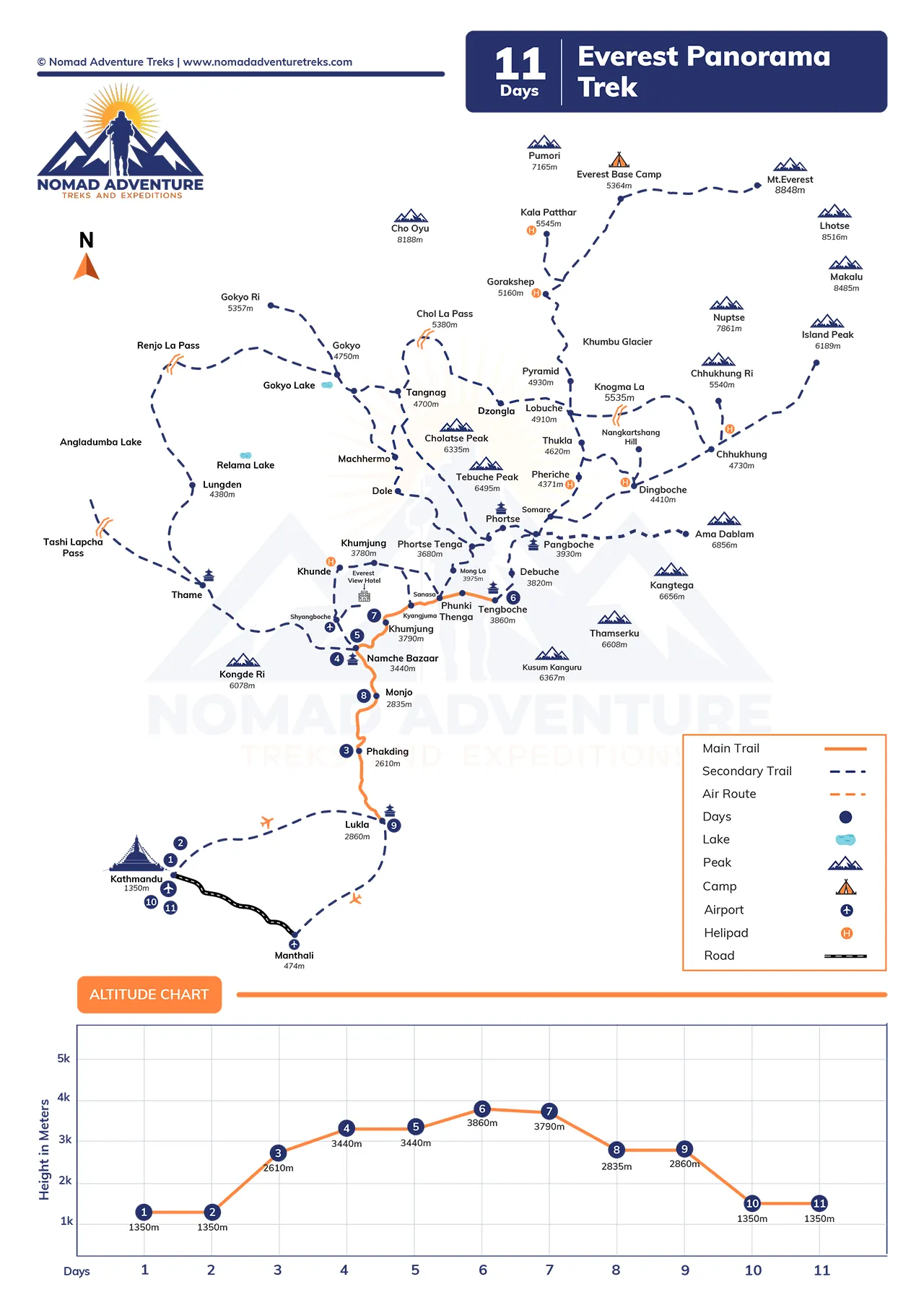
Trip Route Map
Includes & Excludes
What are included with package?
Accommodation
- Twin-sharing/double accommodation in a 3-star hotel for 3 nights in Kathmandu including breakfast (Private room accommodation can be organized at an extra cost)
- Twin-sharing guesthouse accommodation during the trek for 7 nights in the Everest Region with attached toilets in Lukla, Phakding & Namche
Meals & Drinking Water
- All your standard meals during the trek 3 meals a day (Breakfast, Lunch & Dinner) in a guest houses
- A farewell dinner on the last night in Nepal
Purified drinking water during the trek using Water Filter or water purification tablets.
Transportation
- All (international and domestic) airport transfers on a tourist vehicle
- Round-trip airfare between Kathmandu/Manthali and Lukla
- Kathmandu – Manthali – Kathmandu transportation by shared tourist vehicle
Guide and Staff
- Experienced, first-aid trained, government licensed, English speaking, and locally recruited Nomad Adventure’s trekking guide (2 guides for group size more than 7 people)
- Porters during the trek for carrying luggage (1 porter for every 2 clients)
- Wages, accommodation, meals, gear, insurance and medications for all staff
- Guided tour in Kathmandu (Private car + tour Guide)
Medical Assistance
- Assistance in arranging rescue operations in case of complicated health conditions (funded by travel insurance)
- Medical kits, including an oximeter to monitor blood oxygen saturation levels in high altitudes
Permits
- Sagarmatha (Everest) National Park Permit
- Pasang Lhamu Rural Municipality fee
- TIMS (Trekkers’ Information Management System) card
Benefits and Takeaways
- Sleeping bags and down jackets, duffle bag (one for every two trekkers) if you do not have your own
- company’s T-shirt & Cap
- Trip completion certificate
Administrative & Taxes
- All administrative expenses and government taxes
What are not included with package?
Price Excludes
- Lunch and dinner in Kathmandu
- International flight fare and airport departure tax
- Nepal Entry Visa (Visa can be acquired easily after your arrival at Tribhuvan International Airport in Kathmandu with a fee of USD 30 for 15 days visa, USD 50 for 30 days visa and USD 125 for 90 days visa)
- Monument entrance fees while sightseeing in Kathmandu
- Extra night accommodations in Kathmandu due to early arrival or late departure, early return from the trek or other itinerary changes
- Travel insurance along with high-altitude emergency evacuation coverage
- Medical check-ups, vaccinations, or medications required for the trek are not included.
- Any beverages including bottled and boiled water
- Tips to trekking staff and driver
- Personal trekking gear and equipment
- Any expenses other than the Price Include section
- Personal expenses (shopping, snacks, boiled bottle water, hot (Tea/ Coffee) and cold drinks, hot shower, alcohol, Wi-Fi, telephone call, battery re-charge fee, extra porters, etc
- Personal clothing and gear

Note:
If you have a private group and prefer a personalized experience, we can organize a custom trip tailored to your requirements and group size, running it any day you choose.
Detail Information about Everest Panorama Trek 11 Days
How does our trip start?
The Everest Panorama Trek 11 Days starts in Kathmandu, from where we will get on a flight to Lukla, the starting point of our trek. From Lukla, we will begin the first day of trekking by getting to Phakding.
On the way, we will pass our first checkpoint of the trek. Before you start the trek, you should always check your bags to make sure you have everything you need for the rest of the 11-day journey to the remote Himalayan highlands.
Difficulty
Our Everest Panorama Trek 11 Days is an easy trekking experience. Although the Everest region is notorious for being a difficult trail and claiming many lives, our special itinerary takes you on an easy and safe adventure to the Everest region. The itinerary avoids going higher than 3900 meters above sea level, which is a plus point for ease.
Best seasons
The best seasons for our Everest Panorama Trek 11 Days are spring and autumn, closely followed by summer. During the seasons of autumn and spring, nature is in full bloom, the air quality is great, and the sun shines throughout the day.
The summer season also possesses the same qualities, but it is hotter in the lower region, and rainfall is a frequent phenomenon.
Can a beginner join this trip?
Yes, the Everest Panorama Trek 11 Days itinerary is one of the easiest trekking experiences you can go for. It might even be the easiest. There is no risk of severe altitude sickness, the trails are very beginner-friendly, and the environmental conditions are mellow, given the low altitude we trek.
Altitude Sickness
At Tengboche, we reach an altitude of 3860 meters above sea level, which is the highest we will reach during the Everest Panorama Trek 11 Days. Altitude sickness below 5000 meters is not considered to be serious; you can just walk it off by descending about 200 meters.
For the entirety of the trek, you do not have to worry about suffering massively from altitude sickness.
Our guide will check your oxygen levels every morning and every night before hitting the bed. He will also set the pace for the trek so that you do not get altitude sickness even in the slightest. After all that, it is up to you to keep yourself hydrated all the way through.
Accommodation, Food and Drink
Standard accommodation for the Everest Panorama Trek 11 Days is tea houses and lodges, but you can opt for an upgraded accommodation as well. Your upgraded accommodation will definitely be more comfortable and full of extra services, but you will miss out on the amazing local dishes prepared in the local tea houses.
Your breakfast options include pancakes, Tibetan bread, porridge, toast with jam or butter, muesli, and other general items. Your lunch and dinner options are Dal Bhat (national Nepalese dish), momo, Shyakpa (traditional Sherpa stew), Rilduk (potato stew), noodles, pasta, roasted veggies, stir-fried veggies, etc.
Drinks are limited to different types of teas, including black tea, lemon tea, herbal tea, milk tea, and more. Some of the eateries also have hot chocolate and fresh seasonal fruit juice.
Transportation
Flights to and from Lukla and transport to airports will be covered by our Everest Panorama Trek 11 Days package. A private vehicle for your day sightseeing tour around Kathmandu will also be provided.
Permit
There are only two permits required for the Everest Panorama Trek 11 Days those are the Sagarmatha National Park Entry Permit and the Khumbu Rural Municipality Permit.
Trip preparation and fitness
We recommend you physically prepare yourself by doing cardio exercises and endurance-building exercises for about 4 weeks prior to the trek.
Your Extra expenses
Expenses such as travel insurance fees, flight expenses to and from Nepal, tips for the crew, emergency services expenses, additional meals or hotel stays, etc. are considered extra expenses which should be paid out of your pocket.
Things to Remember Before Trekking the Everest Panorama Trek 11 Days
- Pack all your essentials, layered clothing, and beanies are mandatory, and without them, you cannot survive the cold. Shades are important as well since the sunlight reflected by the white snow can be too annoying over time.
- No matter how safe the Everest Panorama Trek 11 Days is, you must always get insured since you cannot predict the activities of nature. It’s better to play it safe than be sorry tomorrow.
- Cash is King. The remote highland villages do not accept card payments; the only form of money they accept is cash. Although much of your trekking expenses are covered by the Everest Panorama Trek 11 Days package, you need some cash for extra expenses.
- Be mindful of the local culture, and do not engage in their activities unless asked, since you might unknowingly do something bad. Better not to take chances.
- Keep yourself well hydrated throughout the trek, and always ask for things you need from the guide; he will help you get them to the best of his abilities.
Frequently Asked Questions
What’s included in the Everest trek package?
Our Everest Panorama Trek 11 Days covers all your accommodation expenses, food expenses (daily breakfast, lunch, and dinner), daily wages of guides and porters, transportation expenses (flight to Lukla and more), trek permits for Everest, insurance cost for guides and porters, and more. You can consult with the trek guide about the inclusiveness of the trek package. Basically anything that is not said to be inclusive is exclusive of the package.
Can I trek independently to Everest Base Camp?
No, entering the Everest region requires all international trekkers to have a licensed guide with them. Trekkers who are seen alone will be transferred back to Kathmandu and fined for breaking the law. Although a porter is not mandatory, the duo of guide and porter will serve you the best in the harsh cold conditions of Everest.
What are the risks of altitude sickness?
The risk of altitude sickness is not a major threat to our Everest Panorama Trek 11 Days itinerary since we barely make it above 3900 meters above sea level. There is basically no threat of altitude sickness at such low elevation. You can go around trekking without any worry.
What should I do in case of an emergency?
If you need immediate medical support, you should let the trek guide know and make him call the emergency evacuation services. A helicopter will come to pick up the injured/diseases and transport them to the nearest hospital for immediate care.
What gear do I need for the trek?
You do not need anything specific or special for this Everest Panorama Trek 11 Days; all you need is a couple of down jackets, trekking pants, a pair of trekking boots, trekking poles, shades, a beanie, and other essential clothing items. We are not climbing peaks or crossing deep crevasses; we do not require any other tools.
Reviews on Everest Panorama Trek 11 Days
 Write a Review
- 1 personUS$ 1375
- 2 - 3 personUS$ 1275
- 4 - 6 personUS$ 1225
- 7 over 9999 US$ 1175
Total Cost:
US$ 1375
- Your safety, our no 1 priority
- Best price guarantee
- Experienced & dedicated team
- Easy booking, no hidden charge
- You can customize this trip
Talk to Travel Expert Samundra Rimal (+977-9843127084)