



Gokyo and Renjo La Pass Trek

Duration
14 Days

Max Altitude
5,358 m. / 17,579 ft.

Difficulty
Moderate

Group Size
2-10 Pax

Meals
- 12 Breakfast
- 11 Lunch
- 11 Dinner

Accommodation
- 3 Star Hotel
- Guest House

Transportation
Car/Plane

Activities
- scenic flight
- Trekking

- 1 personUS$ 1500
- 1 - 2 personUS$ 1440
- 1 - 3 personUS$ 1400
- 4 - 6 personUS$ 1350
- 7 over 9999 US$ 1300
Total Cost:
US$ 1500
- Your safety, our no 1 priority
- Best price guarantee
- Experienced & dedicated team
- Easy booking, no hidden charge
- You can customize this trip



Talk to Travel Expert Samundra Rimal (+977-9843127084)
Introduction of Gokyo and Renjo La Pass Trek
The 14-Day Gokyo and Renjo La Pass Trek is among the popular trekking destinations in Nepal, and it’s all for the right reasons. The Gokyo Valley is arguably the most beautiful Himalayan valley in Nepal, and the Renjo La Pass offers a great trekking experience in addition to being an unforgettable viewpoint.
While the Gokyo Valley lies in the Everest region, it is a completely different experience compared to the standard Everest Base Camp trekking experience. The latter is more crowded since it is the most popular destination in Nepal and one of the most visited trekking destinations in the world.
In contrast, the 14-Day Gokyo and Renjo La Pass Trek is not as crowded and offers an intimate trekking experience with beautiful scenes of the pristine Himalayan lakes of Gokyo Valley.
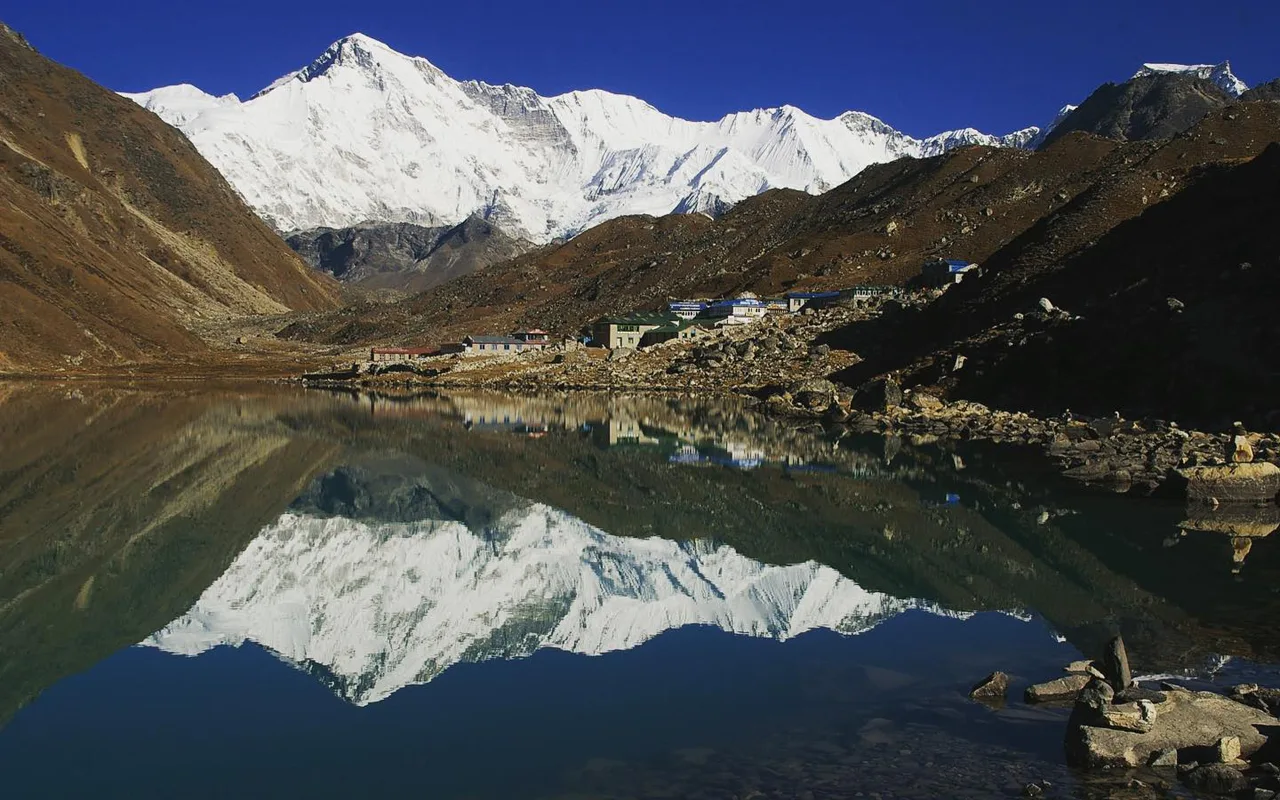
The lakes of Gokyo are considered to be sacred by followers of Hinduism and Buddhism, which is why you might see a bunch of devotees praying and bathing in the icy waters as a test of faith. This happens once or twice a year at certain festive events, so it’s rare to see people dipping in and out of the lake.
There’s also a Hindu temple on the shores of one of the Gokyo Lakes, namely Gokyo Cho Lake.
There are a total of 6 Gokyo Lakes, including Gokyo Cho, Kyajumba Cho, Thonak Cho, Tanjung Cho, Gyazumpa Cho, and Ngojumba Cho. All of these lakes are part of the large Gokyo Valley lakes, and their waters are the same since all of them rely on Himalayan glaciers.
The water is turquoise blue and clean, and the whole lake system is in pristine condition. Being a sacred site, the lakes are conserved and protected by the locals to the best of their ability.
These freshwater lakes are one of the highest of its kind. Some travel agencies will try to sell you “it is the highest freshwater lake in the world,” but that is completely false.
There is a lot of confusion and misinformation surrounding the 14-Day Gokyo and Renjo La Pass Trek, but we are here to provide you with the facts. Stick with us till the end to know every detail of this trek, covering everything from the itinerary to upgrades.
Trip Highlights
- Visit the Gokyo Cho, Kyajumba Cho, Thonak Cho, Tanjung Cho, Gyazumpa Cho, and Ngojumba Cho; all the lakes of the Gokyo region.
- Visit the popular town of Namche and stay there for an acclimatization day.
- Visit the famous Everest View Hotel, the only luxury hotel in the Everest region and also the highest-located hotel in the world.
- Enjoy 360-degree panoramic views from the summit of Renjo La Pass and the balcony of the Everest View Hotel.
- Get a taste of the culture and tradition of the Sherpa people and their authentic dishes.
Detail Itinerary of Gokyo and Renjo La Pass Trek

Day 1: Arrive at Tribhuvan International Airport and drive to your accommodation
On the very first day of your 14 days Gokyo and Renjo La Pass Trek, you will touch the grounds of Kathmandu airport, get your tourist visa approved, and meet our representative who will drive you to your accommodation for the night. One of the best things about visiting Nepal is the easy visa-on-arrival option; it just makes getting a visa a breeze.
To obtain your Nepalese tourist visa, you need to present a couple of documents. These include your proof of return tickets, bank receipts of visa fee payment, your passport that is valid for at least 6 more months, fully filled visa application form, and two passport-sized photos. You can get the bank receipt at the nearby bank counter after you pay your fees.
You can also apply for a Nepalese tourist visa online. For this, you need to visit the official immigration website of the Government of Nepal, fill out a digital visa application form, pay your visa fees, and wait for your tourist visa clearance which will be sent to you via email. You will be sent a barcode which you will have to print out and present at the immigration booth at the airport.
After you pop up at the terminal, our representative will find you and take you to your hotel for the night.

Activity: Driving for 35 Minutes

Max. Altitude: 1,324m/4,344ft. Kathmandu

Accommodation: 3 Star Hotel
Day 2: Fly to Lukla and Trek to Phakding
Lukla is our starting point for the 14-day Gokyo and Renjo La Pass Trek. After a lovely breakfast at our 3-star hotel, we will get in a car to get to the airport and catch the flight to Lukla. Flights to Lukla happen early in the morning since the mountainous region is infamous for cloudy and windy afternoons.
We will get to Lukla (Tenzing Hillary Airport) in just about 35 minutes and begin our day trek shortly afterward. The village of Lukla sits at an altitude of 2860 meters above sea level and is the last place for you to stock up on necessary supplies and trekking gear.
From Lukla, our destination of Phakding is just 8 km, which should take about 2.5 hours to trek. The trail is mostly descending, so it should not be an exhausting first day of the trek.
The trail starts with a slight descent through a thick pine forest with some rhododendron trees. There are multiple ascents and descents throughout the trail, as well as a bunch of suspension bridges.
Firstly, we will get to Chheplung, a traditional Sherpa village not far from Lukla, followed by the Thado Koshi River bridge. Trekkers can enjoy scenes of Kusum Kanguru, Kangtega, and more peaks from the bridge.
From Thado Koshi, we will get to Ghat, a beautiful Sherpa village with an old monastery at its center. This is the final leg of our trek today, and also our lunch spot. By the end of the trek, we will be at 2610 meters above sea level, losing about 250 meters of altitude throughout the day.
Activity: Fly & Trek for 4-5 Hours
Max. Altitude: 2,610m/8,563ft. Phakding

Meal: Breakfast, Lunch, Dinner
Accommodation: Guest House
Day 3: Trek to Namche Bazaar from Phakding
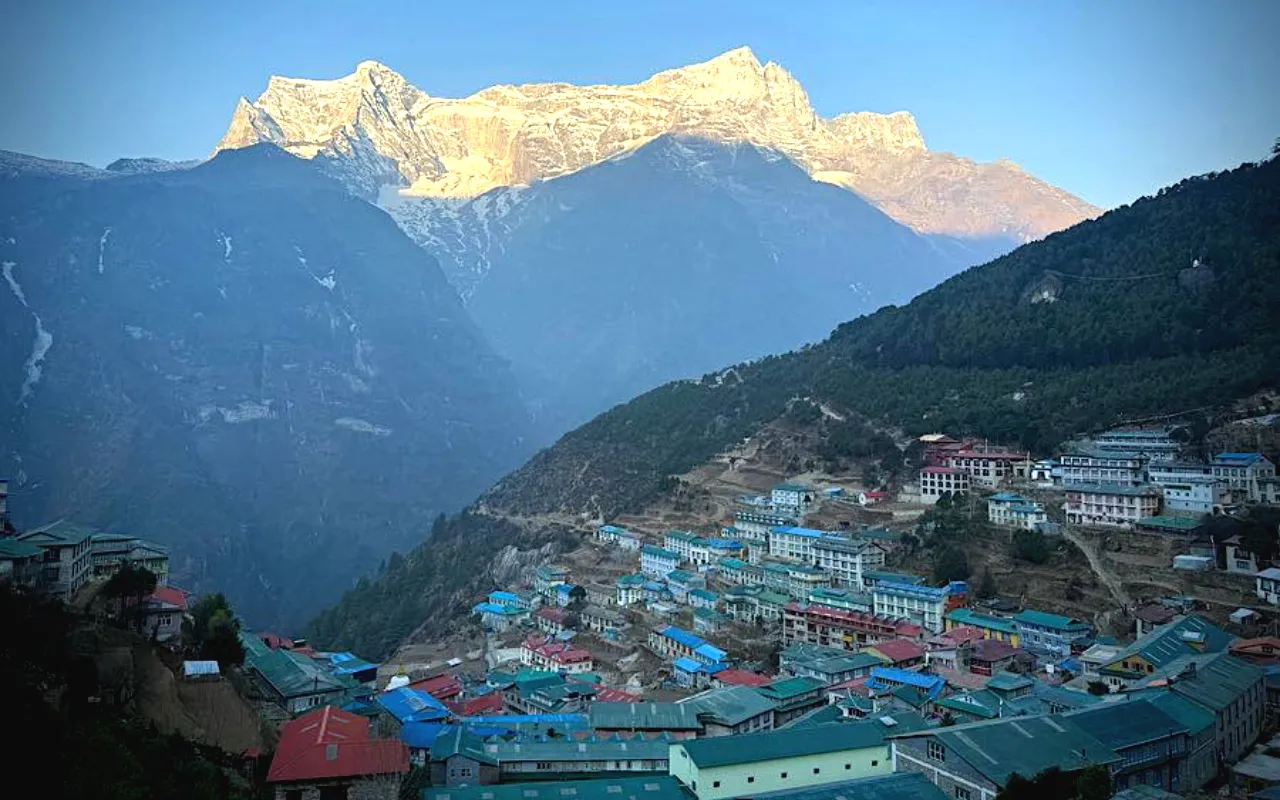
Covering a total distance of 11.7 km is around 6 hours, day 3 of the 14 Days Gokyo and Renjo La Pass Trek is a day to remember as we reach the famous, charming, and vibrant town of Namche Bazaar. We will also gain quite some elevation today, going from 2610 meters to 3440 meters above sea level in Lukla.
Today’s trail starts along the banks of the Dudh Koshi River going along its western edges. The terrain is uneven and the dirt track is full of pebbles but this is all a part of the experience, you probably did not join a Himalayan trek to walk on smooth pitch black roads. First of all, we will get to Zamfute, then to Tok Tok, and Monjo, the entrance to Sagarmatha National Park.
We will cross the Dudh Koshi River many times, using the sturdy and reliable suspension bridges. One of them is the famous Tenzing-Hillary Suspension Bridge which is one of the highest suspension bridges in the region. It’s a great viewpoint to see the deep gorge of the Dudh Koshi River.
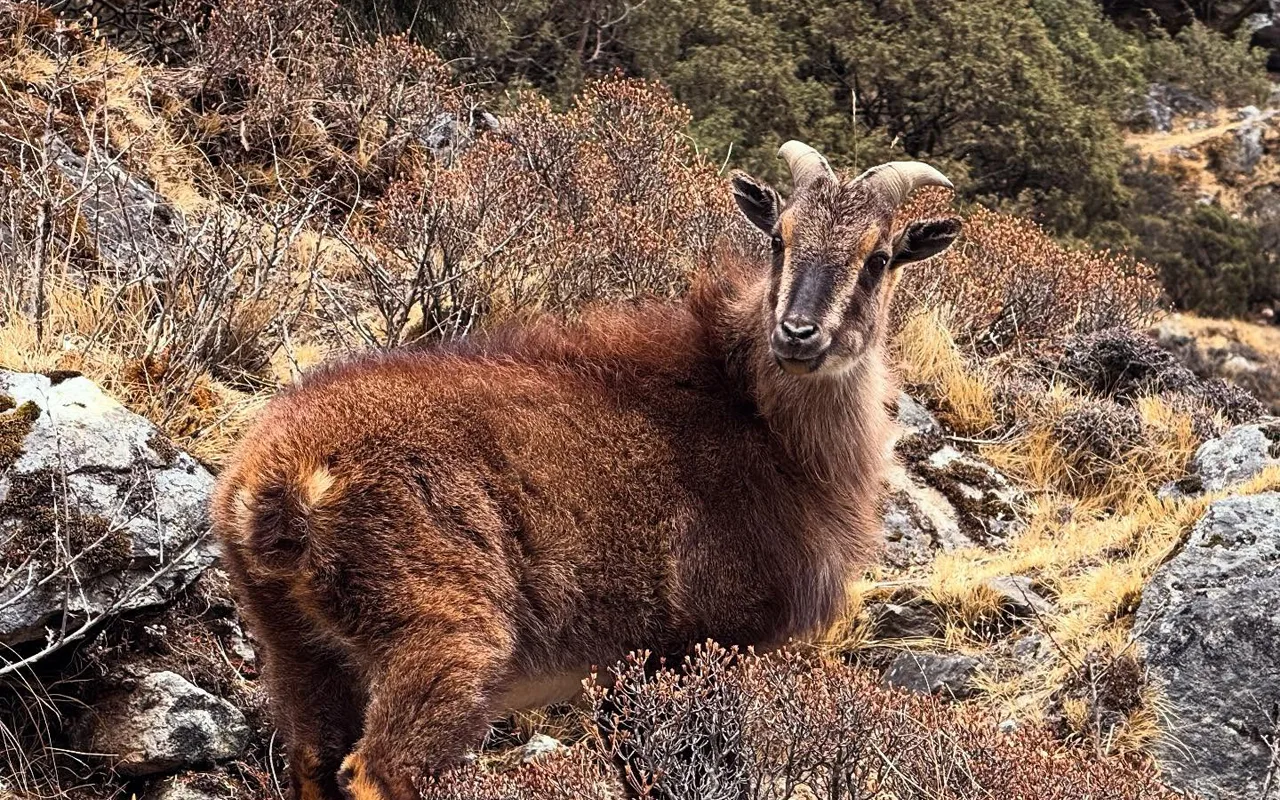
As we reach Monjo, our permits will be checked at the checkpost before we are allowed to enter the Sagarmatha National Park, home to Himalayan Thar, Red Panda, Musk Deer, Himalayan Pheasant, Snow Leopard, and more. This park is a UNESCO World Heritage site and is protected by the government of Nepal.
Making our way through the national park, we will get to Jorsale which will be our last stop for the day. It is also the last village before we reach Namche Bazaar so we do not really have much choice. We will have our lunch there, and get some rest, before climbing the hardest part of today’s trek.
This part of the trek is about 2 hours long. You will see Mt. Everest for the first time during the 14-Day Gokyo and Renjo La Pass Trek as we get to a viewpoint on the way up to Namche Bazaar. We will reach the viewpoint after about 1.5 hours of climb. After 30 more minutes of uphill climb, we will finally reach Namche Bazaar.
As we go up in elevation, the weather predictability plummets. There’s always a chance of heavy clouds and bright sun, you just cannot guess what will happen within the next hour.
Activity: Trekking for 5-6 Hours
Max. Altitude: 3,440m/11,286ft. Namche Bazaar
Meal: Breakfast, Lunch, Dinner
Accommodation: Guest House
Day 4: Namche Bazaar Acclimatization Day. (Acclimatization Hike to Hotel Everest View)(3880)
Getting your body used to the environmental changes is a key preventive measure that you should follow to avoid altitude sickness. Aesthetically and scientifically, the village of Namche is a great place to spend your acclimatization day.
Today, we will go to the Everest View Hotel, the most famous hotel in the Everest region, as part of your acclimatization hike. There are many other acclimatization hiking destinations, but this one is arguably the best option.
Following a steep uphill trail, we will start the hike to Everest View Hotel, with a bunch of ascents and descents along the way. Winding our way through a snake-way trail, the valley below us starts to look distant, and the views get better as we ascent.
After about an hour of trekking uphill, we will get to a leveled part of the trail. By this point, the bustling noise of Namche will be replaced by the calming sounds of birds chirping and winds chiming.
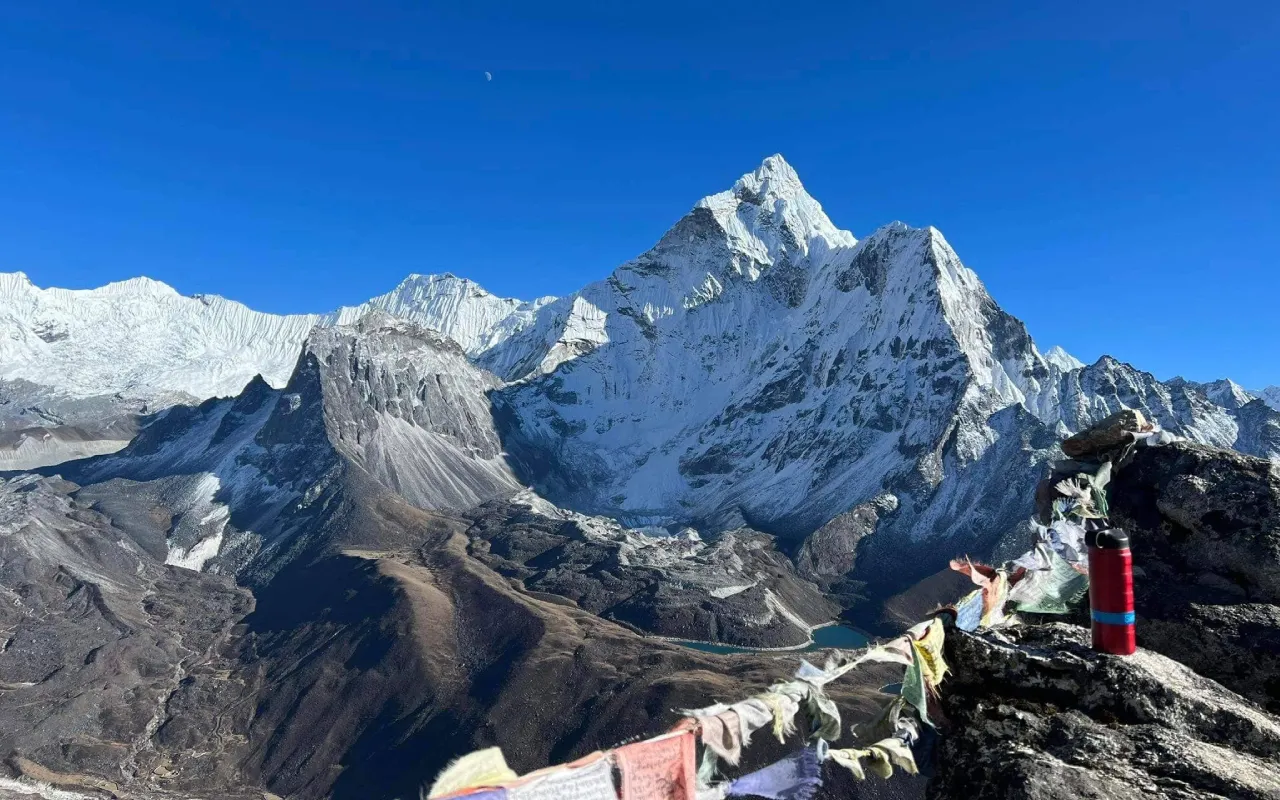
As we get up to 3600 meters of altitude, we get to see a clear view of Ama Dablam Peak, one of the most beautiful peaks in the Himalayas. This 6,812-meter-tall peak is a scenic treat and a sign that more Himalayan views are coming your way.
As we progress along the trail, we get to see views of Lhotse, Everest, and Nuptse. We will soon get to the Everest View Hotel, which is a great viewpoint to see the Everest region peaks.
Sitting at an altitude of 3880 meters above sea level, the Everest View Hotel offers a 360 view with warm beverages to heat our bodies. We will get back to Namche Bazaar after we are done with the sightseeing. In total, this hike will take around 3 hours to complete (ascent and descent).
Another great option for an acclimatization hike is to get to Khumjung Village. Located at 3790 meters above sea level, this village is an authentic Sherpa village that lets you take a peek into their daily lives.
The village also has a monastery, which supposedly has a Yeti Scalp on display. Yetis are mythical creatures that are similar to Bigfoot in size and appearance; the only difference is that Yetis have white fur.
Activity: Hiking for 3-4 Hours
Max. Altitude: 3,880m/12,730ft. Namche Bazaar
Meal: Breakfast, Lunch, Dinner
Accommodation: Guest House
Day 5: Trek to Dole from Namche Bazaar
Day 5 of the 14-Day Gokyo and Renjo La Pass Trek is where we depart from the traditional Everest Base Camp itinerary by going to Dole instead of Tengboche or Pangboche. Today’s trail is about 11 km long and we will reach 4038 meters of elevation by the end of the day.
Leaving Namche Bazaar, we will get on a steep trail that leads us to a hilltop viewpoint. Heading forward, the trail levels a little, offering a gradual uphill trek to Kyangjuma village. At the village, we will come across a divergence, taking the right leads us to Everest Base Camp, so we will take the left to reach Mong La Pass.
Also referred to as Mong Danda (hill), 3973 meters above sea level, this pass is hard to reach as we will have to climb up stone steps and the trail gets narrower at times as we make our way through the woodlands.
We will get to the top of the pass in about an hour, and a lovely view of Mt. Taboche, Thamserku, Ama Dablam, Khumbila, Lhotse, and Everest will be waiting for us there.
We will stop at Mong La Pass for a relaxing break before making our way to Phortse Thenga, following a descent to the Dudh Koshi River. Phortse Thenga is yet another divergence, one path leads to Phortse while the other leads to Gokyo Valley. We will take the latter and continue the trek to Dole. We will cross a river from there, which is where the trail gets sharply uphill.
As we progress, the surroundings change to small shrubs and thin forests, typical characteristics of alpine vegetation. You will also get to see Mt. Cho Oyu, one of the top 10 highest peaks in the world, reaching 8188 meters above sea level. As we get closer to Dole, the trail smoothens out and the steepness vanishes.
Activity: Trekking for 6 Hours
Max. Altitude: 4,038m/13,248ft. Dole
Meal: Breakfast, Lunch, Dinner
Accommodation: Guest House
Day 6: Trek to Machhermo from Dole
Day 6 of the 14-Day Gokyo and Renjo La Pass Trek is a moderate trekking experience as we cover 5.5 km in about 4 hours of trekking. This may seem like a slow pace but since we are over 4000 meters of elevation, we should ascend slowly. Starting from 4110 meters at Dole, we will reach 4470 meters of altitude as we reach Machhermo village.
Leaving Dole, we will descend a snow-covered trail that shortly turns into an ascending track with beautiful views of Kantega, Thamserku, and Cho Oyu. At this point, the alpine vegetation changes to a barren hillside landscape with small bushes and little patches of grass. The trail goes through the villages of Lhafarma and Luza before getting to a ridgeline above the Dudh Koshi River
The trail now turns into a dry sandy track while the Dudh Koshi River flows way below the ridge. Following the trail, we will soon see Machhermo village in the distance.
Activity: Trekking for 4 Hours
Max. Altitude: 4,470m/14,665ft. Machhermo
Meal: Breakfast, Lunch, Dinner
Accommodation: Guest House
Day 7: Trek to Gokyo from Machhermo
Today’s trek is about 5 hours long and requires us to cover a total distance of almost 7 km. Day 7 of the 14-Day Gokyo and Renjo La Pass Trek gains us 320 meters of altitude.
The trek to Gokyo begins with an ascent along a hill ridge accompanied by the scenes of Thamserku and Kangtega Peak. Moving along the route, we will get to Pangka following a narrow trail leading to a wide valley basin. Pangka is not quite a village but a small settlement housing a couple of eateries and tea houses.
From there, the trail keeps going uphill and makes us walk over the largest glacier in Nepal, the Ngozumpa Glacier. To put it simply, the trail is rugged and windy. We will see the first Gokyo Lake as we continue along the trail. The beautiful blue shade of the lake will fill you with excitement and motivation to reach the Gokyo village.
Located at an altitude of 4790 meters above sea level, we will spend the night there and get enough rest to re-energize ourselves for the upcoming day.
Activity: Trekking for 4 Hours
Max. Altitude: 4,789m/15,712ft. Gokyo
Meal: Breakfast, Lunch, Dinner
Accommodation: Guest House
Day 8: Trek to Gokyo Ri and back to Gokyo
Today is the ultimate day of the 14-Day Gokyo and Renjo La Pass Trek as we take you to Gokyo Ri, the summit of the trek and the highest point of the trek (5357 meters above sea level). Taking it slow, it will take us about 6 hours to ascend and descend, not accounting for the time spent at the summit of Gokyo Ri.
From Gokyo village, the distance to Gokyo Ri’s summit is just 2 km but since we are going to travel on snow-covered tracks and that too well over the 4500 meter mark, we will be slow. The decreased amount of oxygen means that you will take shorter breaths to make up for the less oxygen in the air. This is why you will be tired easily even if you have good stamina.
The start of the trek is an ascent over a gravel track with loose rocks that call for attentive foot placement. You should follow the steps of our 14-Day Gokyo and Renjo La Pass Trek guide. As we make our way up the track, the Dudh Pokhari Lake and the village of Gokyo fall into the background.
The winding trail is easy for the most part, but since we will be short of breath, we will feel exhausted, and the barren landscape is not so motivating either. However, the scenes of the icy peaks and glaciers will be enough to motivate us for the time being.
After about 1.5 hours of climbing, we will reach a small Chorten, which is also a great resting place. We will take a short, refreshing break to drink water and rest our legs a little.
We will continue the trek shortly after and reach a narrow track; this is a sign that you are close to the summit of Gokyo Ri. The final section of the climb requires us to trek through a rocky ridge, which is a difficult section, so follow the instructions of the 14-Day Gokyo and Renjo La Pass Trek guide.
From the summit, you will enjoy a 360-degree view of Mt. Everest, Lhotse, Makalu, Cho Oyu, and more. All of the aforementioned peaks are among the top 10 highest peaks in the world. After spending some time at the summit, we will head back to the Gokyo village for a restful night.
Activity: Hiking for 1-1.5 Hours
Max. Altitude: 5,358m/17,579ft. Gokyo
Meal: Breakfast, Lunch, Dinner
Accommodation: Guest House
Day 9: Trek to Lungden from Gokyo via crossing Renjo La Pass (5345)
Following the banks of the Dudh Pokhari River, we will begin trekking a slightly ascending route from the Dudh Pokhari Lake. This switchback path has a bit more life than the barren climb to Gokyo Ri and as we go deeper, the ascend becomes sharper. This road to Renjo La Pass is pretty simple but it will take us hours to get there since the environmental conditions are not complementary to trekking.
After trekking 4.5 km and gaining an elevation of 600 meters, we will finally get to the top of the Renjo La Pass, reaching an altitude of 5345 meters above sea level. The reward for this difficult climb is an unforgettable view of the Everest Himalayan range and the Ngozumpa Glacier. It is a great place to sit and relax for a while and have a photography session.
The descent down to Lungden is steeper than the ascent to the pass. The trail is a mix of gravel road and stone stairs which calls for careful foot placement, As we move up the trail, it begins to turn into plain land as we get close to the Bhote Koshi Valley. This is the sign that we are close to the village of Lungden. Our final altitude of the day will be 4380 meters, losing about 960 meters of altitude.
Activity: Trekking for 6-7 Hours
Max. Altitude: 4,380m/14,370ft. Lungden
Meal: Breakfast, Lunch, Dinner
Accommodation: Guest House
Day 10: Trek to Thame from Lungden
Following the Bhote Koshi River downstream, we will start the trek to Thame with a slight descent. The slopes are barren and there are not many settlements along the way with only a few sparsely populated communities. As we move ahead, the route rewards us with views of the valley and nearby peaks along with small pasture lands where Yaks often spend their afternoons.
After about 1 hour of trekking, we will get to Marlung, a tiny village on the east side of the Bhote Koshi River. There are traditional stone houses all over the village but tin roof houses are gaining popularity at present. We will have our lunch there and continue the trek crossing a suspension bridge over the Bhote Koshi River that leads us to the village of Taranga.
From there, the track begins to be greener as we head out of the Himalayan region into the hilly region. Moving on, we will soon reach Thame where our trek ends for the day. Covering over 10.5 km, we will trek for more or less 5 hours on the 10th day of the 14-Day Gokyo and Renjo La Pass Trek.
Activity: Trekking for 5-6 Hours
Max. Altitude: 3,800m/12,467ft. Lungden
Meal: Breakfast, Lunch, Dinner
Accommodation: Guest House
Day 11: Trek to Namche Bazaar from Thame
Today, we will get back to Namche Bazaar and it will be an exciting day. It is about 9.5 km from Thame to Namche Bazaar which will take us 5 hours to reach. The trek starts with a slight descent paired with the views of Kusum Kanguru and Kongde Ri Peak.
After about 2 km of trekking from Thame, we will get to Thamo village which is the home of Khari Gompa. This Gompa is one of the few nunneries that exist in the Himalayan region, the morning rituals and chants are just so good, that you can’t help but stand outside and listen. Leaving Thamo, we will trek along the Bhote Koshi River accompanied by the sound of the river.
4 hours in on the trek will take us to Samde village where we will have our lunch. The trail then continues to descend taking us to the valley basin before crossing over the Bhote Koshi River via a suspension bridge. Then, we trek an ascending path to get to Phute village. From there, getting to Namche Bazaar is a walk in a park.
Activity: Trekking for 6 Hours
Max. Altitude: 3,437m/11,276ft. Namche Bazaar
Meal: Breakfast, Lunch, Dinner
Accommodation: Guest House
Day 12: Trek to Lukla from Namche Bazaar
Day 12 of the 14-Day Gokyo and Renjo La Pass Trek is one of the longest trekking days as we cover almost 18 km over 7 hours to get to Lukla, our starting point.
Safe to say, we will be exhausted by the end of the day but there will be warm meals and comfy beds waiting for us at Lukla.
Activity: Trekking for 6-7 Hours
Max. Altitude: 2,858m/9,377ft. Lukla
Meal: Breakfast, Lunch, Dinner
Accommodation: Guest House
Day 13: Fly back to Kathmandu
The following day, we will get on a flight to Kathmandu, we can not leave on day 12 because only morning flights are available from the Tenzing Hillary Airport in Lukla.
Activity: Fly for 35 Minutes
Max. Altitude: 1,324m/4,344ft. Kathmandu
Meal: Breakfast
Accommodation: 3 Star Hotel
Day 14: Transfer to the international airport for your final departure
Day 14 is the final day of the 14-Day Gokyo and Renjo La Pass Trek. We will work out if anything is left and bid you farewell before our representative drops you off at the airport.
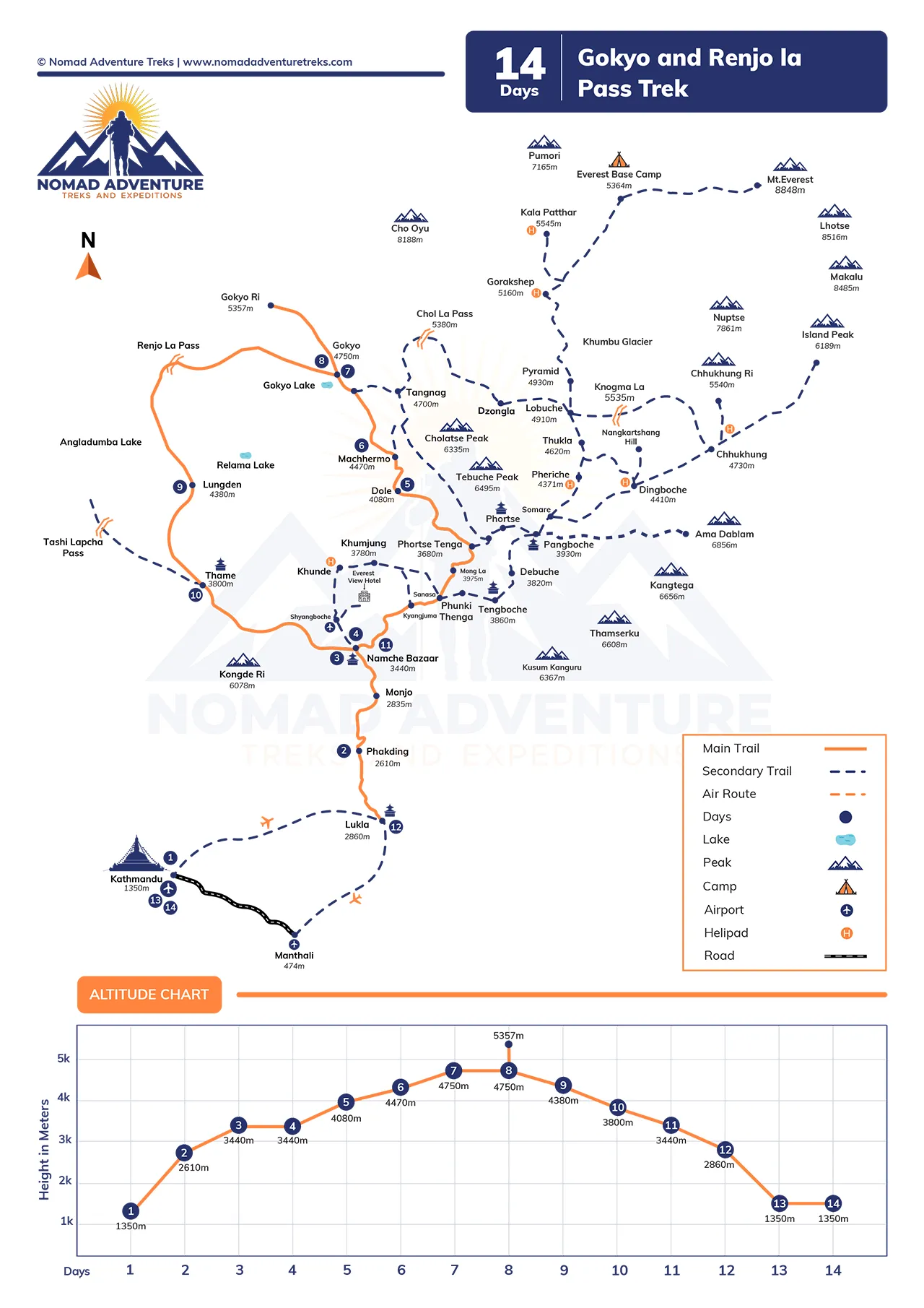
Trip Route Map
Includes & Excludes
What are included with package?
Accommodation
- Twin-sharing/double accommodation in a 3-star hotel for 2 nights in Kathmandu including breakfast (Private room accommodation can be organized at an extra cost)
- Twin-sharing guesthouse accommodation during the trek for 11 nights in the Everest Region with attached toilets in Lukla, Phakding & Namche
Meals & Drinking Water
- All your standard meals during the trek 3 meals a day (Breakfast, Lunch & Dinner) in a guest houses
- A farewell dinner on the last night in Nepal
- Purified drinking water during the trek using Water Filter or water purification tablets.
Transportation
- All (international and domestic) airport transfers on a tourist vehicle
- Round-trip airfare between Kathmandu/Manthali and Lukla
- Kathmandu – Manthali – Kathmandu transportation by shared tourist vehicle
Guide and Staff
- Experienced, first-aid trained, government licensed, English speaking, and locally recruited Nomad Adventure’s trekking guide (2 guides for group size more than 7 people)
- Porters during the trek for carrying luggage (1 porter for every 2 clients)
- Wages, accommodation, meals, gear, insurance and medications for all staff
Medical Assistance
- Assistance in arranging rescue operations in case of complicated health conditions (funded by travel insurance)
- Medical kits, including an oximeter to monitor blood oxygen saturation levels in high altitudes
Permits
- Sagarmatha (Everest) National Park Permit
- Pasang Lhamu Rural Municipality fee
- TIMS (Trekkers’ Information Management System) card
Benefits and Takeaways
- Sleeping bags and down jackets, duffle bag (one for every two trekkers) if you do not have your own
- company’s T-shirt & Cap
- Trip completion certificate
Administrative & Taxes
- All administrative expenses and government taxes
What are not included with package?
Price Excludes
- Lunch and dinner in Kathmandu
- International flight fare and airport departure tax
- Nepal Entry Visa (Visa can be acquired easily after your arrival at Tribhuvan International Airport in Kathmandu with a fee of USD 30 for 15 days visa, USD 50 for 30 days visa and USD 125 for 90 days visa)
- Guided tour in Kathmandu (Private car + tour Guide), Monument entrance fees while sightseeing in Kathmandu
- Extra night accommodations in Kathmandu due to early arrival or late departure, early return from the trek or other itinerary changes
- Travel insurance along with high-altitude emergency evacuation coverage
- Medical check-ups, vaccinations, or medications required for the trek are not included.
- Any beverages including bottled and boiled water
- Tips to trekking staff and driver
- Personal trekking gear and equipment
- Any expenses other than the Price Include section
- Personal expenses (shopping, snacks, boiled bottle water, hot (Tea/ Coffee) and cold drinks, hot shower, alcohol, Wi-Fi, telephone call, battery re-charge fee, extra porters, etc
- Personal clothing and gear

Note:
If you have a private group and prefer a personalized experience, we can organize a custom trip tailored to your requirements and group size, running it any day you choose.
Detail Information about Gokyo and Renjo La Pass Trek
How does our trip start?
The 14-Day Gokyo and Renjo La Pass Trek starts in Kathmandu, where we get on the flight to Lukla, our actual starting point of this 2-week-long trek. Once we get to Lukla via a 35-minute scenic flight, we will shortly get on the road to Phakding, our first-night stay in the Solukhumbu region.
Difficulty
Our 14-Day Gokyo and Renjo La Pass Trek is a moderate trekking experience that calls for previous trekking experience. If you are a beginner, you should not try this trek as it can prove to be too much for someone who is inexperienced.
The stone steps, the long trekking days, and traversing through the harsh climate of the Himalayas are not something everyone is capable of doing without proper experience and preparation. On a scale of 10, we have given it a rating of 7.5.
Best seasons
Coming from our experienced 14-Day Gokyo and Renjo La Pass Trek guide, the season of spring is the best as it offers stable weather, great visibility, and air quality. The day temperature is very moderate, but the nights can be a bit chilly, reaching under 0°C. Since it is the most preferred weather, the trails are more lively and you will meet a bunch of trekkers along the way.
The other best option is the autumn season which boasts similar trekking conditions but a little drier and less cloudy days in comparison to spring. Late autumn can be a bit cloudy when the winter season creeps in slowly.
Altitude Sickness
5357 meters above sea level is the highest altitude we will reach during the 14-Day Gokyo and Renjo La Pass Trek. If you are aware of the traits of altitude sickness, you would know that it generally occurs at over 5000 meters of altitude. However, since we will not be spending much time at Gokyo Ri (5357 m), we can rule out that possibility.
On the other hand, altitude sickness can also occur over 3500 meters, but it is barely harmful as long as we are under 5000 meters of altitude. Our guide will let you in on the preventive measures of altitude sickness and also check your oxygen levels every day and every night.
You are very unlikely to get altitude sickness, but even if you do, it is not a major threat at the elevation we will be traveling in.
Accommodation, Food and Drink
Accommodation in Kathmandu city will be in 3-star hotels, while the trekking days will be limited to standard tea houses in the villages where we will spend the night. These settings are upgradeable, and we will arrange a luxury stay for you to the best of our ability and availability.
Your breakfast options are not that many; you can choose from porridge, muesli, pancakes, Tibetan bread, eggs (poached or fried or boiled), toast, and a couple of other dishes.
Meanwhile, your lunch and dinner options are Dal Bhat (the national Nepali dish), momo, chowmein, noodles, pasta, soups, fried rice, Rildok, Sherpa stew, and more. Tea and coffee are the only hot beverages you will find at every eatery we stop in.
Transportation
Transport services required by our proposed 14-Day Gokyo and Renjo La Pass Trek itinerary will be a part of the trek package. This includes airport pickup and dropoff and flights to and from Lukla.
Permit
The permits required for the 14-Day Gokyo and Renjo La Pass Trek are the Sagarmatha National Park and Khumbu Pasang Lhamu Rural Municipality Trek Card. These permits are a part of our trek package.
Trip preparation and fitness
The 14-Day Gokyo and Renjo La Pass Trek is a difficult trek overall. The high altitude, the low oxygen content in the air, the cold temperature, and the rugged trails are all factors contributing to the difficulty of the trek. Not to mention, the long trekking hours on a daily basis is also something to consider during your preparation days.
We recommend you physically prepare for this trek for 12 weeks before the scheduled start of the trek.
Cost & Budget
Our 14-Day Gokyo and Renjo La Pass trek is priced at USD _________ per person. We came upon this number considering the facilities, and convenience we provide to you throughout the journey.
Your Extra expenses
Your extra expenses include things like tips for the crew members, additional meals, additional stay, travel, and medical insurance, emergency evacuation services, laundry fees, and things that are not mentioned as inclusive.
Things to Remember Before Trekking the 14-Day Gokyo and Renjo La Pass Trek
- Be physically well-prepared by training your leg muscles, and doing cardio, and endurance exercises to upgrade your stamina, and short uphill hikes if possible.
- Research a little about altitude sickness, its causes, and preventive measures. Although our guide will let you know it all, studying it yourself will help you remember ir easily.
- Pack layers of clothing, this includes a thermal base layer that insulates your body heat, a warm cotton layer, your down jacket, and a waterproof and windproof jacket to top it off.
- Bring along a sleeping bag (we rent it as well) since you will need them during chilly nights. The tea houses provide blankets, but they might not be as warm as you would want.
- Energy bars and energy drinks are very handy when you want to energize yourself instantly.
Frequently Asked Questions
Are ATMs or banks available throughout the trek?
No, ATMs and banks are not available throughout the 14-Day Gokyo and Renjo La Pass Trek. There are some banks in Lukla and Namche with ATMs but since there are limited outlets and more users, they can run out of cash very fast. Especially during peak travel season, ATMs can be out of order since getting enough cash to a Himalayan ATM is not as easy. To be safe, just carry cash with you from Kathmandu.
How much water should I drink per day during the trek?
2 to 3 liters of water per day should be enough to stay hydrated, you can always go for more if you want to. Since we will be losing water in the form of sweat, it is absolutely necessary for us to stay well-hydrated, this also prevents us from the risk of altitude sickness.
Is drinking and smoking during trekking days allowed?
Public drinking and smoking are not a new thing in the Himalayas but you must understand that drinking alcohol during your trekking days will dehydrate your body which is not a good thing for altitude sickness.
Reviews on Gokyo and Renjo La Pass Trek
 Write a Review
- 1 personUS$ 1500
- 1 - 2 personUS$ 1440
- 1 - 3 personUS$ 1400
- 4 - 6 personUS$ 1350
- 7 over 9999 US$ 1300
Total Cost:
US$ 1500
- Your safety, our no 1 priority
- Best price guarantee
- Experienced & dedicated team
- Easy booking, no hidden charge
- You can customize this trip
Talk to Travel Expert Samundra Rimal (+977-9843127084)