




Kyanjin Ri Trek

Duration
8 Days

Max Altitude
4,773 m. / 15,659 ft.

Difficulty
Moderate

Group Size
2-20 Pax

Meals
- 8 Breakfast
- 8 Lunch
- 7 Dinner

Accommodation
- Lodge

Transportation
Bus

Activities
- Trekking
- Sightseeing

- Your safety, our no 1 priority
- Best price guarantee
- Experienced & dedicated team
- Easy booking, no hidden charge
- You can customize this trip



Talk to Travel Expert
Samundra Rimal (+977-9843127084)
Introduction of Kyanjin Ri Trek
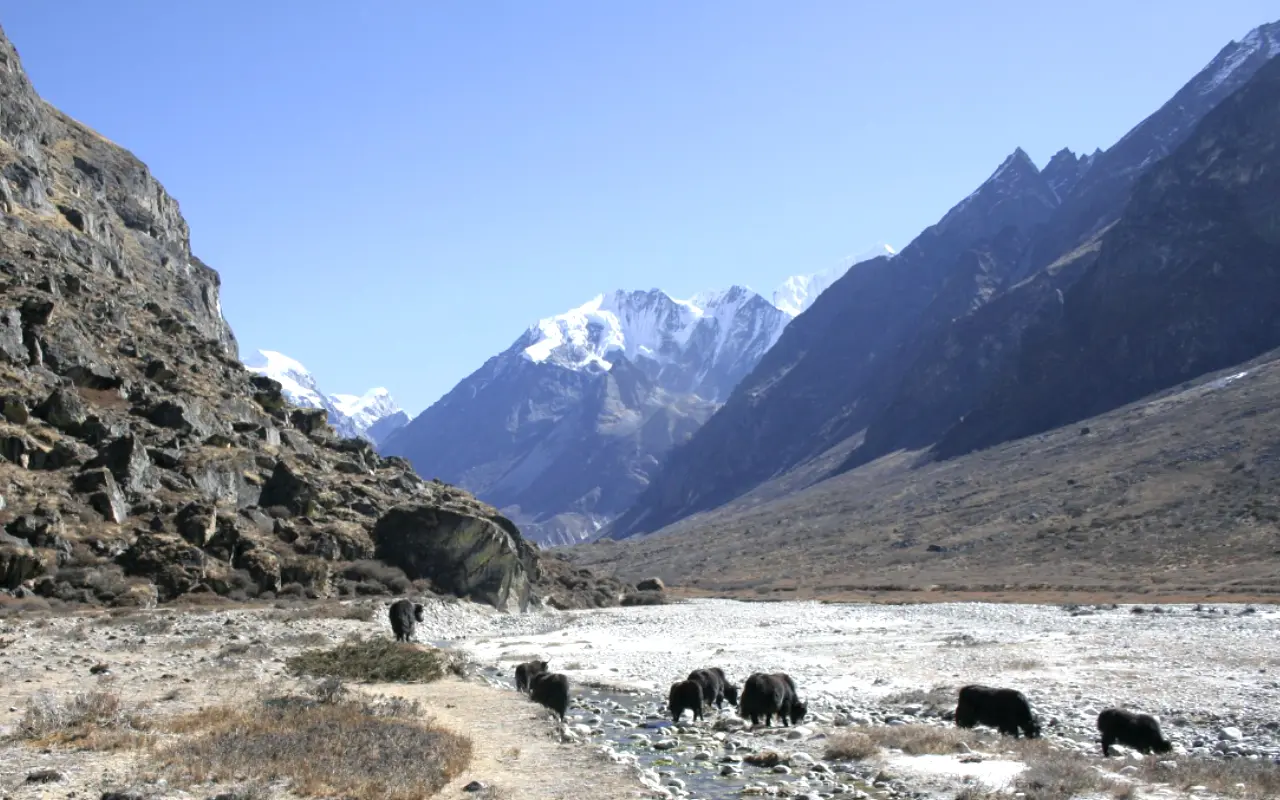
The Kyanjin Ri Trek is an 8 day journey through the Langtang Valley, combining forest trails, Tamang villages, mountain landscapes and a high viewpoint above Kyanjin Gompa. This 8-day walk starts from Kathmandu, goes to Syabrubesi and then walks through Langtang National Park. As you gain elevation, the scenery changes from green forests and river valleys to open alpine landscapes.
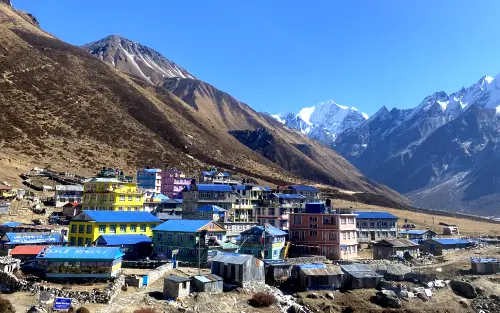
It goes through Lama Hotel and Langtang Village until it reaches Kyanjin Gompa at 3870 m (12697 ft). The mountain village is bordered by mountains, glaciers, rock slopes and open pastures. In the area, there is also a Buddhist monastery and a traditional cheese production center, which will allow trekkers to experience the natural and cultural aspects of the valley.
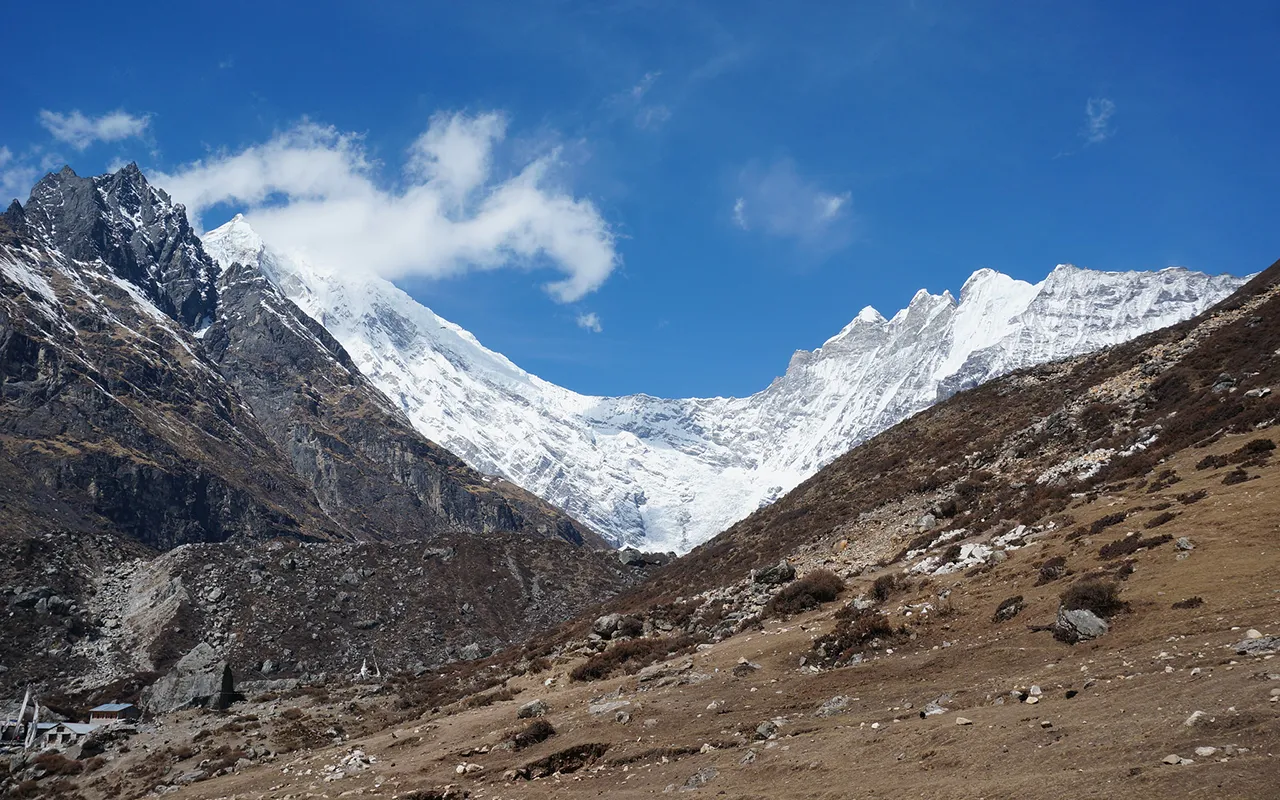
The greatest difficulty is the hike to Kyanjin Ri at 4773m (15659ft). The route is steep in some places and may be challenging due to the altitude. Starting early in the morning is helpful for good mountain visibility and cooler walking conditions. Weather permitting, from the viewpoint you can see Langtang Lirung, Yala Peak, glaciers and the upper Langtang Valley.
During the Kyanjin Ri Trek itinerary, time is set aside to explore the upper valley and then backtrack to Lama Hotel and Syabrubesi. It’s mostly going uphill but the long walking days still call for a lot of stamina. The last day will be a lovely drive back to Kathmandu via the hill region.
This trek is most often done in spring or autumn when the weather and mountain visibility tend to be more predictable. Higher elevations can also experience cold weather and snow in the winter months and rain, clouds, slippery trails and poor road conditions during the monsoon season.
The Kyanjin Ri Trek is not for the faint of heart and would not be recommended for anyone who is not physically fit or has no ability to walk for extended periods of time. It is good if you have done trekking in the past at high altitudes but not necessary if you are well prepared. It can be easier if you take it easy, keep walking regularly, train in the upland hills and wear appropriate clothing.
The route also offers one the chance to understand the culture and life of the village of the Tamang people. During travel, one should take care of the local customs, religious buildings, wild animals and the environment. Nomad Adventure Treks will be able to help you with the logistics of your trip and trekking support.
Trip Highlights
- Drive from Kathmandu to Syabrubesi with views of hills and river valleys
- Hike through Langtang National Park, through forests and the mountains
- Take a stroll through the traditional Tamang villages and enjoy mountain living
- Explore Langtang Village and discover its culture and history
- Visit Kyanjin Gompa at an elevation of 3870 m (12697 ft) in the upper Langtang Valley
- Hike to Kyanjin Ri at 4,773 m (15,659 ft) to enjoy a wide panorama of the Himalayas
- View Langtang Lirung, Yala Peak, glaciers and other mountain slopes
- Visit Kyanjin Gompa monastery and the area of traditional cheese making
- Cross suspension bridges and walk along Langtang Khola through forest trails
- Experience high mountain hiking, Tamang culture and the changing landscape of the mountains
Detail Itinerary of Kyanjin Ri Trek

Day 01: Drive from Kathmandu to Syabrubesi (1,550 m / 5,085 ft)
The Langtang trek starts from Kathmandu to Syabrubesi via a 122 km drive. The trip takes approximately 6-7 hours, depending on the road and traffic. This trail winds through river valleys, terraced hills, small villages and traditional villages in the mountains.
Further north, the road runs along parts of the Trishuli River and slowly progresses into the hill country. The scenery shifts from the hustle and bustle of Kathmandu Valley to the tranquil rural areas. Syabrubesi is a small riverside village, which is a popular point of departure for the Langtang Valley Trek.
Once at Syabrubesi, you will stay in a local lodge and get a good night’s rest before you start trekking the next morning.

Activity: 6 to 7 hours Drive

Max. Altitude: 1,550m/5,085ft. Syabrubesi

Meal: Breakfast, Lunch, Dinner

Accommodation: Lodge
Day 02: Trek from Syabrubesi to Lama Hotel (2,470 m / 8,104 ft)
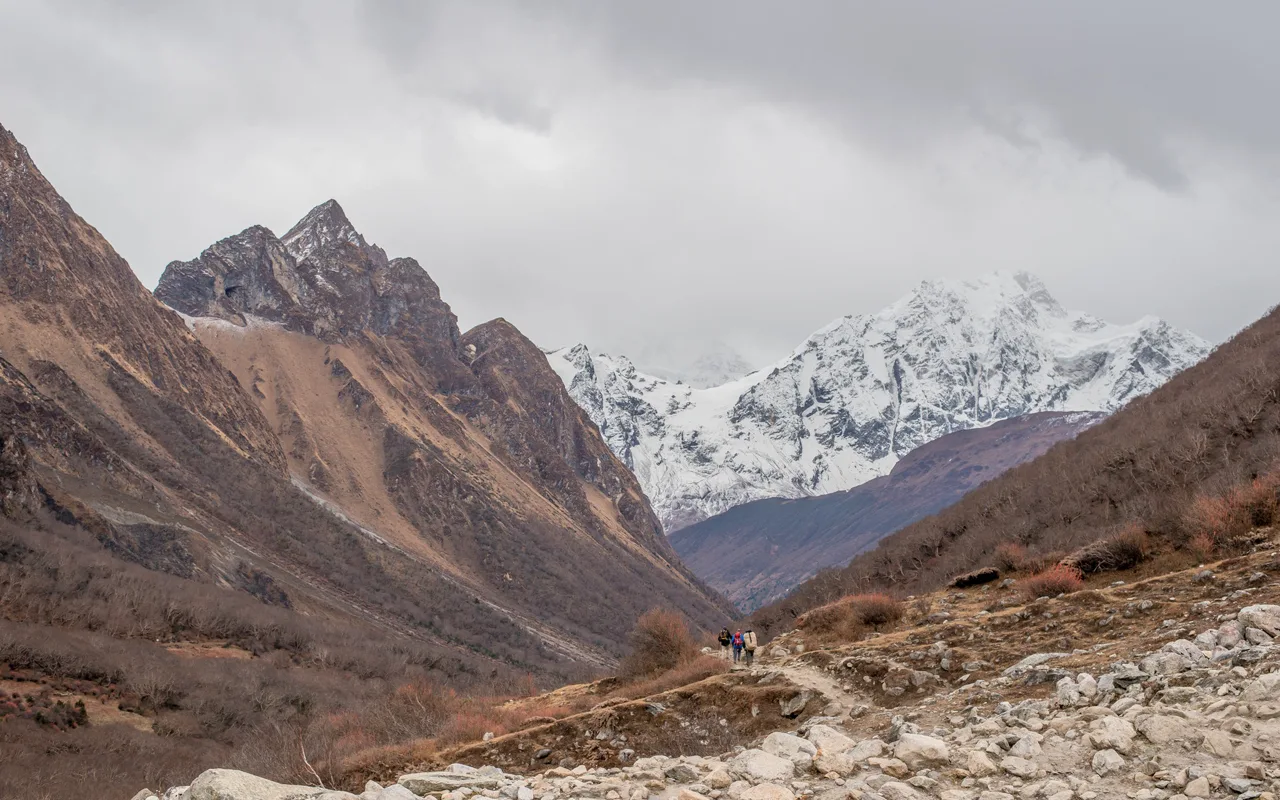
The trek starts from Syabrubesi and follows the Langtang Khola through Langtang National Park. The path slowly rises through the woods of bamboo, oak, maple and rhododendron. Several stretches are along the river and as you get deeper into the valley, you find yourself in a peaceful environment.
Along the way, you’ll pass through small waterfalls, some areas of forest and suspension bridges. There is a consistent climb along the trail and this can be challenging, particularly as you ascend. There are short stops along the way to rest and appreciate the scenic views.
You arrive at Lama Hotel at 2,470 m (8,104 ft) after some 11 km of walking. The settlement is surrounded by forest and is a perfect place to spend one night on the Langtang Trail. A local lodge is used for the overnight stay.
Activity: 6 to 7 hours Trek
Max. Altitude: 2,470m/8,104ft. Lama Hotel
Meal: Breakfast, Lunch, Dinner
Accommodation: Lodge
Day 03: Trek from Lama Hotel to Langtang Village (3,430 m / 11,253 ft)
Leaving from Lama Hotel, the trail makes a steeper climb up the Langtang Valley. As you ascend, the forest thins out and the valley starts to spread out. You will cross several small villages and grazing grounds en route and Langtang Lirung, the tallest peak of the Langtang area, will start to be visible.
It should take about 6-7 hours and the walk is around 14 km. Grading upwards gradually leads to Ghodatabela and then up to the upper valley. Noticeably different from the forest trail of the last day, this section is characterized by changes in vegetation and the more open vistas.
Langtang Village is located at 3430m (11253ft) and is inhabited by the Tamang community. Reconstructed following the 2015 earthquake, it continues to be an important cultural hub in the valley. Overnight accommodation will be in a local lodge.
Activity: 6 to 7 hours
Max. Altitude: 3,430m/11,253ft. Langtang Village
Meal: Breakfast, Lunch, Dinner
Accommodation: Lodge
Day 04: Trek from Langtang Village to Kyanjin Gompa (3,870 m / 12,697 ft)
It is a shorter walking day today, as you proceed from Langtang Village to Kyanjin Gompa. The route rises steadily through open mountain scenery, which is dotted with small villages, yaks and more and more sparse vegetation. As you head up Langtang, the valley widens.
The length of the walk is about 6 km and the estimated time is 3-4 hours. There will be more time for enjoying the surroundings and acclimatising to the rising elevation. It passes through areas of glaciers and views peaks and mountain slopes.
The highest overnight point on this itinerary is Kyanjin Gompa (3,870 m / 12,697 ft). It’s a region renowned for its Buddhist temple and traditional cheese-making. On arrival, you can stay and discover the settlement as well as the nearby area before going to sleep at a lodge.
Activity: 3 to 4 hours
Max. Altitude: 3,870m/12,697ft. Kyanjin Gompa
Meal: Breakfast, Lunch, Dinner
Accommodation: Lodge
Day 05: Hike to Kyanjin Ri (4,773 m / 15,659 ft)
This trek begins early to Kyanjin Ri, the highest peak on this route. The ascent is quite steep in places and will require a slow pace due to the elevation. The track from Kyanjin Gompa is the path that leads up the village to the Kyanjin Ri viewpoint.
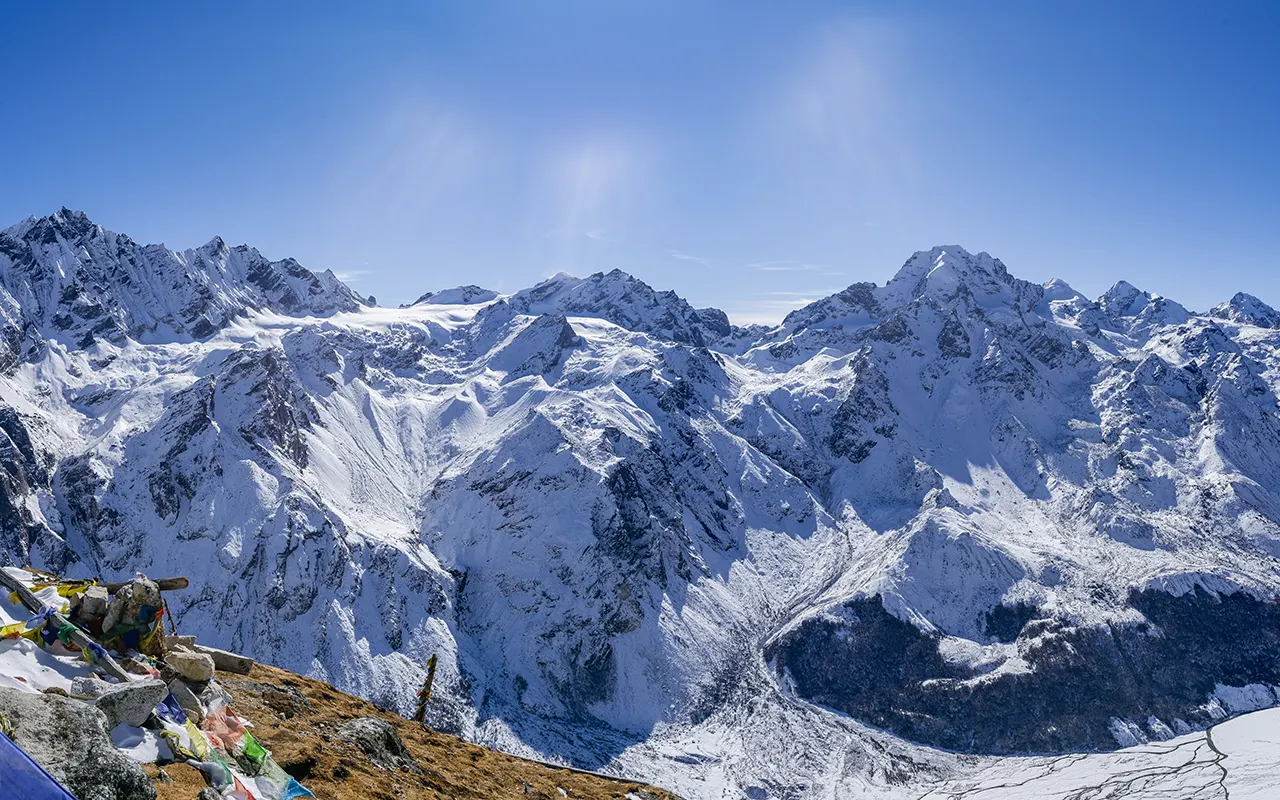
Kyanjin Ri is 4,773 m above sea level (15,659 ft), offering expansive views over the upper Langtang Valley. Langtang Lirung, Yala Peak, Langtang glaciers and some other Himalayan peaks can be seen on a clear morning. The early start will also allow you to savor the early morning light on the mountains.
Here, spend a little time and then head back down to Kyanjin Gompa following the same path. This round trip is approximately 6km and will take about 4 to 5 hrs. After returning to the lodge, you will be hosted at Kyanjin Gompa for another night.
Activity: 4 to 5 hours
Max. Altitude: 4,773m/15,659ft. Kyanjin Ri
Meal: Breakfast, Lunch, Dinner
Accommodation: Lodge
Day 06: Trek from Kyanjin Gompa to Lama Hotel (2,470 m / 8,104 ft)
You will have a long descent starting after breakfast from Kyanjin Gompa to Lama Hotel. The trail is back to Langtang Village and the upper Langtang Valley. As you descend, the vegetation becomes greener and the landscape once again switches from open alpine ground to woodland.
This walk is of the order of 21 km and lasts about 7 hours to 8 hours. The trail is predominantly downhill but should be taken slowly due to the length and repetitive portions of uneven terrain. You will also pass through well-known villages, bridges and river sections you have seen during the previous part of the trek but the views may be different when going back.
You arrive at Lama Hotel at 2,470 m / 8,104 ft, where you will be offered a place to sleep in a local lodge (overnight).
Activity: 7 to 8 hours
Max. Altitude: 2,470m/8,104ft. Lama Hotel
Meal: Breakfast, Lunch, Dinner
Accommodation: Lodge
Day 07: Trek from Lama Hotel to Syabrubesi (1,550 m / 5,085 ft)
On the final day of the trek, walk down the hill from Lama Hotel to Syabrubesi. The trail goes through forest and along part of the path along the Langtang Khola. Some of the familiar areas in the lower valley will be traversed with suspension bridges.
Descents run about 12 km and typically last 5-6 hours. The lower elevation is warmer than the higher elevations and has denser vegetation. The route is mostly downhill but there are a few long uphill stretches; a steady pace is helpful.
Once you arrive at Syabrubesi, you have finished the trekking part of the Langtang Valley trek. After the last evening in the mountain region, you can rest at the lodge and spend the following day in Kathmandu.
Activity: 5 to 6 hours
Max. Altitude: 1,550m/5,085ft. Syabrubesi
Meal: Breakfast, Lunch, Dinner
Accommodation: Lodge
Day 08: Drive from Syabrubesi to Kathmandu (1,400 m / 4,593 ft)
Following breakfast, you’ll drive back to Kathmandu from Syabrubesi. The route is some 122 km long and takes about 6 to 7 hours, depending on road conditions and traffic.
The way back takes you through rural settlements, past terraced hills and through river valleys up winding mountain roads. As you head towards Kathmandu, you will pass through an area where the topography slowly shifts from the hill region to the highly developed Kathmandu area. Meals and short breaks may be taken along the way.
Your Langtang trek ends at Kathmandu (1,400 m / 4,593 ft). You can continue your onward journey or go back to your hotel in the city.
Activity: 6 to 7 hours Drive
Max. Altitude: 1,400m/4,593ft. Kathmandu
Meal: Breakfast, Lunch
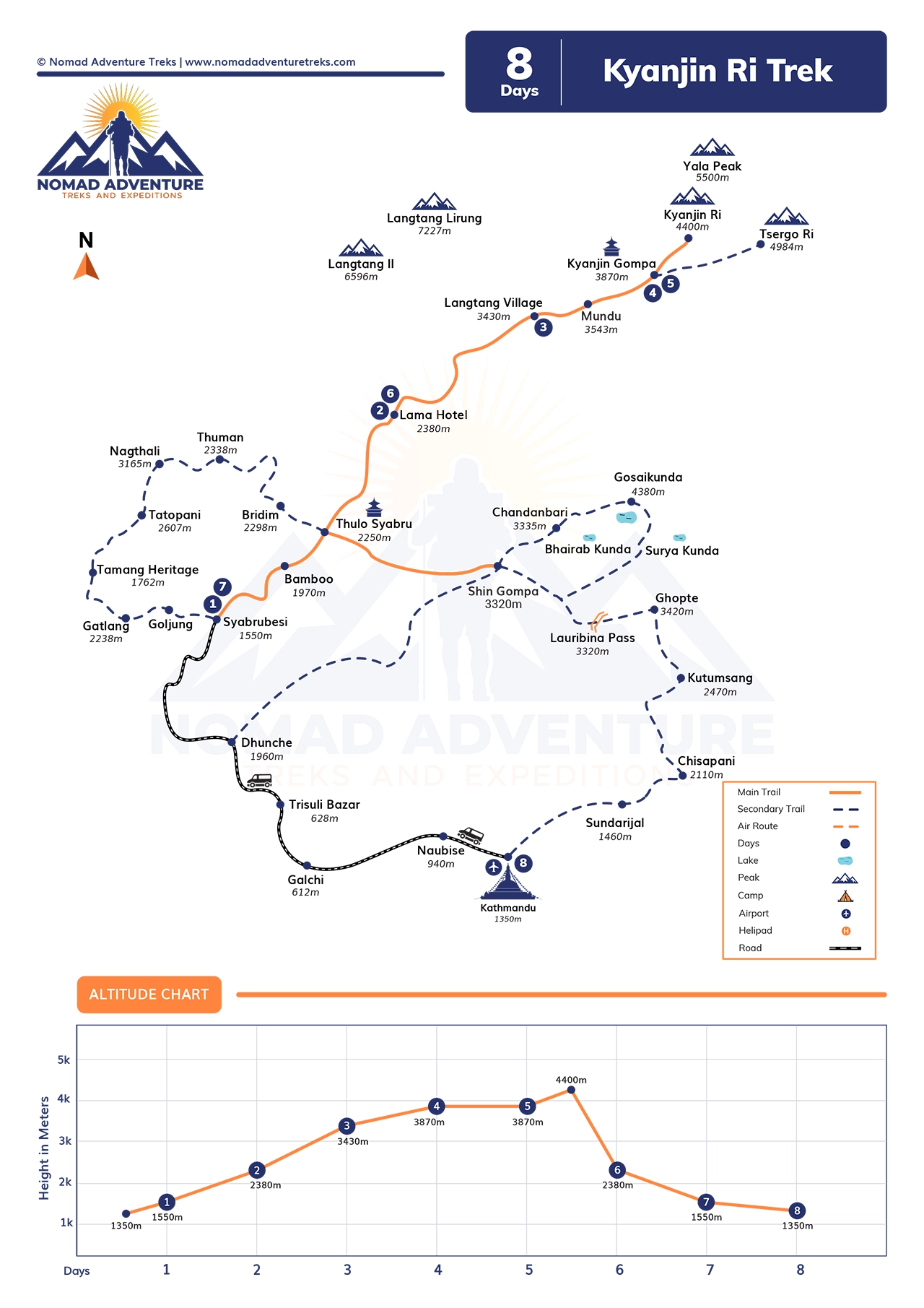
Trip Route Map
Includes & Excludes
What are included with package?
Accommodation
- Accommodation for the trek in local teahouses and lodges
- Simple accommodation with shared toilet and shower blocks
Meals & Drinking Water
- Three meals offered every day on the trekking days
- Daily drinking water
Transportation
- Private transportation from and to the airport.
- Transfer from Kathmandu to Syabrubesi by private vehicle.
Guide and Staff
- Licensed trekking guide along the trekking route
- Trekking staff’s meals, accommodation and allowances
Medical Assistance
- First aid support on the trek
- Support in making medical arrangements if needed
Permits
- Langtang National Park entry permit.
- Permits and TIMS registration required for the trek
Benefits and Takeaways
- Visit Langtang National Park and its mountain scenery
- Enjoy the culture of the Himalayas and see the Tamang villages
- Hike to Kyanjin Ri at 4,773 m (15,659 ft)
- See the Langtang Lirung, the Yala Peak and the surrounding glaciers
Administrative & Taxes
- Package taxes imposed by the government
- Normal administrative and permission fees
What are not included with package?
- Airfare and Entry Visa to Nepal
- Accommodation before and after the trek
- Travel insurance, medical treatment and emergency evacuation
- Snacks, alcoholic beverages and soft drinks
- Drinking water provided in additional bottles, boiled or filtered
- Hot showers, laundry, Wi Fi and charging fees
- Personal travelling gear and clothes
- Tips for the guide, porter and other staff
- Extra lodging and/or transport due to delays, road closures, weather or schedule changes
- All other services and costs not listed in the Includes section

Note:
If you have a private group and prefer a personalized experience, we can organize a custom trip tailored to your requirements and group size, running it any day you choose.
Detail Information about Kyanjin Ri Trek
Weather and Best Season
Spring and autumn are the best times to undertake the Kyanjin Ri Trek as the weather is typically drier and there is greater visibility of the mountains. In March through May, the daytime temperature is mild, the rhododendrons bloom and mornings are clear. September to November is also a good time, as the monsoon is over and dry trails with good visibility.
It can be very cold in the winter at higher elevations and snow may cover the trail around Kyanjin Gompa and around Kyanjin Ri. The Syabrubesi route can become slippery, cloudy and rainy from June to August, which may cause delays on the road.
Spring and Autumn are typically the best seasons to take the Kyanjin Ri Trek. Conditions may rapidly change, so it’s vital to have appropriate layers and rain protection.
Difficulty and Altitude Sickness
The Kyanjin Ri Trek is considered moderate to challenging because we have a few days of trekking as well as the high elevation hike to Kyanjin Ri at 4,773 m (15,659 ft). The main route to Kyanjin Gompa is suitable for reasonably physically fit individuals and the route to the viewpoint is steep and challenging.
At altitudes above around 3,000 m (9,843 ft), acute mountain sickness symptoms may include headache, nausea, dizziness, tiredness and sleep disturbance.
Slow pace, water, proper food and rest will help acclimatize. On the Kyanjin Ri hiking section, don’t rush the climb. When symptoms become severe or worsen, it’s a good idea to descend.
Insurance, Visa and Permit
It is recommended to include travel insurance on the Kyanjin Ri Trek, especially since it is 4,773 m (15,659 ft) high. If trekking, your policy must include the highest point you will be at and medical and evacuation costs, if applicable. Review the terms and conditions of the policy before leaving.
Foreign tourists must obtain a valid Nepal visa for entry into the country, mostly available on arrival at Tribhuvan International Airport or pre-arranged from the Nepalese Embassy abroad. Note that visa requirements and fees may vary; please consult the latest information before traveling.
Langtang route is an entry to Langtang National Park. Under the current trekking regulations in Nepal, a TIMS card is also needed for Langtang trekking. Nomad Adventure Treks will help you arrange the necessary paperwork to trek.
Health and Safety
The Kyanjin Ri Trek is high altitude and good preparation is crucial. Get fit before you leave, incorporating regular walks, training on trails or hills and longer walks into your training. It is also important to give your body time to acclimate as you increase in elevation.
Drink plenty of water during the trek and continue to eat every meal, even when you don’t feel like eating at higher altitudes. Stay warm in early mornings and early evenings, especially at Kyanjin Gompa and Kyanjin Ri (4,773 m / 15,659 ft).
Take your guide’s advice and proceed at a leisurely pace. This section of the Kyanjin Ri hike is challenging due to the thin air and the incline. If you suffer from severe altitude symptoms, do not proceed further upward.
Transportation
The Kyanjin Ri Trek starts with a road trip from Kathmandu to Syabrubesi. The road trip will take about 122 km and is usually completed in about 6-7 hours of driving but can take longer because of traffic, road conditions and weather.
Langtang Valley route is usually started from Syabrubesi. The rest of the way is on foot through Langtang National Park, passing through forests, villages, river valleys and mountain settlements to reach Kyanjin Gompa.
Upon completion of the trek to Kyanjin Ri, you walk back to Syabrubesi and then head to Kathmandu via vehicle. The road conditions may change, especially in the monsoon season, so it is advisable to have some flexibility in your travel plans.
Your Extra Expenses
Some additional cash should be kept on the Kyanjin Ri Trek for personal expenses, as your package will only include the main trekking services. Other expenses that are common are snacks, bottled water, hot showers, charging services, Wi Fi, laundry and personal items.
Plan to spend money on drinks like tea, coffee, soft drinks or hot chocolate at more elevated villages. Normally, the higher the mountain you are traveling to, the higher the price.
Normally, tips for guides, porters and other support staff are not included in the package price. Bring some Nepalese currency as there are limited card payment and ATM facilities in the Langtang area. If you are hiking in the Kyanjin Ri area, no extra activity fee is required in addition to park and trekking permits.
Language and Communication
Nepali is the language spoken the most in the Langtang valley and the language of the Tamang is an important local language among the communities along the route. Several trekking lodge staff are also proficient in English, including around the popular trekking sites like Lama Hotel, Langtang Village and Kyanjin Gompa.
However, during the Kyanjin Ri Trek, basic English is generally sufficient to communicate with guides, lodge staff and other people involved in the tourism industry. Knowing some basic Nepali greetings can make the trek much more manageable and enjoyable.
If communication is difficult, in particular when ordering food, asking about accommodation or communicating with local services, your guide can assist. Patience and respectful communication are helpful when engaging in local community relations during the Kyanjin Ri Trek itinerary.
Mobile Network, Internet and Charging Facilities
Many settlements have mobile coverage in the Langtang region but it is not reliable throughout the Kyanjin Ri Trek. On forest land, in valleys and on the more remote parts of the trail, coverage may be less than strong. The region may have some areas where Nepal Telecom and/or Ncell services may operate but availability is not guaranteed in these areas.
Some lodges may have Wi Fi, at an extra cost but speeds may be restricted. Don’t use the internet continuously on the trek.
Many lodges do have electricity but you might have to pay an additional fee to charge your phone or cameras or share charges. Having a power bank with you helps for the Kyanjin Ri hiking day as you are likely to be away from the lodge for several hours.
Don’ts on this Trip
Respect local customs, religious sites, wildlife and environment during the Kyanjin Ri Trek. Avoid littering on the trail and leaving plastic, food packages or other waste. Where possible, use separate bins for waste; otherwise transport your waste.
Don’t enter into monasteries, shrines or private places without permission. Be mindful of taking photos of local members, particularly at religious or family functions. Minimize noise at culturally significant sites, such as monasteries.
Beware of the elevation of the Kyanjin Ri trek. Do not overdrink, do not run up hills, do not dismiss symptoms of altitude sickness. It is advisable not to take a solo walk on parts of the track you are not familiar with, especially during adverse conditions or reduced visibility.
Cultural Festivals on the Trail
The Kyanjin Ri Trek goes through communities that have strong cultural traditions of Tamang and Buddhist cultures. During some festivals, you can expect to find traditional music, dancing, religious activities, special foods and community gatherings. Festival dates will vary year-to-year and are based on the local lunar calendar.
The Sonam Lhosar holds special significance for Tamang people and is the Tamang New Year. Families gather, people wear traditional clothes, there is music and dancing and there is food and religious services.
Visitors should just watch without interfering with religious activities, treating these not as performances. Respect local advice before entering monasteries, before taking photographs and before entering the community. The actual hiking path, the Kyanjin Ri, is more geared towards the mountain landscape, whereas cultural experiences are more associated with the villages along the hiking route.
Tips for First-Time Visitors
On the Kyanjin Ri Trek, first-time trekkers should be prepared to experience changing weather, long days of walking and a rise in altitude. Warm clothing, rain gear, sun protection, comfortable trekking shoes and a reusable water bottle are essential. The contents of a small day pack should include water, snack food, a jacket, sunscreen and personal items.
Don’t assess difficulty by distance. This ascent to Kyanjin Ri 4773 m (15659 ft) can be strenuous due to the elevation, even for those who are physically fit. Walk slowly and catch your breath.
If you want to go on a Kyanjin Ri Trek itinerary that is smoother, make sure to have enough flexibility in your schedule to account for changes or cancellations that may occur due to weather or health conditions. Take some cash, keep the electronic devices dry and follow your guide’s instructions on the road.
What Is the Kyanjin Ri Hike Like?
It is one of the toughest viewpoint hikes on the Kyanjin Ri Trek, from Kyanjin Gompa to Kyanjin Ri. The track is steep and rocky and follows an undulating route, though it is not so steep on the upper end of the track. It is more difficult than the distance implies, due to the thin air.
This walk is typically done as a round trip in 4 to 5 hours and is about 6 km in length. It is best to do this hike early in the day, as mornings tend to offer greater visibility into the mountains. Walk at a steady pace and take short breaks as necessary.
At 4,773 m (15,659 ft), the viewpoint is considerably higher than Kyanjin Gompa at 3,870 m (12,697 ft). The descent is similar to that back to the lodge. It is important during the Kyanjin Ri hike to maintain a comfortable pace and be well acclimated.
What Can You See from Kyanjin Ri?
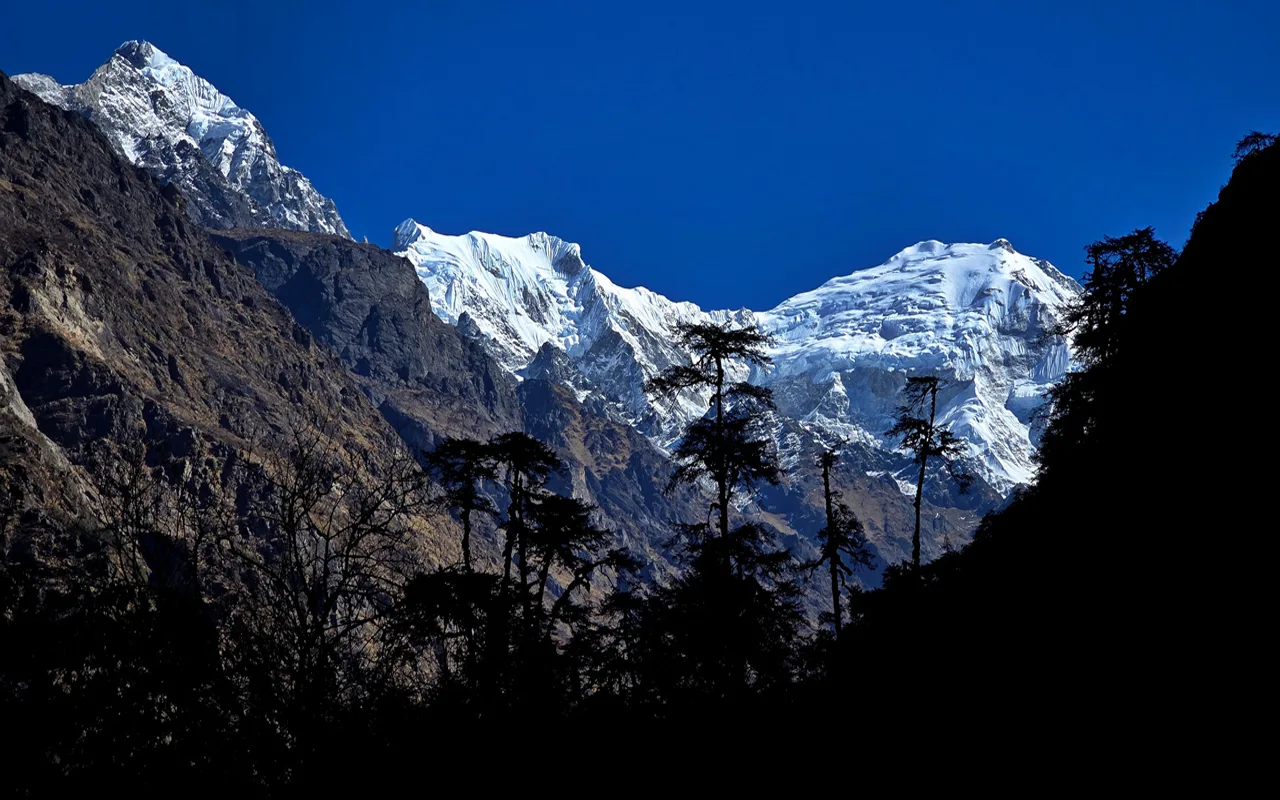
From the Kyanjin Ri viewpoint, one can see over the upper Langtang Valley. The higher portions of the trail offer views of Langtang Lirung, Yala Peak and other surrounding peaks of the Himalayas can be seen. As you ascend, you’ll also see glaciers, rocky mountain slopes and high alpine landscapes.
Views will vary with weather and visibility. This is a good place to view distant peaks on clear mornings and sections of the mountains may be covered with clouds later in the day. This is yet another reason many trekkers prefer an early start.
The valley can be seen in the background, with a view of the different vegetation zones that exist between the valley floor and the open alpine areas surrounding Kyanjin. This is an 8-day Kyanjin Ri Trek that includes time to take in these sights before making the return to Kyanjin Gompa.
Kyanjin Gompa and the Surrounding Area
Kyanjin Gompa is located at 3,870m (12,697ft) in the upper Langtang Valley. It is enveloped by high peaks, open grazing grounds, rock-strewn slopes and glaciers. The settlement is an overnight stop for trekking in the upper reaches of the valley.
The area has a Buddhist monastery and a traditional cheese production facility. Walking tours of the settlement and visits to the monastery and the surrounding trails are allowed as the weather and time permit.
The Kyanjin Ri hike is also based out of Kyanjin Gompa. Usually, trekkers stay here overnight or more to take in the surroundings and to climb the viewpoint without haste.
Who Is the Kyanjin Ri Trek Suitable For?
The Kyanjin Ri Trek is ideal for those who enjoy walking in the mountains and are willing to trek for a few days. While some background at high altitudes is useful, it’s not a requirement, provided you’re physically fit and properly prepared prior to the trip.
It is not so much a technical climb as the steady ascent in altitude. The ascent to Kyanjin Ri (4773m / 15659 ft) is more challenging than the lower areas, so you should be able to walk uphill for a few hours.
For first-time trekkers, it is recommended to do regular walking, stair climbing and uphill exercise prior to booking the trip to Nepal. Those who are less fit should give themselves plenty of rest and take their time. The Kyanjin Ri hike is always conducted at a leisurely pace.
Local Tamang Culture and Village Life
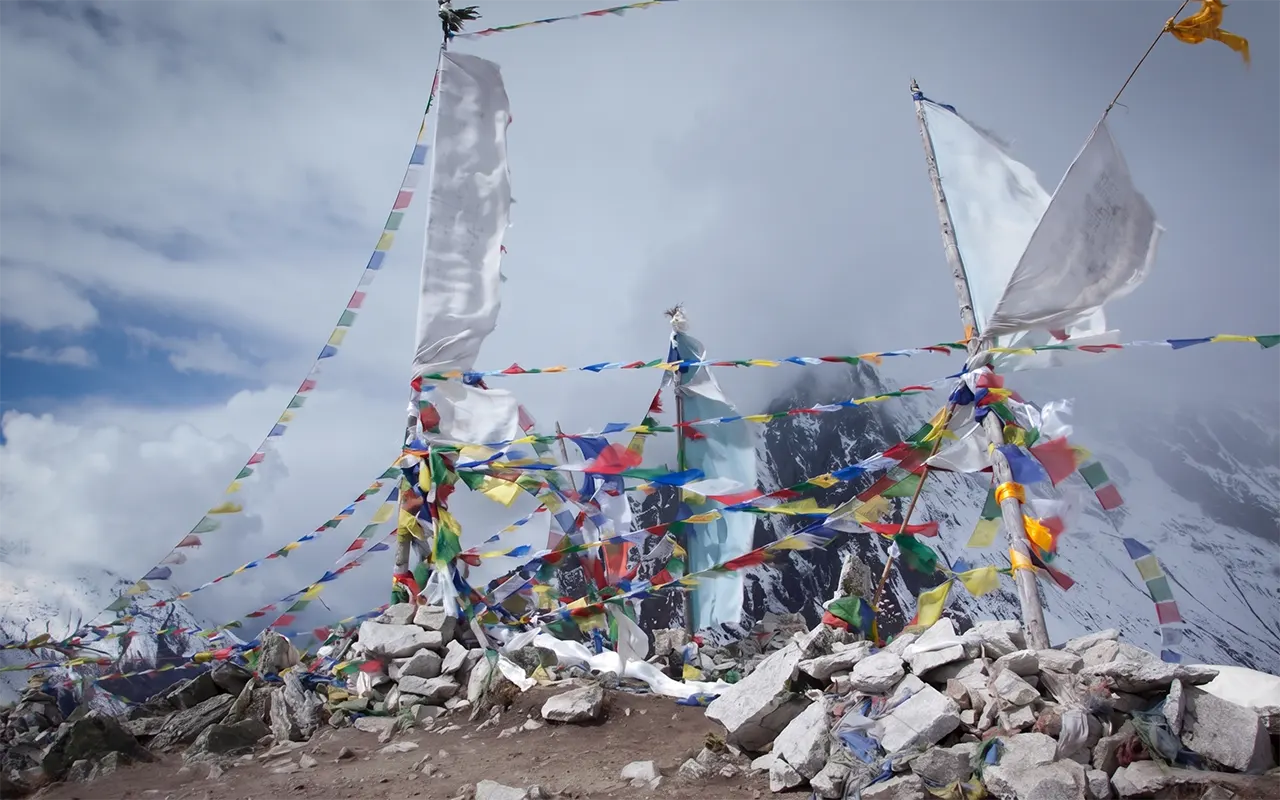
The Langtang Valley is home to Tamang communities, whose traditions, language, Buddhist practices and daily life are very much intertwined with the mountains. Along the route are opportunities to see traditional houses, farm areas, prayer flags, monasteries and local gathering places in the villages.
It travels through villages like Syabrubesi and Langtang Village and then to the higher mountain villages. The daily life of these villages is intricately linked with livestock activities, agriculture, tourism and trade. Local accommodation is also a chance to sample the local cuisine and meet residents.
Respecting homes, monasteries and religious places is important. Ask permission before taking photos of people or private areas. While planning the Kyanjin Ri Trek, participants are required to respect local traditions and avoid showing off cultural practices.
Responsible Trekking in Langtang National Park
Langtang National Park is responsible for protecting forests, mountain landscapes, wildlife and important natural habitats along the trekking route. Visitors are encouraged to bring reusable bottles, reduce plastic waste and take any waste to the correct disposal sites to help protect the area.
Avoid shortcuts and stick to existing trails, especially in fragile alpine areas. Do not disturb wildlife or remove plants, rocks or natural objects from the park. Low noise also helps to preserve the natural environment and is respectful of local communities.
Use water sparingly, particularly in more elevated areas where supplies may be scarce. Monasteries, prayer sites, local homes and cultural traditions should also be respected by the trekkers. Practical advice on responsible travelling practices before and during the Kyanjin Ri Trek can be offered by Nomad Adventure Treks.
Kyanjin Gompa Vs. Kyanjin Ri
| Feature | Kyanjin Ri | Kyanjin Gompa |
| Type | Mountain viewpoint | Mountain settlement |
| Elevation | 4,773 m / 15,659 ft | 3,870 m / 12,697 ft |
| Main Purpose | Hiking and mountain views | Overnight stay and acclimatization |
| Location | Above Kyanjin Gompa | Upper Langtang Valley |
| Walking Required | Around 4 to 5 hours round trip | Reached by trekking from Langtang Village |
| Main Attraction | Panoramic views of Langtang peaks and glaciers | Monastery, cheese production and alpine surroundings |
| Difficulty | Steeper and more demanding due to altitude | Moderate approach with gradual ascent |
| Overnight Stay | No | Yes |
| Best Experience | Sunrise and Himalayan views | Exploring the village and surrounding valley |
| Connection | Hiked from Kyanjin Gompa | Starting point for the Kyanjin Ri hike |
Frequently Asked Questions
How many nights do you spend in Kyanjin Gompa?
Two nights accommodation is provided at Kyanjin Gompa, which gives you sufficient time to recuperate and reach the viewpoint of Kyanjin Ri.
Is Kyanjin Ri a technical route?
No, Kyanjin Ri is a hiking route, not a technical climbing peak but there is steep terrain and altitude, which must be done carefully and with time.
What is the greatest distance that we walk in one day while on the trek?
The maximum trekking distance for a day is around 21 km (Kyanjin Gompa to Lama Hotel) and takes about 7-8 hours.
What's the highest point on the whole trip?
The highest point is Kyanjin Ri at 4,773 m (15,659 ft), which is reached during the dedicated viewpoint hiking day.
Which village is the main cultural stop?
Langtang Village is a destination of cultural importance, where you can learn about the Tamang culture and its reconstructed village.
What kind of accommodation facilities exist on the way?
There are local teahouses and lodges, usually with basic rooms, beds and shared bathroom facilities.
Do the lower parts of the trail have forests?
Yes, the lower levels traverse forests with bamboo, oak, maple and rhododendron trees before opening up.
Are there any suspension bridge crossings on the way?
Yes, there are a few places with suspension bridges, especially in the lower forested section of Langtang Khola.
What alterations are seen in the terrain on the journey?
The landscape slowly shifts from river valleys and forests to open alpine areas, rock faces, glaciers and high mountains.
Are there any roads that could hinder the return trip?
Travel times may change depending on the road conditions between Syabrubesi and Kathmandu, especially during bad weather.
Related Blog and Articles
Reviews on Kyanjin Ri Trek
 Write a Review


- Your safety, our no 1 priority
- Best price guarantee
- Experienced & dedicated team
- Easy booking, no hidden charge
- You can customize this trip
Talk to Travel Expert
Samundra Rimal (+977-9843127084)
Related trips you may like