

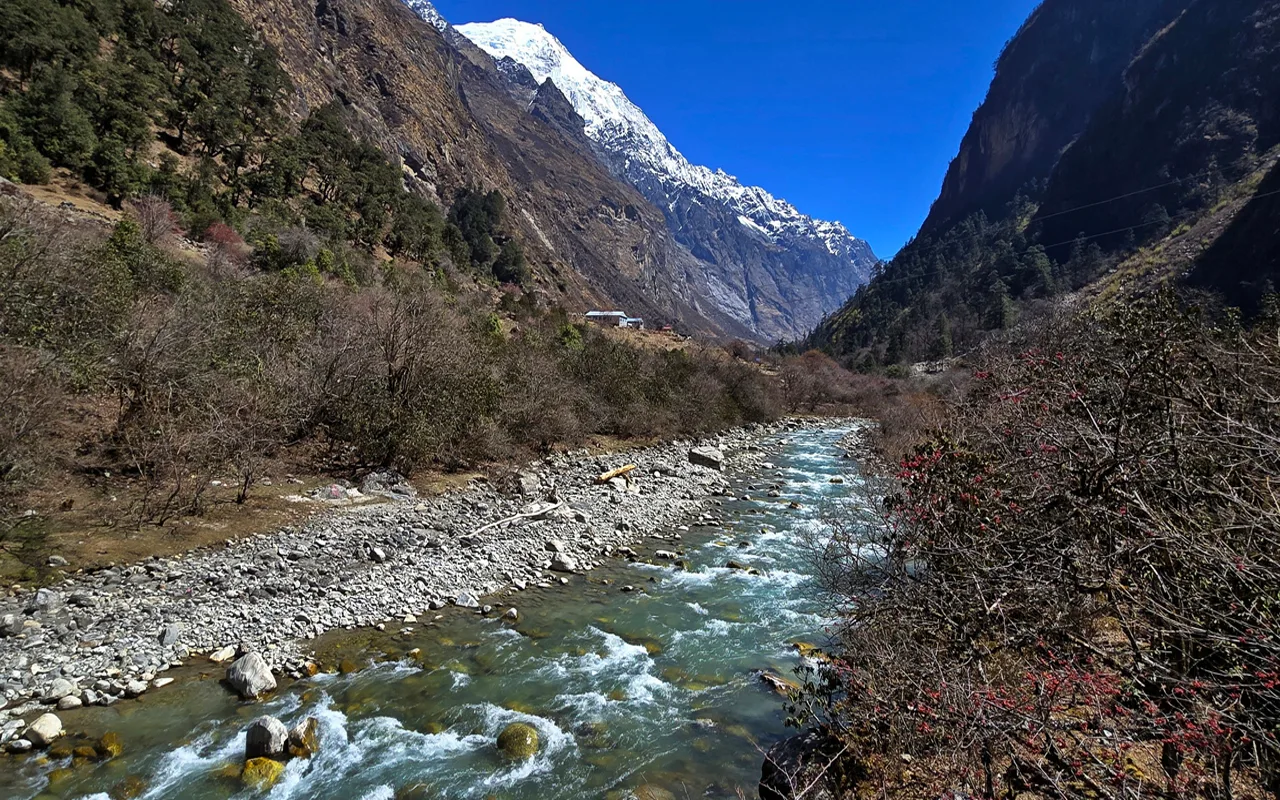


Langtang Gosaikunda Trek

Duration
15 Days

Max Altitude
4,400 m. / 14,436 ft.

Difficulty
Moderate

Group Size
4-5 Pax

Meals
- 14 Breakfast
- 13 Lunch
- 13 Dinner

Accommodation
- Guest House
- 3 Star Hotel

Transportation
Car/Jeep

Activities
- Trekking
- Driving

- 1 - 1 personUS$ 1175
- 2 - 4 personUS$ 1075
- 5 - 10 personUS$ 1025
- 11 over 9999 US$ 950
Total Cost:
US$ 1175
- Your safety, our no 1 priority
- Best price guarantee
- Experienced & dedicated team
- Easy booking, no hidden charge
- You can customize this trip



Talk to Travel Expert Samundra Rimal (+977-9843127084)
Introduction of Langtang Gosaikunda Trek
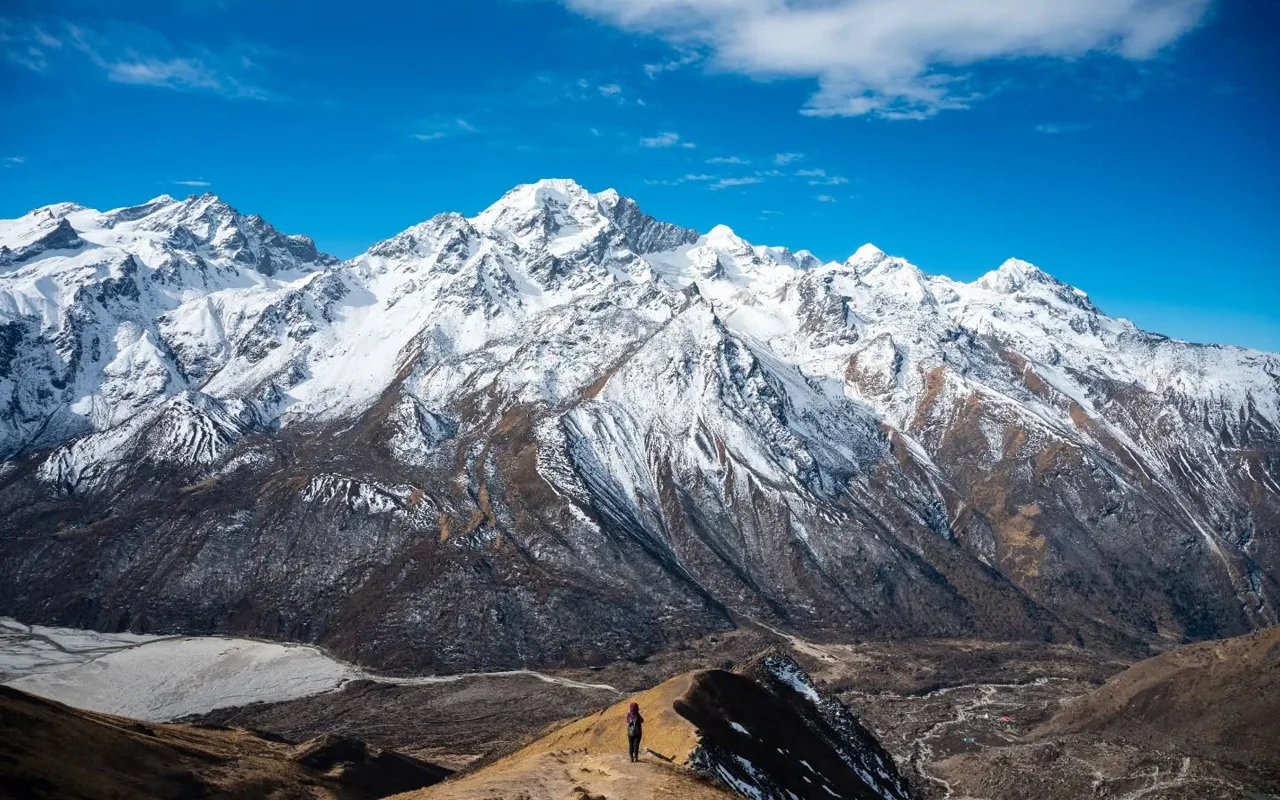
The Langtang Gosaikunda Trek, located in the northeastern part of Nepal, is a breathtaking trek, featuring beautiful scenery, lively culture, and a calm atmosphere.
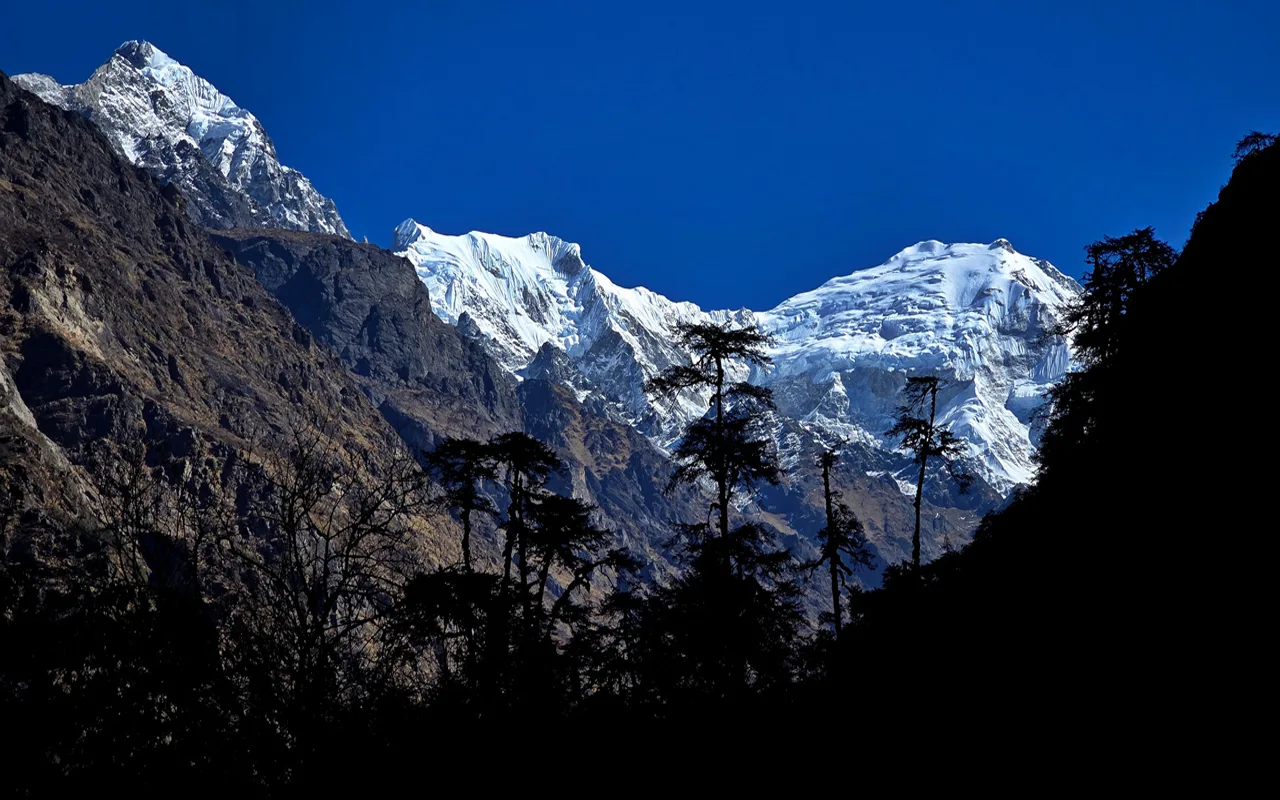
The trail begins in Syabrubesi and into Langtang National Park, known for its rhododendron and bamboo forests. Wildlife such as red pandas, langurs, and colorful birds reside here in these forests. Every step of the trek changes the landscape with high mountain meadows and rocky paths.
The trek goes through traditional valleys such as Langtang, Mundu, with monasteries like Kyanjin Gompa. Here, you will get a glimpse at their way of life and the traditional stone houses of Tamang and Sherpa, respectively.
In the breeze prayer flags flutter and ancient monasteries, making the trip more peaceful. Besides, you will also go over suspension bridges like Bhote Koshi and Langtang Khola, giving you a flavor of adventure as you complete your trek.
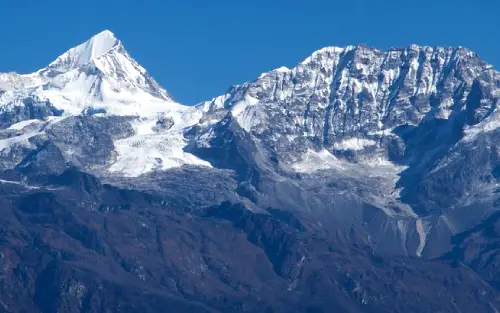
Gosaikunda Lake, at 4,380 meters is a major sacred spotlight on the trek. It is mystically surrounded by some of Langtangs’ finest peaks including Ganchen Himal and Langtang Lirung. Crystal clear waters and a serene atmosphere are what the lake gives us with reflection and peace.
It’s not just about nature on the Langtang Gosaikunda Trek, there’s also a chance to experience local culture. You’ll find villages and spiritual landmarks along the trek which is a rewarding experience.
Whether it’s the beautiful views, the wonderful culture, or the sacred places, the Langtang Gosaikunda Trek guarantees you an adventure you’ll never forget.
Detail Itinerary of Langtang Gosaikunda Trek

Day 1: Arrival in Kathmandu (1,400m)
Once you arrive in Kathmandu at Tribhuvan International Airport, you now start your adventure. On your arrival, our team representative will transport you to your hotel in Thamel, a lively hub for trekkers.
You’ll check in for the trek and meet our trek guide for a detailed briefing about Langtang Gosaikunda Trek Itinerary. In your free time, you can wander the streets of Thamel, or visit some nearby cultural hotspots like Garden of Dreams. This day is best to immerse in the lovely culture and warm welcome of Nepal.

Activity: Drive for 30 minutes

Max. Altitude: 1,400m/4,593ft. Kathmandu

Accommodation: 3 Star Hotel
Day 2: Drive to Syabrubesi (1460m)
Distance: 122 km
Elevation gain: 60 m
The actual adventure starts with long beautiful drive from Kathmandu Valley to Syabrubesi. It heads across green hills, terraced farmlands, and through the Trishuli River gorge.
You’ll be passing by rural Nepalese life along the way and get a view of Langtang Himal, Annapurna I, and Ganesh Himal as you go. After reaching Syabrubesi, a small village between the rolling hills, you settle into your lodge and set yourself up for an adventure ahead.
Activity: Drive for 7-8 Hours
Max. Altitude: 1,460m/4,790ft. Syabrubesi

Meal: Breakfast, Lunch, Dinner
Accommodation: Guest House
Day 3: Trek to Lama Hotel (2460m)
Distance: 11.3 km
Elevation gain: 1000 m
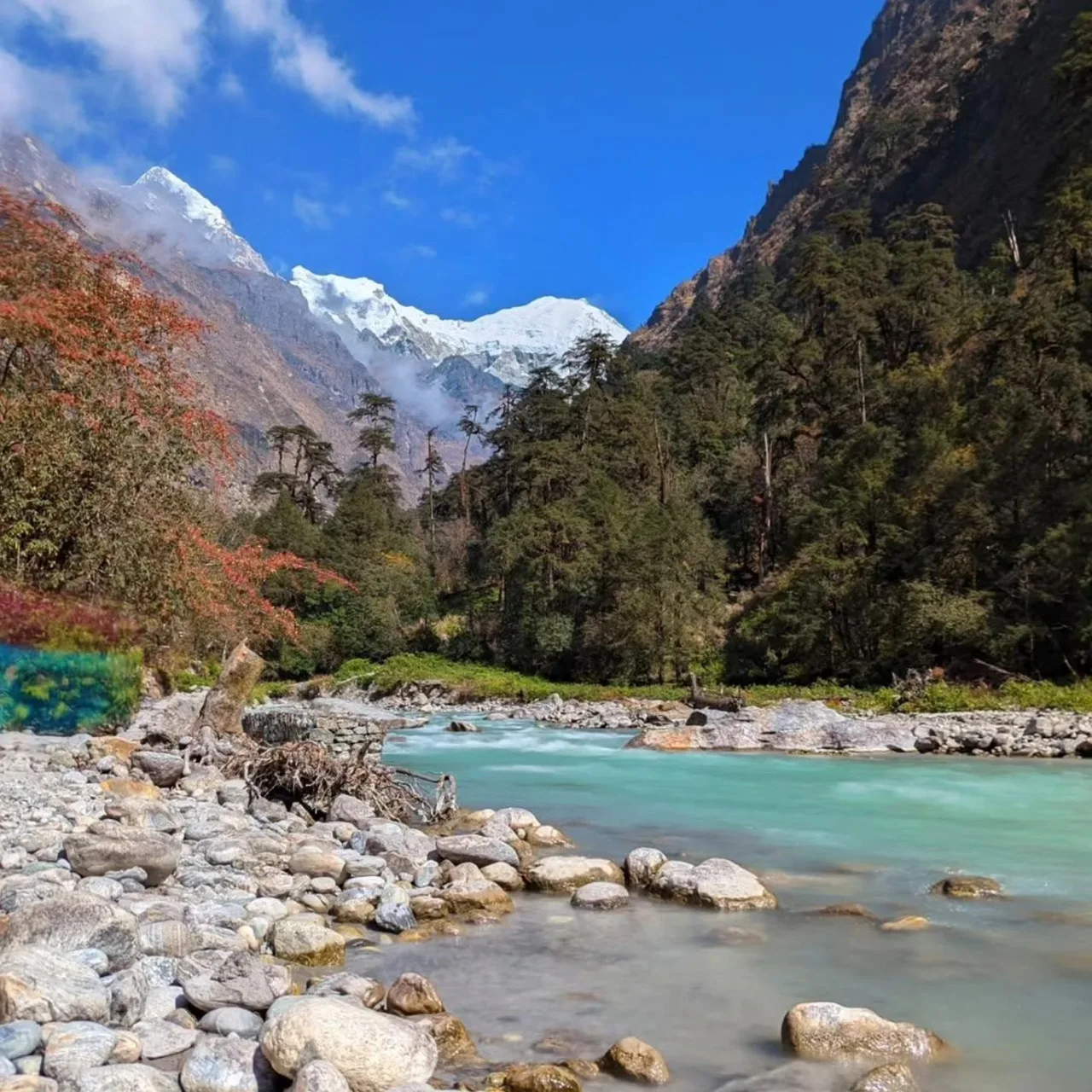
The first day of the trek begins with you crossing the Bhote Koshi River on a suspension bridge and up along the Langtang River through the woods. The trail passes through dense groves of oak, bamboo, and rhododendrons, and monkeys are occasionally spotted as well as colorful birds.
As you ascend, you’ll move past small tea houses, beautiful settlements, and religious spots like Guru Rinpoche Gomba. You can witness wildlife of the region such as langurs, red panda, Himalayan black bears, and yellow-throated martens.
Though high altitude camps are available, we ascend until the end, reaching Lama Hotel, a quiet stop in the forest.
Activity: Trekking for 6-7 Hours
Max. Altitude: 2,460m/8,071ft. Lama Hotel
Meal: Breakfast, Lunch, Dinner
Accommodation: Guest House
Day 4: Trek to Langtang Village (3450m)
Distance: 14.8 km
Elevation gain: 990 m
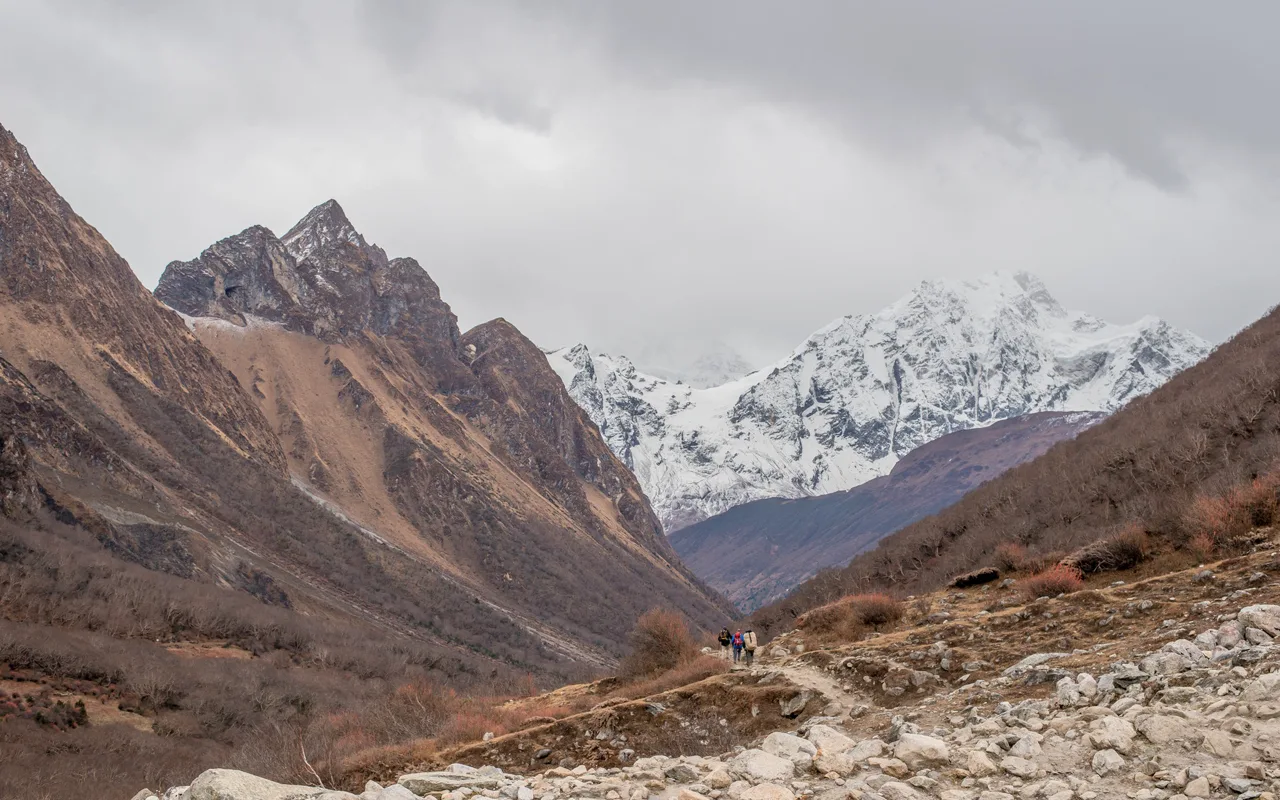
It’s an uphill trail through stunning high mountain scenery. You’ll suddenly emerge from the forest and start to be confronted by Langtang Lirung, the place’s top mountain.
We trek through the riverside meadows, prayer flags, and chortens and past Langtang Village with its traditional Tamang settlement. Here we can see the locals’ stone built houses, the mountain’s wide and sweeping views, and fields of potatoes, barley, etc.
Activity: Trekking for 5-6 Hours
Max. Altitude: 3,450m/11,319ft. Langtang Village
Meal: Breakfast, Lunch, Dinner
Accommodation: Guest House
Day 5: Trek to Kyanjin Gompa (3870m)
Distance: 6.8 km
Elevation gain: 420 m
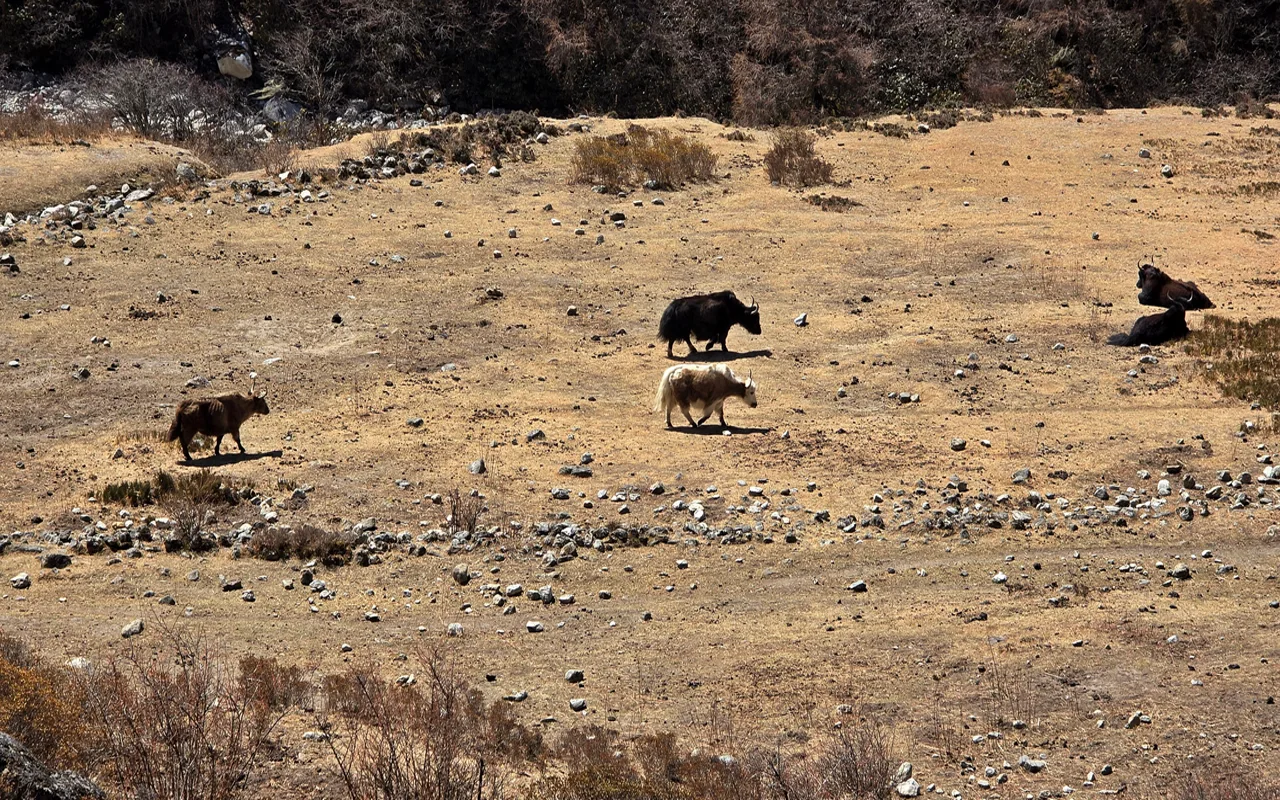
Today’s shorter trek and gradual ascents lead you to Kyanjin Gompa, the spiritual heart of this region. On the way, you can stop at the yak cheese factory and bite some of the freshly produced cheese. You can see Mani Walls and large chortens around the village, showing the deeply rooted culture of Langtang.
You’ll find a serene village such as Mundu and Sindum with towering peaks as you arrive at Kyanjin Gompa. You can visit the ancient monastery and see views of Langtang Lirung and glaciers like Kimshung and Tsherko.
Activity: Trekking for 3-4 Hours
Max. Altitude: 3,870m/12,697ft. Kyanjin Gompa
Meal: Breakfast, Lunch, Dinner
Accommodation: Guest House
Day 6: Hike to Tsergo Ri or Kyanji Ri (Acclimatization day)
Duration (to Tsergo Ri): 5 to 6 hours
Duration (to Kyanjin Ri): 3 to 4 hours
Distance (to Tsergo Ri): 10 km
Distance (to Kyanjin Ri): 5 km
Elevation gain (Tsergo Ri): 1114 m
Elevation gain (Kyanjin Ri): 903 m
Today, we acclimate our bodies to the high altitude and have short hikes to Tserko Ri (4,984 m) or Kyanjin Ri (4,773 m). This religious spot allows you to see the culture and tradition of the local community, adding a spiritual experience to the trek.
From this altitude, you can see Langtang Lirung and Dorje Lakpa, which dominate the skyline. The effort to get up there is strenuous, but then the vistas become an amazing reward for it.
You can use the rest of the day to explore Kyanjin Gompa or simply relax in the amazing beauty of the region. After the rejuvenating moment, we prepare our descent for the next day.
Activity: Hiking for 5-6 Hours
Max. Altitude: 3,870m/12,697ft. Kyanjin Gompa
Meal: Breakfast, Lunch, Dinner
Accommodation: Guest House
Day 7: Trek to Lama Hotel (2460m)
Distance: 21 km
Elevation loss: 1410 m
We start our adventure back to Lama Hotel, retracing the steps, passing through the diverse landscapes along the Langtang River which we earlier traversed.
A downhill trip brings you new views of the valley and gives you another chance to see the beautiful villages. After settling again in Lama Hotel, you are once again hit by the peaceful nature of the forests.
Activity: Trekking for 5-6 Hours
Max. Altitude: 2,460m/8,071ft. Lama Hotel
Meal: Breakfast, Lunch, Dinner
Accommodation: Guest House
Day 8: Trek to Thulo Syabru (2250m)
Distance: 12 km
Elevation gain: 210 m
The trail leaving Lama Hotel passes through serene pine forests and charming villages. We pass through a route that is a mix of ascents and descents, with a distant view of Ganesh Himal and Langtang Himal in the background.
Thulo Syabru, a traditional Tamang village, gives you an opportunity to have a connection with welcoming Tamangs. You can interact with them and gain local insights into their culture.
Activity: Trekking for 6-7 Hours
Max. Altitude: 2,250m/7,382ft. Thulo Syabru
Meal: Breakfast, Lunch, Dinner
Accommodation: Guest House
Day 9: Trek to Shin Gompa (3330m)
Distance: 12 km
Elevation gain: 1080 m
From Thulo Syabru to Shin Gompa, it’s an ascending tour through pine and rhododendron forests. The views become more and more dramatic as the route approaches and the Langtang range appears even closer.
You can witness the religious monastery and yak cheese factory that Shin Gompa is famous for. Before taking a rest in the quiet evening here, take time to explore those popular highlights.
Activity: Trekking for 5-6 Hours
Max. Altitude: 3,330m/10,925ft. Shin Gompa
Meal: Breakfast, Lunch, Dinner
Accommodation: Guest House
Day 10: Trek to Gosaikunda (4380m)
Distance: 9 km
Elevation gain: 1050 m
The sacred Gosaikunda Lake lies on today’s trek and is particularly revered by Hindus and Buddhists. We pass through Laurebina with a sweeping view of Annapurna and Manaslu ranges.
You can relax when you reach Gosaikunda and admire the turquoise lake in the midst of tall peaks. The serene surroundings and its awe inspiring beauty makes the trek memorable.
Activity: Trekking for 5-6 Hours
Max. Altitude: 4,380m/14,370ft. Gosaikunda
Meal: Breakfast, Lunch, Dinner
Accommodation: Guest House
Day 11: Trek to Ghopte (3430m) via Laurebina Pass (4610m)
Distance: 14 km
Elevation loss (to Ghopte): 950 m
Elevation gain (to Laurebina Pass): 1180 m
It’s one of the hardest yet days when you cross the Laurebina Pass, when the rewards are amazing too. The pass at 4,610m is the highest section of the trip that lies steeply up, but the views from the top are astonishing.
After the mesmerizing moment at the Laurebina Pass, we go down through rocky terrain and high mountain meadows and finally reach Ghopte. Ghopte is a quiet stopover on the mountains.
Activity: Trekking for 7-8 Hours
Max. Altitude: 3,430m/11,253ft. Ghopte
Meal: Breakfast, Lunch, Dinner
Accommodation: Guest House
Day 12: Trek to Kutumsang (2470m) via Thadepati (3690m)
Distance: 12 km
Elevation loss: 960 m
Today the trail to Kutumsang via Thadepati is spread with small villages and mind blowing rhododendron forests. If you aren’t short on time, you can even take the Helambu Circuit Trek.
After a while of trekking, the views of Gangchempo and Dorje Lakpa peaks can be seen. Later, passing the forest to Mangengoth, the terrain is steeper. Just before Kutumsang, you will cross Kyuola Bhanjyang, a village famous for agriculture and beautiful landscapes.
Activity: Trekking for 6-7 Hours
Max. Altitude: 2,470m/8,104ft. Kutumsang
Meal: Breakfast, Lunch, Dinner
Accommodation: Guest House
Day 13: Trek to Chisapani (2165m)
Distance: 13.3 km
Elevation loss: 305 m
The trek from Kutumsang continues through green landscapes and charming villages. The trail goes to Chipling village via the ascended and dusty roads of Thorong Danda.
Along the route, you reach Pati Bhanjyang, from which Chisapani is only 30 minutes away. Reaching Chisapani, you get wide views of the nearby valleys and mountains.
Activity: Trekking for 6-7 Hours
Max. Altitude: 2,165m/7,103ft. Chisapani
Meal: Breakfast, Lunch, Dinner
Accommodation: Guest House
Day 14: Trek to Sundarijal (1460m) then Drive to Kathmandu (1400m)
Distance: 10.5 km
Elevation loss (to Sundarijal): 705 m
Elevation loss (to Kathmandu): 60 m
We start with a descent to Sundarijal, where the terrains are mostly plain and the views are impressive. Walking through Borlang Bhanjyang, and through protected areas like Shivapuri National Park, we reach Mulkharka.
For the final stretch, we pass through dense forests and small valleys and start our drive back to Kathmandu. If you do have spare time, you definitely visit Thamel for souvenirs and religious sites like Pashupati and Swayambhunath temple.
Activity: Trek & Drive for 4-5 Hours
Max. Altitude: 1,400m/4,593ft. Kathmandu
Meal: Breakfast, Lunch, Dinner
Accommodation: 3 Star Hotel
Day 15: Departure Day
Completing our Langtang Gosaikunda Trek Itinerary, we transfer you to the airport for your flight home. You get to take with you the cherished memories of the Gosaikunda Langtang Trek. It was a trail through impressive landscapes and lively cultures.
Meal: Breakfast
Includes & Excludes
What are included with package?
Accommodation
- Twin-sharing/double accommodation in a 3-star hotel for 2 nights in Kathmandu including breakfast (Private room accommodation can be organized at an extra cost)
- Best available accommodation Tea house/lodge accommodation during the trek
Meals & Drinking Water
- All your standard meals during the trek 3 meals a day (Breakfast, Lunch & Dinner) in a guest houses.
- A farewell dinner on the last night in Nepal
- Purified drinking water during the trek using Water Filter or water purification tablets.
Transportation
- All (international and domestic) airport transfers on a tourist vehicle
- Kathmandu to Syabrubesi (trek start) by local bus
- Private Car/Van to Kathmandu from Sundarijal (trek endpoint)
Guide and Staff
- Experienced, first-aid trained, government licensed, English speaking, and locally recruited Nomad Adventure’s trekking guide (2 guides for group size more than 12 people)
- Porters during the trek for carrying luggage (1 porter for every 2 clients)
- Wages, accommodation, meals, gear, insurance and medications for all staff
Medical Assistance
- Assistance in arranging rescue operations in case of complicated health conditions (funded by travel insurance)
- Medical kits, including an oximeter to monitor blood oxygen saturation levels in high altitudes
Permits
- Langtang National Park entry permit fee
- TIMS (Trekkers’ Information Management System) card
Benefits and Takeaways
- Sleeping bags and down jackets, duffle bag (one for every two trekkers) if you do not have your own
- company’s T-shirt & Cap
- Trip completion certificate
Administrative & Taxes
- All administrative expenses and government taxes
What are not included with package?
Price Excludes
- Lunch and dinner in Kathmandu
- International flight fare and airport departure tax Guided tour in Kathmandu (Private car + tour Guide), Monument entrance fees while sightseeing in Kathmandu
- Kathmandu sightseeing entrance fee $26
- Nepal Entry Visa (Visa can be acquired easily after your arrival at Tribhuvan International Airport in Kathmandu with a fee of USD 30 for 15 days visa, USD 50 for 30 days visa and USD 125 for 90 days visa)
- Extra night accommodations in Kathmandu due to early arrival or late departure, early return from the trek or other itinerary changes
- Travel insurance along with high-altitude emergency evacuation coverage
- Medical check-ups, vaccinations, or medications required for the trek are not included.
- Any beverages including bottled and boiled water
- Tips to trekking staff and driver
- Personal trekking gear and equipment
- Any expenses other than the Price Include section
- Personal expenses (shopping, snacks, boiled bottle water, hot (Tea/ Coffee) and cold drinks, hot shower, alcohol, Wi-Fi, telephone call, battery re-charge fee, extra porters, etc
- Personal clothing and gear

Note:
If you have a private group and prefer a personalized experience, we can organize a custom trip tailored to your requirements and group size, running it any day you choose.
Detail Information about Langtang Gosaikunda Trek
Best Time for Langtang Gosaikunda Trek
The Langtang Gosaikunda Trek is something you’re going to love for sure, but you should consider the right time to hike. The best time to come to this region is during Spring (March to May) and Autumn (late September to November), as no hindrance occurs in these seasons.
Spring (March to May)
The Langtang Gosaikunda trek is a widely visited trek during spring. In lower altitudes, the temperature is between 10°C to 20°C whereas, at upper altitudes, the temperature is between -5°C to 5°C, near Gosaikunda Lake.
Clear skies during the spring and suitable temperatures allow for stunning Himalayan views. You are even rewarded with the rhododendron forests in all their bloom colors like red, pink, and white.
You can also see musk deer or red pandas. It is a good time for the trek as spring brings pleasant weather, blooming flowers, and bursts of wildlife activity.
Autumn (September to November)
Langtang Gosaikunda Trek can be done in another feasible season, autumn. It has dry and stable weather with clear views of the surrounding mountains. Daytime temperatures average between 10°C and 15°C (50°F and 59°F) dropping to -5°C and 0°C (23°F and 32°F) at night.
Even if the temperatures are slightly cold, the weather remains calm. It’s a peak trekking season, so a lot of people trek during this time, allowing you to meet fellow trekkers. With the stable weather and incredible views, this is the perfect time for your trek.
Monsoon (June to August)
The monsoon for Langtang and Gosaikunda Trek begins in the month of June. It is highly muddy and slippery down the lower parts of the trek and the trails are filled with leeches.
The dark rain clouds can obstruct the views that you come to see in Langtang. As monsoon is also the time for summer here, the weather is hot for trekking. Monsoon trekking means going into challenging conditions, so you need rain gear. You can wear waterproof sturdy boots and leech repellent for more comfort.
Daytime temperatures are between 22°C and 30°C (72° and 86°F), and nighttime are 17°C and 21°C (63 and 70°F). The trek really isn’t done in summer, but the lower number of crowds does provide a peaceful time.
Winter (December to February)
The Langtang Gosaikunda Trek is not suitable for trekkers to trek in winter because of the harsh trekking conditions. Higher elevations can get heavy snow and blizzards and avalanches or trail blockage are a high possibility.
Temperatures at night of high altitude can drop from -10°C to -20°C and daytime temperatures are from 6°C to 10°C. Winter trekking is challenging, especially for beginner trekking because of the cold weather and difficult conditions.
After December 15, the trail seemingly isn’t recommended due to the high risk of snow storms. The smaller number of trekkers gives you a chance to trek peacefully but only if you are prepared to take the extreme cold.
Gosaikunda Langtang Trek is filled with various periods to provide you with amazing experiences. Each season has its own requirements and rewards. For an isolated trek, winter and monsoon will be your choice, and for amazing scenery, pick spring and autumn.
Trekking preparation for Langtang Gosaikunda Trek
Langtang Gosaikunda Trek is a great adventure but you need to be prepared well. The terrains are diverse, from dense forests to high altitude passes. You should also be physically and mentally ready to ensure a smooth adventure.
Step one is having basic physical fitness. To cover long days of walking you need stamina. You need to start doing regular cardio exercises like walking, jogging, or cycling. These help build the endurance you need in the actual and exhausting trek.
You must also strength train your legs as the hike involves some uphill climbs. Try to mimic the trekking conditions and terrains by trying for some shorter hikes before you start the Langtang Gosaikunda Trek. You will easily accomplish the trek if you are already well built physically.
While going for Gosaikunda Langtang Trek, make sure to pack essential trekking gear. Gear such as good hiking boots, handy backpacks, trekking poles, and warm sleeping bags.
You should also clothe in layers to adapt to the changing temperatures when going to higher altitudes. Wearing base layers, insulating layers, and waterproof windproof outer is a good choice.
Dehydration during the trip is pretty common being lost in the exhaustion and the beautiful scenery of the Langtang. But always keep a reminder to drink enough water, 3 to 4 liters to avoid dehydration. Since the source in the remote region isn’t the best, carrying water purification tablets and water purifiers is required.
Altitude at Gosaikunda Lake goes over 4,000 meters, and you need to be mentally prepared for this high altitude. At this altitude, you can have a risk of altitude sickness which is a serious issue. Rushing the climb and going to high altitudes without letting your body adjust to the low level of oxygen can be risky.
In severe cases, it can turn into High Altitude Cerebral Edema (HACE) and High Altitude Pulmonary Edema (HAPE), both are life threatening. It can simply be prevented by going at a slow pace, having proper hydration, and eating healthy food.
Langtang Gosaikunda Trek Difficulty
The Langtang Gosaikunda Trek isn’t a strenuous trek, rather a moderate level trek. This is ideal for people with basic fitness requirements and a well developed cardiovascular system. Trekkers from the young age of 12 to the old age of 65, can easily accomplish it.
While parts of the trek have steep climbs, and long days of walking, with proper rest along the trek, you don’t have an issue.
The trails are good, but some will be tricky, especially given the varying elevations. Altitude is a big challenge, particularly in Gosaikunda Lake (4,380 m). As you go higher, you’re getting thinner air to breathe, meaning you will have a harder time with very little oxygen.
The Langtang Gosaikunda Trek is done with gradual ascents and acclimatization to avoid altitude sickness at high altitudes.
With the right preparation, and if prepared physically to take on these challenges, the Langtang Gosaikunda Trek will be an amazing trip.
Accommodation and Meals on Langtang Gosaikunda Trek
In the Langtang Gosaikunda Trek, the accommodations are mostly only tea houses that are basic with limited facilities. They have only basic services of bedding and blankets, and shared bathrooms.
Meals however are completely amazing and delicious. You get to eat traditional Nepali dal bhat, Tibetan Momo, Western style pizza, and sandwiches.
The first village is Syabrubesi which is where Hotel Syabru and Golden Peak Hotel are located. Both have private and dormitory room, and hearty meals.
You will arrive at Langtang village as you trek. The Langtang View Lodge and the Himalaya View Lodge here offer cozy rooms with awesome views of the surrounding mountains.
You will keep heading further along and reach Kyanjin Gompa, the topmost section of the trek. They have the largest variety of rooms and meals available. Tserko Ri Lodge is another location in this area that has stunning mountain views if you want it.
However, Thulo Syabru is on the way back down. After days of trekking this village has lodges such as Himalaya Hotel and Thulo Syabru Lodge, offering both basic and upgraded accommodation.
Just before Gosaikunda, you will come across Shree Gosaikunda Lodge and Gosaikunda Hotel near the sacred lake. They offer basic lodges with twin sharing beds, shared bathrooms, and meals with heavenly views of the lake and the surrounding mountains.
The meals on the Gosaikunda Langtang Trek are of various options. You have vegetarian and traditional Nepali dishes like Dal Bhat (rice and lentils) with delicious curries. You get a chance to eat Tibetan-influenced food such as Momo (dumplings) and Thukpa (noodle soup).
For most Western trekkers, there are dishes such as sandwiches, burgers, pizza, and more which are both for vegetarians and non-vegetarians.
Why Choose Langtang Gosaikunda Trek
Langtang Gosaikunda Trek mixes stunning views with a bit of culture and some spiritual experiences. Initially, the drive Kathmandu to Syabrubesi, providing amazing landscapes, marks the start of the adventure.
On the trek, you pass through a restricted area, Langtang National Park, which preserves regional wildlife and landscapes.
Villages on the Langtang give you a glance at their traditional stone houses, colorful prayer wheels, and peaceful monasteries such as Kyanjin Gompa. Tamang and Sherpa are the communities living in these villages. Langtang is a place with very friendly locals and people who want to share their culture.
The Gosaikunda Langtang Trek’s highlight is the trip to Gosaikunda Lake. The lake stands at 4,380 meters above sea level surround the tall peaks like Langtang Lirung and Ganesh Himal. According to legend, Lord Shiva had created the lake, making it a sacred place of pilgrimage. The lake has a serene atmosphere for trekkers to relax.
You’ll get to see different landscapes along the way. It runs through dense rhododendron and bamboo forests and into mountain meadows. A thrilling experience is the suspension bridge you’ll cross over rivers such as Bhote Koshi and Langtang Khola.
The route goes through high altitude passes such as the Lauribina La, at 4,610 meters. You will find yourself in awe of the stunning view of the Himalayas.
The trek is appropriate for all levels of trekkers. The trails are manageable, though are slightly challenging. You will see wildlife such as snow leopards, interact with local cultures, and visit spiritual landmarks like Gosaikunda Lake. Even if you have never headed out on a trek, the Langtang Gosaikunda Trek will be an easy as well as memorable one.
Permits Needed for Langtang Gosaikunda Trek
For the Langtang Gosaikunda Trek, you need two essential permits, Langtang National Park Permit and TIMS. These permits are to ensure your safety and give managers an idea of how many trekkers will arrive in an area at a given time.
As you are in the Langtang region, which is a restricted area, you need obtain Langtang National Park Permit. This permit costs you NPR 3,000 (around USD 25) and allows you to enter the protected areas.
The Langtang National Park has amazing but rare species such as red pandas and snow leopards. So, permits are required to keep them from being extinct and reduce your footprint on the trails.
All visitors must buy the NRP 2,000 (approximately USD 15) TIMS (Trekkers’ Information Management System) Card. The permits track the movement of tourists and are a part of the effort of Nepal to protect the environment and keep them safe.
Both permits is easily issued at the Nepal Tourism Board Office, Kathmandu. To avoid any hassle, you as well book the package from us and get the permits with no hardships.
Packing List for Langtang Gosaikunda Trek
When packing for Langtang Gosaikunda Trek, you need to pack light, but make sure you pack the essentials. Having lightweight packing is really important in long days of climbing to avoid the strain on your shoulder, back, and knees.
Comfortable Gears
Firstly, you need a comprehensive backpack that can pack around 30 to 40 liters. This sturdy backpack is important to pack all the other essentials like clothes, snacks, self care, and more.
Buy a good trekking shoe that has proper ankle support. You will face steep climbs and uneven terrains during the trek, which can be hard for your ankles. But a sturdy trekking shoe will make the adventure even more comfortable.
Warming Essentials
When hiking to a higher elevation, it is essential for you to clothe in layers. The temperature from lower altitude to high altitude has a significant decrease (0°C to -10°C). Wearing moisture wicking layers first to avoid sweat, insulating layers for warmth, and a waterproof windproof jacket for the outer will be helpful for changing temperatures.
Even though the Langtang and Gosaikunda Trek has numerous tea houses along the route, it isn’t reliable. Some tea houses don’t have cozy and hygienic bedrooms, so it is better to carry a warm sleeping bag rated at -10°C will be handy.
Self care and Health Essentials
Don’t forget to pack sunscreen of SPF 50+, hat, and sunglasses. The UV rays from the sun will be the strongest here, so you definitely need those for your personal care.
You will surely be exhausted during the long days and hours of trekking. Bring snacks like energy bars, chocolates, trail mix, and dry fruits like nuts will help you stay energized while trekking.
Teahouses will give you safe drinking water, but during the hours of trekking, you need to have a refill. You should keep a hydration bottle and purification tablet to stay hydrated during the trek.
One important thing to pack is an inclusive first aid kit. Minor injuries are common during Langtang and Gosaikunda Trek, which should be taken care of before they turn severe. The first aid kit should contain medications such as bandages, Diamox for altitude sickness, ibuprofen, and paracetamol for pain relievers.
Before you start the Langtang Gosaikunda Trek, check up on your medical history and past illnesses. You should take a doctor’s advice and their prescribed medicines when trekking.
Electronics
Of course, make sure you have your camera to capture the stunning views along the Langtang Gosaikunda Trek. While bringing electronics like cameras, phones, and more, do bring extra batteries and power banks as the valley is remote and electricity scarce.
Optionals
An optional item to have is trekking poles. They aren’t necessary but will help you keep balanced during uneven terrains and reduce the stress on your knees. For short hikes nearby, you can bring duffle bags to store items like cameras and phones. While it isn’t necessary, you can wear gaiters to avoid dust and allergy on the trail.
Langtang Gosaikunda Trek Cost
The Langtang Gosaikunda Trek is in fact an affordable and rewarding adventure and depends on the duration and services offered. A 15-day trek package can cost anywhere from USD 700 to USD 1200.
This package includes the Langtang National Park trekking permit (USD 30 USD) and TIMS permit (USD 10 to 20 USD). In addition to giving guide and porter service, it includes vehicles to and from Kathmandu and simple accommodations and meals while on the trail at descent teahouses.
Depending on where you’re going, accommodation in a teahouse will cost you somewhere from USD 5 to USD 10 per night in less altitude like Syabrubesi. Prices reach USD 10 to USD 20 per night as you ascend to higher altitudes like Thulo Syabru.
The meals follow a similar pattern, costing around USD 3 to USD 5 at lower altitudes, and USD 5 to USD 8 at higher altitudes. You get all three meals of the day, which includes traditional.
Nepali food like Dal Bhat, Tibetan food such as momo, and Western food like pizza.
In addition, the prices increase for bottled water, snacks, and hot drinks at high altitudes. Generally, at lower altitudes, bottled water costs about USD 1 to USD 2, but USD 3 to USD 5 in areas of higher altitudes.
Energy bars, tea, or coffee can cost around USD 1 to USD 3, snacks prices range from USD 1 to USD 4.
Gear costs can also add up to your overall cost of the trip. Trekking boots, backpacks, sleeping
bags, and warm clothing can cost as little as USD 200 to USD 400, depending on what you choose to buy. The full Langtang and Gosaikunda Trek generally costs from USD 700 to USD 1,200 including permits, meals, accommodation, and essential kit.
Reviews on Langtang Gosaikunda Trek
 Write a Review
- 1 - 1 personUS$ 1175
- 2 - 4 personUS$ 1075
- 5 - 10 personUS$ 1025
- 11 over 9999 US$ 950
Total Cost:
US$ 1175
- Your safety, our no 1 priority
- Best price guarantee
- Experienced & dedicated team
- Easy booking, no hidden charge
- You can customize this trip
Talk to Travel Expert Samundra Rimal (+977-9843127084)
Related trips you may like