






Lapchi Trek

Duration
8 Days

Max Altitude
4,600 m. / 15,092 ft.

Difficulty
Moderate

Group Size
2-20 Pax

Meals
- 7 Breakfast
- 8 Lunch
- 7 Dinner

Accommodation
- Teahouse

Transportation
Bus

Activities
- Trekking
- Sightseeing

- Your safety, our no 1 priority
- Best price guarantee
- Experienced & dedicated team
- Easy booking, no hidden charge
- You can customize this trip



Talk to Travel Expert
Samundra Rimal (+977-9843127084)
Introduction of Lapchi Trek
The Lapchi Trek is an 8 day trekking journey in eastern Nepal which takes you through the remote valleys of the mountains, traditional Sherpa villages and key Buddhist pilgrimage sites. This path is found in Dolakha district along the Nepal Tibet border, and traverses the Lapchi Khola, leading to the holy Lapchi Valley, where the famous Tibetan sage Jetsun Milarepa is said to have meditated. The trip is a blend of scenic vistas, the local culture, and religious heritage in a smaller section of the Himalayas.
In Nomad Adventure Treks, this trek is done at a slow pace under the supervision of our experienced trekking team. We will take care of transportation, permits, accommodation, meals, and all other essential trekking details and you can enjoy the trip and we will do all the logistics, starting at the beginning to the end.
The Lapchi Trek Nepal covers a shifting landscape with the trail slowly ascending from Lamabagar into the territory of higher mountains. The walk will take you through rivers, wooden bridges, bamboo forest hikes and seasonal settlements whereby the local Sherpa and Lapchi communities are still living their traditional life.
Lapchi Trek Itinerary will have a steady climb with sufficient time to enjoy upper valley and come back via same route. The trip goes up to Lapchi Village (3,850 m / 12,631 ft) before taking a day hike to Sephuk (4,600 m / 15,092 ft), allowing your body to adjust gradually to the higher altitude.
The Lapchi Valley is a religious place that has been of great significance in Tibetan Buddhism. The pathway goes to Chora Gephel Ling Monastery, the holy cave of Jetsun Milarepa, the ancient meditation caves and the holy footprints which till now keep drawing pilgrims of Nepal, Tibet, and other Buddhists. These locations render the Lapchi Valley Trek unlike many other trekking trails in Nepal.
The other significant aspect of the Lapchi Trek is the trip to Sephuk where there is a retreat house and a holy water of Milarepa. Depending on local conditions and border laws, the trip can also be extended to include a brief hike to Ramding Namgoma, which is on the Nepal Tibet border at approximately (4,500 m / 14,764 ft).
Lapchi Trek package is all inclusive of experienced guides, accommodation, meals during the trek, permits and transportation as per the itinerary. During the journey, our support team will help you, and the trek will be more comfortable, and you will be safe in this remote book of the Himalayas.
The trail is also an opportunity to appreciate the natural environment of the Gaurishankar Conservation Area. Depending on the time of the year, you might encounter Himalayan birds, pastures used by yaks to graze, alpine vegetation, waterfalls, and clear view of Gaurishankar (7,134 m / 23,406 ft) among other nearby peaks.
On the whole, Lapchi Trek is a good choice of trekkers who want to know the medium-level to difficult Himalayan adventure with the combination of nature, Buddhism, and nonviolent mountainous landscapes. The trip is a fulfilling experience to tourists seeking a more peaceful trekking spot and learning about the religious importance of Lapchi Valley.
Trip Highlights
- Visit the sacred Milarepa Cave and Chora Gephel Ling Monastery during the Lapchi Trek.
- Hike through quiet bamboo forests, river valleys, or traditional Sherpa villages on the Lapchi Trek Nepal.
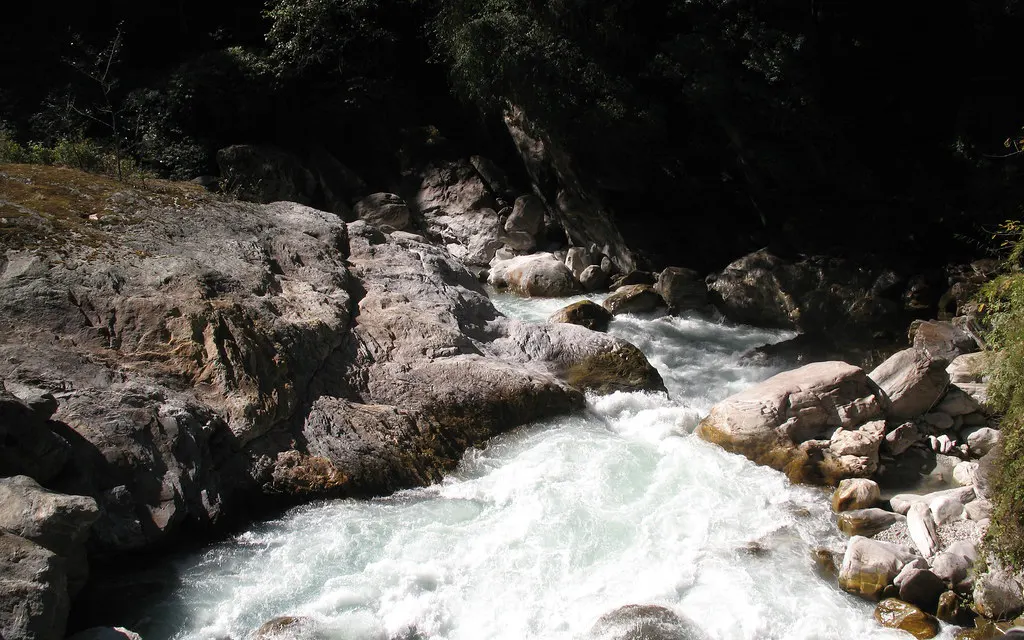
- Follow the scenic Lapchi Khola while trekking toward the remote Lapchi Valley.
- Hike to Sephuk (4,600 m / 15,092 ft) to visit Milarepa’s retreat site and holy water.
- Experience mountain scenery of Gaurishankar (7,134 m / 23,406 ft) and the Himalayan mountains.
- Explore the spiritual landmarks included in the Lapchi Trek Itinerary.
- Experience the quiet beauty and Buddhist heritage of the Lapchi Valley Trek with fewer crowds than Nepal’s popular trekking routes.
Detail Itinerary of Lapchi Trek

Day 01: Drive from Kathmandu to Lamabagar
The Lapchi Trek starts with a picturesque ride out of Kathmandu to Lamabagar (2,077 m / 6,814 ft), a small Sherpa village in Dolakha district. We will leave the city early in the morning and follow the highway through rivers, hills, and rural villages before reaching the mountain region. The trip can be made either by public bus or private jeep, a private vehicle gives a shorter and smoother ride.
The landscape slowly transforms, however, as we ascend, the busy towns are replaced by forested hills and mountain valleys. Along the way we will go by a few little villages, and we will see farmland. The journey will include brief stops for meals and refreshments along the way.
Upon reaching Lamabagar, we will check into a local teahouse and rest after the long drive. During the day we will get time to tour around the village to see how our local Sherpa people live, and to visit some of the Buddhist prayer sites in the village before we resume our night back to our teahouse.

Activity: Drive, 7–8 hours by private jeep or 8–10 hours by public bus

Max. Altitude: 2,077m/6,814ft. Lamabagar

Meal: Lunch, Dinner

Accommodation: Local Teahouse
Day 02: Trek from Lamabagar to Lumnang Village
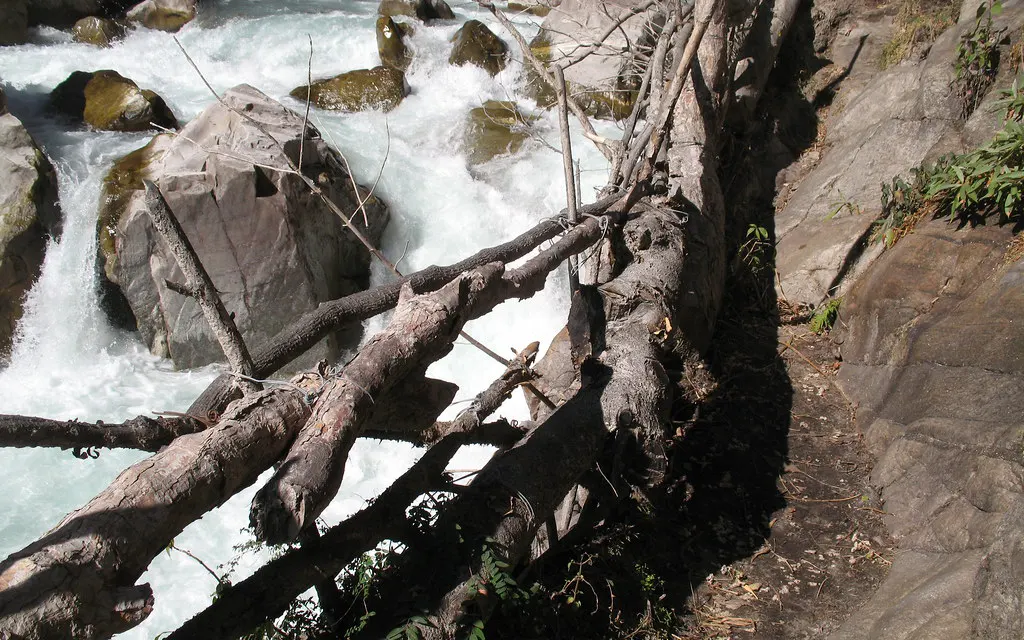
Today is the first day of the Lapchi Trek, the walking day. We will leave Lamabagar after breakfast, and start on the trail of the Lapchi Khola. The pathway slowly climbs up through bamboo woods, over several little brooks and through several wooden bridges. The serene environment and the flowing river contribute to this section being a pleasant introduction to the trek.
It has several steep parts since we rise in height during the day. We will stroll at a leisurely pace and have frequent stops to take a break and enjoy the natural beauty. On the path, we might encounter locals along the trail who are commuting between villages or taking care of their animals.
We then begin to climb and the woodland begins to thin out and the mountainous terrain becomes clearer. About six hours of walking will take us to Lumnang Village (3,450 m / 11,319 ft). The Lapchi people have this little seasonal village that they use during winter time and spend a night here peacefully. We will spend the night in a local teahouse, have a freshly prepared meal and get ready to continue the trek the next day.
Activity: Trekking, 6 hours
Max. Altitude: 3,450m/11,319ft. Lumnang Village
Meal: Breakfast, Lunch, Dinner
Accommodation: Local Teahouse
Day 03: Trek from Lumnang to Lapchi Village
We will now proceed on the trail of the Lapchi Trek Nepal as we proceed with the journey towards the spiritual Lapchi Valley. After breakfast, we will leave Lumnang and walk beside the fast flowing Lapchi Khola while gradually climbing through a peaceful mountain landscape. The landscape becomes more open, with the great views of the nearby hills and the high peak of Gaurishankar (7,134 m / 23,406 ft) on clear days.
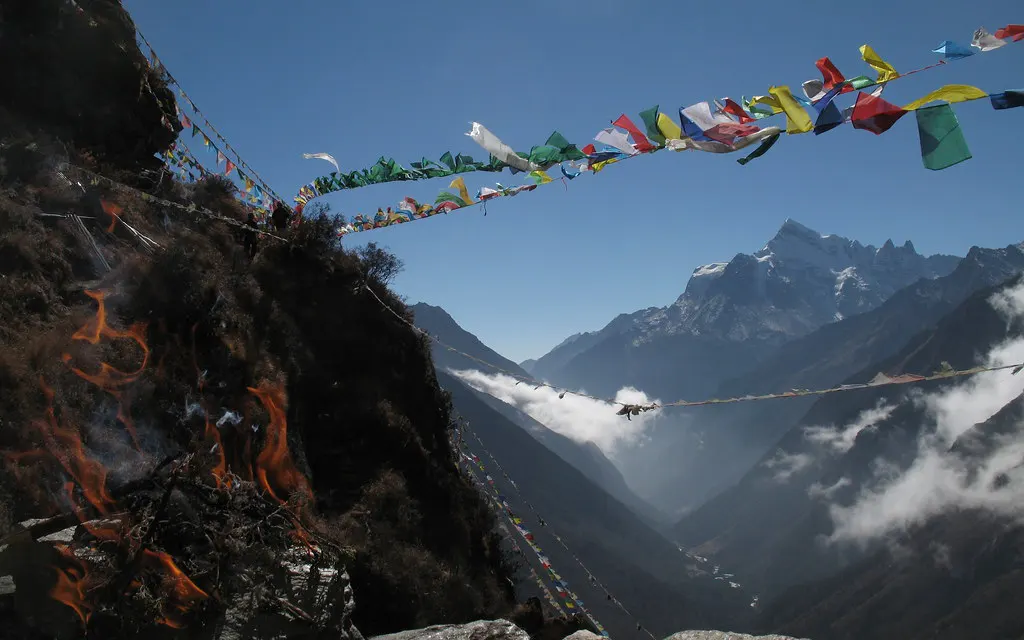
The trail follows a steady ascent through alpine pastures where local herders graze yaks during the warmer months. As we approach Lapchi Village, the valley widens and the spiritual importance of the area becomes more noticeable. The trail is lined with prayer flags, mani walls and traditional stone structures.
Once we reach Lapchi Village (3,850 m / 12,631 ft) we will have time to visit Chora Gephel Ling Monastery, the sacred cave, and the footprints that are thought to be those of Jetsun Milarepa. The monastery has also a number of meditation retreat places that are still in use by the meditators. We will stay the night in the village and then proceed with our Lapchi Valley Trek the next day.
Activity: Trekking, 5–6 hours
Max. Altitude: 3,850m/12,631ft. Lapchi Village
Meal: Breakfast, Lunch, Dinner
Accommodation: Local Teahouse
Day 04: Hike to Sephuk
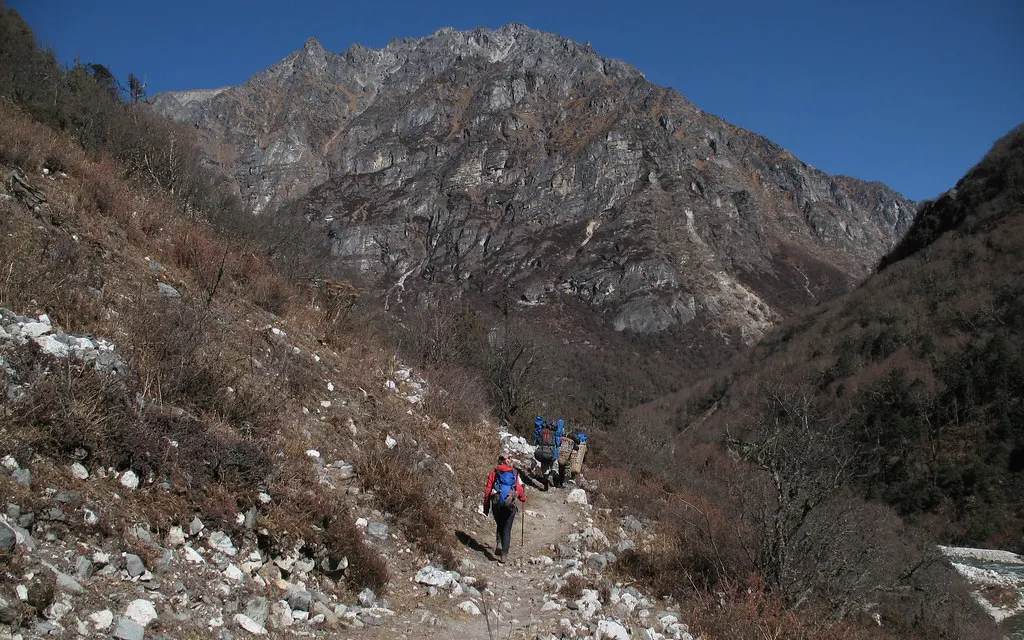
Today is an exploration day on the Lapchi Trek as we hike to Sephuk (4,600 m / 15,092 ft), an important spiritual site in the upper Lapchi Valley. We will depart Lapchi Village after breakfast and start a slow climb with rocky paths and open mountainous landscapes. The landscape around us becomes rougher and has broader perspectives of the valley as we ascend.
This path takes you to the retreat spot of Jetsun Milarepa where you can see his meditation house and the holy water that still draws Buddhist pilgrims. This serene place has been considered as one of the most important religious places in the Lapchi Trek Nepal and it is an opportunity to know more about the religious history of the area.
We will spend time exploring the area and enjoying the surrounding mountain scenery before returning to Lapchi Village by the same route. In clear weather, the viewpoint provides beautiful views of Lapchi Monastery, the surrounding mountainous terrain and the valley. After returning to the village, we will rest and prepare for the following day’s excursion.
Activity: Exploration Hike, 5–6 hours
Max. Altitude: 4,600m/15,092ft. Sephuk
Meal: Breakfast, Lunch, Dinner
Accommodation: Local Teahouse
Day 05: Field trip to Ramding Namgoma
We will resume the exploration of the upper valley today in Lapchi Trek Itinerary. We will walk after breakfast to Ramding Namgoma (approximately 4,500 m / 14,764 ft) in a place close to the Nepal Tibet border. This excursion can only be done when local conditions and border regulations permit and our guide will decide this depending on the situation.
The walk takes approximately 40 to 60 minutes, depending on trail conditions. As we do so, we will traverse high alpine landscape and be in serene environment as we see the mountainous landscape. This is a religious place and is visited by Buddhist pilgrims who visit to pay their respects and meditate.
We will continue to visit Ramding Namgoma, and then we will go back to Lapchi Village. The rest of the day may be spent in rest, or returning to the monastery, or strolling through the village, and then having dinner at the teahouse. The additional day will enable you to enjoy more of the Lapchi Valley Trek and then start the trip back.
Activity: Exploration Hike, 2–3 hours
Max. Altitude: 4,500m/14,764ft. Ramding Namgoma
Meal: Breakfast, Lunch, Dinner
Accommodation: Local Teahouse
Day 06: Trek from Lapchi Village to Lumnang
Today, we will begin our return journey on the Lapchi Trek by retracing the same trail back to Lumnang. After breakfast, we will say goodbye to the local people of Lapchi Village and start descending along the Lapchi Khola. The known path enables us to appreciate the landscape in a new way as we walk at a slow pace.
The trail passes through open hillsides, small grazing areas, and sections of bamboo forest before gradually descending into the valley. We will pass over a few wooden bridges and have brief rests in between to have a rest and view the serene environment. The descents are not demanding as compared to the uphill ascents; however, there are still rocky trails that need proper footing.
We will then reach Lumnang Village (3,450 m / 11,319 ft) after several hours of trekking. Upon arriving in the village, we will check in our teahouse, have a freshly cooked meal and rest after another successful day in the Lapchi Trek Nepal.
Activity: Trekking, 5–6 hours
Max. Altitude: 3,850m/12,631ft. Lumnang
Meal: Breakfast, Lunch, Dinner
Accommodation: Local Teahouse
Day 07: Trek from Lumnang to Lamabagar
Today is the final walking day of the Lapchi Trek Itinerary. After breakfast, we will leave Lumnang and continue descending toward Lamabagar by following the same trail through forests, streams, and river valleys. The path is generally downhill, and it is a pleasant stroll with another opportunity to enjoy the natural beauty of the area.
Part of the way will be through bamboo forests, over little bridges, and along the Lapchi Khola. The route is also through some quiet woodland areas where one can also enjoy the serene environment before getting back to the roadhead. We will also keep a moderate pace with some brief stops on the way.
Once at Lamabagar (2,077 m / 6,814 ft), we will have dinner at a local teahouse and spend the last night of our stay in the mountains. This will be a nice time to rest, recount our experiences during the Lapchi Valley Trek and get ready to drive back to Kathmandu the next morning.
Activity: Trekking, 5–6 hours
Max. Altitude: 3,450m/11,319ft. Lamabagar
Meal: Breakfast, Lunch, Dinner
Accommodation: Local Teahouse
Day 08: Drive from Lamabagar to Kathmandu
It is the last day of Lapchi Trek. We will depart Lamabagar after breakfast and start the reverse journey towards Kathmandu. The route traverses the scenic road across mountain villages, rivers, and hillscapes to the capital city.
We will stop at suitable places along the way for refreshments and lunch while enjoying the changing scenery as we descend from the hills. This is a final opportunity to enjoy the scenery of eastern Nepal before returning to the bustling city.
Our team will pick you up and take you to your hotel or where you would like to be in Kathmandu. This ends the Lapchi Trek Nepal, and you will return with lasting memories of peaceful mountain trails, sacred Buddhist sites, and the local culture of Lapchi Valley.
Activity: Drive, Departure, 7–8 hours by private jeep or 8–10 hours by public bus
Max. Altitude: 2,077m/6,814ft. Lamabagar
Meal: Breakfast, Lunch
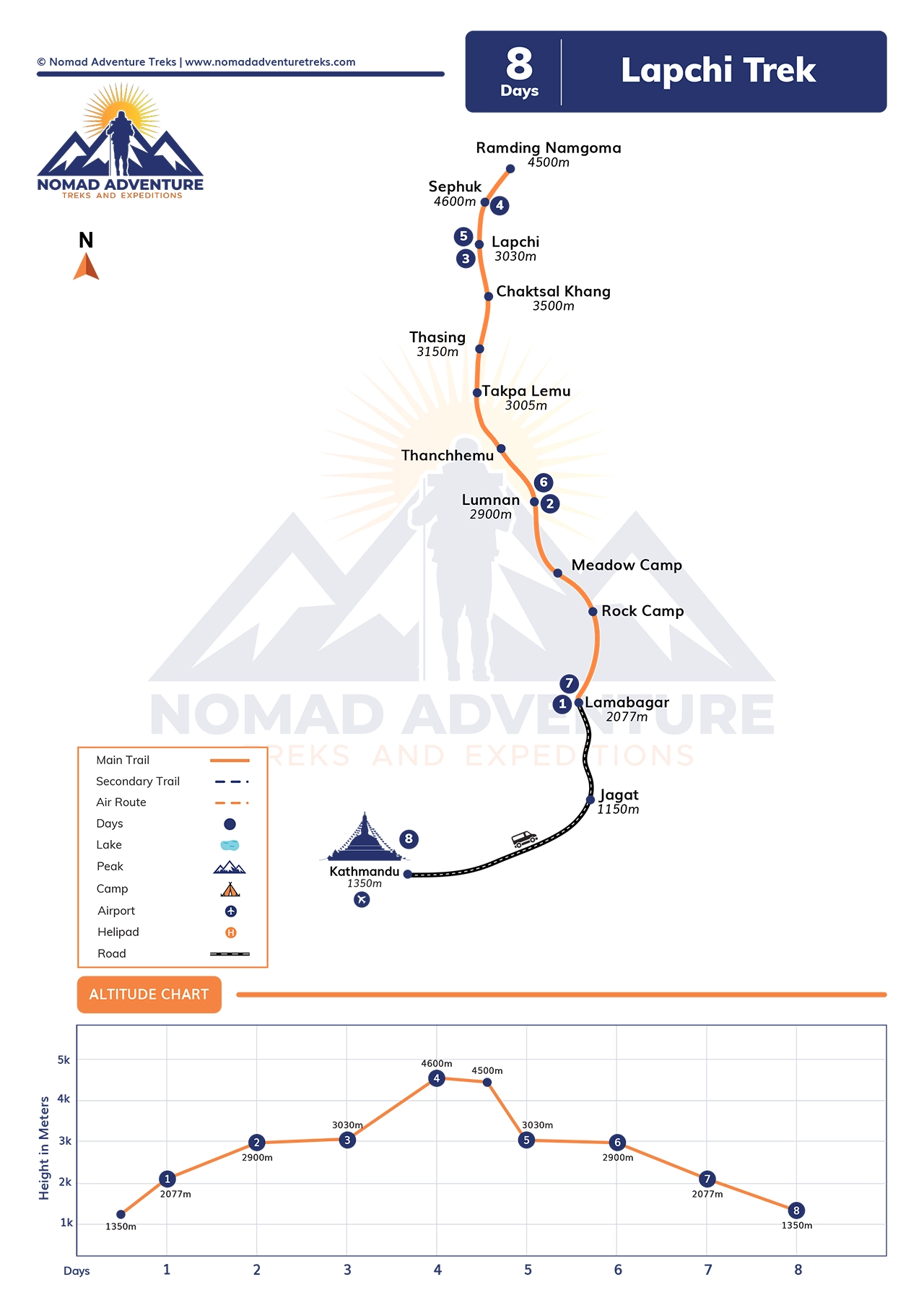
Trip Route Map
Includes & Excludes
What are included with package?
Accommodation
- Twin sharing accommodation in local teahouses or teahouses throughout the trek.
- Private room accommodation may be arranged in some locations at extra cost, subject to availability.
Meals & Drinking Water
- Three standard meals a day (Breakfast, Lunch, and Dinner) during the trek.
- Tea or coffee with breakfast.
- Freshly prepared meals at local teahouses and teahouses along the trekking route.
- Safe drinking water is available during the trek through boiled water or approved water purification methods.
Transportation
- Private ground transportation from Kathmandu to Lamabagar and from Lamabagar back to Kathmandu as per the itinerary.
- All required local transportation during the trip.
Guide and Staff
- Experienced, government licensed, English speaking, and first aid trained trekking guide.
- Professional support staff as required for the trek.
- Wages, accommodation, meals, transportation, insurance, and equipment for all trekking staff.
Medical Assistance
- Comprehensive first aid kit carried by the trekking guide.
- Pulse oximeter to monitor blood oxygen saturation levels at higher elevations.
- Assistance with arranging emergency rescue operations if required (rescue costs covered by your travel insurance).
Permits
- Gaurishankar Conservation Area Permit.
- TIMS Card (if required under current trekking regulations).
- All necessary government permits and official fees required for the Lapchi Trek.
Benefits and Takeaways
- Complimentary duffel bag for use during the trek (if required, to be returned after the trip).
- Company T shirt and cap.
- Trip completion certificate.
Administrative & Taxes
- All administrative expenses.
- Government taxes and official service charges.
What are not included with package?
- International airfare to and from Nepal.
- Nepal entry visa fee.
- Travel insurance, including high altitude trekking and emergency helicopter evacuation coverage.
- Lunch and dinner in Kathmandu.
- Personal trekking clothing and equipment.
- Personal medical expenses, vaccinations and medications.
- Bottled water, soft drinks, alcoholic beverages, tea, coffee and any other drinks, other than the included meals.
- Personal expenses such as snacks, hot showers, Wi-Fi, telephone calls, laundry, battery charging fees and souvenirs.
- Tips for trekking guides, porters, drivers and other staff.
- Extra accommodation, meals or transport caused by weather conditions, road closures, natural disasters, strikes or circumstances beyond our control.
- Expenses incurred due to early return or changes in itinerary for personal reasons.
- Any services or expenses not specifically mentioned under “What are included with package?”

Note:
If you have a private group and prefer a personalized experience, we can organize a custom trip tailored to your requirements and group size, running it any day you choose.
Detail Information about Lapchi Trek
Lapchi Trek Weather and Best Season
It is possible to do the Lapchi Trek during the spring and autumn because these seasons are usually stable and the mountain scenes are very good. These seasons offer pleasant temperatures during the day, clear skies and good trail conditions. During spring, rhododendrons and new greenery are blooming, and in autumn, the weather is dry and visibility is at its best across the valley.
During summer, monsoon rain is very heavy and it renders the trails muddy and slippery. In the lower sections of forests, leeches can also be found. It is a lot colder in winter, particularly at the higher elevations and snowfall may render parts of the trail hard to reach. Selecting the appropriate season will make you experience the Lapchi Trek Nepal safely and comfortably.
Lapchi Trek Season Guide
Season |
Weather |
Trail Conditions |
Recommendation |
| Spring (March to May) | Mild temperatures with clear skies | Dry trails, blooming rhododendrons | Highly Recommended |
| Summer (June to August) | Heavy rainfall and humid conditions | Muddy trails with possible leeches | Not Recommended |
| Autumn (September to November) | Stable weather and excellent visibility | Dry trails and clear mountain views | Highly Recommended |
| Winter (December to February) | Cold with occasional snowfall | Snow may affect higher sections | Suitable for experienced trekkers |
Difficulty and Altitude Sickness
The Lapchi Trek can be classified as a medium to difficult trek due to its remote area, gradual increase in elevation and mountainous terrain. On forest trails, rocky paths and uneven ground, you will walk between five and six hours per day. Even though the highest point is Sephuk (4,600 m / 15,092 ft), the itinerary follows a gradual ascent from Lamabagar to Lumnang and Lapchi Village, helping your body adjust to the increasing altitude before reaching the highest point.
Altitude sickness is not limited to any age or fitness, above 2,500 m (8,202 ft) anyone will experience it. Symptoms such as headache, nausea, dizziness, and loss of appetite are common. We have guides who ensure that each trekker is accompanied throughout the trip and to walk at a slow pace, take frequent water breaks, and get lots of rest. Report to your guide as soon as you feel unwell so that appropriate measures can be taken before the symptoms are severe.
Insurance, Visa and Permits
The Lapchi Trek Nepal involves various permits prior to getting to the trekking area. Before the expedition, Nomad Adventure Treks will obtain all the required trekking permits and do the paper work. Because the permit requirements may vary, our staff will give the current information when making the booking.
Before traveling to Nepal or Kathmandu, international tourists should acquire a valid Nepal tourist visa. It is also highly advisable that you buy a full trekking coverage that may be in place of high altitude up to 4,600 m (15,092 ft), emergency treatment and helicopters evacuating. The Lapchi Valley Trek is a remote area even though the trail is well-maintained, and proper insurance is a valuable aspect of your preparations.
Health & Safety
We are more concerned with your safety during the Lapchi Trek. Our trained guides have a first aid kit and ensure that the health of all group members is checked throughout the trek. Our walking speed is moderate and we take frequent breaks so as to minimize fatigue and to aid effective acclimatization.
We suggest that to remain healthy, we have to drink a lot of water, eat balanced meals and have adequate rest at night. In the upper valley, there are limited basic medical facilities; hence, it is essential to carry your own medicines in case they are needed. Our team will also organize the most suitable rescue process in case of a major emergency based on the circumstances and your coverage by the travel insurance.
The first four Trip Information sections have the same overall style as your reference package but enhance readability with a seasonal table.
The next four sections will be:
- Transportation
- Your Additional Costs on the Lapchi Trek
- Language & Communication
- Internet, Charging and Mobile Network
Transportation
The Lapchi Trek starts with an overland trip of Kathmandu to Lamabagar where the trekking trail starts. Depending on availability, you can travel by a shared local jeep or a private jeep. Public bus drive normally takes 8-10 hours whereas a private jeep takes around 7-8 hours and is more comfortable and flexible.
After starting the trek, the only way to go is by walking through mountain trails, forests, and river valleys. No roads beyond Lamabagar, and the only means of reaching Lapchi Village is to walk. Once we complete the Lapchi Trek Itinerary we will go back the same way to Lamabagar and then have to drive to Kathmandu. Our team will arrange all ground transportation included in the itinerary to ensure a smooth travel experience.
Your Additional Costs on the Lapchi Trek
The package covers the majority of the large costs of the Lapchi Trek Nepal, but you should bring some additional cash to spend on. Since there are no ATMs in the trekking region, it is best to withdraw enough money before leaving Kathmandu.
You may need additional budget for:
- Guidelines about being a guide and support personnel.
- Personal snacks and beverages
- Alcoholic beverages not included in the meals.
- Personal shopping in Kathmandu.
- Extra accommodation before or after the trek
- Travel insurance
- Personal trekking equipment if rented or purchased
- Expenses caused by delays due to weather, road conditions, or personal reasons
Carrying sufficient cash will help you manage these additional expenses comfortably during the Lapchi Valley Trek.
Language & Communication
The Lapchi Trek passes through villages where local people mainly speak Sherpa, Tibetan dialects, and Nepali. Trekking guides usually speak English, which makes it easy to communicate during the journey. Your guide will also assist you to communicate with the locals and also describe the history, culture and religious significance of the sites you are visiting.
Since the trek will venture into a remote part of the Himalayas, any chance of interaction with individuals beyond your group is slim beyond Lamabagar. It is always nice to learn some simple Nepali greetings, which contribute to a cordial interaction with the residents of the area.
Internet, Charging and Mobile Network
Kathmandu has mobile and internet connectivity but connectivity is limited when you go further into the trekking area. Mobile connections can be obtained in some of the lower villages during the Lapchi Trek, but network coverage is not certain. Beyond Lamabagar, Internet access is usually out.
Service |
Availability |
| Mobile Network | Limited in lower villages and unavailable in most upper sections |
| Internet | Available in Kathmandu only and very limited on the trek |
| Charging Facilities | Available in some teahouses, but not guaranteed |
| Electricity | Basic electricity is available in some villages |
We suggest the use of a power bank fully charged to ensure that your phone and camera, among other electronic devices, serve you during the trek. It is also a good idea to make your family aware before the Lapchi Trek Nepal that you might not have time to communicate until you get back to Lamabagar.
Don’ts on This Trip
While joining the Lapchi Trek, it is important to respect the local culture, religious traditions, and natural environment. Lapchi valley is a holy pilgrimage place of the Buddhists and thus one is expected to be respectful with the journey.
When visiting monasteries and meditation places, you must wear simple clothes. Never take photographs without permission of your guide in religious buildings or of local people. As you walk in stupas, mani walls and prayer wheels, do as the locals do and walk clockwise.
Do not leave rubbish along the trail or damage plants and wildlife. Keeping the trekking route clean helps protect the natural environment and preserves the spiritual atmosphere of the Lapchi Valley Trek for future visitors.
Cultural and Religious Significance
The Lapchi Trek Nepal is not a mountain trip due to the fact that it takes the path of one of the most significant Buddhist pilgrimage trails in the Himalayas. Lapchi Valley is closely connected with Jetsun Milarepa, the famous Tibetan Buddhist saint who is believed to have meditated in caves throughout the region during the eleventh century.
The route goes through a few of their holy places like Chora Gephel Ling Monastery, the meditation cave of Milarepa, the holy footprints and ancient meditation places that still today are frequented by the monks and pilgrims. Buddhist practitioners visit Lapchi all year round to pray, meditate as well as to attend religious ceremonies conducted by the local monastery.
These locations will offer a chance to learn about the spiritual traditions that have influenced the valley over centuries. Adhering to the local traditions and keeping a low profile around religious places will assist in making the Lapchi Trek a more valuable experience.
Food and Accommodation
During the Lapchi Trek, you will stay in simple local teahouses operated by families living in the region. The accommodation is simple yet comfortable enough to trekkers visiting this isolated area of Nepal. A majority of the rooms are twin sharing with beds, mattresses, pillows, and blankets. Bathrooms tend to be communal and facilities get primitive as you climb up the valley.
Meals are freshly prepared using locally available ingredients. Breakfast normally includes eggs, Tibetan bread, porridge, pancakes, tea or coffee. The regular lunch and dinner menu is dal bhat, noodles, fried rice, soup, potatoes, seasonal vegetables and other basic Nepali meals. In larger villages, supplies are transported within the area, so the menu is restricted.
The trek has safe drinking water all along. We suggest bringing a reusable water bottle that could be filled with boiled or treated water availed by the teahouses. In case of any dietary needs or food allergies, then please do notify us of the same before you travel so that we can make the necessary arrangements where possible.
Packing List
Packing properly for the Lapchi Trek will make your journey more comfortable, especially because temperatures change between lower valleys and higher elevations. We suggest carrying just the basics and leaving your backpack light.
Clothing
- Down jacket
- Waterproof jacket and trousers
- Warm fleece jacket
- Thermal base layers
- Trekking trousers
- Moisture wicking T shirts
- Sun hat and warm hat
- Gloves
Footwear
- Comfortable trekking boots
- Camp shoes or sandals
- Warm trekking socks
Personal Equipment
- Sleeping bag suitable for cold weather
- Trekking poles
- UV protection sun glasses
- Lip balm and sunscreen
- Spare batteries Headlamp
- Reusable water bottle
- Power bank
- Personal toiletries
- Basic first aid supplies and personal medicines
With the necessary equipment, you will be able to visit the Lapchi Trek Itinerary with greater ease and be ready to adapting weather conditions in the mountains.
Responsible Trekking
The Lapchi Valley Trek passes through an ecologically sensitive region and a great Buddhist pilgrimage site. Everyone who comes to the places has a responsibility to preserve the natural environments and marvel the local cultures.
To minimize plastic waste, please do not leave rubbish on the trail and use reusable water bottles when possible. Take the existing paths to avoid damaging vegetation, and never interfere with animals in Gaurishankar Conservation Area.Go to monasteries, meditation caves and sacred locations, all wearing appropriate clothing and following the instructions of your guide. Never take pictures of monks, local people or religious ceremonies without permission.
The encouragement of locally owned teahouses and the respect of the local customs of the community also help retain the unique culture of the Lapchi region. Travelling in a responsible way will ensure that you preserve the environment and the culture that makes the Lapchi Trek Nepal a unique Himalayan adventure in the long term.
First Time Visitor Tips
This is your first Lapchi Trek and proper preparation will ensure that the trip is safe and more enjoyable. The path is very steep and traverses isolated mountainous regions with limited amenities.
Before you begin the trek, it is recommended to:
- Build up fitness by regular walking before the trip.
- Carry comfortable waterproof trekking shoes.
- Carry warm clothes in layers as per changing temperatures.
- Carry a good sleeping bag suitable for cold weather.
- Drink sufficient water throughout the trek.
- Trek at a comfortable pace, do not rush.
- Carry a power bank to charge electronic gadgets.
- Arrange personal medication and hygiene.
- Respect the local Buddhist customs and monastery rules.
- Carry some extra cash for personal expenses.
Proper preparation will make the Lapchi Trek Itinerary more enjoyable and comfortable in order to make the trekking experience more fulfilling.
Frequently Asked Questions
What is so special about Lapchi?
Lapchi is considered to be among the most significant Buddhist pilgrimages sites within the Himalayas since it is deeply linked with the Tibetan saint, Jetsun Milarepa who meditated in the valley centuries ago. The place is frequented by many pilgrims to practice spirituality and meditate.
Does the Lapchi Trek have the capacity to be used by single travelers?
Yes. The Lapchi Trek is open for individuals but it is better to join an organized group and have an expert guide as the trail passes through remote and mountainous areas with few facilities.
Can the Lapchi Trek itinerary be customized?
Yes. Nomad Adventure Treks can customize the itinerary according to your travel time, fitness level or any other sightseeing you would like to do before or after the trek.
When should I book the trek?
We recommend that you book the trek at least one and half months before your intended departure date especially during the trekking season of spring and autumn.
Is the Lapchi Trek busy?
No. The Lapchi Trek is far quieter than popular routes like Everest Base Camp or Annapurna Base Camp, making it perfect for travelers looking for a peaceful trekking experience.
Will I see snow on the trek?
During late autumn, winter and early spring, it can be snowy, particularly at higher altitudes, like Sephuk. The trail is normally snow-free during the prime trekking seasons.
Are beginners able to complete the Lapchi Trek?
The trek can be successfully done by beginners who are in good shape and are well prepared. A pre-trip walk or hiking will also help to make the experience pleasant.
Are there monasteries to visit during the trek?
Yes.The trek also stops at significant Buddhist places like Chora Gephel Ling Monastery and the meditation cave of Milarepa, some of the spiritual highlights of the journey.
What animals may I encounter on the walk?
Himalayan birds, musk deer, the Himalayan tahr and more wildlife are found in the forests and mountain slopes around Lapchi. Observations are subject to seasonal and weather factor.
Can I extend my trip after the Lapchi Trek?
Yes. Trekking is often combined with sightseeing in Kathmandu by many trekkers, or further trekking and cultural tours in Nepal.
Is the trek suitable for photography?
Yes. The trail provides great chances of capturing mountainous terrain, forests, rivers, monasteries and traditional villages along the way.
Are there any sacred rules visitors should follow?
Yes. When visiting monasteries and caves, visitors are expected to respect local traditions, keep quiet in religious places, not to disrupt meditation areas, listen to their guide, and obey his or her directives.
Is it possible to charge camera batteries on the trek?
In some villages, charging can be provided, but there is not much. It is advisable to have spare batteries or fully charged power bank in the hands of photographers.
Will trekking poles be necessary on this trek?
Trekking poles are optional, yet highly encouraged since they give greater balance and place less pressure on the knees when climbing ascent and descent.
Are vegetarians permitted to be part of the Lapchi Trek?
Yes. Vegetarian meals are typically available in local teahouses and our team will be in a position to coordinate proper meals in advance.
Does the trek have a luggage limit?
When porters are hired, each trekker is usually assigned a specified amount of luggage. We recommend that you bring all your stuff in a duffel bag and a small day pack during the trek.
What is unique about the Lapchi Trek compared to other treks in Nepal?
Unlike most trekking trails which are more mountain-oriented, the Lapchi Trek is a combination of both natural beauty and spiritual purpose, so that visitors can visit sacred Buddhist sites in a serene valley of the Himalayan range.
Can I combine the Lapchi Trek with other destinations?
Yes. Most of the travelers combine the journey with Kathmandu sightseeing, Langtang region tours or other cultural experiences basing on time they have.
Why should I choose Nomad Adventure Treks for the Lapchi Trek?
Nomad Adventure Treks offers expert local guides, well-thought-out itineraries, logistics, and customized service to ensure you have a safe and fulfilling trekking experience in Lapchi region.
Reviews on Lapchi Trek
 Write a Review


- Your safety, our no 1 priority
- Best price guarantee
- Experienced & dedicated team
- Easy booking, no hidden charge
- You can customize this trip
Talk to Travel Expert
Samundra Rimal (+977-9843127084)