



Laya Gasa Trek in Bhutan – 18 Days

Duration
18 Days

Max Altitude
4,890 m. / 16,043 ft.

Difficulty
Moderate

Group Size
2-20 Pax

Meals
- 16 Breakfast
- 16 Lunch
- 17 Dinner

Accommodation
- Hotel
- Lodge

Transportation
Flight/Jeep

Activities
- Trekking
- Sightseeing
- Camping

- Your safety, our no 1 priority
- Best price guarantee
- Experienced & dedicated team
- Easy booking, no hidden charge
- You can customize this trip



Talk to Travel Expert Samundra Rimal (+977-9843127084)
Introduction of Laya Gasa Trek in Bhutan – 18 Days
Laya Gasa Trek in Bhutan is an 18 days tour of remote mountainous and traditional mountain settlements, which should be undertaken by people who like to walk long distances, the silence of nature and the richness of cultural experiences. It is a rewarding trek designed for travelers who enjoy long walking days, remote natural landscapes, and cultural sites that are rarely visited in the Himalayas. It starts in the Paro Valley and gradually heads north through forests, river valleys, and high altitude landscapes.
During the initial days, the track traverses pine forests and rhododendrons and crosses clear streams and open valleys. When the path is ascended higher, the landscape shifts to the meadows of the alps and mountain traverse. Some of the high mountain passes included in the itinerary are Nyile La and Sinche La that provide panoramic views of snow covered mountains including Jomolhari and Jichu Drake on clear days.
The journey also offers valuable experience of the rural life in Bhutan. Tours such as Lingshi and Laya enable one to see the daily life of the people and their culture in the villages. These villages are way out of the byways, and here the living is very slow and simple. In the course of the journey, there are ancient dzongs and monasteries shown in the landscape that are evidence of the high spiritual culture of the country.
One of the highlights of the trip is the visit to the natural hot springs at Gasa. The trek takes many days in walking and the warm water soaking will be the rest and comfort before the final stages of the trek. The environment here is calm and enclosed with mountains thus a refreshing stop at the end of the road.
During the trek, a seasoned guide/support staff is engaged to offer guidance, camping arrangement, and meals. The camps are situated in beautiful spots and the food is a blend of local and familiar food to ensure that the energy is maintained during the days of long walks. Although the hike is characterized by length of distance, steep uphill weather, and high altitude, the long walks slow the pace and give one time to adapt and appreciate the environment.
This 18 day adventure will provide the perfect combination of nature, culture, and adventure. The product is an appropriate selection of those who want to learn more about the mountainous part of Bhutan and the way of life in the traditional village, without the city traffic and the modern civilization.
Trip Highlights
- Cross high mountain passes such as Nyile La, Jare La and Sinche La
- Camp at Jangothang with the views of Mount Jomolhari and Jichu Drake
- Guided tours to the remote village of Laya and a local Layap community
- Walk through forests, alpine meadows and glacial valleys
- Relax in the natural hot springs of Gasa
- Visit Taktsang Monastery and the old dzongs in Paro, Thimphu, and Punakha
Detail Itinerary of Laya Gasa Trek in Bhutan – 18 Days

Day 01: Flight to Bhutan – Paro (2,250 m)
Your journey will start with scenic flight into Paro – the only international airport in Bhutan. Upon arrival, your local team in the airport will welcome you and transfer you to your hotel, which is only a short drive away. After checking in, you will have time to rest and recover from your journey, while enjoying the calm atmosphere of the Paro Valley.
If time and energy is available, you will be able to enjoy a leisurely walk around Paro town in the evening. You will see the traditional Bhutanese houses and prayer flags and a peaceful lifestyle. Later, your guide will meet you to explain the trekking plan, review of permits and check your gear. In the evening, you will have a welcome dinner with the Bhutanese cuisine before you go to bed for a good rest.

Activity: Arrival, Airport Pickup, Settle-In, 30-minute transfer to hotel

Max. Altitude: 2,250m/7,382ft. Paro

Meal: Dinner

Accommodation: Hotel
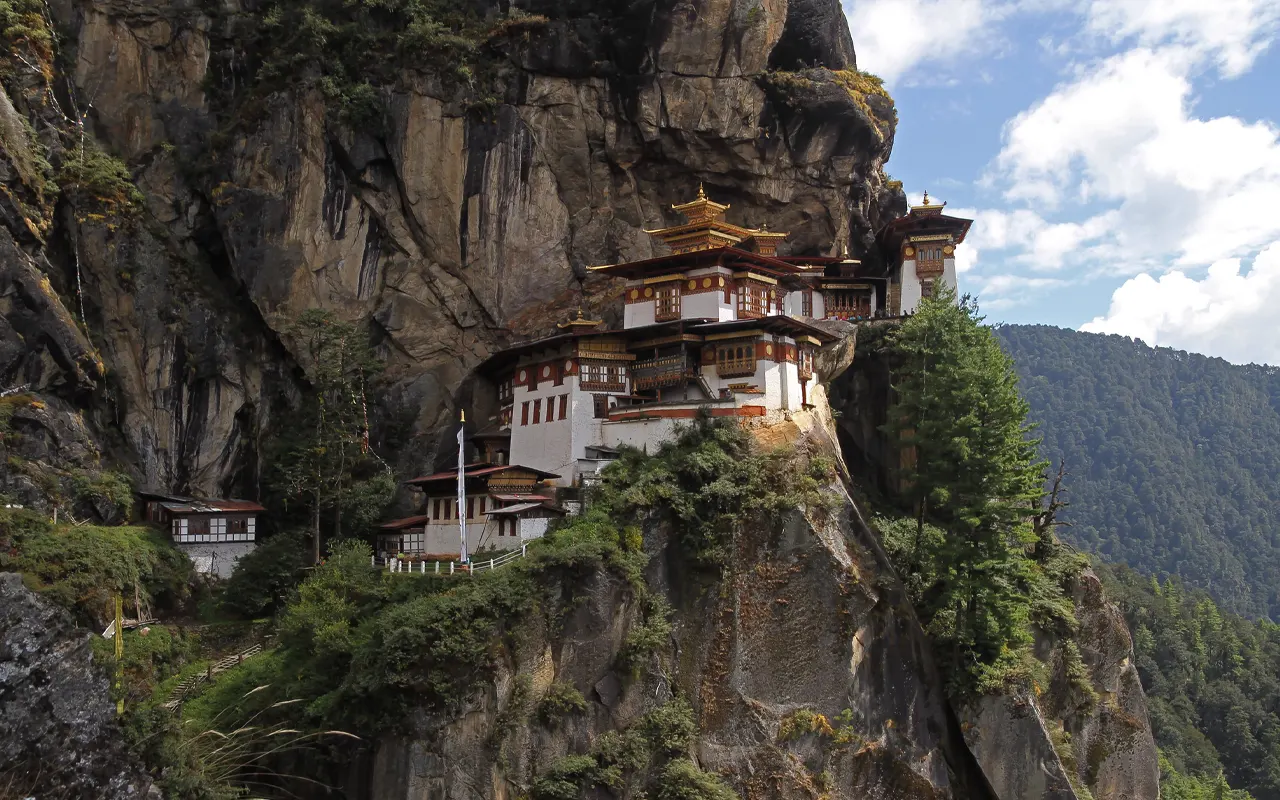
Day 02: Paro Acclimatization Hike to Tiger’s Nest Monastery (3,120 m)
After breakfast you will start with an acclimatization hike to Taktsang Monastery commonly known as Tiger’s Nest. The trail climbs up at a gradual pace through pine forest and prayer flags line the trail with beautiful views of the Paro Valley along the way. The hike is undertaken at a steady pace so as to allow your body to adjust to the altitude.
As you ascend higher you will be able to see the monastery dramatically on the cliff face above. After reaching the view point you will go down to visit the monastery itself a short section of stone steps. Your guide will explain its religious significance and the story of Guru Rinpoche.
After you spend some time at the monastery you will hike back down to the valley. In the afternoon you will have time to relax or visit nearby places like Paro Rinpung Dzong or the National Museum.
Activity: Acclimatization Hike, Cultural Sightseeing, 5 hours trekking
Max. Altitude: 3,120m/10,236ft. Taktsang Monastery
Meal: Breakfast, Lunch, Dinner
Accommodation: Hotel
Day 03: Drive to Drukgyel Dzong and Trek to Shana (2,850 m)
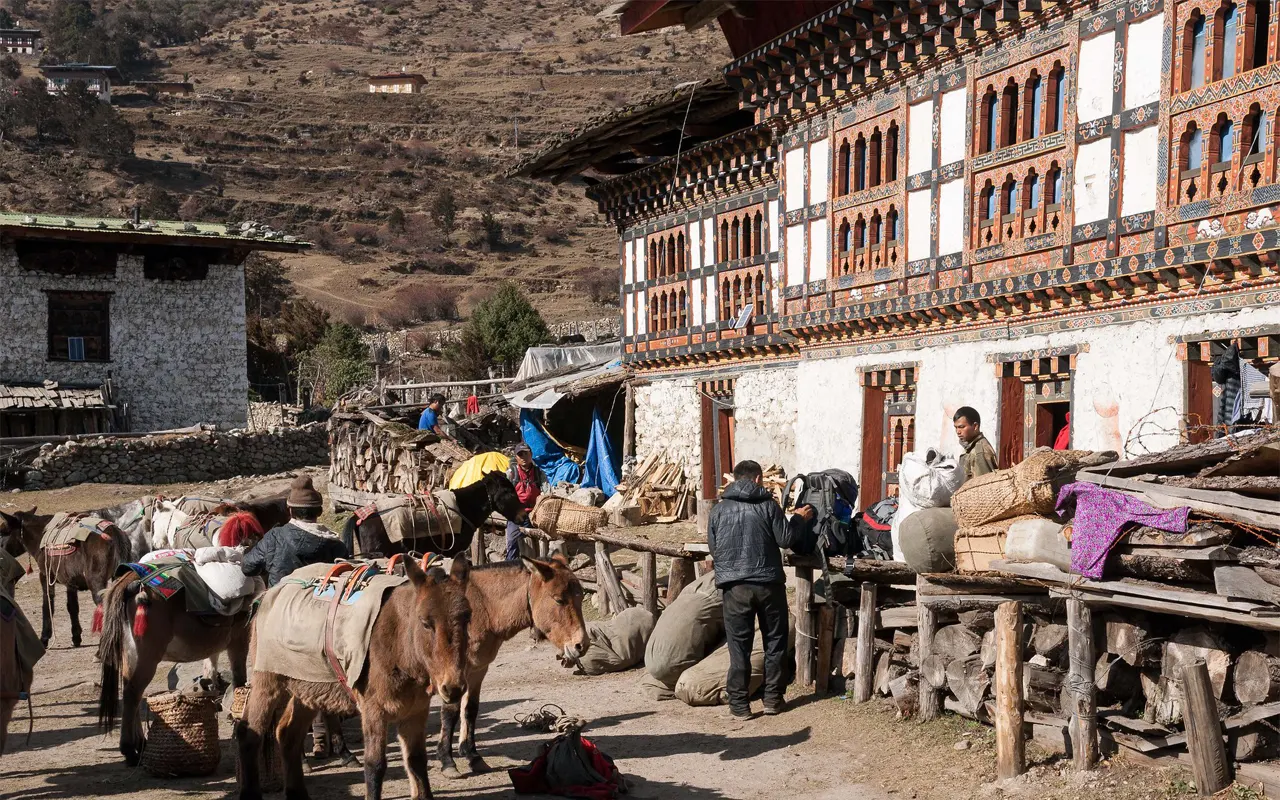
After an early breakfast you will go on a short scenic drive on the Paro valley to Drukgyel Dzong. These ancient ruins are the starting point of the trek. Here, you will meet the trekking crew and pack animals and final preparations will be made prior to you beginning to walk.
The trail follows the Paro River, and it is a wide and easy trail. You will pass terraced fields, small settlements and forested areas as the surrounding gradually becomes more remote. The walk is not strenuous and helps you to acclimatize to the rhythm of trekking. On clear days, you will make out distant views of snow covered peaks.
By late afternoon, you will arrive at Shana, a quiet camping area along the river. After dinner, you will relax and enjoy your first night camping in the Bhutanese wilderness.
Activity: Short Drive, Trekking, Camping, 6 hours trekking (30-minute drive)
Max. Altitude: 2,850m/9,350ft. Shana Camp
Meal: Breakfast, Lunch, Dinner
Accommodation: Lodge
Day 04: Trek from Shana to Thangthangka (3,750 m)
After breakfast you will leave Shana and trek further into Jigme Dorji National Park. The trail follows the Paro River and passes through a mix of pine, birch and rhododendron forest. The walk is gradual with gentle ups and downs, so that you can gain the altitude in a comfortable manner. Moss covered trees and a quiet surroundings make a peaceful walking environment.
As the day goes on the forest gradually opens out and the landscape becomes more rugged. You will stop for lunch beside the river and enjoy the peaceful natural setting. On clear days you may have your first afar sight of Mount Jomolhari on the way.
By late afternoon you will reach Thangthangka, a vast meadow with a stone shelter used by trekkers and herders. After you have set up camp you will have a warm meal and good rest after a longer walking day.
Activity: Trekking, Camping, 7–8 hours trekking
Max. Altitude: 3,750m/12,303ft. Thangthangka Camp
Meal: Breakfast, Lunch, Dinner
Accommodation: Lodge
Day 05: Trek from Thangthangka to Jangothang (4,040 m) – Jomolhari Base Camp
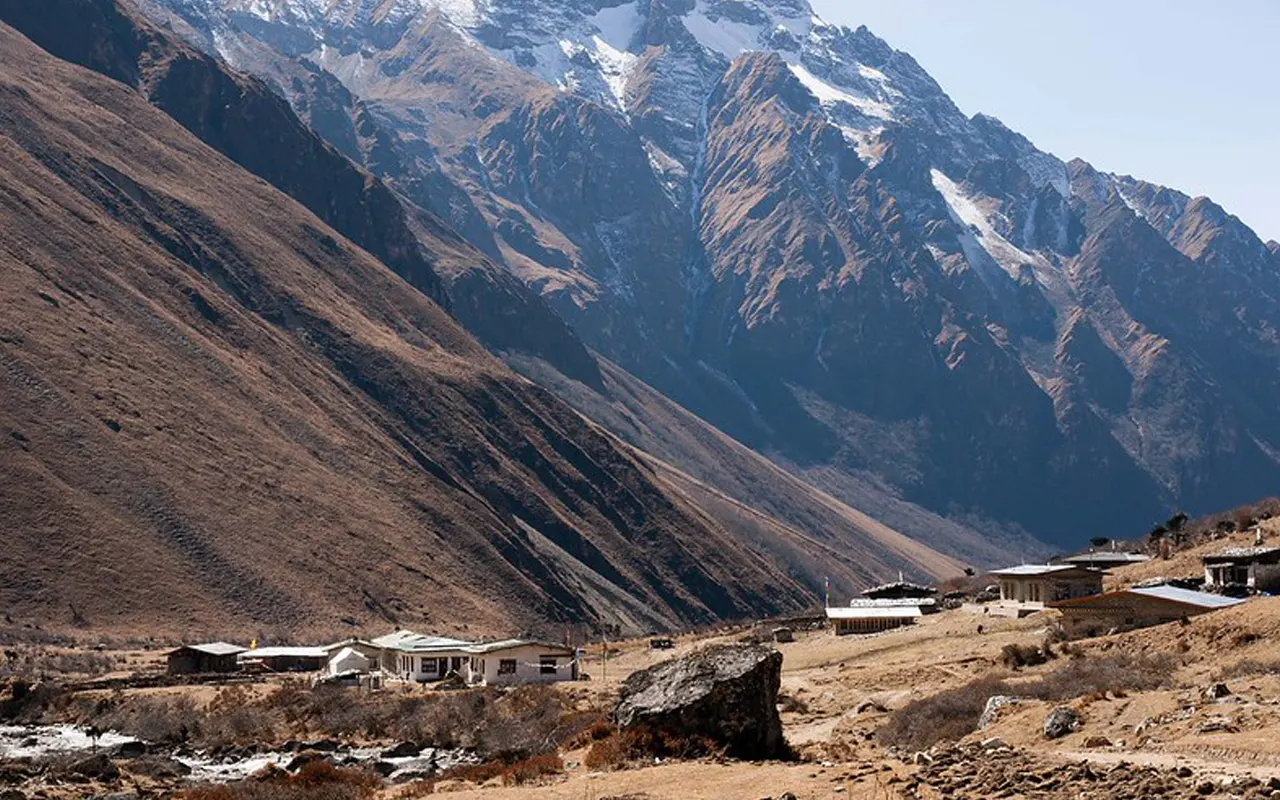
Today, you will continue your trek towards to Jangothang which is the base camp of Mount Jomolhari. The trail slowly gains elevation above the tree line and the valley opens into expansive alpine terrain. You will see yak herder shelters and possibly herds of blue sheep can be seen grazing on the slopes.
As you walk higher, Mount Jomolhari slowly comes into full view, dominating the landscape with its snow covered summit. The path is steady and time is given to adjust to the increasing altitude. After lunch on the way, you will proceed to the wide valley of Jangothang.
By afternoon, you will arrive at the campsite which is located below an old fortress ruin with clear views of Jomolhari and Jichu Drake. The evening is free to relax, take photos and enjoy dinner with high Himalayan peaks all around.
Activity: Trekking, Mountain Views, Camping, 7 hours trekking
Max. Altitude: 4,040m/13,255ft. Jangothang Camp
Meal: Breakfast, Lunch, Dinner
Accommodation: Lodge
Day 06: Rest Day at Jangothang (4,040 m)
You will spend the day at Jangothang to give your body time to acclimatize to the altitude before crossing passes at higher altitudes. The morning is relaxed and you can have vistas of Mount Jomolhari when the sun gradually comes up and starts lighting the valley.
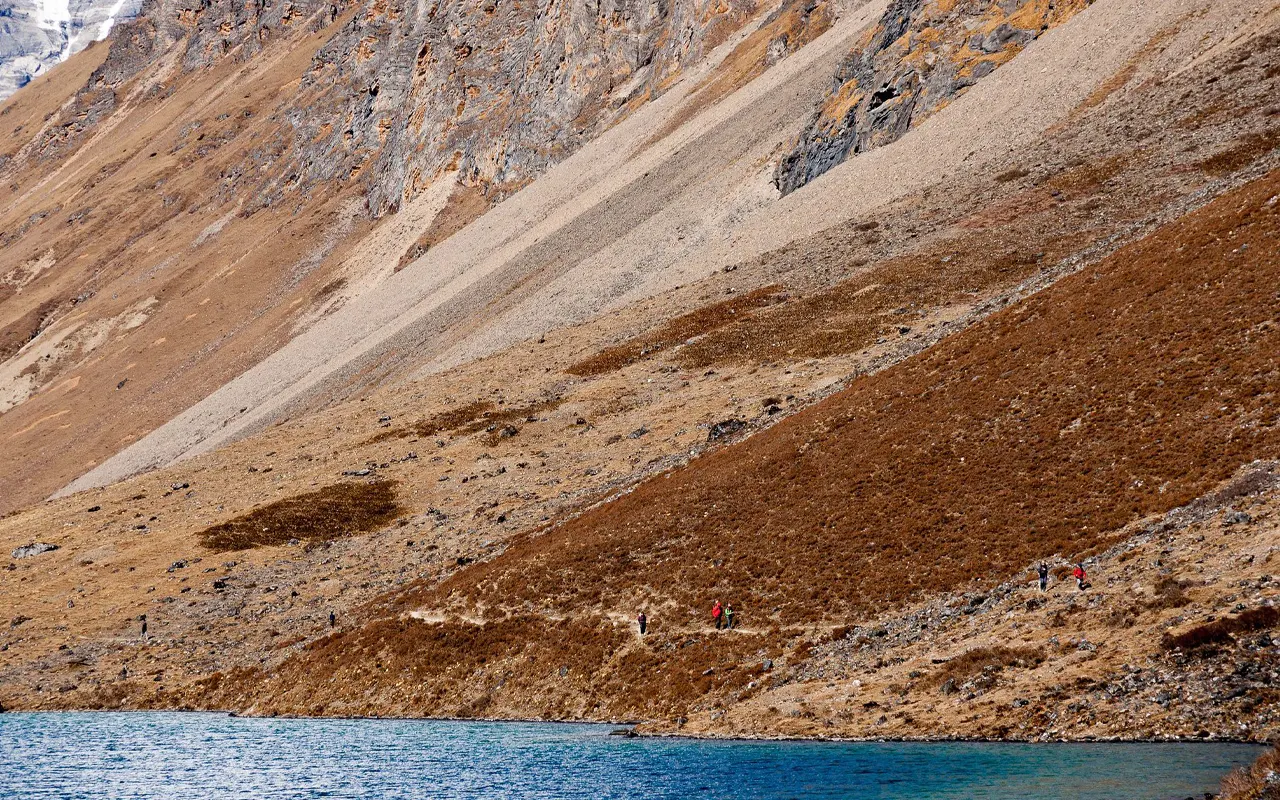
If you feel energetic you will have the option of a short acclimatization hike to a nearby ridge or viewpoint above the camp. These walks are helpful in terms of altitude adaptation, and offer wide views of glaciers and surrounding peaks. Another option is a low walk towards nearby alpine lakes.
In the afternoon you might rest at camp, visit around the local yak herders, or just enjoy the quiet mountain environment. This slower day is to help prepare you physically and mentally for the more difficult sections of the trek ahead and is often remembered as one of the most peaceful days of the journey.
Activity: Acclimatization, Optional Hikes, Relaxation, Optional short hikes (3–4 hours)
Max. Altitude: 4,500m/14,764ft. optional hike
Meal: Breakfast, Lunch, Dinner
Accommodation: Lodge
Day 07: Trek from Jangothang to Lingshi (4,100 m) via Nyile La Pass
After breakfast you will leave Jangothang and start ascending towards Nyile La pass. The trail ascends steadily and as you ascend you will have changing views of Mount Jomolhari behind you. Walking slowly and pausing frequently will help you to manage the altitude.
After a few hours, you will reach Nyile La Pass, which is marked by prayer flags and stone cairns. From the top you will have the wide views of snow covered peaks all around and the Lingshi Valley below. This is one of the first major crossings of high passes of the trek.
The descent from the pass is steep and you will take your time as you walk down into alpine pastures. By late afternoon, you will arrive in your campsite near Lingshi village. If time permits, you can visit a local home, drink a cup of butter tea with villagers before dinner.
Activity: High Pass Crossing, Trekking, Camping, 6–7 hours trekking
Max. Altitude: 4,890m/16,043ft. Nyile La Pass
Meal: Breakfast, Lunch, Dinner
Accommodation: Lodge
Day 08: Trek from Lingshi to Chebisa (3,850 m)
Today provides a shorter and less strenuous walking day. After breakfast, you will take an easy trail through rolling hills and open landscapes. The path passes the small settlement of Goyul, where stone houses are grouped very close to each other, giving the village a unique look.
You may also have time to visit Lingshi Dzong which is located on a hill overlooking the valley and provides fine views of the surrounding area. The trail then continues gradually towards Chebisa, which is one of the most scenic villages on the route.
By early afternoon you will reach Chebisa, with its beautiful waterfall which flows down cliffs behind the village. Your campsite is located in a nearby meadow. The remainder of the day is free to take short walks, explore the village or enjoy quiet relaxation in this peaceful environment.
Activity: Trekking, Village Exploration, Camping, 5 hours trekking
Max. Altitude: 4,140m/13,583ft. trail high point
Meal: Breakfast, Lunch, Dinner
Accommodation: lodge
Day 09: Trek from Chebisa to Shomuthang (4,130 m)
After leaving Chebisa you will enter a constant climb to Gogu La Pass. The ascent is demanding and you will be walking at a slow and consistent pace. From the top of the pass you will be rewarded with views back towards the Chebisa Valley and encompassing highlands.
After descending from the pass you will hit a broad valley where you can stop for lunch by a stream. The afternoon walk involves several short uphill and downhill walks on open country. Along the way you may meet yak herders or spot wildlife in the distance.
By late afternoon, you will reach Shomuthang, a quiet campsite near a stream and edge of forest. After dinner you can relax and enjoy peaceful surroundings in the mountains.
Activity: High Pass Crossing, Trekking, Camping, 6–7 hours trekking
Max. Altitude: 4,400m/14,436ft. Gogu La Pass
Meal: Breakfast, Lunch, Dinner
Accommodation: Lodge
Day 10: Trek from Shomuthang to Robluthang (4,160 m)
After breakfast you will leave Shomuthang and start your climb towards Jare La Pass. The trail passes through high altitude meadows and sparse vegetation and the air is thinner as you gain elevation. You will walk at a comfortable pace and will take regular breaks to be comfortable.
Reaching Jare La Pass is a gratifying moment with prayer flags marking the top and expansive views of surrounding peaks. From here you will descend into a wide valley that is a summer grazing ground for yaks and takin. This is a region characterized by open landscapes and wildlife.
After crossing a small river and taking lunch you will continue along an easy path to Robluthang. By late afternoon, you will reach this rocky campsite, above a river, surrounded by towering mountains. You will have a good rest early after a hard day.
Activity: High Pass Crossing, Wildlife Scenery, Camping, 6 hours trekking
Max. Altitude: 4,785m/15,699ft. Jare La Pass
Meal: Breakfast, Lunch, Dinner
Accommodation: Lodge
Day 11: Trek from Robluthang to Lingmithang (4,140 m) via Sinche La Pass
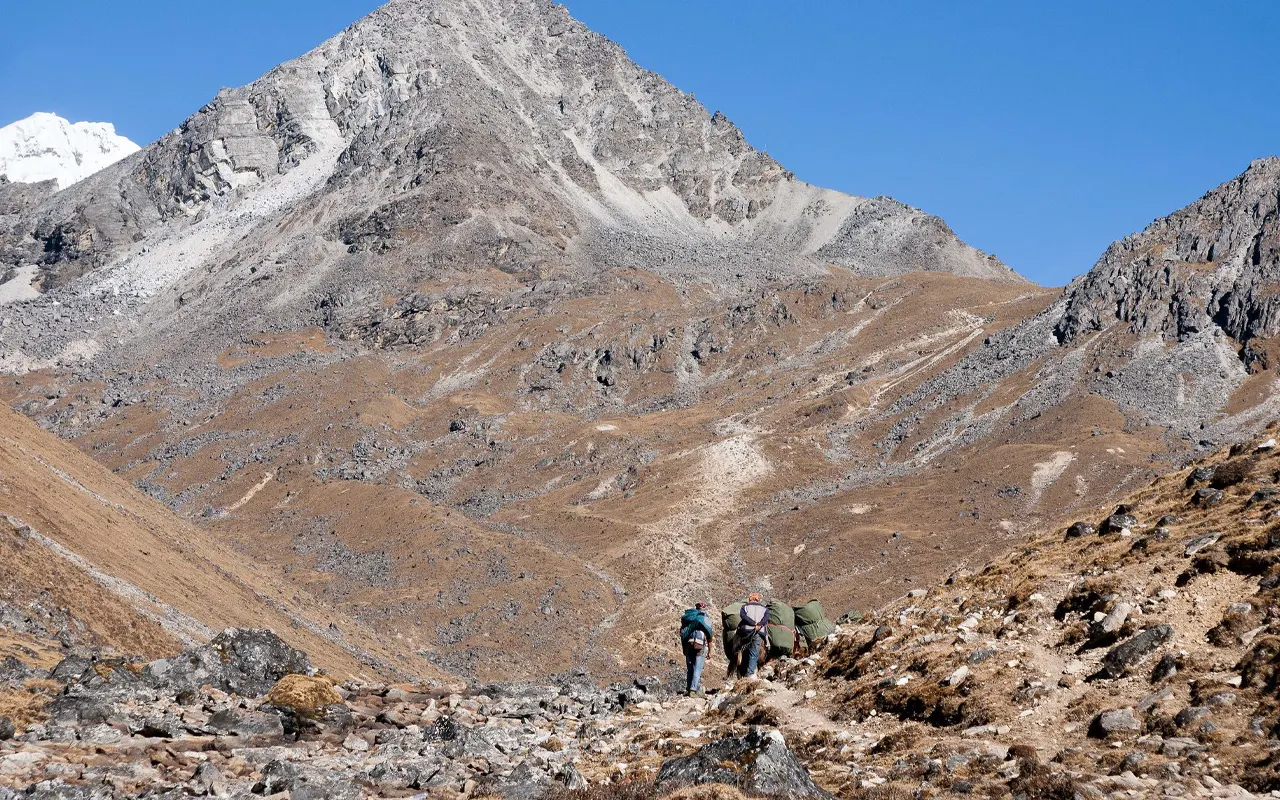
Today is one of the hardest days of the trek. You will begin early in the morning and begin the long climb towards Sinche La Pass the highest point in the journey. The trail is steep and rocky; altitude causes the climb to be slow and demanding.
After several hours, you will reach the pass, where prayer flags flutter in the wind, and views stretch across glaciers and distant peaks. This is a great achievement, not to mention a memorable moment of the trek.
The descent is long but gradual, taking you through glacial valleys and then into forested sections of the trail. By the end of the afternoon, you will arrive at Lingmithang, a beautiful campsite by a river with beautiful mountain views. A warm meal and rest await you.
Activity: High Pass Crossing, Trekking, Camping, 7–8 hours trekking
Max. Altitude: 5,005m/16,421ft. Sinche La Pass
Meal: Breakfast, Lunch, Dinner
Accommodation: Lodge
Day 12: Trek from Lingmithang to Laya (3,800 m)
Today’s walk is a shorter and more relaxed one. You will follow the river downstream through forested areas, where trees covered in moss and thick vegetation give the place a peaceful atmosphere. As you go down the air becomes warmer and more comfortable.
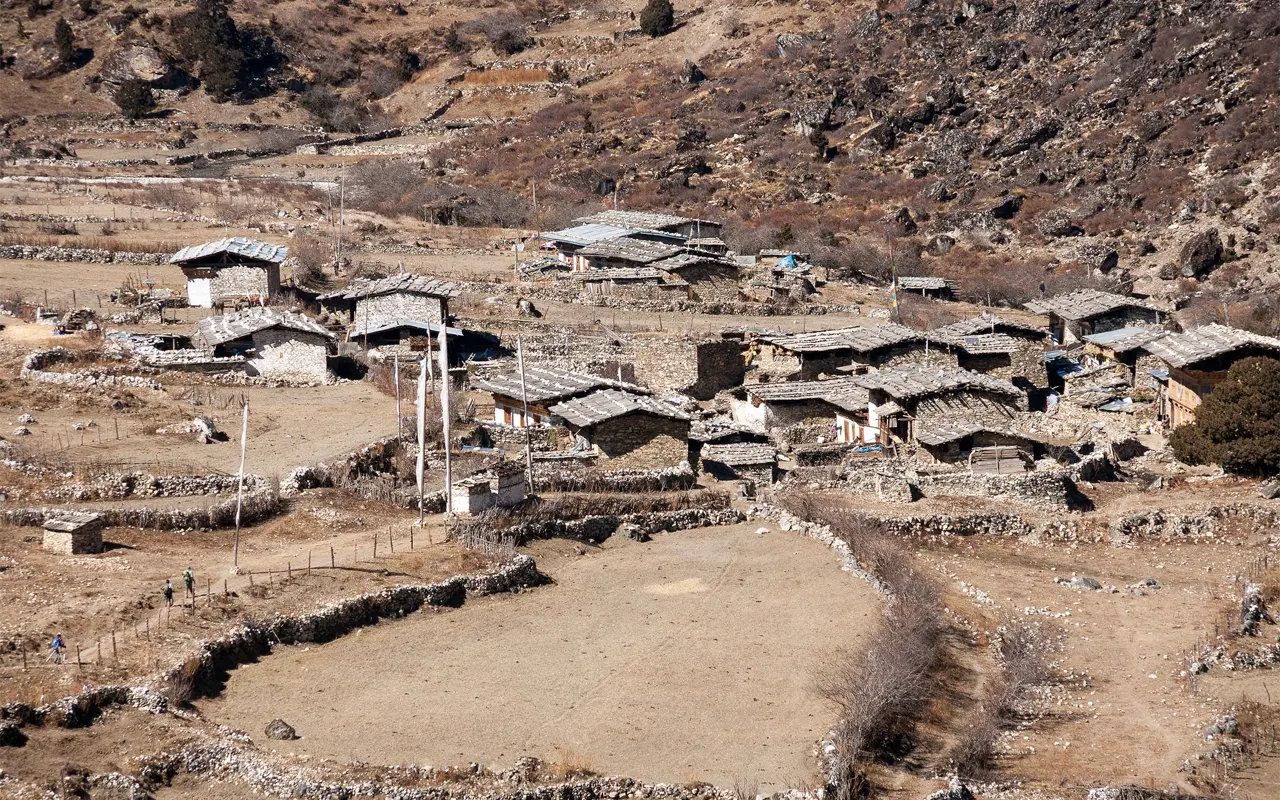
After few hours you will see the hillside settlement of Laya in front of you. A final short climb and you are in the village, one of the highest permanent settlements in Bhutan. Your campsite is just outside the village.
In the afternoon, you will have time to go around Laya, walk through the village paths and interact with the local people. Your guide will help you understand the daily lives and traditions, and make this day a meaningful cultural experience.
Activity: Trekking, Cultural Exploration, Camping, 3–4 hours trekking
Max. Altitude: 4,140m/13,583ft. Lingmithang start
Meal: Breakfast, Lunch, Dinner
Accommodation: Lodge
Day 13: Rest Day in Laya – Cultural Experience
You will have a good rest day in Laya so to recover from the previous days of high altitude trekking and also to get a taste of the local village life. The morning is slow, and you have time to enjoy the mountain views around the village. After you eat breakfast you will have time to walk through Laya and see daily activities of Layap community.
You can visit local homes, the village school or just sit and enjoy conversations with villagers through your guide. Layap people are friendly and also have their traditional clothes and you will learn something about their distinctive way of living.
The day is also to rest your body before the final stages of trekking. You can exercise, relax or take time in the village. This is one of the most significant aspects of the trip due to the slower pace and cultural contact.
Activity: Cultural Immersion, Rest, Optional walks around village
Max. Altitude: 3,800m/12,467ft. Laya
Meal: Breakfast, Lunch, Dinner
Accommodation: Lodge
Day 14: Trek from Laya to Koina (3,800 m)
After breakfast you get to leave Laya and start a long trekking day towards Koina. The trail descends steeply at first so careful footing is important. As you walk down, the landscape will change, and you will enter into greener forests with ferns, bamboo and dense vegetation.
You will follow the river part of the day, and cross several ridges, some ascents and some descents. Although the altitude is similar, the constantly changing terrain makes the walk physically demanding. Along the way, you will enjoy quiet forest scenery and occasional waterfalls.
By late afternoon, you will arrive in Koina, a campsite by the river and surrounded by forest. This is your last night of camping on the trek, and the evening is for relaxation and celebration.
Activity: Trekking, Camping, 7–8 hours trekking
Max. Altitude: 3,800m/12,467ft. Laya and Koina
Meal: Breakfast, Lunch, Dinner
Accommodation: Lodge
Day 15: Trek from Koina to Gasa (2,900 m) via Bari La Pass – Soak in Gasa Hot Springs
Today is the last day of trekking. You will begin early and ascend slowly through forest towards Bari La Pass. From the pass, you start long descent towards Gasa, constantly changing views, slowly signs of villages appear.
After reaching the village of Gasa you will continue to walk down to the natural hot springs next to the river. Upon arrival, you will check in at a rudimentary lodge and enjoy a relaxing soak in the warm mineral pools. This is a rewarding way to relax tired muscles after many trekking days.
In the evening you will have the dinner and get a comfortable night for celebrating the completion of trekking journey.
Activity: Trekking, Hot Springs, Lodge Stay, 7–8 hours trekking
Max. Altitude: 3,900m/12,795ft. Bari La Pass
Meal: Breakfast, Lunch, Dinner
Accommodation: Lodge
Day 16: Drive from Gasa to Punakha (1,300 m)
After breakfast, you will say farewell to the trekking crew and start the drive from Gasa to Punakha. The road goes downhill gradually through forested hills and warmer valleys with some nice views along the way. As you lose height you will find your vegetation changes, more farmland and fruit trees becoming present.
After arriving into Punakha, you will check into your hotel and have a well earned rest. In the afternoon, you will go to Punakha Dzong, which is at the confluence of two rivers. The dzong is an important historical and religious site, and your guide will explain the significance of this site.
You may also take a short walk on the nearby suspension bridge before returning to your hotel. The nighttime is free and easy, as you will be able to enjoy the comfort after days in the mountains.
Activity: Scenic Drive, Cultural Sightseeing, Hotel Stay, 3–4 hours by vehicle
Max. Altitude: 2,770m/9,088ft. Gasa
Meal: Breakfast, Lunch, Dinner
Accommodation: Lodge
Day 17: Drive from Punakha to Thimphu (2,320 m), then Continue to Paro
In the morning you will leave Punakha and drive towards Thimphu. The road ascends to Dochu La Pass, where you are allowed to stop to enjoy the mountain views and see the line of chortens marking the pass. From here, the road goes down to the Thimphu Valley.
In the capital of Thimphu, you will have time to do some short sightseeing. You can go to visit the Buddha Dordenma statue or you can walk around the Memorial Chorten where the locals pray. This gives a small glimpse of the modern life in the capital of Bhutan.
Later on in the day you will continue your drive to Paro. After checking into your hotel you will have a farewell dinner with your guide, reflecting upon the journey you have completed.
Activity: Mountain Pass Drive, City Sightseeing, Hotel Stay, 4–5 hours by vehicle
Max. Altitude: 3,100m/10,171ft. Dochu La Pass
Meal: Breakfast, Lunch, Dinner
Accommodation: Hotel
Day 18: Depart Paro – Farewell Bhutan
After breakfast you will have time for a last look around the Paro Valley. At the pre-decided time you will be transferred to Paro International Airport for your onward flight.
As you leave Bhutan, you will take with you memories of high mountain passes, quiet villages, warm hospitality and peaceful landscapes. The journey ends, but the experience of trekking through the remote parts of Bhutan will remain with you long after you are go back home.
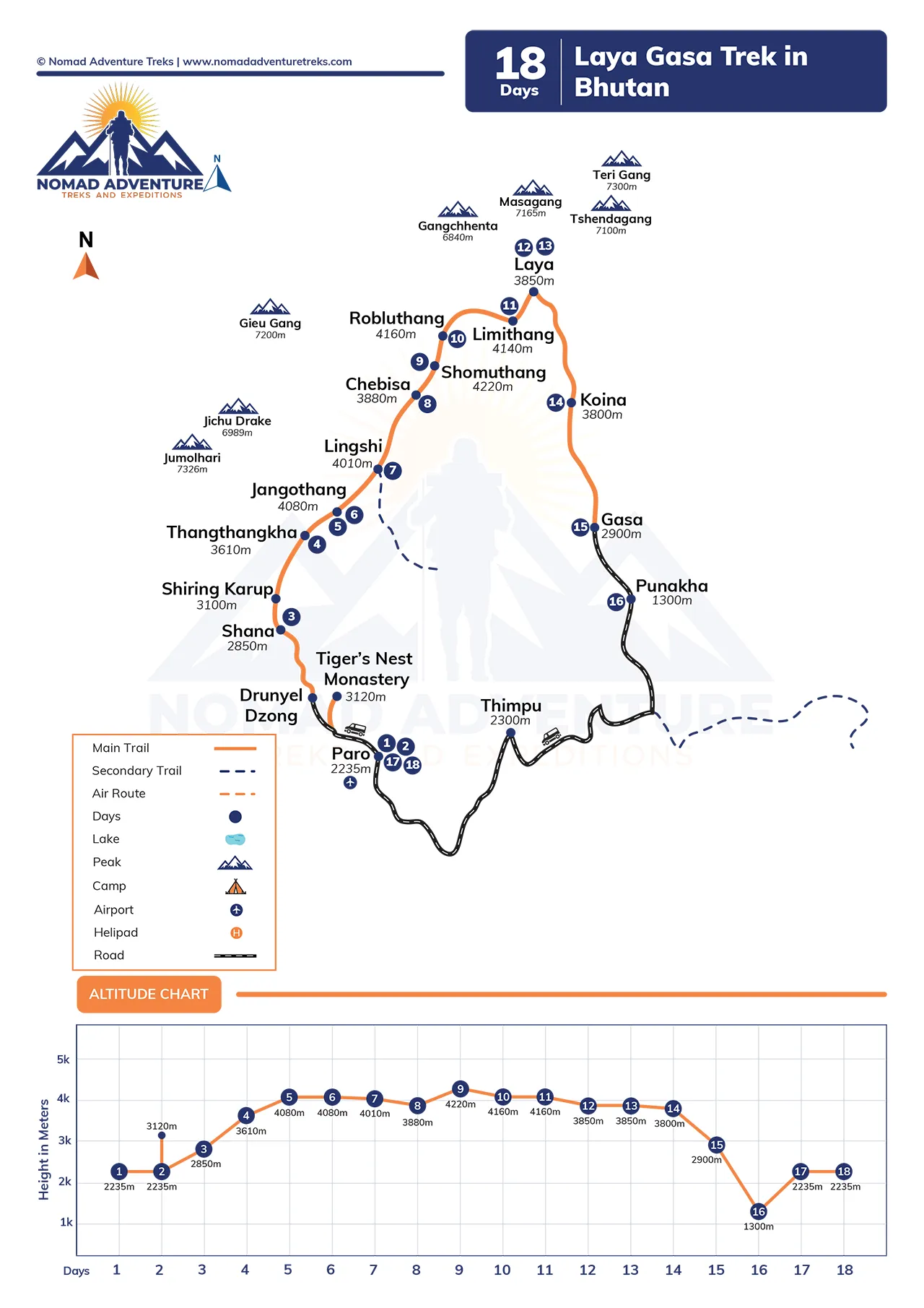
Trip Route Map
Includes & Excludes
What are included with package?
Accommodation
- Twin sharing or double accommodation in a standard hotel in Paro for 2 nights including breakfast
- Twin sharing or double accommodation in a standard hotel in Punakha for 1 night including breakfast
- Twin sharing or double accommodation in a standard hotel in Paro for 1 night including breakfast after the trek
- Camping accommodation during the trek for 11 nights including tents and camping equipment
Meals and Drinking Water
- All meals during the trip as per itinerary including breakfast lunch and dinner
- All standard meals during the trekking days prepared by the cook in camp
- Purified drinking water during the trek using boiled water water filter or water purification tablets
- Welcome dinner in Paro and a farewell dinner in Paro
Transportation
- Airport pickup and drop off transfers in Paro by private vehicle
- All road transportation as per itinerary including Paro to trek start point and Gasa to Punakha Thimphu and Paro
- Private vehicle with licensed driver during sightseeing and transfer days
Guide and Staff
- Experienced and licensed English speaking Bhutanese trekking guide
- Cook and support staff for camping trek
- Pack animals such as horses or yaks for carrying camping equipment and main luggage
- Wages accommodation meals gear and insurance for all trekking staff
Medical Assistance
- First aid kit carried by the guide and support team during the trek
- Assistance in arranging rescue operations in case of complicated health conditions funded by your own travel insurance
Permits
- Bhutan tourist visa processing and visa clearance letter
- All trekking permits and route permits required for Laya and Gasa region
- National park entry permits as required for the trekking route
Benefits and Takeaways
- Camping tents sleeping mats kitchen equipment and dining tent during the trek
- Trip briefing and cultural guidance during the tour and trekking days
Administrative and Taxes
- All administrative expenses and government taxes related to Bhutan visa and trekking permits
What are not included with package?
Price Excludes
- International flight fare to and from Paro
- Travel insurance along with high altitude emergency evacuation coverage
- Personal expenses such as shopping snacks soft drinks alcohol Wi Fi hot shower phone calls and battery charging fees
- Any beverages including bottled water and alcoholic drinks in towns
- Tips to trekking staff guide cook and driver
- Personal trekking gear and equipment including sleeping bag and trekking clothing if not mentioned in includes
- Extra night accommodations in towns due to early arrival late departure weather delays or itinerary changes
- Any expenses other than the What are included with package section

Note:
If you have a private group and prefer a personalized experience, we can organize a custom trip tailored to your requirements and group size, running it any day you choose.
Detail Information about Laya Gasa Trek in Bhutan – 18 Days
Weather and Best Season
Weather is one of the important factors to consider while planning the Laya Gasa Trek in Bhutan, as the route traverses through a great range of altitude and changing landscapes. The most suitable seasons to undertake this trek are spring in March to May and autumn from late September to November. During these months the weather conditions are generally stable with clearer skies and comfortable temperatures during the day. These conditions make walking more fun and offer better vision when crossing high mountain passes and valleys.
Spring is a pleasant time to undertake Bhutan Laya Gasa Trek, particularly in the lower and middle parts of the trail. Forests grow greener, flowers start blooming and the temperatures are not too hot during the day. At higher elevations, the nights are still cold, but it is manageable with appropriate clothing.
Autumn is also very popular, and is often a more popular time of year because of the dry weather and great mountain views. After the monsoon season is over, the air becomes cleaner and the visibility in the Himalayan range improves.
Summer between June and August is the monsoon in Bhutan, and is not a good time to trek. Heavy rainfall can make trails slippery and muddy, raise rivers and make it difficult to see due to clouds. Leeches may also exist in the lower forest areas.
Winter from December to February is also not recommended for Laya Gasa Trek itinerary, as there is a significant decrease in temperature due to high altitude and the major passes are also blocked by snow. For safety, comfort and the best possible experience, spring and autumn are still the most appropriate seasons.
Difficulty and Altitude Sickness
The Laya Gasa Trek in Bhutan is regarded as a difficult trek, and is suited for trekkers who are very well fit and have trekked once before. The route consists of long walks of six to eight hours, often in rugged mountain terrain. You will have steep ascents and long descents as well as narrow trails and several high mountain passes which require stamina and a steady pace.
The trek has very high altitudes, with the highest located at the Sinche La, which exceeds five thousand meters. At this height, the levels of oxygen are reduced and altitude sickness can affect those making their trek no matter their age or fitness level. Common symptoms of early onset include headache, fatigue, dizziness, shortness of breath and loss of appetite. It is important to recognize these signs and communicate these to your guide.
The Laya Gasa Trek itinerary is designed to help reduce altitude related risks through proper acclimatisation days at Jangothang and Laya. These rest days give your body time to acclimate before going higher. Walking at a slow and steady pace, drinking sufficient water, eating well and abstaining from alcohol are all beneficial for acclimatization.
Experienced guides keep a close watch on trekkers during Bhutan Laya Gasa Trek. If serious symptoms arise, descending to a lower altitude is the best solution and evacuation can be organized if necessary. With the right preparation and awareness, most trekkers successfully deal with the altitude.
Food and Drink
Food during the Laya Gasa Trek in Bhutan is prepared to ensure sufficient energy as well as comfort for long trekking days. In cities like Paro, Thimphu, and Punakha, meals are eaten at hotels or local restaurants at which you can enjoy Bhutanese as well as familiar international dishes. Bhutanese meals usually contain rice, vegetables, lentils and local cheese dishes, which present simple yet nourishing flavours.
Once the trek starts, all the meals are prepared by the trekking cook and the support team. Breakfast is served hot every morning and consists usually of items like porridge, eggs, toast or chapati, along with tea/coffee. Lunch is eaten on the trail or in camp and may consist of rice, noodles, vegetables, soup and fruit. Dinner is served in the evening at camp and is a warm and filling meal with multiple dishes which helps you to recover after a long day of walking.
Hot drinks are available at camp, which are very nice in cold mountain conditions. Drinking water is made safe with a boil and filter at every campsite and you are encouraged to carry bottles for refilling each day. Special dietary requirements such as vegetarian meals can usually be met with advance notice. Overall, food can be described as simple, fresh, and high altitude trek food on the Bhutan Laya Gasa Trek.
Insurance Visa and Permits
Traveling for Laya Gasa Trek in Bhutan has to be documented properly and all the arrangements have to be made through a licensed tour operator. Bhutan follows a controlled tourism system, which means that the visitors cannot travel independently. Once your trek is confirmed, the necessary visa and permits are in place in advance so that your arrival and travel in the country is a smooth and well-organized trip.
Most foreign travelers require Bhutan tourist visa. Once you have booked the Bhutan Laya Gasa Trek you will need to make a visa application, which your tour operator will process on your behalf. You will receive a visa clearance letter prior to departure which is presented on arrival in Paro to have the visa stamped into your passport. Citizens of India, Bangladesh and Maldives have slightly different procedures, but still need to make travel arrangements with an authorized operator.
Also, the Laya Gasa Trek itinerary traverses protected areas and regions close to the northern border and requires special trekking permits. These include permits for national parks and restricted regions such as Laya and Gasa districts. All the required permits are collected before the trek from all relevant authorities as well and the price is mostly included in the trek package.
Travel insurance required for this trek. Your insurance has to cover high altitude trekking up to five thousand meters and include emergency evacuation and medical treatment. Proof of valid travel insurance is required before starting the trek. Having proper insurance and permits ensures that you are able to focus fully on enjoying the trek and not having to worry about administration.
Health and Safety
Health and safety are significant factors in the Laya Gasa Trek in Bhutan, particularly due to the remoteness of the terrain and the altitude. During the trek, you are guided by highly qualified guides who are trained in altitude awareness, first aid and emergency response. The Trekkers know the route well and they visit the trekkers daily to ensure that everything is okay and they carry a well stocked first aid kit to address the common problems like blister, headache, minor injuries or stomach aches.
Your guide will see signs of issues with elevation at elevated altitudes, often, and he or she will promote open communication. However, it is necessary that you notify the guide in time in case you feel unwell so that precaution may be taken in the early days of the Bhutan Laya Gasa Trek itinerary to reduce any health hazard.
A safer trek includes trekking at a normal pace, being hydrated, eating healthy, and getting the necessary rest. When serious health issues arise then the most effective solution would be to descend to a lower altitude.In more severe cases evacuation could be organized either by horse or by helicopter depending on the circumstances.
Transportation
All transportation while on the Laya Gasa Trek in Bhutan is organized in advance so that you can enjoy a comfortable and safe trek. Your tour starts from your arrival at Paro International Airport; here you will be greeted and transferred by private vehicle. All travel within Bhutan is to be done with licensed drivers and approved vehicles as per the Bhutanese tourism Regulations.
Road travel is used to reach the trekking starting point and again after the trek ends. You will pass through picturesque valleys and woods, and through mountain roads that pass by rural villages and landscapes of nature. After completing the trek at Gasa, a vehicle will be waiting to take you to Punakha and later on to Thimphu and Paro as per the Laya Gasa Trek itinerary.
Drivers are experienced and know the Bhutanese winding mountain roads, and safety is always considered. During long drives, stops can be taken for rest, photos or refreshments as required. Whilst roads in certain areas are narrow and bumpy, the journey is generally comfortable and well paced.
During the trekking days, the pack animal like yaks or horses carry the main equipments and luggage. This means that you will be able to walk with just a light day pack. By utilizing a combination of flights, road travel and animal support, transportation during the Bhutan Laya Gasa Trek is reliable and well coordinated.
Your Extra Expenses
The Laya Gasa Trek in Bhutan is designed to be inclusive of most of the essential services but there are some expenses that are personal to you and you should plan for them separately. Being aware of these costs in advance helps you to be better prepared and enjoy the trek without any financial concerns during the trek.
International flights to & from Bhutan are not included in trek package. You will have to pay for your own flight tickets to Paro, most often via Bhutanese airlines. Travel insurance is also your own responsibility and must be arranged prior to arrival. While meals are included during the trek, extra drinks in the towns such as soft drinks or alcoholic beverages or imported bottled water are paid separately.
You might also like to budget on personal snacks like chocolate or energy bars especially if you enjoy familiar items when trekking. Opportunities to purchase some snacks are very limited once the trek starts. Another very common expense is souvenirs. Many trekkers opt to purchase woven textiles, yak wool products, handmade paper or traditional crafts especially in villages such as Laya, and in major towns.
Tipping is not mandatory but expected if you are satisfied with the service of guides, cooks and support staff. Tips are generally collected at the end of the Bhutan Laya Gasa Trek. Other minor expenses may include the laundry service in hotels, the phone call, or internet use in towns. Since ATMs are only available in Paro and Thimphu it is advisable to have enough local currency before embarking on the trek.
Language and Communication
Dzongkha is the national language of Bhutan and communication during the Laya Gasa Trek in Bhutan is generally easy for English speaking travelers. English is widely in use in schools and is commonly spoken by guides, drivers, hotel staff and those who work in the tourist sector. Your Trekking Guide will communicate in English correctly and help in translations wherever needed.
In such remote villages as Laya, local people may speak regional dialects in addition to Dzongkha. English may be minimal among the older residents but communication is generally friendly and welcoming. Your guide will help translate conversations so that it’s easier to interact with villagers and learn about their daily lives and traditions.
It is not necessary to learn many simple words in Dzongkha, yet it is generally welcome among locals. Basic greetings or even expressions of gratitude are received joyfully and can develop positive relationships. Even minor gestures to communicate show respect and interest to local culture.
There is limited communication with the outside world during the trek. Mobile network coverage is largely not available when you leave the big towns. However, this means that you can focus more on the experience, the landscapes, and the people you meet along the Bhutan Laya Gasa Trek. Most trekkers find that the good group interaction and guidance that is available makes the communication smooth and enjoyable throughout the journey.
Mobile Network Internet & Charging Facilities
One of the unique things about the Laya Gasa Trek in Bhutan is the chance to disconnect from modern communication. Mobile network coverage and internet access are available in Paro, Thimphu, and Punakha where hotels frequently offer Wi-Fi services. However, after the trekking starts one will experience very low or totally zero mobile signal.
During the trek, you cannot expect to have access to internet or phone services. Campsites have no electricity and there is usually no charging facility. Villages such as Laya may have small solar access, but not good enough to charge personal devices. For this reason, it is important to get ready beforehand.
You are advised to fully charge all electronic devices before leaving Paro and carry power banks or spare batteries for cameras, phones or headlamps. It is also beneficial to conserve battery life by turning on the airplane mode or by turning devices off when not in use. To be on the safe side, the trekking crew can carry emergency communication equipment though not to use it personally.
Many trekkers find that lack of connection contributes to the overall experience of the Bhutan Laya Gasa Trek. Evenings are spent talking, reading or enjoying the natural surroundings instead of using screens. This digital break gives more time to connect with nature, trekkers, and the journey itself.
Don’ts on This Trip
Bhutan preserves its culture and environment with the help of responsible tourism and visitors are expected to respect the local values during Laya Gasa Trek in Bhutan. Keeping the following points in mind will help you to travel respectfully and safely.
- Don’t disrespect local customs/dress inappropriately
When visiting monasteries or dzongs, or religious sites, you should remove your shoes and any form of headwear and dress down. Long pants and covered shoulders are the norm. Do not point your finger at religious images, and do not take photographs inside temples unless definitely permitted. When visiting villages or local homes, a calm behavior and polite manners are appreciated. Loud behavior or public display of affection should be avoided.
- Do not litter or destroy the natural environment
Bhutan places so high value on environmental protection. Any waste that you bring into the mountains should be carried back out. Do not leave trash along the trails or campsites and do not pick plants or disturb wildlife. Your trekking team will take care of waste matters and your cooperation will help keep the region clean and protected.
- Do not walk alone or go off the group without informing your guide
The mountains can be dangerous if you are on your own. Always remain close to your guide or trekking companions. If you need to step off the trail for a short period of time, make sure to tell someone first. Independent trekking is not allowed in Bhutan and it is dangerous.
- Do not purchase antiques and wildlife products
It is illegal to purchase or export antiques that are more than one hundred years old or products made from endangered animals. Purchase souvenirs only from shops licensed by the ministry of tourism, and stick to legal souvenirs like handicrafts and textiles.
- Do not smoke in public or sacred places
Smoking is restricted in many public and sacred places in Bhutan. If you smoke, do so discreetly, never near forests, tents, or religious sites, and always carry your cigarette waste with you.
Cultural Festivals on the Trip
Timing your Bhutan Laya Gasa Trek with a cultural festival can provide you with an additional cultural experience during your trek. While the trekking route itself is remote, there is a potential to experience some festivals before or after the trek.
- Royal Highlander Festival in Laya
If you trek in late October, you may coincide with the Royal Highlander Festival in Laya village, but the event does not take place every year and dates can change, so advance confirmation is required. This festival is about the culture of the high altitude communities of Bhutan. Local people assemble in their traditional attire for several days of music, dances, sports and community activities. Trekking at this time is a rare chance to see the local traditions and village life in a festive atmosphere.
- Paro and Thimphu Tshechu
These major religious festivals are held in the major cities of Bhutan. Paro Tshechu is usually in the spring season whereas Thimphu Tshechu is in autumn. Masked dances, religion ceremonies, and gathering of large community are at the heart of such events. If your schedule is accommodating, your Laya Gasa Trek itinerary can be modified to add a festival visit.
- Smaller local festivals
Occasionally there will be some smaller community festivals, for example in Punakha depending upon when the event falls. Festival dates are based on the lunar calendar and vary from year to year, so it is recommended to plan in advance.
Tips for First Time Visitors
For those new to trekking in Bhutan or trekking to high altitudes, preparation goes a long way. The following tips will help you to enjoy the Laya Gasa Trek in Bhutan comfortably.
- Train before your trip
This is a physically challenging trek. Begin training two to three months before departure. Focus on walking, hiking and cardio exercises to increase stamina as well as leg strength.
- Test your gear before you get there
Be sure that your hiking boots are well broken in and comfortable. Test your backpack and clothing on practice walks so you know that everything fits and functions as it should.
- Packing carefully and efficiently
Pack what you need and only what you need and stick to luggage limitation. Warm clothing, good sleeping bag, protection from rain, and sun are very necessary. Bring personal medication and small comforts.
- Be mentally prepared
In remote areas, facilities are primitive. Most likely to expect camping, basic washing and a little bit of weather discomfort. The attitude and flexibility will make the experience enjoyable.
- Follow your guide’s advice
Your guide has experience of the road, of weather and cultural demands.Believe them when it comes to speed, rest, safety.
- Drink water and eat well
It is important to remain hydrated and have regular meals in order to remain at high altitudes. However, even though you do not feel like consuming a lot of food, attempt to consume sufficient amounts to stay energetic.
- Bring some money and an open mind.
Carry some small local currency tips or little purchases. Better than that, come in with curiosity and respect. Bhutan is an experience of its own, and one must be patient and open-minded to enjoy its experiences.
Frequently Asked Questions
What is the duration of hiking every day in Laya Gasa Trek?
You are going to walk 6 to 8 hours a day, covering approximately 10 to 19 kilometers depending on terrain during most of the Laya Gasa Trek.
Does it include rest days to acclimatize in this trek?
Yes, the itinerary gives some acclimatization days (such as at Jangothang and Laya) to acclimatize to the altitude.
Are we camping down all night or staying in guesthouses during this trek?
It is mainly a camping tour with tents and you will stay in hotels in Paro, Thimpu, and Punakha.
Do I have to bring my own equipment and large backpack to trekking?
No. You only carry a little day pack with the necessaries; the rest of your equipment is carried by pack animals, or porters.
And what happens to me in the event I fall ill or get hurt in the trek?
Our guide will offer first aid and organize descent or evacuation in case of need.
Are there any age restrictions or fitness criteria of the Laya Gasa Trek?
No strict age limit. This trek is more about good fitness and health than age.
Is there safe drinking water during the trek?
Yes. Camps have safe drinking water (boiled or filtered). Carry a reusable water bottle.
Does that mean that I can purchase snacks or other supplies on the trek?
There are no actual stores left on the trail after Paro. Carry along any additional snacks or things you require.
What wildlife could I expect to see on this trek?
Yaks and blue sheep may appear in lofty places, takin and deer or a variety of birds in the woods.
Is it safe to trek in Bhutan?
Yes. The level of crime in Bhutan is minimal and you will never be alone during the trek because you will be with your guide.
Does the trek have ATM or credit card facilities?
It has ATMs only in Paro and Thimphu and not in the mountains.
Do I tip the guide and porters and how much?
Optional. A tip that is given to the guide and crew at the end of the trip is collected by many groups as a way of appreciating their efforts.
What currency would be the best to carry in this trip?
The currency of Bhutan is Ngultrum though the US dollars are also widely used and can be readily changed.
Will I get an opportunity to relax in the Gasa hot springs?
Yes. The trek ends at Gasa hot springs (Gasa Tshachu), where you will have an opportunity to relax in the hot springs.
Does the Laya Gasa Trek need any form of guide, or can I trek on my own?
No. In Bhutan independent trekking is illegal and you should have a licensed guide with you.
Do I have to carry my sleeping bag and other camping stuff?
Tents and pads are provided. Bring a good sleeping bag and other camping equipment is provided.
What is the route to Bhutan and is the package inclusive of the flights?
It includes fly to Paro through Druk Air or Bhutan Airlines. It does not include international flights, but we can recommend you.
How fit should I be and how can I prepare?
In good physical condition and healthy enough to do 6-8 hours of trekking per day. Previous high-altitude trekking experience is quite useful.
Could beginner trekkers manage the Laya Gasa Trek?
It is a long uphill trek. Before attempting Laya Gasa, beginners are ideally supposed to have certain experience or training in trekking.
What is the average group size of Laya Gasa Trek?
We operate small group tours of 2-10 trekkers and we do custom treks.
Reviews on Laya Gasa Trek in Bhutan – 18 Days
 Write a Review
- Your safety, our no 1 priority
- Best price guarantee
- Experienced & dedicated team
- Easy booking, no hidden charge
- You can customize this trip
Talk to Travel Expert Samundra Rimal (+977-9843127084)