
noti-icon

Unbeatable Holiday Offers - Save Up to 20% on Your Next Adventure!

Best Time to Visit Bhutan for Trekking and Hiking Adventures

Nestled in the Eastern Himalayas, Bhutan is always described as a paradise for hikers and trekkers. Bhutan offers a wide range of dramatic landscapes, immaculate wilderness, spiritual culture, and snow-capped mountains.  Trekkers can get an authentic trekking experience.

Whether you are seeking high altitude adventures in the dramatic snow-capped mountains, or someone who is seeking gentle cultural hikes through traditional villages and valleys, Bhutan’s landscape offers you all. You will gain an unforgettable moment from Bhutan’s Landscapes.

Timing is one of the essential factors while you are travelling. Knowing about certain climate structures directly affects your experiences. Trekking in Bhutan not only means blending with the peace and nature, but it is also about facing altitudes, weather patterns, and terrain. Choosing the right season can make a huge difference in your journey.

While Bhutan looks stunning throughout the year, the conditions for trekking and hiking can dramatically change. The condition of trekking and hiking depends on the weather you choose. Factually speaking, there are two main ideal seasons to do trekking and hiking in Bhutan, they are: the spring season (March to May) and the autumn season (September to November).

Winter and summer are also unique seasons to do hiking, but it varies from the type of hiking. This blog will guide you through the best time to trek and hike in Bhutan. This blog will break down each season’s advantages and disadvantages, recommended trekking destinations, and planning tips to make your journey rewarding.

Trekking Seasons in Bhutan

Spring (March – May)

The spring season, one of the popular trekking seasons in Bhutan. The valley looks awake and lively because of the melted snow. The trails look like a piece of art due to the lined-up blooming rhododendrons, magnolias, and alpine meadows. The air feels fresh, and the landscapes look vibrant, creating a heaven for hikers.

Weather

The spring season’s temperature is mild. The temperature ranges from cool morning to pleasant warm afternoon. At night, higher altitude valleys feel cold. Overall, the weather conditions are comfortable. If you want to enjoy the clearest skies, you can consider visiting in early spring, as late spring can be a bit hazy.

Why trek in spring

Here are the points to describe why trekking in spring is best

  • Vibrant and blooming rhododendron in the green and dense forest.
  • Moderate temperature and stable weather
  • A balance between natural and cultural experiences.

Popular treks in spring

Jomolhari Trek

This is the classic trek through stunning mountains. One can get a deep cultural experience from this trek. A perfect combination of beauty and culture.

Druk Path Trek

This trek is short but equally rewarding. The path to this destination connects Paro and Thimphu.

Bumthang Cultural Trek

This trek is ideal for those trekkers who love a gentle pace with rich cultural heritage.
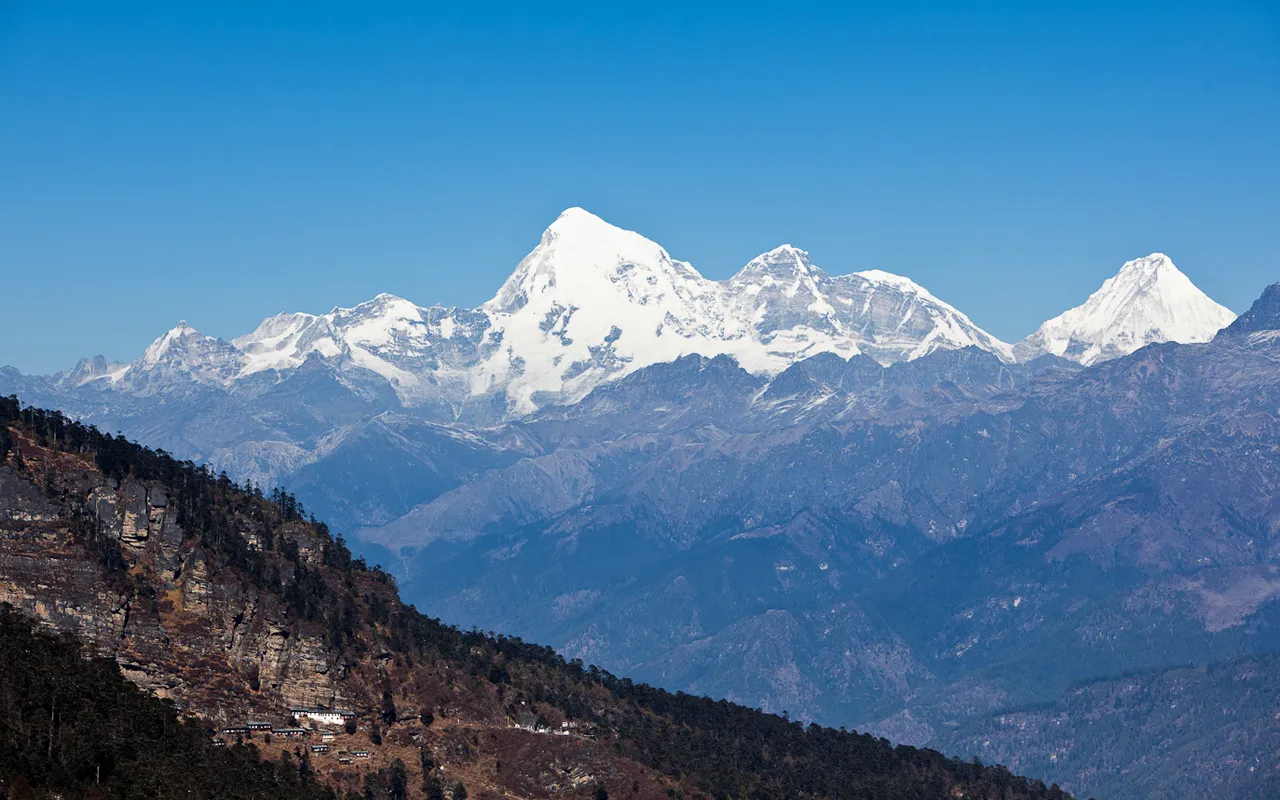
Jomolhari

Autumn (September – November)

Autumn is the overall best season to trek in the landscapes of Bhutan. Due to the monsoon rain, the skies seem clearer, and the views of the mountains are crystal clear. The temperature is crisp. The weather is stable, making it ideal for long and high-altitude treks.

Weather

The temperature is ideal for trekking as the days are cool and comfortable. Nights can be a bit chilly, especially above the altitude of 3000 meters, but the overall condition is manageable.

Why trek in autumn

Here are the points to clarify why you should trek during the autumn season.

  • Clear visibility of the Himalayas and landscapes.
  • Perfect for long and high-altitude treks.
  • Manageable weather conditions.

Cultural experience can acknowledge the cultural festivals like Thimphu Tshechu and Wangdue Tshechu.

Popular Treks in autumn

Here are some popular treks to do during the autumn season.

Snowman Trek

This trek is considered the toughest trek in the world. The weather conditions during this season are manageable, so one can attempt this trek due to stable weather.

Dagala Thousand Lakes Trek

Through this trek, one can experience the views of alpine lakes and stunning landscapes.

Laya Gasa Trek

This trek will take you through the remote cultural highland villages. One can get an experience of a cultural adventure.
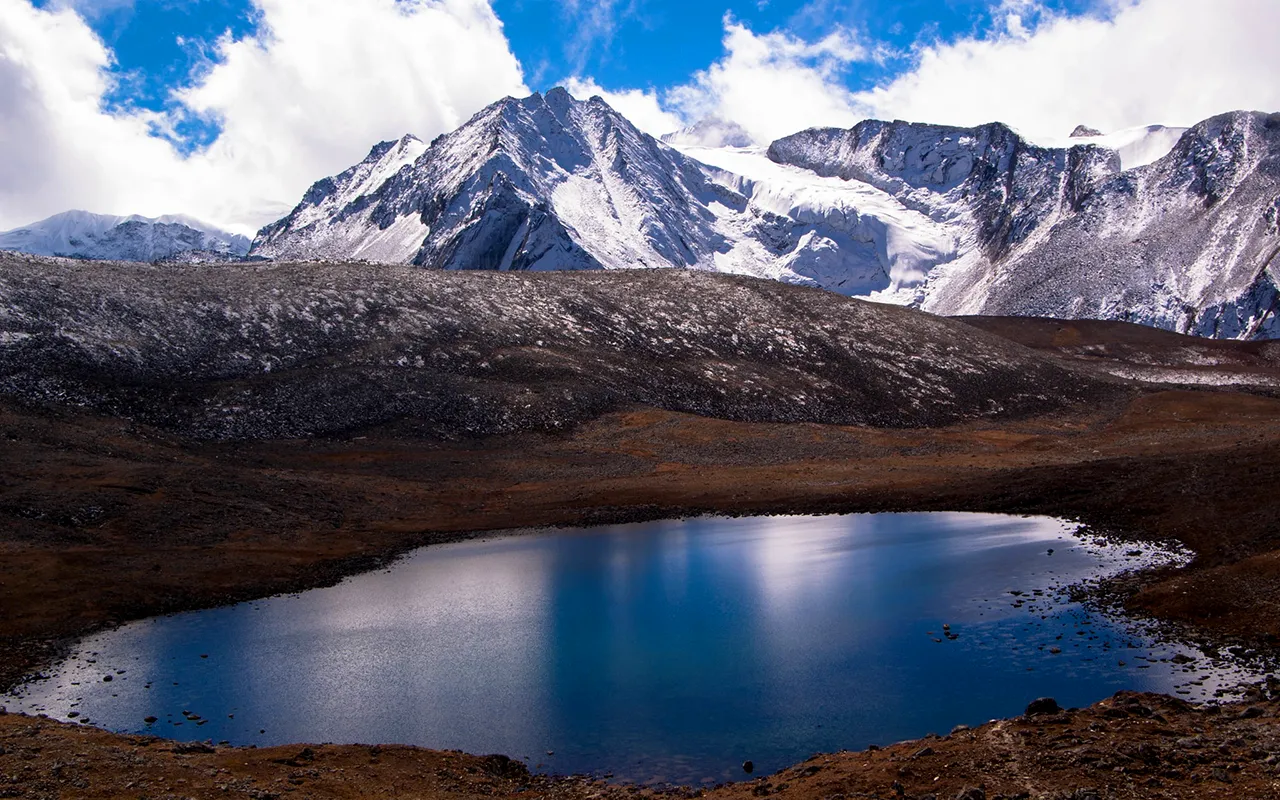
Snowman Trek

Winter (December – February)

Winter is often missed by trekkers, but this season holds its own charm. Above the altitude of 3000 meters, the temperature drops gradually, and you can also see the snow blankets on the trails. The skies are unusually clear, and the valleys are reposeful with fewer crowds in the trails.

Weather

The weather is cold, especially at the high altitudes. Despite being cold, the lower land treks still become manageable.  The daytime sunshine makes the lower valley accessible and manageable. In Punakha, Gangtey, and Bumthang, the weather is pleasant and cool.

Why trek in the winter season

Here are some points to describe why you should trek during the winter season.

  • Fewer crowds.
  • Clear skies and peaceful trails.
  • Opportunity to hike on low lowlands in a peaceful environment.
  • Cultural immersion.
  • Scenic experience.

Popular Treks in winter

Gangtey Trek

This trek is short but scenic; trekkers pass through the Phobjikha Valley.

Punakha Winter Hikes

This trek is ideal for those trekkers who love gentle walks to monasteries and rice fields.

Bumthang Cultural Valley Hikes

During the winter season, trekkers can explore monasteries and traditional villages at a comfortable altitude.

Summer/Monsoon (June – August)

The summer or monsoon season might be risky due to heavy rainfall, slippery trails, and especially leeches in the forest areas. There is a high risk of landslides in the high-altitude region. This season is less recommended to do trekking.

Weather

The weather is humid and wet. Trail conditions are worse due to mud and steep terrain. Mountain views are often obscured by the clouds.

Why trek in the summer or monsoon season

  • View of lush green forest and vibrant landscape.
  • Less crowded than other peak trekking seasons.
  • Suitable for valley hikes and short cultural walks.

Possible activities to do in the summer

Take a short hike to stunning places like Paro, Thimphu, and Bumthang Valleys.

Best Treks by season

Each season has its own highlights and its own advantages. Here are some highlights of each season in the prospect of trekking.

Spring highlights

The major highlights of this season are vibrant forests, blooming rhododendrons, moderate temperatures, and lush Valleys. This season is ideal for moderate treks like Druk Path and Jomolhari.

Autumn Highlights

The major highlights of this season are crystal clear mountain views, cultural and traditional festivals, cultural immersion, and stable weather. This season is ideal for epic and highland treks such as Snowman treks or Laya Gasa.

Winter Highlights

The major highlights of this season are crystal clear skies, peaceful trails, cultural immersion, and scenic beauty. This season is ideal for beginners who love slow cultural walks. The best trekking destinations during this season are Gangtey and Punakha.

Summer Highlights

The major highlights of this season are lush greenery; overall, trekking in this season might be risky. This season is best for short and cultural hikes.

Tips for Planning Your Trekking Tips

Planning for a trek is essential. Planning makes a huge difference in shaping your journey. Here are some of the tips mentioned below for you.

Match trek difficulty with your fitness level

Bhutan offers you every type of trek, ranging from difficult treks to moderate treks. You can choose the toughest trek Snowman trek, or a gentle walk to the cultural heritage. Choose the trekking destination according to your fitness level. As a trekker, you should know your strengths and weaknesses. By choosing the right option, your trek will be fruitful.

Pack Smart

Packing is another essential part when it comes to trekking or touring. You should always pack smart and light. The weather is unpredictable, so pack the essential layered clothing. Bring layered clothing, waterproof gear, and boots to handle the harsh weather conditions. Always pack those things that are essential.

Travelling agent

Travel with the licensed Bhutanese operator. Travelling individually is not allowed. You should travel with a trusted and licensed operator. You must book your travel with a trusted agent who can provide you with accommodation, a guide, porters, and permits.

Acclimatization Plan

Acclimatization is a crucial part of trekking, especially when you are trekking above 3500 meters. Allow yourself to adjust to the altitude. This helps the trekkers to mitigate the risk of altitude sickness. Make a proper itinerary plan. Don’t rush; always follow your body. Recognize the early symptoms of altitude sickness.

Understand Permits and SDF

To visit Bhutan, visitors need to obtain permits and the SDF (Sustainable Development Fee). These formalities are often handled by your operators.
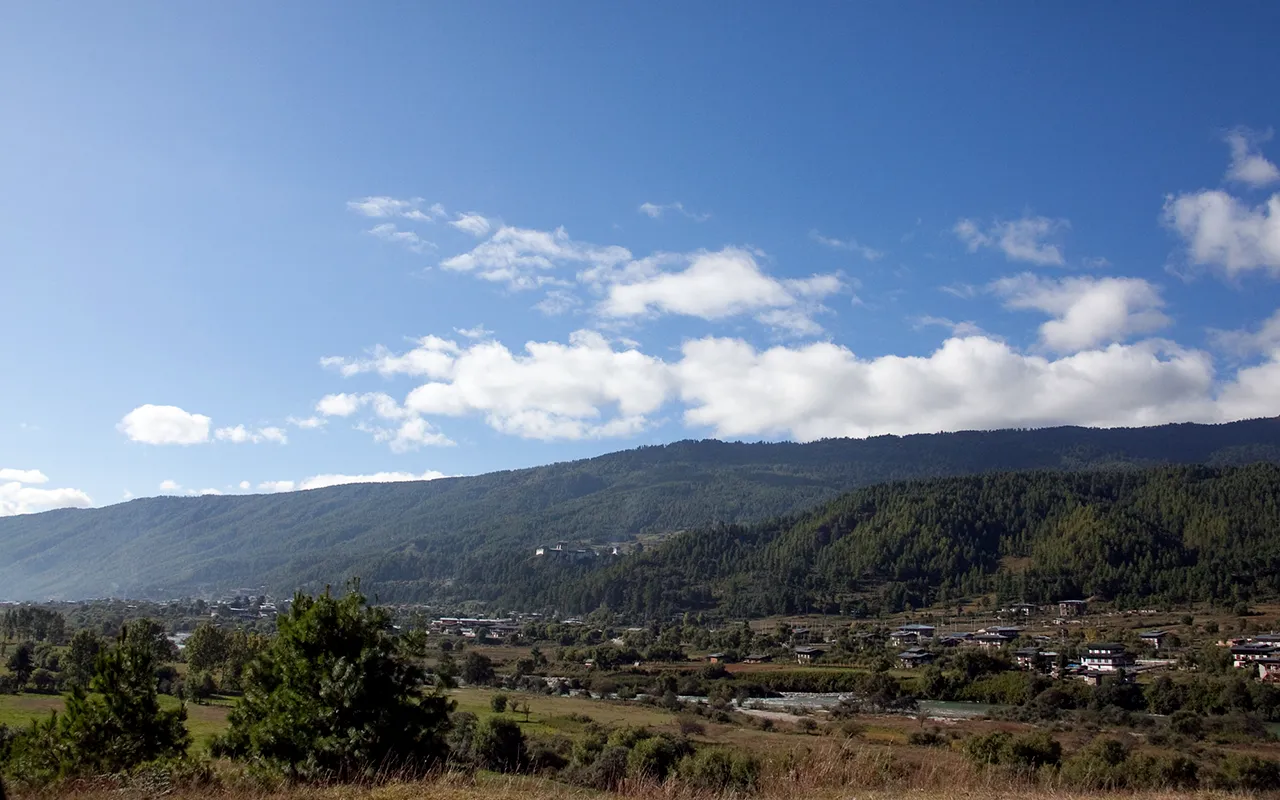
Bumthang

Festivals and Trekking

One of the features of trekking in Bhutan is that you can combine your trekking with Bhutan’s renowned cultural festivals. One of the festivals that is renowned all over the world is Tshechus. This festival is conducted in fortresses and monasteries across the nation. This festival celebrates the teaching of Guru Rinpoche, a person who introduced Buddhism in Bhutan.

Every person wears their traditional attire to celebrate the festivals. For the trekking, visiting Bhutan during the time of Tshechu adds value to their cultural and traditional finds.

Spring Festival

During the spring season, trekkers get a chance to enjoy the vibrant festival like Paro Tshechu. This season makes the trek more appealing. This festival is one of the biggest festivals in Bhutan. In central Bhutan, people celebrate small community-based festivals that can be seen in Bumthang, which align adventure with culture.

Autumn Festival

Autumn is also about festivals. The most celebrated festival falls under this season. The popular trekking season with popular festivals seems like a cherry on top adventure. Thimphu Tshechu and Wangdue Tshechu are the major highlights of the autumn season. If you want to explore more about this cultural festival, plan the Laya Gasa Trek and the Dagala Thousand Lake trek. Trekkers can enjoy a mask dance before venturing into the wilderness.

Winter Festival

While winter is limited to the lower elevation, it is still possible that you catch a glance at cultural festivals like Trongsa Tshechu and Punakha Drubchen. These festivals might be small festivals, but due to fewer crowds, you can enhance your cultural knowledge.

Summer Festival

Even during the harsh season like monsoon the Bhutan’s culture still comes to life. Festival like the Haa Summer festival is celebrated in the highland of Bhutan. Trekking to the highlands is not recommended for travelers, and they can enjoy their days in Paro, Thimphu, or Haa and participate in small cultural gatherings.

Why combine trekking with festivals?

  • Travelers get to enjoy Bhutan’s traditional lifestyle, cultural history, and get to look at the vibrant traditional outfits, not just natural beauty.
  • Travelers get to be involved with locals and celebrate festivals with them, but interactions and involvement depend on the tourists’ cultural understanding.
  • This is the combination of physical adventure and spiritual immersion.

Conclusion

Bhutan is a trekker’s paradise. Bhutan is a land that goes beyond adventure. It is a journey through spiritual tradition, vibrant living culture, and untouched wilderness. The ideal time to visit Bhutan for trekking and hiking is are spring season (March – May) and autumn (September – November) when the weather is stable and predictable.

During these seasons, the skies seem to be clear and the trails seem to be stunning. For those travelers who love peace and want to enjoy the nature of Bhutan on a Low-altitude hike, then the winter season is ideal for them. The summer season is ideal for traveling the lowlands of Bhutan, but it is not recommended for trekkers who want to attempt high-altitude trekking.

The Summer Season is vibrant due to green, lush valleys, but the scenario is disturbed by the thick clouds. Travelers get to enjoy the mask dances and other rituals of the festival. Travelling to Bhutan is a perfect blend of nature and spiritual practices.

Bhutan is rich when it comes to nature and tradition. As a tourist, it is your duty to respect the norms of the local people and their traditions. Are you ready to be part of Bhutan’s Natural beauty and cultural traditions?
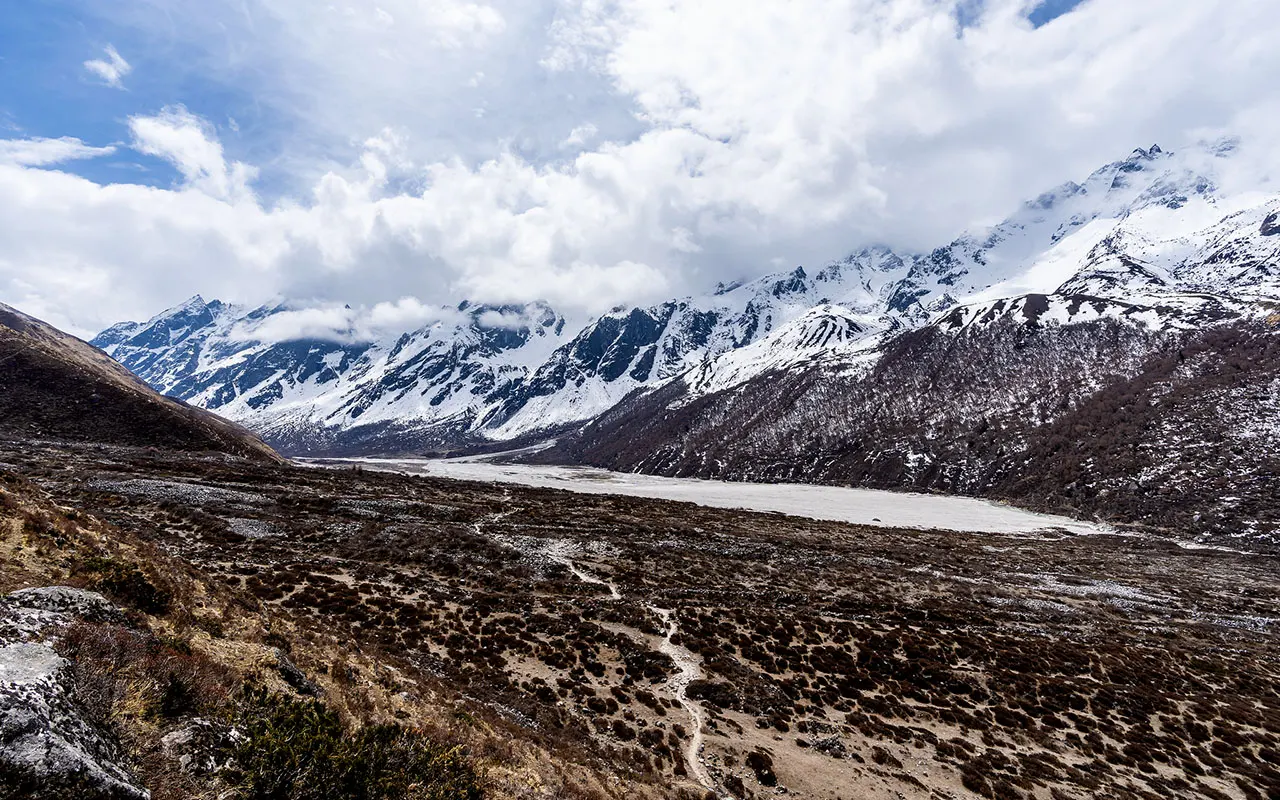
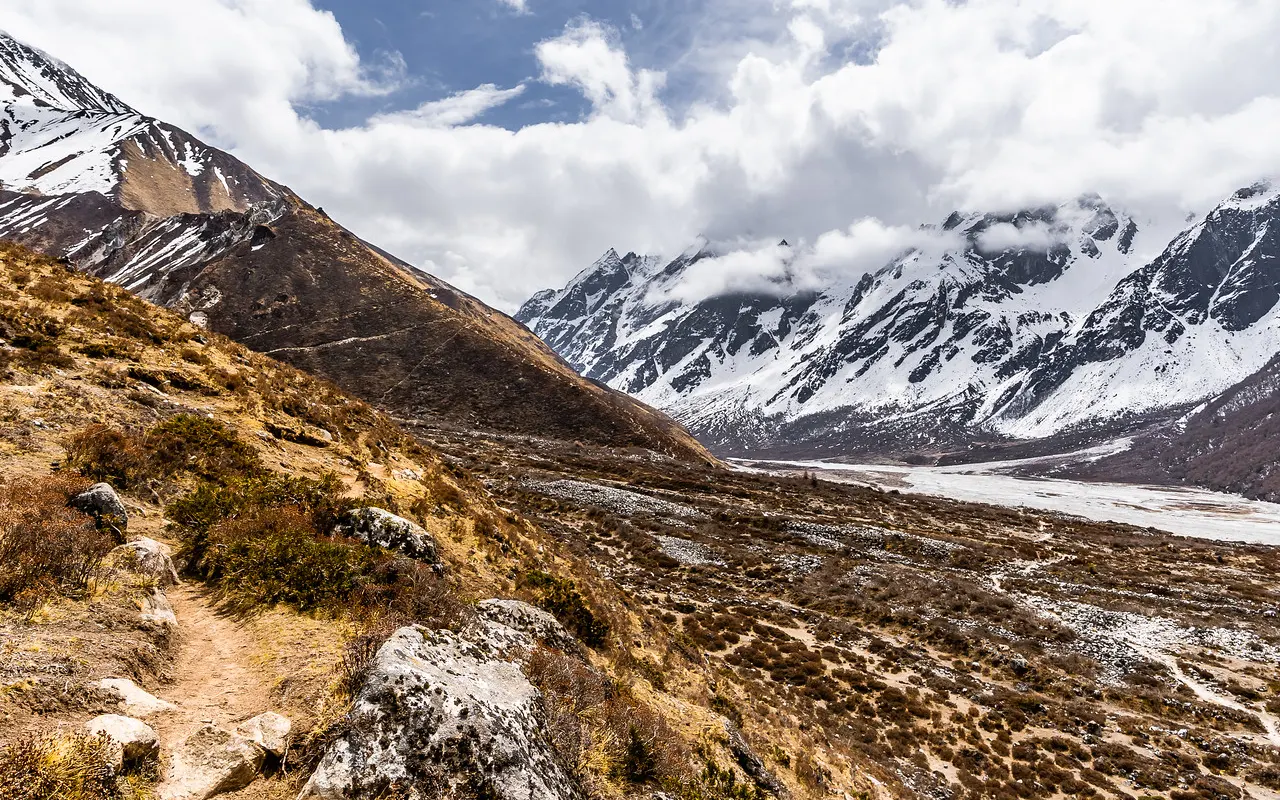
Tserko Ri: A Complete Guide to Trekking, Views, and Adventure in Langtang Valley

Introduction

A mountain that highly commands the Langtang Valley trek is Tserko Ri, which is an epitome of stunning Himalayan views. This summit attracts trekkers who want to explore Nepal in a tranquil environment. Climbing Tserko Ri comes with the feeling of achievement and awe of the sublime mountain scenery.

The climbing experience to Tserko Ri has one of the greatest panoramic scenes of Langtang Lirung, Gaurishankar, among others. From the summit, the sky transforms into a canvas of colors as the sun sets.. The viewing point offers an ideal combination of the beauty and tranquility of the quiet isolation of less-traveled paths. It symbolizes the reason why Langtang Valley has been a popular trekking area.

In addition to the landscape, Tserko Ri gives a cultural experience, which makes the trip more fascinating. A traditional village, monasteries, and prayer flags show the ultimate spirituality and lifestyle of the Himalayas that straddles between adventure and classical knowledge and awareness.

Trekkers are given a glimpse of the real mountain life and beautiful landscape sites, bringing in the holistic experience. This is a cultural plunge that will make the trek more than all about nature. Tserko Ri is an ideal adventure with a challenge and tranquility at the same time in the Himalayas of Nepal.

It is a fusion of trekking, spiritual, and natural integrity. The combination of sublime mountains, culture, and serene nature characterizes Tserko Ri as one of the places to visit in Langtang Valley.

Location and Overview

Tserko Ri rests close to the scenic village of Kyanjin Gompa, in the right center of Langtang Valley in Nepal. This fact renders it an easy but satisfying peak for adventurers who are going through the highlights of the area, as well as the scenic features. Kyanjin Gompa is the ideal starting point of the climb.

The highest point elevation is 4,984 meters (16,345 feet), providing an average high-altitude level that suits to wide range of trekkers. Its altitude gives it a one-of-a-kind view of Himalayan grandeur with no undue technical challenge.

Trekker at Tserko Ri can see the spectacular 360-degree views of the Himalayas. The dominant peaks include Langtang Lirung, Dorje Lakpa, and the nearby Shishapangma. Such an aerial view will compensate all efforts invested in this trek, providing memorable mountain views and the feeling of authentic Himalayan size and beauty.

Tserko Ri View

Trekking to Tserko Ri

The walk to Tserko Ri starts at Kyanjin Gompa, a pretty mountain village with the facilities and support needed by climbers. This starting point is great in the sense that trekkers can have time to relax and get ready before hiking to the top. The trekking experience is boosted by the village.

The 4-6-hour direction to Tserko Ri trip is generally made by the speed and acclimatization. The majority of trekkers take about the morning to ascend the summit, appreciating the views, and are back down in the afternoon. This is appropriate on any day of hiking in an extended Langtang schedule.

The route passes through a wide variety of landscapes, encompassing colorful meadows in the Alps laden with wildflowers. The Yak pastures contribute to the Himalayan feel as grazing herds enhance the pastoral beauty. The route has different terrain, and the sights offered provide diverse terrain and rocky routes.

There are many significant panoramic viewpoints along the way after each key rise, encouraging you to stop and take in some of the amazing mountain sights along the way for your overall enjoyment. These breaks would be ideal for photography, rest stops, and taking in the rugged beauty of Langtang. The constant different sights with changing vistas maintain interest and excitement in the trek up to Tserko Ri.

The trek difficulty of the climb to Tserko Ri can be rated from moderate to hard or hard. The trail is loose and steep, sometimes irregular, and it involves good physical fitness and initial acclimatization. Trekkers should consider stopping for proper breaks, rest, and then keep in mind that they may feel the altitude effect.

What to Expect at the Summit

At the top of Tserko Ri, trekkers enjoy a memorable view of famous peaks such as Langtang Lirung, Ganesh Himal, and Shishapangma in the distance. With majestic mountains standing sentinel in the background, the summit creates an incredible mountain panorama.

The golden hour is a magical moment for both sunrise and sunset. The change of light casts the snow-capped landscape into a new, glowing panorama that is every photographer’s dream to capture nature’s colors. Many climbers plan when to summit based on how they would like to experience these sights.

There is plenty of time for memorable photos at the summit. Because the peak is generally clear and has vast views from every angle, trekkers will have wonderful conditions for viewing the Himalayan landscape. The watershed of trekking cameras to smartphones captures stunning images that exemplify the wildness and beauty of the Himalayas.

Tserko Ri’s summit is not only breathtaking to the eyes, but it also provides guests with rest in some of the most peaceful alpine environments. The complete quietness, the fresh air, and the allure of the sound, sleepiness, and stillness of the mountains caters to the calmest of spaces for the trekkers to be centered by the hiking experience.

Tips for Trekking Tserko Ri

Best time to climb

The best time for trekking to Tserko Ri is the spring (March to May) and autumn (September to November). In such months, clear skies and stable weather conditions improve safety and visibility for climbers. Temperatures are also softer, and it is easy to trek.

The trail conditions during the monsoon season are slippery with landslides in some sections, so it is a good idea to avoid the monsoon season for the climbing. Heavy snowfall in winter can create hazards as well as difficulties. It is important to make plans by climbing during the seasons advised to create the best opportunities of successfully and significantly enjoying your climb.

Gear needed

You should bring necessary gear, including insulated clothes, a windproof jacket, and other thermal garments, to cope with cold temperatures at high altitudes. Tserko Ri rapidly changes weather, and thus layered clothing is important to adapt to different weather.

Trekking poles support the knee during a steep or uneven hike and to increase stability. Ankle-supporting, good hiking boots are important to safeguard in rocky and slippery areas. Safety and comfort are improved with proper gear.

Acclimatization

The elevation of 4,984 meters makes acclimatization an essential factor to avoid altitude sickness. It is better to take up more time at Kyanjin Gompa or a lower altitude and then slowly increase the altitude.

The risk factors linked to acute mountain sickness are taken care of in the case of hydration and rest during the acclimatization days. Listening to your body and going up at a slow pace enables you to enjoy the trek up safely.

Guides and porters

Guides and porters are not mandatory, but they come with the benefits of safety and comfort on the trek. Professional local guides share route information and other important technical data, like weather forecasting, and help in difficult portions of the route. Their observations bring more experience on board.

Porters will enable you to have a lighter physical load as they will carry the heaviest gear, so you are able to complete the ascent more easily and not waste energy. Porters are particularly useful to inexperienced or older trekkers, creating a positive impact on trip safety and logistics.

Tserko Ri

Nearby Attractions

The cultural and spiritual centre of the Langtang Valley is Kyanjin Gompa. This is a serene monastery that can guide lessons of Tibetan Buddhism and local heritage, which can guide the trekkers to enhance a cultural experience to accompany the mountain experience.

A side hike of a short distance out of the Tserko Ri summit trail is a scene of eye-catching landscapes of the Langtang Glacier. This cold area is an eye-catching natural phenomenon, and it demonstrates the glacial processes of the valley since it offers an additional thrilling aspect to the trekking program for nature enthusiasts.

The Yak Cheese Factory offers a special local product to visit in Kyanjin towards Kyanjin. Trekkers learn the traditional yak cheese-making and get to taste fresh yak cheese, benefiting the local life as a way of boosting traditional culture and adding a cultural zest to the Langtang trekking experience.

Suggested Itinerary

Day 1

Start your walk out of Lama Hotel and pass through lush forests, cross over wooden bridges, and start following the Langtang River as it flows. The wayside gradually embraces alpine plains, yak fields, and far snow tops. Late in the afternoon, you will arrive in Langtang Village, a charming and very rich cultural settlement, and home to mountains.

Day 2

Keep moving on to Kyanjin Gompa, which is a spiritual centre encircled with grandeur. The trail comes past many walls and chortens, and it gradually increases upwards. As an attraction, enjoy the relaxing environment of the monastery and the picturesque scenes within the mountain.

Day 3

Wake up early and ascend the hike to Tserko Ri, which is the most significant in the Langtang trek. It is a gradual ascent that is compensated by spectacular 360-degree sightlines of Langtang Lirung, Dorje Lakpa, and Shishapangma on the contrary side of the border. After reaching the summit, proceed to Kyanjin Gompa to relax, have warm food, and experience the most peaceful mountain atmosphere.

Day 4

Now it’s time to roll back your steps, moving down past Langtang Village and Lama Hotel. A downhill trail will be an easier path to walk and enjoy the skyline you ascended previously. You will go over forests and rivers and friendly tea houses. You can choose to stop at Lama Hotel, on the way, depending on your speed, or you can pass on to Syabrubesi.

Conclusion

Tserko Ri is an ideal combination of adventure and marvelous nature with panoramic the Himalaya. It’s easy to access the summit, which gives good views to the trekkers, resulting in memorable scenes of classic settings and serene alpine scenes for all who visit Langtang Valley.

The expedition is a blend of physical adventure and cultural experience that traverses through colorful fields, yak fields, and ancient villages. It is a perfect destination to visit natural beauty along with the true Himalayan spirituality in the same trip.

The addition of Tserko Ri to your itinerary of Langtang Valley would add a twist to any trip to the valley, with a remarkable summit of the valley and its unique views. It is an absolute site that tourists cannot leave without because they are interested in the grandeur of the Nepalese mountains and the relaxed cultu

Dolma La Pass – The Hardest but Holiest Day of the Kailash Trek

Introduction

Kailash is one of the most sacred mountains of Hinduism, Buddhism, Jainism, and Bon in Tibet. Many thousands of pilgrims participate in the Kailash Mansarovar Yatra every year, believing they can cleanse themselves and achieve enlightenment through the invigorating experience of the holy yatra.

The Kailash Mansarovar Yatra is a pilgrimage that has two principal destinations: Mount Kailash and Lake Mansarovar. The pilgrimage symbolizes liberation and self-purification. It has great significance for not only Hindus, Buddhists, Jains, and Bon, but the actual physical act of pilgrimage offers ritualistic activities that priests and families lead pilgrims along a spiritual path toward spiritual renewal.

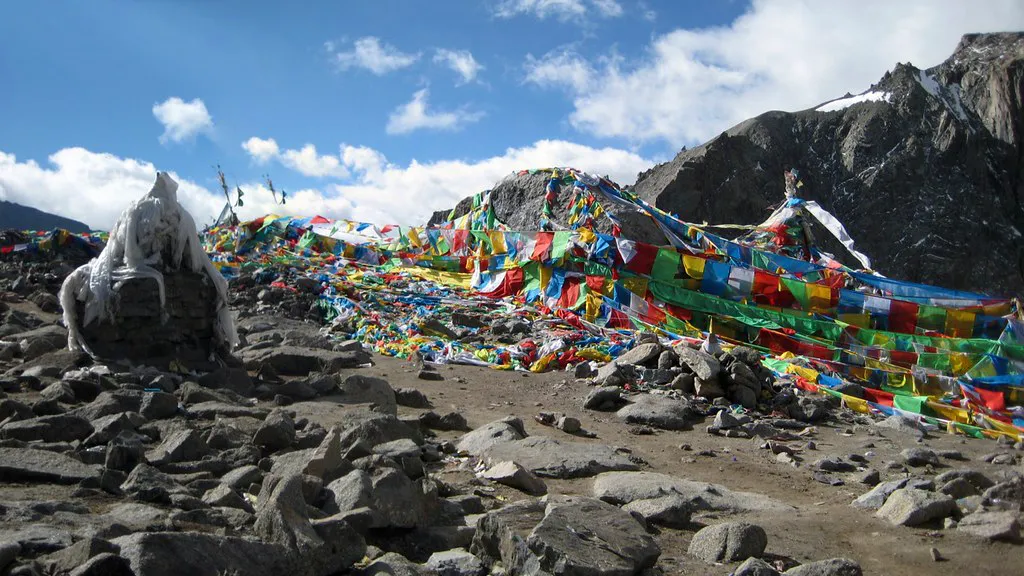
The high Dolma La Pass was the most difficult part of the trek. At 5,635 m, its highest point is depicted in the circle at the top of the last section. Dolma La should be included in the trek, as there are several day-to-day challenges, such as steep climbs, thin air, snow and rain, and harsh winds. It will push a person’s limits physically and mentally.

Although arduous and dangerous, Dolma La is priceless from a spiritual perspective. At this point, pilgrims believe they have shed their sins and received blessings from the mountain, making that view a physical milestone that represents faith, sacrifice, and the promised ultimate spiritual reward associated with the Kailash trek.

What is Dolma La Pass?

As the highest and most difficult point of the Kailash Kora, Dolma La Pass is an integral section of the three-day circumnavigation of Mount Kailash that tests pilgrims with physical challenges and takes on a sacred meaning during the journey.

With an elevation of 5,635 meters (18,471 feet), Dolma La requires both acclimatization and stamina to cross it safely. At high altitudes, trekkers are influenced by thin air and cold weather, so good preparation and resilience are crucial.

Dolma La Pass
Dolma La Pass

The pass is dedicated to Dolma or Tara, a goddess of Buddhism, meaning compassion and protection.  One of the goals is to pray for blessings from Dolma to overcome obstacles and receive the spiritual strength to continue in the difficult climb and descent.

Dolma La, like Mount Kailash and Lake Mansarovar, is of very old spiritual value in multiple faiths. It represents, among other things, divine compassion, mercy, and the sacred threshold to spiritual purification on the sacred path of Kailash in the eyes of Hindus, Buddhists, Jains, and Bon followers.

Crossing Dolma La Pass is more than a physical feat; it is an act of transformation in which the conditions of one’s physical body communicate symbolic spiritual meaning. Pilgrims undertake the task of negotiating this sacred pass for the hope of its blessings, for forgiveness of sins, and for blessed spiritual merit that will last long after their Kailash Mansarovar pilgrimage.

The Hardest Day of the Kailash Trek

The hardest day of the Kailash trek starts from Dirapuk Monastery at 4,950 meters. Pilgrims have to climb through a rocky, steep ascent on rocky terrain, turning in sharp angles. At this high altitude, only 21% fraction of the oxygen is available, increasing the risk of altitude sickness. Headaches, dizziness, and nausea add to the exertion of the climb, requiring a mix of stamina and ascent acclimatization strategies to gain the ridge.

On that day, one may never know what the weather can “give”. Unexpected sudden snowfalls followed by freezing temperatures or strong winds ask for continuous caution in this terrain. More experienced pilgrims and trekkers will dress in multiple layers of clothing, while being mindful.

Exhaustive physical demands or characteristics add to mental stress. One’s own exhaustion will question determination. Many pilgrims will question their goal in this physical exertion or, at some point, question their desire to continue. But the shared challenge of the goal brings confidence and camaraderie to the solitude of fellowship between travelers.

That day is considered the “testing point” on the Kailash pilgrimage. Understanding that you have passed Dolma La Pass or are shaping it means that you have worked through physical suffering to meet the challenge, just as inner devotion to the divine concedes another step toward ultimate spiritual transformation, liberation, and freedom.

The Holiest Experience on the Pass

Pilgrims at the top of Dolma La Pass leave prayer flags, coins, and personal offerings as tokens of devotion and gratitude. These are prayers that praise the divine and ask for protection and spiritual advancement on their journey

It is said that crossing Dolma La is a symbol of spiritual renewal and purification. The suffering that pilgrims believe in cleanses their sins and enables them to forget all the negativity of the past and re-wash their inner beings using the power of God and forgiveness.

The pass is above the sacred Gauri Kund (5,608 m), a lake associated with Goddess Parvati, aka Gauri. This religious place strengthens the spiritual importance of the pass. Pilgrims come to the place and conduct rituals to get blessings and the approval of God.

There are endless tales and myths surrounding Dolma La, and its great spiritual forces. These stories evoke belief and worship about miracles, protective gods, and supernatural events that occurred to the pilgrims of the past on this holiest ascent.

That is why the meeting of faith, nature, and challenge at Dolma La makes the sacred experience of the Kailash trek. When pilgrims go away, they come back with a powerful spiritual force that keeps their faith and continues to nourish their lifelong devotion to Mount Kailash.

Practical Tips for Crossing Dolma La Pass

Acclimatization

The slow adaptation to the elevation above Dolma La Pass is important to avoid altitude sickness. The body will adjust safely to lower oxygen levels when it spends several days at intermediate elevations.

Prior acclimatization enhances energy, lowers the sense of dizziness, and makes the entire process much safer. To successfully get past the high Pass, pilgrims must listen to their bodies, not hurry, and allow their bodies to rest to visit Kailash. This means carrying rest days along.

Fitness preparation

The heart and lungs are prepared by cardiovascular training for the intense effort of climbing Dolma La. Regular endurance training, such as hiking, running, or cycling, is also important for steep ascent.

Deep, controlled breathing techniques maximize oxygen uptake and ensure that one stays calm when exercising. Weighted hikes of the legs can help to maintain the location in inequalities beyond 5,000 meters.

Best season

The months of May-June and September-October would give the best chances to cross the Dolma La Pass without the danger of falling off. There is a slight amount of snow and ice, which causes less risk of slipping.

These are also the months when the weather is somewhat predictable and the days are longer and warmer. Pilgrims can enjoy better views and gentler weather, and the climb is a lot less intimidating than when it rains.

Gear essentials

Warm clothes are extremely necessary since there is a drop in temperature at the cold level, particularly in early mornings and evenings. The base layers and the jackets having insulation make sure that heat of the body is stored.

Hiking poles will be used to give supplementary support and balance over the steep and rocky climbs. The use of waterproof boots encourages feet to be wet and cold, whereas energy snacks help increase strength throughout the entire climb, ensuring you do not feel tired and develop a cramp.

Mental readiness

It is important to stay psychologically strong to break the burden of the tough conditions of Dolma La. Meditations and mindfulness sessions may help pilgrims to tackle stressful situations on the pass.

Slow and gradual walking not only saves energy but also regulates breathing. When a positive attitude prevails, backed by faith and positive peer support, resilience is developed.

Dolma La Pass in Pilgrim Narratives

The devotees refer to Dolma La Pass as the ultimate moment of the Kailash Yatra. It marks the peak of physical and emotional strain, where belief will converge into great meaning and revelation.

Numerous pilgrims tell how they changed, shed tears of relief, gratitude, and enjoyed crossing the pass. This is a moment of reincarnation, a getting rid of the shackles of the past, and a strong relationship with the Kailash divine energy.

The pilgrimage along Dolma La passes through acute struggle and divine rewards. The pilgrims face the constraints, but are blessed by the spirit, which provides fresh dedication and tranquility of the heart via an experience with this sacred process.

Dolma La is a staple pilgrimage experience that most people will always remember. It reinvigorates faith, sheds light, and power towards further pursuit of their spiritual journey with boldness and dedication outside the yatra.

Conclusion

Dolma La Pass is the hardest but holiest day of the Kailash trek. Dolma La Pass is a combination of steepness, elevation, and unpredictable weather with profoundly symbolic spirituality and ritual along the trail of Mount Kailash.

Both physical stamina as well as mental determination are tested on this day, offering great spiritual rewards to one who endures. The pilgrims come out transformed with blessings and renewal of spirit over the sacred challenge conquered at Dolma La.

Being much more than a journey, Dolma La is a pilgrimage of life. It invites pilgrims to believe, sacrifice, and serve, making the Kailash pilgrimage a memorable event of spiritual awakening and inner self-reconstruction.

FAQs

  1. How difficult is Dolma La Pass?

The Dolma La Pass is the hardest part of the Kailash trek. Crossing Dolma La involves a steep climb to 5,635 meters, followed by a challenging 7-10 hour descent.

  1. Can elderly pilgrims cross it?

With the correct acclimatization and support, elderly pilgrims can cross Dolma La Pass.

  1. What is Gauri Kund’s significance?

A sacred lake at the bottom of the pass, Gauri Kund, is spiritually significant for pilgrims as the deity Parvati is associated with it, and many pilgrims perform purification activities in this sacred lake.

Tengboche Monastery: Where Himalayan Spirituality Meets Breathtaking Views

Tengboche Monastery, Spiritual heart of the Everest Region

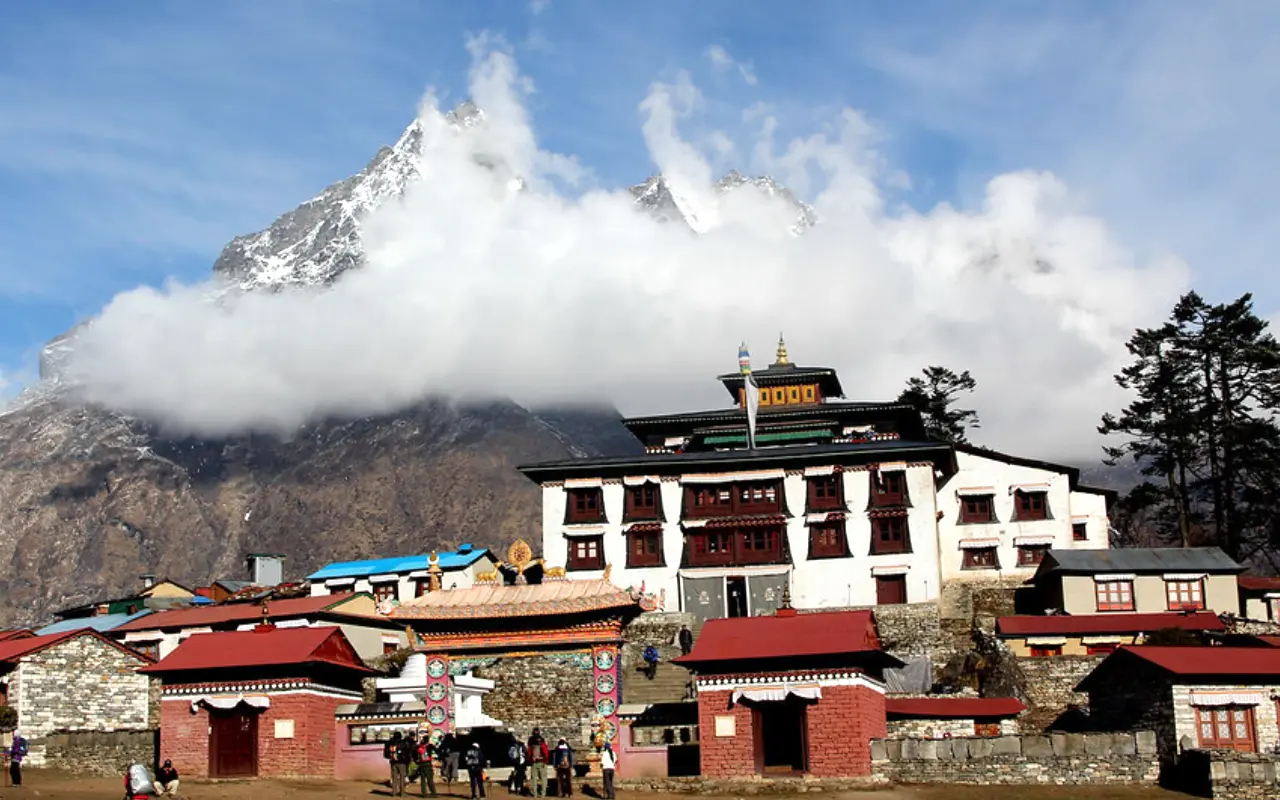
Tengboche Monastery, located at 3,867 meters in Nepal, is a vital spiritual center for Sherpa Buddhists. It holds religious values, being the biggest gompa in the region, captivating the visitors with its calm atmosphere and holy rituals.

Tengboche is an essential pit-stop in the Everest Base Camp trek because it gives trekkers a spiritual break from the strenuous trails. The location near Everest gives the hikers this cultural immersion and an enriching experience, other than just the physical satisfaction and putting oneself to the test with an adventure as such.

In Tengboche, the spirituality of the Himalaya region encounters panoramic mountain views of Everest, Lhotse, and Ama Dablam. The monastery harmonizes well with the rich Buddhist cultures and the magnificent natural beauty, thus making it an unbeaten cultural and scenic stopover on the Everest trail.

History and Cultural Significance

Tengboche Monastery was established in 1916 by Lama Gulu in accordance with the revelation of the Lama Sangwa Dorje and blessing by the Ngawang Tenzin Norbu fifth incarnate of Sangwa Dorje. It is the earliest of the celibate monasteries of the Nyingmapa lineage in the Khumbu region, constructed with the assistance of local Sherpas.

Monastery is a major key component of Sherpa Buddhism. It embraces religious activities and the religious teachings of Vajrayana Buddhism and serves as a cultural bridge between the Sherpa religious life and the general world. It houses hundreds of Buddhist monks who are engaging in the practices of Buddhist chanting and meditation.

Tengboche Monastery has survived natural disasters and was damaged by the 1934 earthquake and by a raging fire in 1989. Every single time, it has been constructed with the assistance of the local communities and foreign aid.

Tengboche, being the biggest monastery in the Khumbu region, is both a place of religious base as well as a religious center of festivals, including the popular Mani Rimdu. It is positioned in a strategic location and has cultural importance, making it a prototype of spirituality in the Himalaya.

Location and Scenic Beauty

It is located at an altitude of 3867 meters above sea level. Tengboche Monastery is one spiritual experience unique to a high altitude. It is geographically positioned to get the attention of trekkers on the Everest Base Camp track to increase its importance as a cultural tourism destination.

The spectacular panorama of the world’s highest mountains surrounds Tengboche Monastery, including Mount Everest, Lhotse, Ama Dablam, Thamserku, and Nuptse. It is a beautiful combination of impressive mountains that add spiritual and aesthetic beauty to the monastery.

Tengboche Monastery is situated at the center of Sagarmatha National Park, a World Heritage Site. In the park, this natural and cultural gem remains under the protection of this reserve, and one can get the experience of calm Himalayan beauty as well as deep religious customs.

Spiritual Experiences at Tengboche

Around Tengboche Monastery, prayer and monk chanting take place every day, and this arouses a spiritual feeling. Ringing of bells, sounds of drums and horns fill the mountains as people are welcomed to the religious practices of the ancient traditions of Buddhism in this holy land of the Himalaya range.

Trekkers will have a rare opportunity to witness the religious activities in the Tengboche Monastery. The performance of monks through sacred dances and rituals gives information about the culture and Buddhist faith of the people to make the trek even richer than the physical adventure.

You can experience peace and mindfulness while in and around Tengboche Monastery. Once inside the breathtaking Himalayas, the visitors are filled with a sense of composure that makes them pause and find inner peace and harmony, along with spiritual renewal in their journey.

Practicing in this spiritually rich and beautiful natural world, Tengboche Monastery is a transformational destination for many. It is another invitation to the harmonious relationship between the spirituality of human beings and the greatness of the high mountains.

The Mani Rimdu Festival at Tengboche

The most important Buddhist festival is the Mani Rimdu Festival at Tengboche Monastery in October or November. It is the concluding part of a one-month cycle of religious rituals and doctrine with wide appeal.

Monks wear colorful masks and perform ritual dances representing Buddhist deities and teachings. The dances marked by prayers and chanting establish a lively and holy environment with devotion and cultural diversity to their credit.

The Mani Rimdu Festival has a wide audience of trekkers and local communities- the Sherpa and pilgrims, both from Nepal and Tibet. The coming together sheds light on the significance of the festival as a religious as well as cultural event in the high Himalaya.

Trekking to Tengboche Monastery

Set in a stunning location, Tengboche Monastery offers unrivaled views of Ama Dablam and Lhotse.

Trekking to Tengboche Monastery from Namche Bazaar involves a 5 to 6-hour walk covering an approximation of 9 to 11 kilometers. The path winds along scenic pine and rhododendron forests, suspension bridges, and provides fantastic views of the mountains.

The Tengboche Monastery is a part of the Everest Base Camp and Everest Panorama treks. It gives trekkers a religious and spiritual resting point that makes their Everest voyage more worth the religious rituals and jaw-dropping Himalayan sceneries on the route.

Trek is moderately rated with a very gradual ascent and descent to enable acclimatization to high altitude. This serves to mitigate the possible altitude sickness, as well as allowing the trekker’s time to appreciate the changing view.

There are comfortable bed and breakfast stays in lodges and teahouses in the vicinity of Tengboche Monastery. Such accommodations serve food and heat, which makes the monastery a good and comfortable stop for trekkers who trek further to Everest Base Camp or other places in the region.

Best Time to Visit Tengboche Monastery

The Tengboche Monastery can be visited best during the fall season between September- November. The season is stress-free as the sky is clear and favorable. It also falls alongside the colourful Mani Rimdu ceremony, enhancing the enrichment of the spiritual and cultural facets in the monastery.

Another ideal time to visit Tengboche Monastery is in spring (March to May). The forests around the monastery are flowering rhododendrons, and the weather is pleasant. This is the period that trekkers relish the beautiful scenic nature and the silent spiritual environment.

The low number of tourists that visit Tengboche Monastery in the winter provides the place with a serene and calm setting. The hike will get tougher, however, with cold weather and possible snow. To trekkers, it is highly recommended that they prepare well for even blistering conditions in exchange for the peace of the winter scenery.

The monsoon also contributes to a heavy downfall of rain and, hence, becomes a burden to travel to Tengboche Monastery as the trails remain slippery and difficult to navigate. It is less busy, but the challenging trail conditions during this season may make it preferable to travel during autumn and spring.

Practical Travel Tips

● Visiting Tengboche Monastery, dressing modestly, and acting according to the local culture.

Never wear shoes inside the monastery because this is a show of respect.

Bring enough cash as one will not find any ATM at Tengboche.

● There is basic accommodation at lodges and teahouses available near Tengboche, and Nepalese food is served.

Carry warm clothes, mornings and evenings.

Sunrise and sunset are the best moments for photography, as the views in the mountains are spectacular.

● At Tengboche, please be considerate when photographing monks or religious rituals.

Why Tengboche Monastery is Special

Tengboche Monastery is one of a kind, as this place combines all of the culture, religion, and beauty of the Himalayas. The unique destination offers visitors the natural setting of magnificent mountains coupled with the wealth of Buddhist traditions that are ever present in a conducive ambiance that has both spirituality and nature coming hand in hand.

Spirituality, timed with adventure, comes in this monastery. Viewing high altitude Trekkers would discover that they are exposed to deep religious rituals and prayers at the Tengboche Monastery, which would add spirit and significance to their high altitude trekking experience. It gives a nice contrast to the physical difficulty that is presented by the Everest region.

The serene atmosphere of the Tengboche Monastery urges a contemplative and mindful approach. The monastery is flanked by breathtaking mountains as its scenic backdrop and offers a calm and tranquil place where one can connect with the spirit and find peace within their inner being, thereby adding some repose to their overall trek.

To a lot of people, what they witnessed at Tengboche Monastery remains a memory. Cultural immersion, awesome landscapes, and the spiritual feeling make the combination a memorable experience, still in the minds of trekkers even after they have finished their journey in the Himalaya.

Conclusion

Tengboche Monastery is one of the crucial spiritual and cultural points of the region of Everest. It is a hotbed of Buddhist culture, Himalayan beauty, and a hot destination of historical importance to the trekker and spiritual person alike.

To get in tune and experience the tranquil and silent moments in Tengboche Monastery, trekkers are invited to take a break at this place. This religious retreat provides a special opportunity to meditate and gain energy in the lavishness of the Himalayas.

Make sure you visit Tengboche Monastery while on the Everest trek. Live this spiritual adventure, allowing your soul to make everlasting memories and enrich your path and your soul.

Dashain Festival in Nepal: A Complete Guide to Traditions and Celebrations

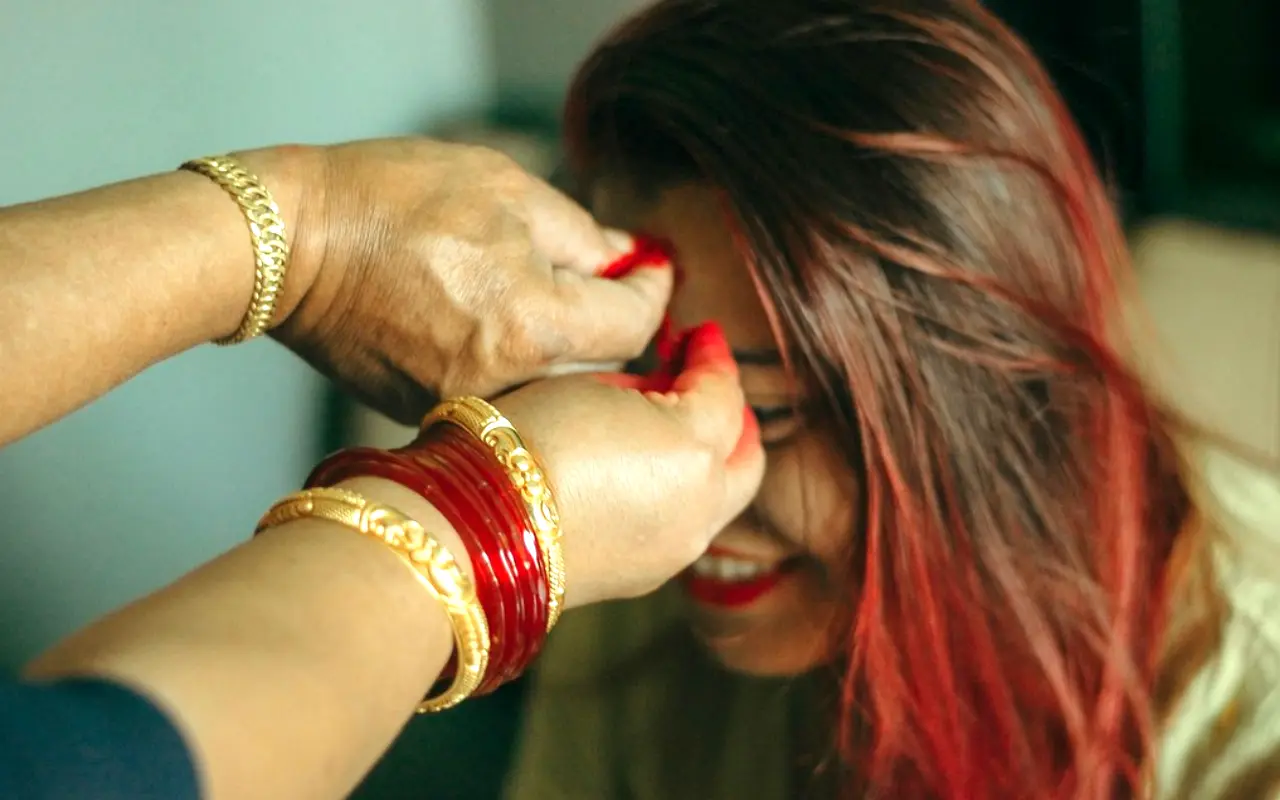
Elders bestowing Dashain Tika and blessings on the young

The largest and most important festival in Nepal, celebrated by all the families and communities in the country, is the Dashain Festival in Nepal. It is a joyful festival characterized by cultural practices that reflect Nepal’s rich heritage.

An auspicious festival that is held once a year in Nepal, Dashain Festival stretches fifteen days in celebration of the defeat of evil and the triumph of the goddess Durga. It is thus a festival of power, protection, and blessings that dates to deep ancient Hindu myth and Nepalese overall cultural value.

Dashain Festival in Nepal has a crucial role in society as the festival stimulates unity and revival. In the process, humans come home and are blessed by their elders, and spend their time on traditional customs, which is a cherished event that binds families and the culture.

Historical and Religious Significance

The historical and religious impacts that surround Dashain revolve around the victory of Goddess Durga over the demon called Mahishasura. She is an allegorical figure of divine power, fighting against injustice and bringing peace and fairness back to the universe.

It is said that Durga’s triumph over Mahishasura symbolizes how good has triumphed over evil. Her victory invites adherents to oppose negativity through virtue in accordance with the symbolism of the festival.

According to Hindu folklore, Dashain marks such triumph of gods and venerates the power and patronage of Durga. It generates rituals and prayers to request blessings of prosperity, bravery, and overcoming personal hardship.

Dashain festival in Nepal strongly shapes Nepali culture, marking a bold assertion of Nepali tradition, family values, and public unity. It reaffirms commonalities in people, so gathering reminders of what is morally just is enduring, and there is a sense of hope that the local community can survive amidst the corruption of influence in Western institutions.

When is Dashain Festival in Nepal Celebrated?

Dashain festival in Nepal occurs annually in September and October based on the lunar calendar. The dates fluctuate year to year, during the bright lunar half-moon of the months of Ashwin and Kartik according to the Nepali calendar.

This festival is 15 days long, which makes Dashain one of the longest and awaited events in Nepal. Each of these 15 days of the festival has its importance, significance, cultural traditions, and activities that lay out more of the story and progression with blessings.

Major Nepali auspicious days to celebrate during Dashain in Nepal are the Ghatasthapana, Fulpati, Maha Ashtami, Maha Navami, and Vijaya Dashami. This period is critical to practice special prayers, the application of tika, and enjoying with family members and friends.

Major Rituals and Traditions of Dashain Festival in Nepal

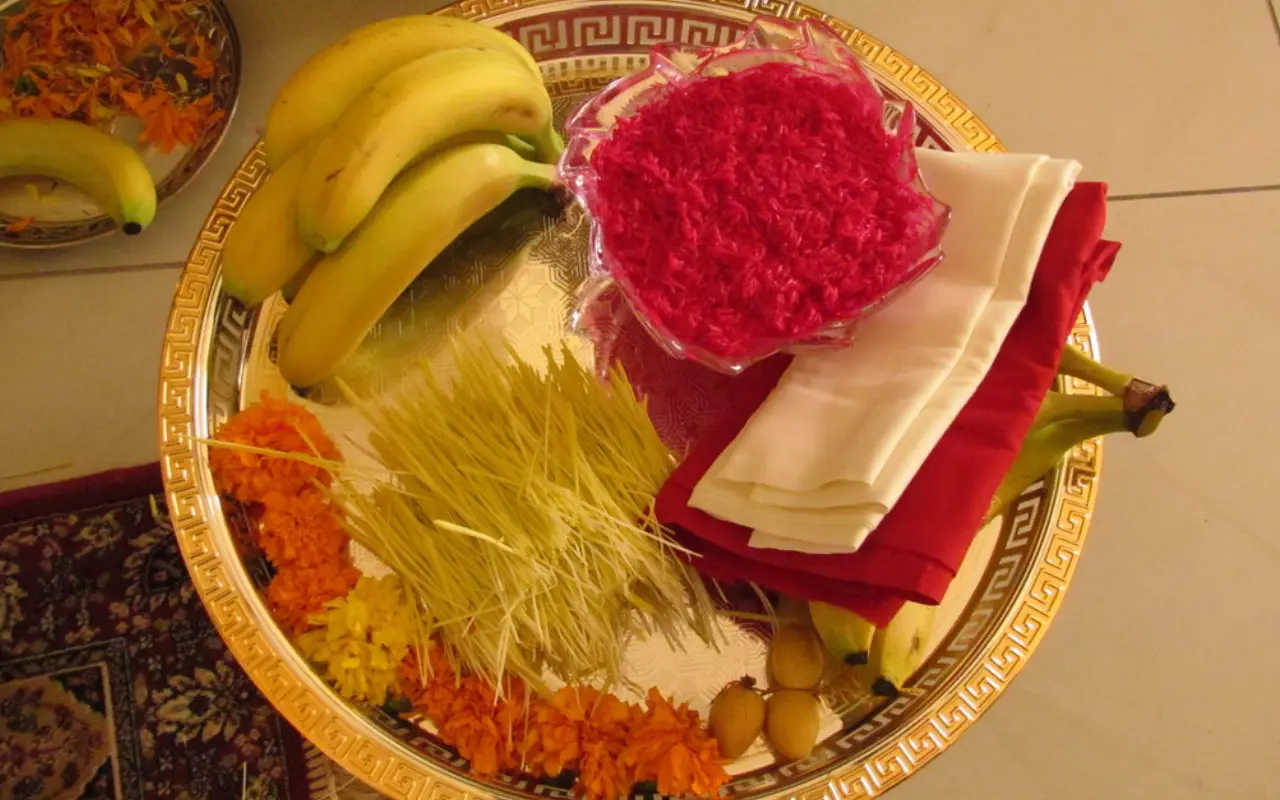
Dashain Tika Thali, decorated with Tika, Jamara, Fruits, and Flowers

Ghatasthapana, or the first day of the Dashain festival in Nepal, is when people plant jamara seeds. Jamara is are very sacred grass that symbolizes life itself and is planted for auspiciousness and protection. This marks the beginning of the rituals of Dashain and the onset of spiritual preparations.

In Nepal, offerings of holiness, including barley, flowers, and leaves, are carried into houses on the seventh day of Dashain, known as Fulpati. They are placed in worshipping room on a special platform to recognize the goddess’s blessings for the family.

The eighth day of the Dashain festival in Nepal is called Maha Ashtami, and this day is when the majority of animal sacrifices and prayers are made to the goddess Durga. This is the day for assurance and support of Goddess Durga. This is a very important day, with an intensity of prayers and procedure.

The ninth day of the Dashain festival in Nepal is considered Maha Navami, or the day when our tools, vehicles, and weapons should be worshipped, indicating respect and gratitude towards the means of our livelihood and protection throughout the year.

The tenth day of the Dashain festival in Nepal is called Vijaya Dashami, where the elders of families put tika and jamara on the heads of younger members, blessing them with health, wealth, and success in the coming year.

Kojagrat Purnima, or the last day of the Dashain festival in Nepal, is the conclusion to the festival. People remain awake all night praying to Goddess Lakshmi for wealth and prosperity, and marking the end of the festival with the last rituals and gatherings with family, children, and friends.

How Nepali Families Celebrate the Dashain Festival in Nepal

In Nepal, Dashain brings families together who are separated by huge distances, as it is a reason to unite in their celebrations and tie together bonds with rituals and happy reunions. This feast is a happy period of getting to see relatives again and getting blessings from elders.

Among the major practices of Dashain, receiving tika and jamara from elders is one of them in Nepal. This is representative of protection, good fortune, and respect, which spawns a sense of extreme family unity and tradition.

The exchange of gifts and wearing of new clothes are the important aspects of Dashain in Nepal. Individuals purchase and exchange gifts to their loved ones and stressing the generous spirit and merry mood, wearing bright things to celebrate the event.

During the celebration of the Dashain festival in Nepal, special foods are very crucial. Traditional food as goat curry, rice pudding, and sel roti, is made and served up to impress the whole family as well as the guests, and make the event more festive.

Food and Feasts of the Dashain Festival in Nepal

Dashain Feast: A Celebration of Food, Family, and Tradition in Nepal

Goat meat curry, sel roti, and beaten rice are popular foods during the Dashain festival in Nepal. Families make special preparations for these foods, enjoying them together; these foods symbolize abundance and celebration.

Part of the meaning of the Dashain Festival in Nepal comes from feasting. Feasting creates occasions for people to come together in joy and hospitality. The common dinner helps tighten relationships and the culturally relevant values of generosity and communality that are expressed during the festival.

The culinary practices surrounding the Dashain Festival in Nepal also celebrate agricultural blessings and abundance. Food is much more than simply consumption, with the sharing of special dishes evoking an important sense of belonging and connection to the past, community, and each other during the festival. The foods of Dashain bring a festive spirit to life throughout the celebration.

Dashain in Villages vs. Cities

Dashain festival in Nepal has different meanings in its villages and towns. Villages typically focus more on traditional rites of passage, with community celebrations and more outdoor activities, preserving age-old practices with cultural significance.

In the villages, there are bamboo swings and kite flying, and other activities that foster good fun and communal spirit. The towns have more of a mix of festivities and traditional practices in adapting to urban lifestyles while keeping the essence of the festival.

Dashain and Tourism in Nepal

Nepal is one of the countries where travelers may enjoy rich cultural rituals, family visits, and celebrations such as kite flying and traditional feasts during Dashain. The festival presents an exclusive experience of the Nepalese culture, which explains why it is a fascinating period for visitors.

The advantages of visiting Nepal in Dashain are the clear weather of autumn, as well as the changing colors of leaves, and witnessing the real celebrations. Travelers, however, must know about high local traffic and possible lack of services since it is a family reunion and celebration.

During the time of the Dashain festival in Nepal, tourists are given guidance to book rooms and even transportation arrangements ahead of time. To make the trip more enjoyable, local customs should be respected, cultural events should be joined, and one should explore beyond cities during this celebratory period.

Dashain festival in Nepal is a mixture of natural attractiveness and cultural richness. Prominent trekking trails and heritage sites are full of festivals, which can provide a traveler with not only the view of adventure but also a vivid cultural experience with the most significant celebration in Nepal.

Dashain Festival Activities and Fun

Kids enjoying the traditional Dashain swing in Nepal
Kids enjoying the traditional Dashain swing (also known as Ping) in Nepal

Kite flying as a tradition and symbol of freedom and happiness makes Dashain, a much-loved festival in Nepal. The festivities incorporate everyone, with people of all ages coming out to enjoy by sending kites filled with color in the skies, and this creates a festive, colorful, and lively light in the events.

In rural areas, bamboo swings (ping, in the Nepali language) are a popular Dashain activity in Nepal. Such big swings unite communities by providing entertainment and enjoyment as well as conserving a cultural activity that is highly valued during the festival.

The Dashain festival in Nepal also has cultural dances. Different ethnical groups present customary dances, with colorful costumes, rhythmic steps, and speech telling about the diverse cultural heritage of Nepal.

Dashain music is predominantly dynamic and lively. The Nepali traditional instruments accompany dance and other traditional rituals, and music sets the overarching mood for the celebration, making it easy to participate collectively in the spirit of joy.

Dashain vs. Tihar: Nepal’s Two Grand Festivals

Dashain, which is known to be the longest festival in Nepal, describes the triumph of goddess Durga over the demon Mahishasura, and the victory of good over evil in accordance with the Hindu mythology. It takes place during 15 days and consists of family reunions, rites, blessings, as well as in feast, the profound religious meaning of which is observed.

Tihar, or the festival of light, is next in line after Dashain and is a five-day festival. It worships Goddess Laxmi, animals, and nature with special emphasis on money, prosperity, and building relationships between brothers and societies with the help of colorful lighting and cultural dances.

Nepal is culturally incomplete without both Dashain and Tihar. Dashain examines a sense of spiritual victory and family togetherness, while Tihar emphasizes thanks and community with celebrations strengthened with light and joy to fill the color and culture of Nepalese society.

Travel Tips for Experiencing Dashain Festival in Nepal

The most appropriate places to enjoy the Dashain festival in Nepal are Kathmandu Valley, Pokhara, Bandipur, and rural villages. Such places present colourful culture, cultural practices, flying kites, and new markets, marking the cultural spirit of the Dashain.

When spending Dashain festival in Nepal, tourists ought to respect the local culture by dressing decently, asking permission before inviting themselves to rituals, and respecting family traditions. Sensitive participation proves to be a better experience, as well as respecting the Nepalese culture.

There are holiday closures of shops, offices, and crowded travel routes as people travel home to meet family in Nepal. One has to ensure in advance how they are going to get to where they are going and where they will sleep during the festive season.

Conclusion

Dashain festival in Nepal is considered the unity, culture, and happiness festival that brings families, communities together to celebrate. It displays the ancient customs and religious traditions that make the social relationships and cultural pride in the whole country.

This is the ideal festival to have a firsthand exposure to Nepali culture. Having pleasing rituals and festivals and evergreen traditions, tourists get a special access to the Nepali heart and soul of its rich culture.

Wildlife Reserve in Nepal: A Complete Guide for Nature Enthusiasts

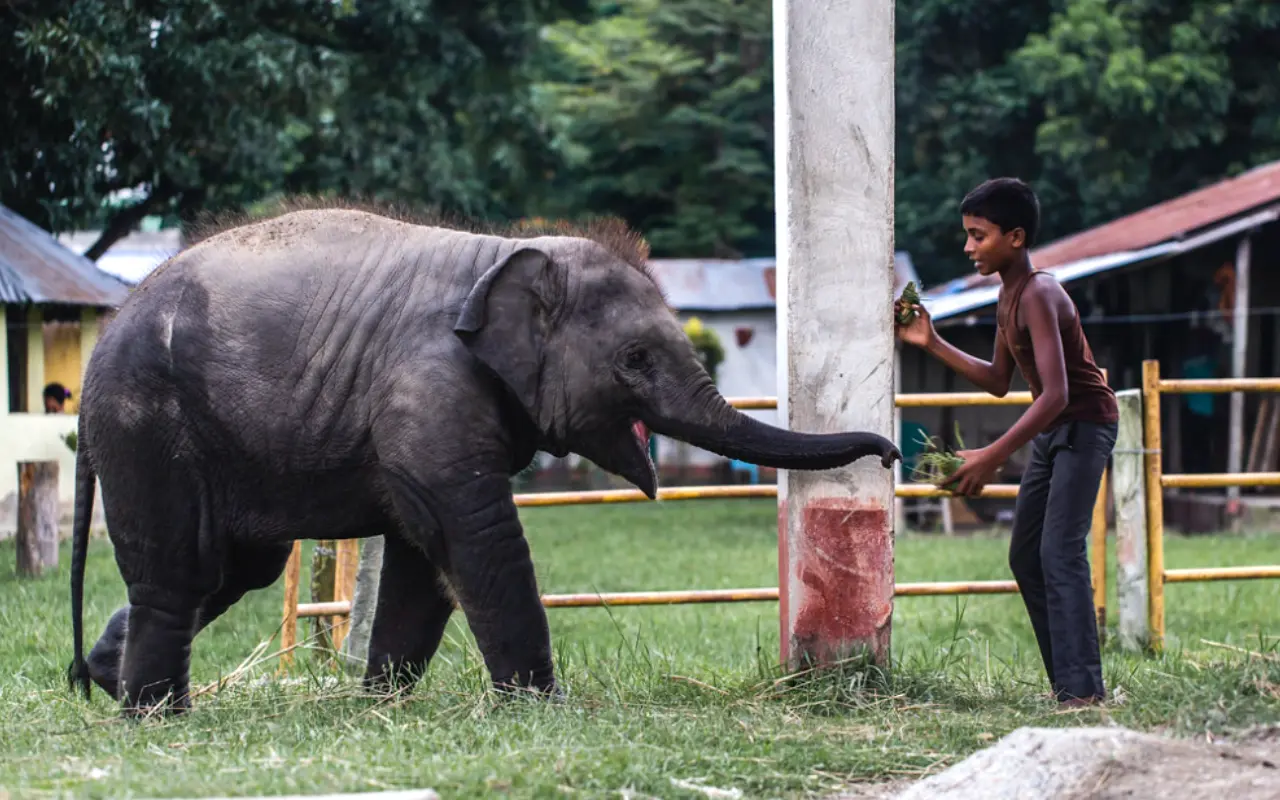
Elephant Sightings at Koshi Tappu Wildlife Reserve, Nepal

The wildlife reserves of Nepal are full of an enormous array of flora and fauna that show evidence of the diversity of biological makeup in Nepal, which is to be envied. The presence of endangered species that inhabit the wildlife reserves is important to the local ecological equilibrium and natural heritage continuum, but the wildlife reserves preserve wilderness, species, ecosystems, landscapes, and habitats.

Wildlife reserves are a human endeavor to preserve the habitat of endangered and vulnerable species in a threatened state of decline. Wildlife reserves in Nepal foster eco-tourism that promotes appropriate CGI tours that allow sustainable activities within local communities, while generating goodwill towards wild and animal land conservation.

For all nature lovers, experiencing a wildlife reserve in Nepal will create some of the most enduring memories in their lives. Getting close to rare animals in the wild, meadow and mountain views of unblemished landscapes, and fostering the love of wilderness and nature will surely be a special memory of a wildlife reserve in Nepal.

What is a Wildlife Reserve in Nepal?

A wildlife reserve in Nepal is a reserved area where the country aims to protect the wildlife and biodiversity habitats. Most of the wildlife reserves are open areas where the goal is wildlife protection with limited human activities.

Some of the reserves also act like national parks where the emphasis is not only on wildlife but also on the recreation of the people. Protected zones in Nepal generally provide a more sustainable utilization of the resources as well as conservation.

There has been a history with regard to the creation of the wildlife reserves in Nepal so as to conserve their highly important habitats of some endangered species of animals, the wild Asian elephant, the Bengal tiger, and others.

Parsa Wildlife Reserve is one of the examples, as it was set up in 1984 to preserve these species and their environments. Such reserves supplement the national parks that give additional protection to key wildlife corridors and other undisturbed habitats.

Wildlife reserves in Nepal are meant to preserve endangered species and their habitat to achieve a balance in the ecosystem. They offer refuge to a variety of flora and fauna, facilitate ecosystem services, and reduce human and wildlife conflict. These reserves also contribute towards conservation of biodiversity and ecotourism, with the benefits of supporting the local people and conservation of the reserves.

Major Wildlife Reserves in Nepal

1. Koshi Tappu Wildlife Reserve

Migratory birds at Koshi Tappu Wildlife Reserve, located on the Sapta Koshi River floodplains in southeastern Nepal.
Migratory bird at Koshi Tappu Wildlife Reserve, located on the Sapta Koshi River floodplains in southeastern Nepal.

Koshi Tappu Wildlife Reserve covers about 176 km², and is the home to Nepal’s last remaining wild water buffalo and a variety of endangered species. It is paradise for bird lovers with the bird life characterized by over 400 species recorded, mainly migratory as well as resident species such as Bengal florican and Sarus crane.

In addition to this, its wetland ecosystem supports a variety of wildlife such as gharial crocodiles, river dolphins, and various deer species, especially, making this very crucial for conservation and an eco-tourism site.

2. Parsa Wildlife Reserve

Parsa Wildlife Reserve is famous for its forested areas and is home to many types of mammals. It is a key habitat for the Bengal tiger, Asian elephant, gaur, and many more. It is an important site for forest conservation and the protection of endangered mammals in Nepal’s low-lying Terai region.

The thick forest area of the reserve supports various wildlife, which enhances biodiversity and ecological balance. It also supports the income of local people through escalating eco-tourism and sustainable natural resource use, cementing conservation and community relations.

3. Shuklaphanta Wildlife Reserve

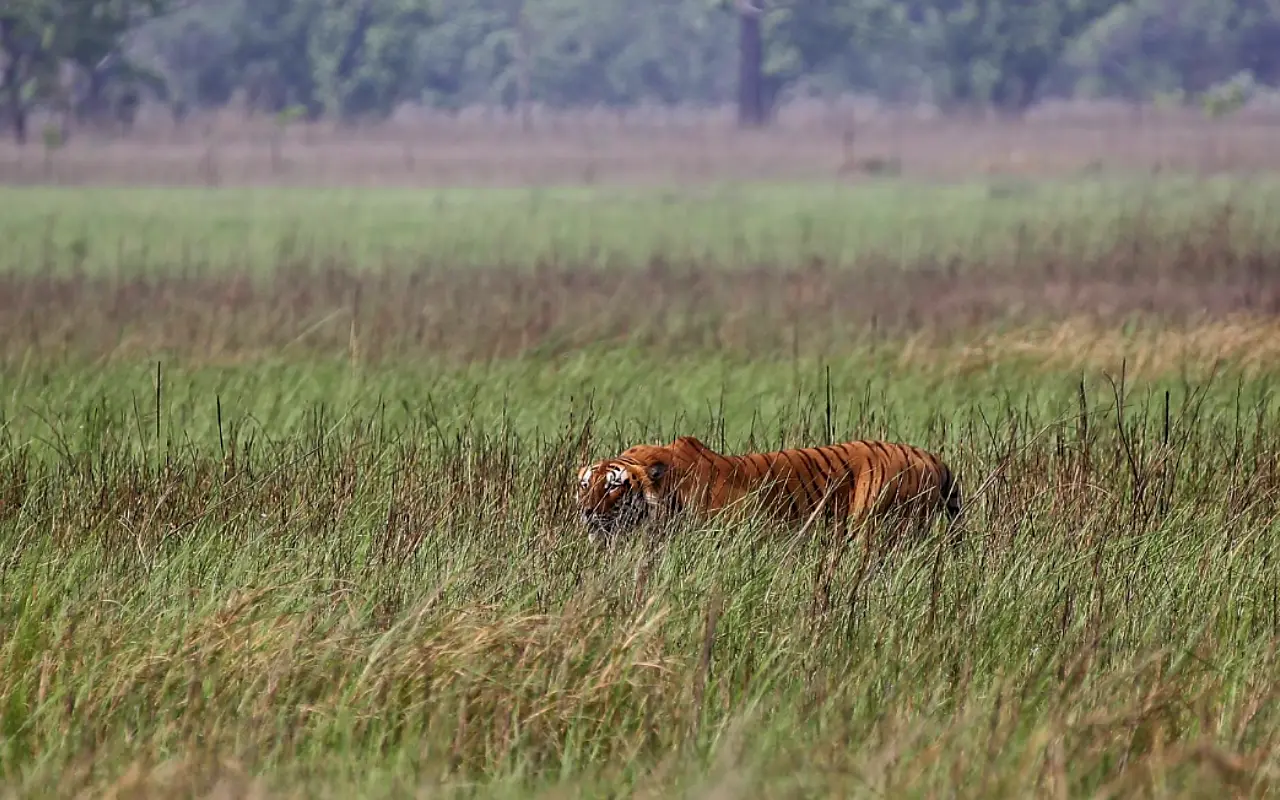
Bengal Tiger Spotted at Shuklaphanta Wildlife Reserve, Nepal

The wetlands and grasslands of Shuklaphanta Wildlife Reserve make it the perfect habitat for swamp deer, which contains the biggest reserves of swamp deer in Nepal. It contains a good diversity of wild animals while encouraging the grassland ecosystem to survive.

The grassland sections, where migratory birds and mammals can attain their necessary habitats to survive, support the health of the entire ecosystem. Eco-tourism is also fostered in Shuklaphanta, which engages visitors in wildlife viewing and promotes awareness and value to the economies of communities.

There are many notable wildlife reserves in Nepal, including the National Park, Babai Wildlife Reserve, and Khaptad National Park. These areas protect rare habitats and species that are part of the entire biodiversity resource conservation of Nepal.

Wildlife and Flora in Nepal’s Reserves

Bengal tiger, one-horned rhinoceros, Asian elephant, Ganges river dolphin, etc., are some of the endangered species preserved in wildlife reserves in Nepal. These wildlife play an important role in maintaining the ecosystem.

Numerous resident and migratory birds can be found in Nepal’s wildlife reserves. Such reserves as the Koshi Tappu bird reserves are famous due to more than 400 species of birds, including some unique migratory birds such as the Bengal florican. These habitats give vital resting places to the migrating birds.

The reserves have unique flora, unique forest types, including dense Terai forests, grassland, and wetland ecosystems. These also accommodate a wide variety of plant species, which help sustain rich wildlife, both tropical hardwoods and alpine shrubs, which allow a wide array of ecological niches.

Top Activities in a Wildlife Reserve in Nepal

Jeep safaris and escorted wildlife tours offer an adventurous experience of travelling in the thick woods and grasslands, spotting everything in the wild, including the Bengal tigers and one-horned rhinoceros. Skilled guides give comments concerning the animals and their habitat to enrich the safari tour.

Birdwatching trips enable visitors to see more than 400 species of resident and migratory birds, especially in the wetlands such as Koshi Tappu Wildlife Reserve. These tours are suited to the leisure bird fancier as well as the more serious ornithologist in search of scarcer species.

Photography sessions and nature walks bring people closer to nature, and because it consists of wildlife, plants, and insects of lesser size, one can get up close and personal with them. The beautiful scenarios in Nepal present photographers with the opportunity to capture some magnificent shots of the various flora and fauna.

River boating/canoeing offers an exclusive view of water-life, including crocodiles, dolphins, and water birds that are found at reserves where there are rivers like Koshi Tappu and Chitwan. This is a peaceful exercise that adds some color to the safari experience and provides exciting wildlife sightings.

Going out in the local communities, visiting Tharu villages close to Koshi Tappu, makes the wildlife reserve visit rich in local cultural information on local ways of life and customs. Such experiences create an understanding of the symbiotic nature of the interaction between indigenous heritage and nature conservation.

Best Time to Visit a Wildlife Reserve in Nepal

November to April is the drier period, and wildlife viewing and bird watching are best during that time, with animals being concentrated around the few water sources. Winter (December to February) is less touristy, with agreeable climatic conditions in Terai, and spring (March to April) is pleasant with tinged flowers.

Summer (May to June) is usually hot and humid, so the temperatures may reach 40 °C, which makes seeing the wildlife more problematic. There is a rainy season in the months of monsoon (July to September), and there is a lack of activities outdoors due to heavy rain and high humidity. Therefore, visiting Nepal wildlife reserves is best during the main portion of late autumn to the early days of the spring season to observe animals and see the birds.

Accommodation Options

Accommodation within a wildlife reserve in Nepal contains eco-lodges and luxury safari camps. They provide pleasant stays with immersion in nature, personal service, and directed wildlife experiences in impeccable settings.

There are also budget guesthouses, located at the entrance to wildlife reserves in Nepal. It can also serve as a fine choice when someone is intending to spend considerable hours around the reserve and the neighborhood village and only needs a mere place to reside. These guesthouses are the basic accommodation at a low cost.

Camping is an excellent activity that enables an adventurous traveler to have contact with nature. In some wildlife reserves in Nepal, camping can only be done in areas that are already designated, and this must be approved by the appropriate authority.

Permits and Entry Fees

Any tourist visiting a wildlife reserve in Nepal is required to acquire an entry permit, yet the prices differ among the nations. Depending on his or her nationality, international visitors are charged much more than SAARC nationals and Nepali nationals. Permits allow people access to hunting areas where they make payments to fund conservation.

In Nepal, the wildlife reserve has permits that are procured at the park’s main entry gate or the Nepal Tourism Board Kathmandu office. Once you have acquired a permit, you will be required to keep it with you while in the reserve.

Within a wildlife reserve in Nepal, the laws that one must abide by include no plant and wildlife disturbance, appropriate waste management, limited walking hours, and guides being mandatory in activities like walking through the jungle in order to conserve nature.

Travel Tips for Visiting a Wildlife Reserve in Nepal

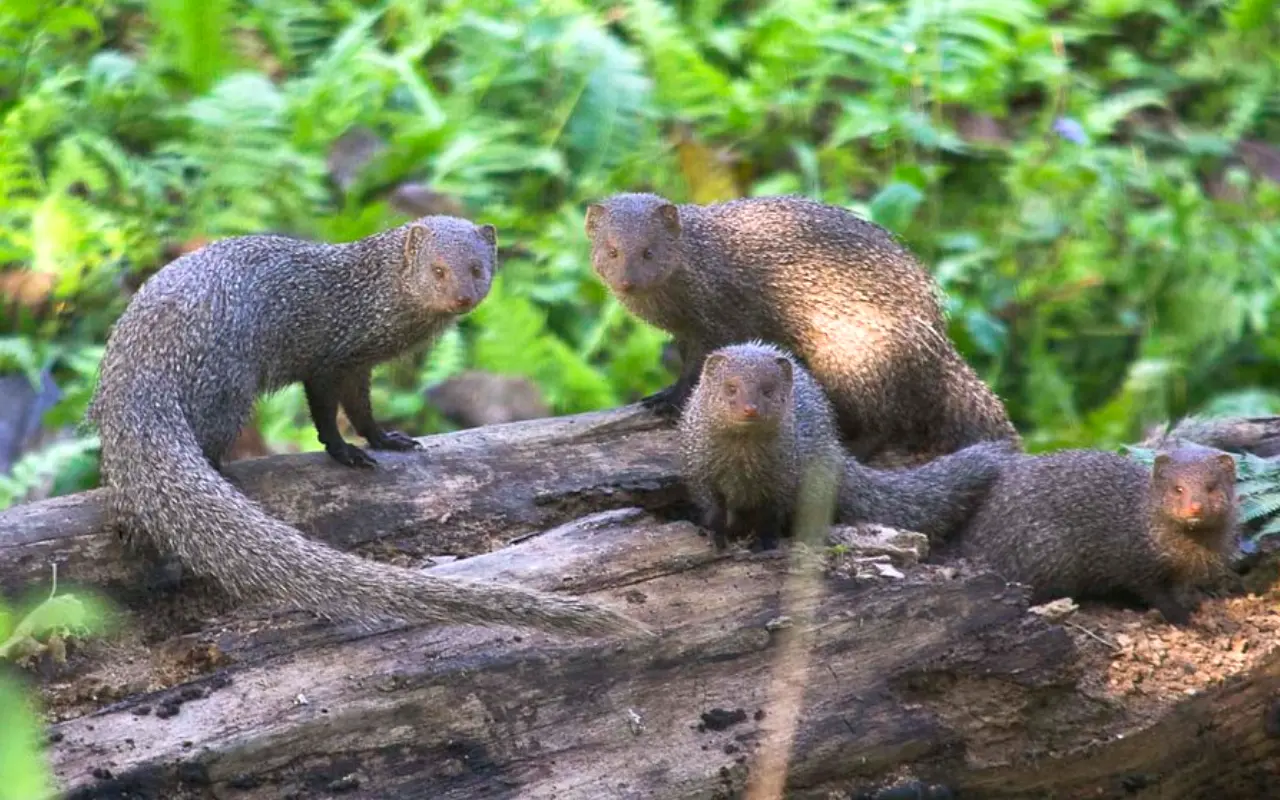
Stripe-necked Mongoose at Koshi Tappu Wildlife Reserve
  • Pack breathable clothing that can be layered for changing weather and a rain jacket.
  • For hiking the wildlife reserves in Nepal, bring good sturdy trekking shoes and moisture-absorbing socks.
  • Pack a hat, sunglasses, and repellent for sun and insect protection.
  • Take the wildlife reserve guides seriously and do not tease or feed animals.
  • Use eco products and discard single-use plastics to have less environmental impact.
  • Remember to dispose of waste material, but not in the reserve, and also do not disturb the flora and fauna.
  • To spot wildlife and provide expertise on the content and culture of the place, hire local guides, and contribute to the community via their local wildlife protection.

Conclusion

A remarkable variety of flora and fauna that observed within the native habitats awaits in the wildlife reserves in Nepal, and it is one of the best chances to witness them worldwide. Moreover, one can visit the wildlife reserves in Nepal to have some cultural experiences and biological diversity, in an excellent, exotic, and untouched environment.

Responsible travel will assist in making sure these fragile ecosystems are taken care of, aid in making sure we leave their cultural traditions intact, and be considerate of their participation in conservation. Your visit provides partial support to a sustained tourism activity, which in turn supports the wildlife and also the locals in or around these reserves.

From Kathmandu to Everest Base Camp Trek by Road: A Less-Traveled Adventure

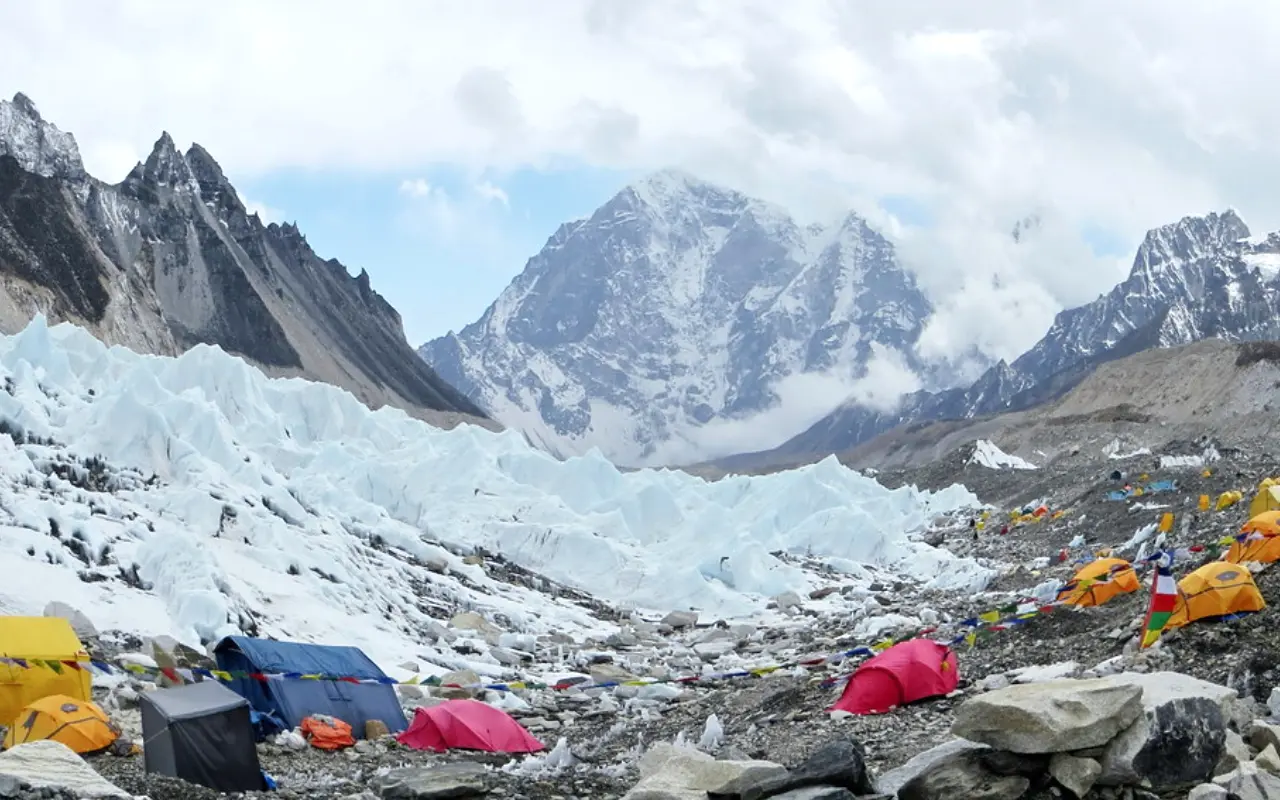
Khumbu Glacier, the gateway to Everest Base Camp.

Everest Base Camp (EBC) is an aspirational trekking destination and has continued to call people from all over the world with its epic mountainous backdrops and associated spirituality. Usually, the journey begins with a flight to Lukla.

But there is another adventure that is lesser known—the Everest Base Camp trek by road. This land option is becoming popular for those who don’t want the standard experience of flying to Lukla but want to take their time and see some off-the-beaten-path little places and sights along the way.

This blog will be your complete guide to the Everest Base Camp trek by road. We will outline the unique advantages and disadvantages of such a trek, and give you some pragmatic advice and pointers on how to plan the ultimate off-the-beaten-path trek to the heart of the Himalayas.

Expect nothing less than a true account of the experience—both the difficulties and experiences, and how this journey is probably unlike most of your past trips. If you are searching for an ample amount of adventure over the mundane, your Everest Base Camp trek by road is waiting for you.

Why Choose the Road Route Over the Flight to Lukla?

By selecting the Everest Base Camp trek by road, you can avoid the inconveniences of the Lukla flight delays and cancellations that often occur with the unpredictability of mountain weather, because the overland travel makes it more likely you´ll commence the trek as expected.

Trekking to Everest Base Camp by road is a more cost-effective and secure option. You can skip the expensive flight to Lukla and continue with your Himalayan experience, hopefully less complicated.

Not only will you get to experience more rural and authentic Himalayan villages through overland travel, but the Everest Base Camp trek by road follows fewer treks. Therefore, you have greater cultural experiences and a better sense of local life in the mountains.

The Everest Base Camp trek by road is for those who love this type of adventure and use their spare time wisely. It is also for someone who wants an experience with a pill of tourism, and without being rushed. For an amazing trip like this, you will transform what you expect into a true Himalayan odyssey.

Route Options for Everest Base Camp Trek by Road

A. Kathmandu to Salleri Route

The Everest Base Camp trek by road using the Kathmandu to Salleri route takes an incredible 8-10 hours of scenic driving through the hills and countryside of Nepal. Salleri is the modern and trendy option for people who are choosing to travel by road rather than in the air.

The Salleri route is much easier than before due to reformed road access. Most of the drive is on paved roads, albeit with a few bumpy spots. This route suits trekkers who want to seek comfort, flexibility, or a minimal budget.

Once you reach Salleri, you will join the main trekking route so that you won’t have to walk through extensive crowds as experienced on the popular trails from Namche Bazaar. The Everest Base Camp trek by road through Salleri gives you greater opportunities for acclimatization and organic interactions with remote Himalayan villages.

B. Kathmandu to Jiri Route (The Classic Route)

From Kathmandu, the road trip to Everest Base Camp via Jiri starts with a 9–12-hour journey. Jiri is historic as the original trek before trekking ever began regarding Everest expeditions; indeed, early expeditions made by Hillary and Tenzing began from Jiri.

This journey is longer but provides the opportunity to travel through lush forests, terraced fields, and remote Sherpa and Rai villages. Each expedition brings you different cultural encounters and superb natural scenery, which will certainly highlight Jiri as historically and culturally important, although more time-consuming.

With fewer crowds, the Jiri route also allows for a gradual period of acclimatization and satisfaction for those who want a traditional and immersive experience on an Everest Base Camp trek by road.

Day-by-Day Itinerary Sample (Salleri Route – 15 Days)

Day 1 is an 8-10 hour drive from Kathmandu to Salleri, the roadhead for your EBC trek by road. There will be some nice views along the way, and you will start to prepare for your trek.

On days 2 and 3, you will trek from Salleri to Ringmo and Nunthala with spectacular villages and terraced fields. This section will allow your body to acclimatize very gradually while integrating the culture during your EBC trek by road.

On days 4 and 5, you will trek from Nunthala to Kharikhola and Surkhe, hiking over some suspension bridges and through the rhododendron forests. The trails will be quiet and include Sherpa and Rai villages on your EBC trek by road.

Days 6 and 7 on your EBC trek by road will join the main Everest trail at Phakding and trek to Namche Bazaar. You will hike through the pine forests in Sagarmatha National Park and arrive at the dynamic Sherpa town of Namche Bazaar.

Day 8 is an acclimatization day in Namche Bazaar. You will be able to shop at local markets and take treks to viewpoints, while your body adjusts to the early stages of acclimatization, which is essential for your safe EBC trek by road.

Days 9 to 11 will trek from Tengboche, Dingboche, and Lobuche with alpine scenery and monastery visits. These days will demonstrate the increasing altitude on your EBC trek by road.

On day 12, you will arrive at Gorakshep, the last settlement before hiking to Everest Base Camp. Consider this to be a cause for celebration of this incredible accomplishment that is possibly the highlight of your EBC trek by road.

Day 13 will involve an early climb up to Kala Patthar to take in the breathtaking sunrise views over Everest and then descend to a lower altitude to continue your EBC trek by road.

Lastly, your trek will be your journey back via the same route to Salleri over days 14 and 15, or you may opt to fly out from Lukla. You have now completed your amazing EBC trek by road.

Road and Trail Conditions

Everest Base camp Trek

The Everest Base Camp trek route from Salleri is filled with bumpy, winding Himalayan roads. You have to travel for several hours on unpaved roads. However, you will have some amazing scenic views along the way.

After Salleri or Jiri, the EBC trek by road includes a combination of stone steps, mountain trails through forests, and exhilarating suspension bridges across rivers. Your trail will have a combination of ascents and descents while including remote Sherpa villages and breathtaking valleys.

The seasonal weather largely affects the journey to the Everest region. Because of the muddy and slick roads during the monsoon season and the ice roads during the winter, the car trip to Everest Base Camp is challenging.

Logistics and Permits Required

Sagarmatha National Park permit and Khumbu Pasang Lhamu Rural Municipality Permits are what you will need during the Everest Base Camp trek by road. These permits can be obtained in Kathmandu, at the hiking location, or through a trekking agency.

While this permit is typically obtained en route (e.g., in Lukla or Monjo), some agencies in Kathmandu may facilitate the process in advance. If you intend to travel from Jiri or Salleri via road, you will need to get a Gaurishankar Conservation Area Permit.

Accommodation and Food

The EBC trek by road provides basic tea houses as the normal form of accommodation. Family-run lodges house basic but clean rooms, usually with twin beds and shared bathrooms. At the end of the day, these lodges provide a warmer place to rest than a tent.

You can get simple menu options in these tea houses from Nepali staple Dal Bhat to noodles, momos, and varieties of soups. The food is freshly cooked, filling, and provides nutrition for trekkers in the high Himalayas.

The options for luxury accommodation and dining are limited along the trek to EBC, kept in check in comparison to the roads to Lukla. Your hosts are genuine, and the warmth and hospitality would be considered primitive compared to lodges supporting the Lukla roads, while the experience is both comfortable and provides a window into the culture of the area.

Pros and Cons of the Road Route

Pros:

  • No risky flight delays to Lukla, making it safer
  • More opportunities for cultural engagement and interaction in remote villages
  • A less busy trail means trekking in a quieter and more peaceful environment.
  • Gradual ascent to altitude provides an easier acclimatization process and a lower chance of experiencing altitude sickness.
  • Cheaper than flying to get to the trek, and usually more planning is required in organizing the trip.

Cons:

  • Adds several days to the journey, so makes it longer
  • You can feel the sandy, rough, and uneven roads.
  • You may get limited accommodation options and medical help along the way.
  • Needs more stamina due to long-distance trekking
  • Increased chances of road blockages or travel disruptions because of landslides or weather, especially in the monsoon or winter months.

Best Time to Go

To enjoy the surrounding scenery to the fullest, plan your Everest Base Camp trek by road in March to May. These months offer clear skies, comfortable trekking temperatures, and vibrant wildflowers and rhododendrons along the way, making the landscape colorful.

Another time for the enjoyable trips can be obtained from September to November. The weather is ideal, offering unobstructed views of Everest and the surrounding peaks. The trails are also dry and well-maintained, perfect for trekking.

It is better to avoid the EBC trek by road in the monsoon (June to August), as the roads can become muddy and hazardous. Also, avoid deep winter (December to February), as snow can block trails and make travel difficult.

Final Tips for a Successful Everest Base Camp Trek by Road

  • To get the most out of each travel day, start each day of your road trip to EBC early in the morning to take advantage of the light and possible delays.
  • Flexibility is key on your trek to EBC; road conditions and trail conditions can change quickly.
  • It’s a good idea to have plenty of cash; after Salleri or Jiri, you will no longer find ATMs.
  • Think about hiring a guide or porter to assist you in selecting appropriate paths and to explain cultural values.
  • On your road trip to EBC, you must adequately acclimate to prevent altitude sickness.
  • Ensure your essential gear, such as snacks, warm clothes, and a first aid kit, is easily accessible.
  • Always check weather reports and prepare mentally for poor weather conditions during your Everest Base Camp Trek by road.

Conclusion

The Everest Base Camp Trek by road is a singular and fun experience that allows deeper engagement with the incredible Himalayas than simply flying to the trek start point. It is an experience of culture, challenge, and natural wonder.

For trekkers who feel comfortable with walking to their destination, the less-traveled route to Everest Base Camp allows you to interact with real local culture and have the luxury of being alone on the trail. The slower pace allows adequate time for acclimatization as well as exploring meaningful options in the departing and arriving locations.

The walking route choice to EBC incorporates cultural engagement and physical and mental challenge together. Therefore, the Everest Base Camp trek transforms into a holistic experience, represented in each step taken, reflecting Nepal’s culture and geography, and offering personal discovery through physical challenge.

Everest Base Camp Trek Cost: How to Save Money Without Compromising the Experience

Experience the Majestic Views from EBC

The Everest Base Camp trek is an exciting journey across Nepal’s glorious Himalayas in the Everest region and draws trekkers from around the world. However, the Everest Base Camp trek costs vary widely as the trek has options from a budget to a luxury trek. Research, careful planning, and budgeting are important to make this journey possible for a wide range of travelers.

Just because you book your trek to Everest Base Camp doesn’t mean you will have to spend vast amounts. A savvy trekker will plan to keep costs down. Trekking is typically cheaper based on group size. Book flights in advance, and opt to stay in teahouses instead of lodges.

To help save some costs for your Everest Base Camp trek, use local guides and share stuff. Buying in Kathmandu instead of overseas also helps to save costs, although you will still need to make sure you are safe and comfortable on the trek.

By researching and preparing to see the Everest Base Camp trek cost-effectively, you will soon be able to enjoy stunning views surrounded by the Himalayas. You will get the experience of a lifetime and save on unwanted costs that do not need to be wasted.

Average Cost of EBC Trek (2025 Estimate)

You will find the average price of an Everest Base Camp trek costs between $1200 and $2500 in 2025. Trekking costs depend on many factors such as group size, style of travel, and included services. There are mainly two styles of travel to Everest Base Camp. Trekking options typically fall into two categories: budget and luxury.

You can expect to spend around $1300 to $1400 for a budget trek. For the luxury treks or private tours, the price can vary greatly and cost up to $3000 or more. The prices usually will include permits, any domestic flights, accommodation, most meals, guide and porter payment, as well as some gear rental or purchase. Trekkers can help themselves save money on the Everest Base Camp trek package through early booking and signing up for group treks.

Basic budget breakdown:

• Flights to/from Lukla

The flight from Kathmandu to Lukla and Lukla to Kathmandu is the key part of the Everest Base Camp trek cost. In 2025, you can expect to pay around $200 to $300 per person. If you book in advance, the cost may be reduced.

• Permits

Everest Base Camp trek cost for permits is usually a collective total of $50–$55 to cover Sagarmatha National Park (about $30) and the Khumbu Pasang Lhamu Rural Municipality (about $20–$25). The TIMS card is no longer required, but you will need to obtain these two permits.

• Guide/porter fees

Expenses for hiring a guide and porter represent another key part of the Everest Base Camp trek cost. You should expect to pay between $30–$40 daily for a guide, and $20–$25 for a porter. On a 12–14-day trek, their combined cost would usually be between $500 and $700.

• Accommodation and meals

Spending on teahouse accommodation will be between $10–$25 per night, and while food costs can vary, you might expect to spend between $5–$10 for each meal. In total, the cost will be somewhere between $300 and $700 for both accommodation and food on a two-week trek.

• Gear and insurance

Gear and insurance can represent a key variable in the Everest Base Camp trek costs; typically, for both gear and insurance, you are likely to expect anywhere between $150 and $700 in total. If you search for rent or purchase second-hand gear, your expectations could be lower; however, it is recommended that you purchase travel insurance that covers medical emergencies.

Key Ways to Save Money on the EBC Trek

a. Book with a Local Trekking Agency

Using a local trekking agency will dramatically reduce your Everest Base Camp trek cost. You will skip international middlemen with a local agency. Nepali agencies are negotiable and offer lower prices. You will maximize your budget and not sacrifice customer service.

Using a local agency gives you local knowledge to not only save you on your Everest Base Camp trek cost, but also to enhance safety, as well as optimize your experience. The local guides know the terrain, the weather, and which lodges will give you the best value for your money.

b. Travel in a Group

Operating at all times in a group setting will enable you to minimize costs on your Everest Base Camp trip. You will share both guide and porter fees, but also get to share accommodation and transportation charges, significantly and dramatically reducing total costs per person.

If you are booking a group with trekking agencies, group bookings also generally have discounts, specifically further reducing the base camp trek cost. Once you are walking as a group, you will build bonds and friendships – supporting each other on your journey will be worthwhile for many reasons and allow considerable savings.

c. DIY vs Package Trek

If you decide to take a DIY (do-it-yourself) approach to your Everest Base Camp trek cost, you can save some money by arranging your flights, permits, and accommodations. Since it’s your planning, there are no agency fees, and you have more control over how much you spend.

Despite potentially lessening the Everest Base Camp trek cost, taking a DIY approach can impose additional logistical challenges and time and research. Package treks are more expensive but will provide you with convenience and support for those who want to plan without the hassle.

Save on Flights and Transportation

Everest Base camp Trek
Everest Base Camp Trek

Buy Kathmandu–Lukla flights as far in advance as possible to keep your Everest Base Camp trek price down, including airfare. International travelers usually pay around $215–$228 each way for Lukla flights.

By purchasing flights as far in advance and at as low a rate as possible, even in the offseason, you’ll reduce your Everest trek expenses. Additionally, you can have much better chances of successfully getting flights during busy periods.

If you’re able to travel in March or November, you’ll also save on price, because airfare is cheaper, and you’ll encounter fewer other trekkers on the route. One other way to avoid a huge expense is to travel by bus or jeep to Jiri or Salleri, instead of taking the expensive flight to Lukla, to keep your transportation costs down.

Affordable Accommodation Tips

Teahouses are the cheapest form of accommodation along the Everest Base Camp trek, and they provide limited rooms and plentiful food. Along the path, you will find an abundance of teahouses, making it easy for trekkers to find value accommodation and experience local Nepalese hospitality.

Some lodges along the Everest Base Camp trek offer free rooms when you eat all of your meals there. This is simply an offer designed for lower elevations, whereby trekkers can substantially reduce accommodation expenses while enjoying warm local food.

When trekking to Everest Base Camp, avoid pre-booking rooms in the off-peak season. Teahouse owners will often give substantial discounts to fill a room at lower elevations, especially when few other tourists are hiking the Everest Base Camp trek.

Cut Down Food and Drink Costs

Stay away from bottled water on the Everest Base Camp trek because it is money-saving and environmentally friendly. Bring purification tablets for purification or use a Lifestraw to filter the water from streams as you trek, and you won’t have any additional Everest Base Camp trek costs.

The cost of energy bars and nuts, packed from Kathmandu, is far cheaper than buying snacks on the trek, which can be overpriced in lodges. Bringing your snacks has cost benefits.

One of the best ways to save costs on the trek is to eat the dal bhat. It is locally priced and comes with unlimited refills. The hearty meal will give you energy to stay satiated throughout the trek.

Try to avoid imported snacks, soft drinks, and alcohol on the way to Everest Base Camp, as these options will be expensive once you arrive in Nepal. By eating more local food and drinks, you can minimize your food costs on the hike.

Rent or Borrow Trekking Gear

Renting trekking boots, sleeping bags, and down jackets in Thamel (Kathmandu) is a sensible method to reduce your Everest Base Camp trek cost. The rental shops provide adequate rental equipment at cheaper prices than you would pay to purchase new, which helps keep your budget manageable.

To reduce the Everest Base Camp trek cost even further, try to rent or borrow most of your gear and just invest your funds in personal gear such as base layers and socks. This way, you are properly equipped and comfortable, at the same time, you can establish good hygiene practices for your role in the hike, and you save even more money without compromising on safety and preparedness.

Combine Permits Smartly

When permits are properly combined, they will reduce your Everest Base Camp trek cost by ensuring you only pay for what permits you are required to pay for: Sagarmatha National Park and Khumbu Pasang Lhamu Rural Municipality. A guide will eliminate the need for a TIMS card, and simplifying your costs where possible is key.

Never purchase permits from any third-party sellers who mark up the prices. Purchasing your permits through the official offices in Kathmandu or Monjo provides better prices with no duplicate fees and allows transparency on your Everest Base Camp trek costs.

Choose the Right Season

View from Everest Base Camp

Avoiding the peak trekking months, especially late April and October, will save money on your Everest Base Camp trek by getting cheaper flights and accommodation in less busy times. It is often possible to obtain better rates by booking in advance in shoulder or off-peak months.

Trekking in the off-peak or shoulder months gives you the best chance of saving money on the whole Everest Base Camp trek because you can keep costs down and enjoy fewer crowds on the trek. You will enjoy the benefits of a quieter trail whilst being able to have more control over your budget without sacrificing your experience.

Bonus Tips

Use a solar charger, as the electricity is an expensive cost on the Everest Base Camp trek.

Use a local SIM (in Kathmandu) to call and use the internet along the trail.

Use public transport in Kathmandu to save some more money.

Reuse your water bottle at tea houses, use purification tablets, and do not buy bottled water.

Sign up for a group trek sharing the same itinerary, and both can share the cost of the guides, porters, and accommodation.

Final Thoughts

Trekking to Everest Base Camp does not have to be expensive. With good planning, you should be able to save money while still enjoying amazing Himalayan views and great local culture, without overspending.

It is helpful to think more about value than price; your trip will have a much better focus on experiences such as local meals and authentic teahouse stays. This will help you with the duration of your trek, so your experience is everything you can make it. Smart budgets will make sure you maximize every part of your adventure while not giving up on comfort or safety.

By choosing cost-effective methods such as local companies, group treks, and going during the off-season, trekkers can reduce the cost of their Everest Base Camp trek significantly. Thoughtful spending creates savings for trekkers and a memorable and worthwhile experience.

Top 10 Cultural Heritage Sites of Nepal You Must Visit in 2026

Cultural Heritage Sites of Nepal represent this country´s incredible Hindu and Buddhist traditions, older forms of art, and stunning architecture. Every site from Pashupatinath to Changu Narayan presents a spiritual and historical richness within Nepal’s culture.

Among the various cultural heritage sites of Nepal, Kathmandu Valley alone is home to seven UNESCO heritage sites, which include Kathmandu Durbar Square, Pashupatinath Temple, Swayambhunath Stupa, etc. In sites like Bhaktapur and Patan Durbar Square, you can witness beautiful wooden architecture, attracting many people.

Boudhanath Stupa and Lumbini, Buddhism’s sacred birthplace, are key landmarks of the cultural heritage sites of Nepal. These sacred places also express the complement, and contrasting fusions of Hindu-Buddhist traditions and rituals, festivals, and place all of these traditions into the synchronicity of spirituality, peace, and each cultural significance and richness of one place in the global community.

The cultural heritage sites of Nepal are also set to attract visitors in 2026 with more robust economic rebuilding, enhanced infrastructure, and a revitalized tourism experience. It is the ideal year to experience the temples and stupas, together with the ancient historic squares and cultural and spiritual living memory of Nepal.

Top 10 Cultural Heritage Sites of Nepal

1. Kathmandu Durbar Square (Hanuman Dhoka)

Kathmandu Durbar Square

A significant piece of cultural heritage of Nepal, Kathmandu Durbar Square was the royal residence of the Malla and Shah dynasties. The site has amazing artwork from the Licchavi to Malla period, incorporating both religious and royal implications.

This cultural heritage site of Nepal has many things to see and experience. This includes the Taleju Temple constructed for the royal goddess, the Kumari Ghar for the living goddess Kumari, and Kasthamandap (a wooden building to show the architectural style).

The architecture of the square shows wood-carved windows, stone sculptures, and courtyards like Nasal Chowk, where they used to coronate kings. Overall, it represents centuries of craftsmanship that show spiritual tradition for all cultural heritage sites of Nepal.

Events like Indra Jatra usually occur in the square that embraces both Buddhism and Hinduism. The durbar square remains alive with the vibrant cultural heritage of Nepal and is a bustling area where people come for a historical and festive experience.

2. Patan Durbar Square

Patan Durbar Square, A Living Museum of Newar Culture

One of the most important cultural heritage sites of Nepal, Patan Durbar Square is known for its beautiful Newar architecture and metalwork. The site is inscribed as a UNESCO World Heritage Site in Lalitpur and showcases Nepal’s past and cultural heritage artistry.

There are many aspects of this cultural heritage site of Nepal, such as the Krishna Mandir, known for its detailed carvings, and the Hiranya Varna Mahavihar (Golden Temple). Whereas, Patan Museum is known for its unique arts and religious practices.

Patan Durbar Square has substantial artistic and spiritual heritage, fusing Hindu and Buddhist traditions. Temples, palaces, and courtyard areas have significant wood carvings and metalwork representing hundreds of years of craft.

This cultural heritage site of Nepal remains an actual place, still vibrant with festivals and traditional Newari life. Visitors will be welcomed with open arms into Nepal’s rich cultural heritage and architectural wonders.

3. Bhaktapur Durbar Square

The Enchanting Beauty of Bhaktapur Durbar Square

Bhaktapur Durbar Square, a World Heritage Site of Nepal, is celebrated as the best preserved medieval city with extraordinary Newari architecture in Nepal. It represents the glory of the Malla dynasty, superb craftsmanship, and urban heritage.

Magnificent features like the Nyatapola structure, a five-tiered pagoda structure that represents power and determination, may be seen at this cultural heritage site of Nepal. The three-storey, 55-window Palace presents intricate woodwork that represents royal history at its core.

Another notable structure at this cultural heritage site of Nepal is the Vatsala Temple, dedicated to the sacred stone architecture of Nepal, along with its remarkable size silver bell. The distinctively rich religious, artistic, and cultural traditions of Nepal’s Newar people are vibrantly displayed in the Square.

Bhaktapur Durbar Square is a living museum of Newari culture, tea shops, living local pottery & weaving, and annual festivals representing the region within Bhaktapur. It is again an animated heritage site of Nepal where visitors to Nepal can take advantage of the medieval urban environment.

4. Swayambhunath Stupa (Monkey Temple)

Swayambhunath Stupa, also known as Monkey Temple

Swayambhunath Stupa is a cultural heritage site of Nepal and the oldest Buddhist stupa in Kathmandu, with a history of more than 1,500 years. It represents the self-begotten nature of enlightenment and remains a spiritual compass for the valley.

This cultural heritage site of Nepal gives the best views of Kathmandu from a hilltop. It is a site of cultural and architectural significance, being layered with Hindu religious and Buddhist symbols; both are uniquely blended into the architecture, highlighting the religious solidarity in Nepal and the depth of the spiritual legacy of the valley.

The cultural heritage site of Nepal is known as the Monkey Temple and offers a high level of peace and meditative atmosphere. Visitors can enter this sacred space of the valley, which is occupied by a myriad of prayer wheels, statues, and stupas. Many people simply come to appreciate and enjoy the beauty of this sacred and spiritual space.

5. Boudhanath Stupa

Boudhanath Stupa
Boudhanath Stupa

Boudhanath Stupa, an important cultural heritage site of Nepal, is among the largest spherical stupas in the world and a UNESCO World Heritage Site since 1979. This place symbolizes peace, spirituality, and enlightenment consistent with Buddhist traditions.

There are many monasteries in this cultural heritage site of Nepal because it is in the center of the Kathmandu valley. The Boudhanath Stupa is a massive mandala, with Buddha’s eyes, representing wisdom and compassion; it draws many pilgrims and tourists.

Prayer wheel rituals and kora, which is circumambulation (clockwise) while chanting the mantra of “Om Mani Padme Hum,” occur every day at this cultural heritage site of Nepal. The site has a peaceful spiritual atmosphere and is embellished with exuberant festivals and devotion.

6. Pashupatinath Temple

Pashupatinath Temple, Spiritual Serenity on the Banks of the Bagmati

Pashupatinath Temple, a prestigious cultural heritage site of Nepal, dedicated to Lord Shiva, is located on the sacred Bagmati River. It is one of the most significant Hindu temples in the Kathmandu Valley and reflects the spiritual richness of Nepal.

This cultural heritage site of Nepal represents a very large complex of the main pagoda-style temple with 500+ shrines, ashrams, and temples, which showcases intricate wood carvings and traditional Nepali art.

As a major spiritual site for cremation, this cultural heritage site of Nepal consists of extensive religious funerary rituals along the Bagmati River, considered purifying and sacred. The temple precincts see pilgrims year-round, and the religious significance is most evident during the festivals and Maha Shivaratri celebrations.

Maha Shivaratri sees thousands of devotees attend this cultural heritage site of Nepal, where all-night prayers and ceremonies are conducted in honor of Lord Shiva. The connection to Hindu mythology and religious pilgrimage significance makes this particular cultural heritage site of Nepal a major cultural and religious center.

7. Lumbini – Birthplace of Lord Buddha

Lumbini, the birthplace of Gautam Budhha
Lumbini, the birthplace of Gautam Buddha

Lumbini is the birthplace of Lord Buddha, and an important Cultural Heritage site of Nepal was declared a UNESCO World Heritage site in 1997. Because of its religious and historical importance, this place attracts a large number of pilgrims.

This cultural heritage site of Nepal has the Maya Devi Temple, the place of Buddha, and the Ashoka Pillar. There are also a large number of monasteries representing Buddhist traditions and cultures.

Lumbini has a calm spiritual atmosphere, with peaceful gardens and monuments that encourage reflection and meditation. This cultural heritage site of Nepal represents peace on a universal level and a continued legacy of Buddhism. It is a well-known pilgrimage site and cultural heritage site for many from around the world, and continues to have a peaceful tranquility within its botanical gardens.

8. Changunarayan Temple

Changu Narayan Temple, Nepal’s Oldest Living Hindu Shrine

Changunarayan Temple, recognized as a Cultural Heritage Site of Nepal, is the oldest Hindu temple in operation. Because it originated in the 4th century, it displays Nepal’s ancient spiritual and cultural traditions.

This Cultural Heritage Site of Nepal, dedicated to Lord Vishnu (Narayana), has a fantastic two-tiered pagoda roof. The exterior and interior of the temple have fantastic stone and wood carvings that illustrate Lord Vishnu’s ten avatars and other Hindu deities.

Changunarayan temple has a unique style of Nepali architecture, containing elements of the Licchavi period. It includes elaborately carved wooden struts, gilded doorways, stone pillars, and engravings containing Sanskrit inscriptions, with some of the oldest inscriptions to have been made in Nepal.

As a Cultural Heritage Site of Nepal, Changunarayan Temple is a living worship and cultural celebration space, and continues to attract worshippers and visitors interested in reflecting on the temple’s heritage, art history, and spirituality.

9. Janaki Temple, Janakpur

Janki Temple Janakpur: Where Sita’s Birth, Wedding, and Faith Unite

Janaki Temple in Janakpur, Nepal, is a magnificent cultural heritage site featuring Goddess Sita. Built in 1910 by Queen Vrisha Bhanu of Tikamgarh, it represents a unique section of Hindu-Koiri and Mughal architecture, composed of white stones and modern marble.

With 60 rooms covering a large area and decorated with Madhubani painting, colored glass, and lattices in the windows, and carvings, it is a cultural heritage site of Nepal that remembers the divine story of Sita, which is also important for Hindu pilgrims.

Ancient Hindu stories are the source of Janaki Temple’s spiritual significance. It is thought that Sita was born in Janakpur, where she also had her swayamvara with Lord Rama. Within the grounds of the temple are monuments for Rama, Lakshmana, and other associated figures of this significant history.

Janaki Temple represents both Nepali and Indian culture, and is often a place where numerous celebrations of festivals occur, primarily during the celebration of Vivah Panchami, which reflects the divine marriage of Rama and Sita. Pilgrims and tourists can access religious and cultural experiences at this site of worship.

10. Bonus: Tansen Palpa (Optional Add-on)

Tansen Palpa

Tansen Palpa, an important cultural heritage site of Nepal, is an ancient hill town representing Newar, Magar, and Muslim heritage. The site provides a curated mix of architecture and customs resulting from centuries of cultural hybridity and strategic significance in western Nepal.

This cultural heritage site of Nepal has beautiful cobbled lanes and traditional Newari houses, ruins of subsequent dynasties, and interesting sites like Rani Mahal. It is known as the “Taj Mahal of Nepal,” and visitors from all over the world come to see this incredibly rare structure because of its rich history and stunning location.

In addition, Tansen Palpa’s cultural heritage sites of Nepal include antiquated temples, palaces, and forts in the shape of Tansen Durbar, Bhairab Temple, and Srinagar Durbar, among others. Despite being in a perilous position on several accounts, there are places of beauty in taking in the artistic, religious, and architectural legacies, possessing a vivid image of Nepal’s history stemming from the medieval era.

Travel Tips for Visiting Heritage Sites in 2026

  • Consider visiting during the spring (March-May) or fall (September-November) for temperate weather.
  • When visiting sacred or religious places, dress conservatively compared to North American dress.
  • Respect local customs, traditions, and ritual practices. Check the admission price and hours of the site before your visit.
  • Always remove shoes and hats when entering temples or sacred places.
  • Local guides can enrich your understanding and experience.
  • Always get a person’s permission before photographing him or her, and it is advisable to get permission if you are photographing a religious ceremony.

FAQs

1) Do I need permits to visit the heritage sites in Nepal?

Most cultural heritage sites in Nepal (particularly UNESCO World Heritage sites) have an entry fee or permit for tourists. The entry or permit fee goes toward site conservation. Trekking areas may require more permits; however, the majority of cultural heritage sites do not require special trekking permits.

2) Do I have to choose from the ten heritage sites in Nepal?

Most cultural heritage sites, particularly UNESCO-designated World Heritage sites, require an entry fee or permit for tourists to enter. The fee is likely being used for site conservation. More expensive trekking permits may be necessary if you are visiting remote trekking areas; however, generally, heritage sites do not need specially designated trekking permits.

3) Can I visit all 10 sites in one trip?

Yes, you can see the top 10 cultural heritage sites of Nepal in one trip, but with planning and time. Many of them are located in or just outside the Kathmandu Valley, while others, like Lumbini and Janakpur, require travel, but are doable in a 2-3 3-week itinerary.

4) Are the sites safe for families?

Yes, most cultural heritage sites are suitable for family visits. Most families, young children, and learning experiences are suitable for young children. For example, durbar squares, stupas, and temples all allow younger children to visit as long as their adults look after the safety of the children.

5) Are these sites safe and being restored after the earthquake?

Since the earthquake in 2015, there have been vast restoration efforts in place for the cultural heritage sites of Nepal. Most major sites like the Kathmandu Durbar Square and Patan Durbar Square are safe and restored, and conservation work is ongoing, so visitors can be confident of safety and of preserving cultural integrity.

Conclusion

Cultural heritage sites in Nepal reveal a timeless legacy of rich history, religion, and artistry infused with Hinduism, Buddhism, and local traditions. They embody the essence of Nepal’s increasingly diverse cultural identity and spiritual heritage.

It is essential to put experiencing these cultural heritage sites of Nepal on your 2026 itinerary, as there will never be another opportunity to see ancient palaces, sacred temples, and colorful festivals, with travel being more honorable and enhanced once it is restored. They create opportunities for visitors to establish connections to living cultural pasts in Nepal.

Visitors are encouraged to take care to access these heritage sites of Nepal as responsible and respectful tourists, honor the diversity of local traditions, and enhance the integrity of the cultural heritage sites for future generations. Further, it is ever more important in a globalized world to engage with mindful travel and for Nepal’s cultural heritage sites to be discovered, visited, and still inspire the world.

Trekking in Nepal for Beginners: Top 5 Easy Treks to Start With

Welcome to the trekking world! Trekking in Nepal for Beginners is the best place to start your adventures. Nepal welcomes beginners with gorgeous mountains and a sweeping landscape.

Trekking in Nepal for Beginners is easy because of remote signs and local help. The local teahouse culture is very supportive, making it easy for trekkers new to trekking. You’ll be feeling right at home in minutes on the friendly Nepali trails.

Ghandruk Village
Ghandruk Village

Trekking in Nepal for Beginners is about seeing new things and memorable landscapes. You start in lush forests and finish at impressive panoramas. Each day offers fresh sights. Even on easier and shorter treks, you’ll enjoy their remarkable Himalayan beauty.

The fact that makes Trekking in Nepal for Beginners” easy” is its moderate altitudes and trails that feature shorter routes. Every trekker is capable of completing these well-known routes. Most walking abilities and first-timers will feel at home on the paths.. You don’t need to dive into serious fitness preparation.

Follow along with Trekking in Nepal for Beginners to find your way through the magic of adventure in the mountains. Feel the confidence as you take your first steps on famous trails. Explore your dreams. Exploring Nepal begins here, one easy trek at a time.

What Makes a Trek Beginner-Friendly?

1. Trail Conditions and Safety

Trekking in Nepal for beginners is easy because the trails are well-marked, easy to follow, and the trail system is wellmaintained. Gentle inclines also help new trekkers feel safe while building their confidence and dealing with fewer obstacles. The established rescue plan with scheduled checkpoints on the trek is another part of making trekking for beginners safer.

Reliable guides help in traversing the trekking routes and trails with much less stress. You can just enjoy the beautiful scenery instead of worrying about losing your way on trails. It is safer for beginning trekking because the initial treks differ from technical trails, which have steep climbs and glacier terrain.

Supportive infrastructure makes a big difference for safety in trekking. Well-defined paths that are well-frequented mean there will always be assistance available if there is an emergency.

Beginner treks were purposefully selected because of the reliability of weather patterns, with low exposure and minimal natural hazards making these treks a safe introduction to mountain trekking for anyone.

2. Altitude

Trekking below 4,000 meters will reduce the risk of altitude sickness, which makes the trek safe and enjoyable. Lower elevation treks allow you to acclimatize safely. This way, a beginner can still feel the physical challenge of the trek while not having to deal with extreme physical stress.

Although a beginner trek may not include higher altitudes, they are usually still meant to minimize health-related issues associated with exposure to high altitudes. Trekkers at these elevations report better sleep, more overall energy, and a very small chance of experiencing headaches or nausea. This means trekking is enjoyable and provides lasting memories for beginners.

You don’t have to worry about your health and can freely enjoy the beauty of Nepal, local hospitality, and different ethnic cultures. You can fully take in the amazing scenic views and vibrant villages rather than dealing with discomfort and dangers.

3. Availability of accommodations

The plentiful teahouses available allow beginner trekkers to have much more comfort. Teahouses provide food and sleeping arrangements in the company of warm hosts and good local food. This means you no longer have to carry heavy camping equipment when sleeping in the mountains.

As a beginner, on easy treks, a good teahouse network means there is always a bed and cozy warm shelter somewhere to stay at the end of each day. With food and drink available, you will have more available social space to form new friendships or support each other as fellow travelers. This adds a sense of ease and pleasure to the whole experience.

Teahouses also provide some assurance regarding the unpredictable weather or when you feel fatigued, either pre-exhausted or otherwise. Beginners will appreciate having showers and charging stations, which add some comfort and convenience to their experience, becoming accustomed to multi-day trekking.

4. Duration

Trekking in Nepal for beginners is the best choice because it has several trekking routes that can be completed in 3 to 7 days. These shorter trails will allow trekkers to embrace Nepal’s beauty without too much exertion, making the trek interesting and enjoyable.

Itinerary essentials, such as daily rest days and acclimatization days, are built in. Shorter trails allow for possible increases in daily mileage, which gives individuals fair chances to stay together and enjoy the pacing of the trip. With moderate exertion and the absence of high amounts of preoccupation with distances or time, new trekkers can appreciate the trip without feeling fatigued.

5. Accessibility from major cities like Pokhara and Kathmandu

Trekking in Nepal for beginners can be found readily available from major cities such as Pokhara and Kathmandu, making travel issues minimal. Moreover, often the transportation is easy, allowing new trekkers to think less about logistics and concentrate more on preparing for the trek, not difficult transfers.

Accessing trailheads makes travel manageable as trekkers do not need to rely on bus transfers or flights, which may have made travel more exhausting and stressful. Getting on a trek so close to big cities also allows beginner trekkers to buy last-minute gear and equipment, as needed.

Top 5 Easy Treks in Nepal for Beginners

1. Ghorepani Poon Hill Trek

Crowd Enjoying Breathtaking Sunrise Views from Ghorepani Poon Hill

The Ghorepani Poon Hill Trek is known as one of the best trekking routes for Beginners in Nepal. This trek has become a great option for beginner trekkers because of its moderate duration and low altitude, which offer adventure and rich scenery.

This trek will take you 4 to 5 days to complete and begin after a drive from Pokhara to Nayapul. You will start trekking in Nayapul and move forward, enjoying the Magar and Gurung communities. You can enjoy these ethnic villages’ kind welcome and learn about their customs.

Another highlight of the trek is walking through forests of blossoming rhododendrons while they are blooming in the spring. The blooming rhododendrons make these trails colorful, and they offer a little magic in every step you take down the trail. this creates awesome opportunities for nature photography.

At Poon Hill, you will reach an altitude of 3,210 meters and get to see a spectacular sunrise of the Annapurna and Dhaulagiri range. It is the perfect ending to your trek.

2. Langtang Valley Trek

Langtang Valley
Langtang Valley

With 6 or 7 days, the Langtang Valley Trek represents a breathtaking opportunity to trek in the Himalayan beauty for all beginner trekkers without extreme altitude challenges. The day-by-day trekking route offers gradual acclimatization as well as the best reward one could ask for as an introduction to early or new trekkers.

You’ll start your journey from a scenic village nearby called Syabrubesi, just north of Kathmandu. To begin, you’ll take a bus or jeep and get to see rivers, hills, and local villages as you get yourself to the lovely village of Syabrubesi.

One of the main highlights of your journey to Langtang Valley is the glacier vista of Kyanjin Gompa and Langtang Lirung. If you are lucky enough, you will get an amazing view of mountain landscapes and rhododendron blooms along the way in spring.

During the trek, you will get an opportunity to immerse yourself in the vibrant Tamang Culture and the rich biodiversity of Langtang National Park. Trekking in Nepal as a beginner will make your journey meaningful and simple with traditional villages, Buddhist monasteries, and friendly teahouses.

3. Ghandruk Trek

Ghandruk: Where Tradition Meets the Mountains

Ghandruk trek is a short trek that can be completed in 2 to 3 days and is great in Nepal for beginners. The Ghandruk Trek offers a mild introduction to Nepali trekking culture and the splendor of the Annapurna region.

This trek begins in Kimche, which can be reached by road from Pokhara. You will then pass through trails featuring terraced fields and forests, which are accessible to people of different fitness levels.

Ghandruk village is one of the cultural centers of the Gurung community, with some remarkably welcoming and friendly individuals. The authentic Nepal village experience is thorough in Ghandruk village, and you will find traditional houses, a culture museum, and beautiful mountain scenery.

At ~2,000 meters, any risk of altitude sickness is remote. The joys of trekking in Ghandruk are amazing views of Machapuchare (Fishtail) and Annapurna South, which result in a perfect blend of nature, culture, and the splendor of the Himalayan Mountains.

4. Everest View Trek (Short EBC Trek)

Everest View Trek
Everest View Trek

The Everest View Trek is an ideal introductory high-altitude trek, at a 5-7 day duration, with an easy/ moderate ascent that starts in Lukla. This trek will allow the beginner to trek in Himalayan scenery without lengthy or extreme ascents.

The route offers trekkers time in a number of Sherpa villages and through beautiful forests. It is an easy-going trek that ascends to a maximum elevation of approximately 3,867 meters in Tengboche.

In addition to trekking through the tropical jungles, trekkers will have opportunities to experience the brilliant Sherpa culture, traditional monasteries, and the vibrant mountain communities. You will also get an opportunity to witness the towering Himalayas vistas of Mount Everest, Lhotse, Ama Dablam, and other iconic peaks.

The Everest View Trek is aimed at trekkers desiring to behold Everest from an elevated distance and experience trekking in the Himalayas, without being overly difficult. The duration is also easy to manage; in addition, the altitude is below challenging levels of above 5,000m.

The Everest View Trek is an excellent introduction to trekking in the mountain community of Nepal. It successfully satisfies the expectations of ambitious hikers by offering the Himalayan trekking experience.

5. Chisapani Nagarkot Trek

Nagarkot
Nagarkot

The Chisapani Nagarkot trek begins at Sundarijal and is completed in 3 to 4 days. You will get an opportunity to escape to the untouched nature with lush forests and rural settlements. This trek is good for you if you are seeking to experience trekking that combines nature and culture while being near a city.

This trek has a steep climb in Shivapuri National Park, and you will get panoramic views of the Himalayas, including Langtang, Annapurna, and Everest after reaching Chisapani. Chisapani offers a tranquil setting for taking in the scenery and has a remarkable regional diversity of natural features.

After reaching, you will continue your trek to Nagarkot, well-known for its sunrise views over the Himalayas. The trails to Nagarkot will take you through the terraced fields and rural villages, which provide valuable insights into locals’ lifestyles and natural scenery.

Nagarkot sits at the eastern edge of the Kathmandu Valley, providing a view back to the valley and mountain vistas. It was also rich in cultural sites such as the Changunarayan Temple. It is a good trek for beginner trekkers to visit because of its easy access from Kathmandu, with jaw-dropping views that offer layers of experience connecting with scenery and our common cultural outlook as humans.

Tips for First-Time Trekkers in Nepal

  • Employ a local guide or porter for added safety and assistance.
  • Prepare physically with routine moderate treks and cardio before your adventure.
  • Prepare for variable weather by planning for layering of clothes, and pack responsibly.
  • Stay hydrated and trek slower to lessen the potential for altitude sickness.
  • Respect local culture and protect the natural environment.

Best Time to Do These Easy Treks

Spring in the hillside of Nepal is exploding with blooming rhododendrons along the trails and amazing views of the mountains. This makes the trails vibrant with color across Nepal’s stunning landscapes, making an unforgettable experience for novice trekkers.

Autumn, on the other hand, is known as the season with exceptional weather and visibility because it has clear skies and mild temperatures, ideal for trekking. You can enjoy majestic mountain views; however, you can also stroll in comfortable walking temperatures through colorful villages along the same trails.

Winter is cool, but it’s still okay, particularly for low-altitude trekking. The daytime sun keeps the shoulders of the trails pleasantly warm, and you can comfortably walk the trails as there are only a few trekkers about. The guesthouses remain open; however, the trails will be quiet. Winter trekking provides a more sublime experience, but be aware that it is chilly at night and particularly so at higher altitudes.

You should avoid trekking during the monsoon season, from June to August. The mountains are hidden behind clouds, the trails are muddy and slippery, the leeches are at their peak, and unless you are prepared for challenging conditions, do not attempt these treks during this time.

Conclusion

Trekking in Nepal for beginners doesn’t require any previous experience. Any novice trekker can experience Nepal’s beautiful scenery, open-hearted culture, and the relatively easy nature of the trails, which make mountain experiences possible and enjoyable from day one.

Try some of these beginner treks to help you build confidence and learn about yourself. Each undertaken trek prepares you with invaluable experience and has its challenges and gratifying experiences as you learn to hike in the high mountains!

For added assistance, check out our helpful guides on area packing lists, trekking permits, and budgeting advice. Each of these resources can help you plan and stay organized so you can enjoy every experience trekking in Nepal!