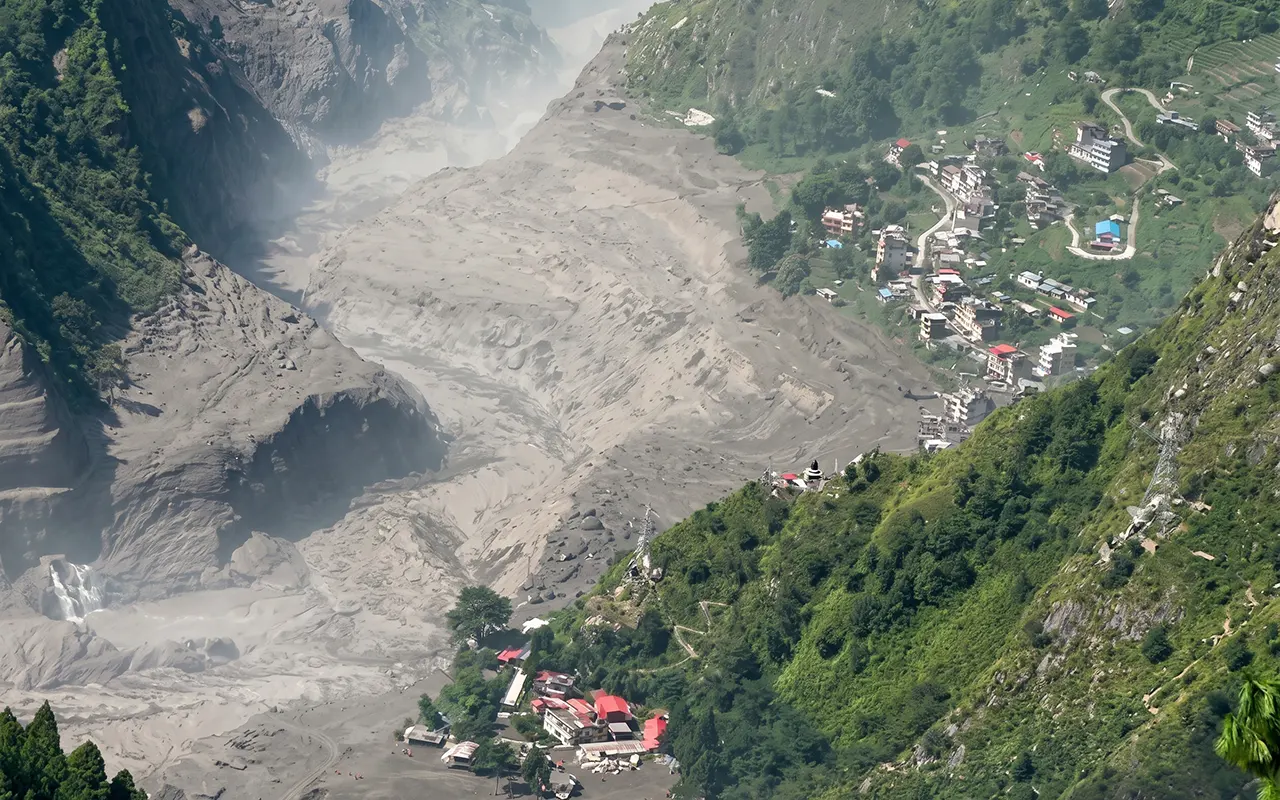
Nepal is also in the midst of trying to cope with the severe impacts of flash floods that hit the Bhotekoshi and Trishuli river system on August 26, 2026. The disaster has had a huge impact on some parts of Rasuwa, Nuwakot and surrounding districts and search and rescue and relief efforts are ongoing. The Nepal Tourism Board is also working with the tourism organisations to share verified information on affected tourists and damaged tourism infrastructure.
It’s crucial to note that the flood has only impacted parts of Nepal for those planning to travel. Many places of interest and trekking areas are still open. The current condition is predominantly focused on certain river corridors and access roads.
What Happened in Nepal on August 26?
The current flood situation in Nepal comes after a sudden and destructive flood that entered the Bhotekoshi river system from the Tibetan side, followed by the Trishuli and then the Narayani river system. The event had a significant impact on settlements, bridges, roads and other infrastructure, especially in the northern and central regions of the country.
The area of Rasuwa has been impacted severely and parts of the Trishuli corridor are also seriously affected. Authorities remain monitoring river levels and any potential secondary hazards and will not let travelers into affected river corridors until they say it is safe.
Is Nepal Safe to Visit Now?
Though there are many parts of Nepal that are appropriate for tourism, it is advised to avoid the directly affected areas and check local conditions before travelling.
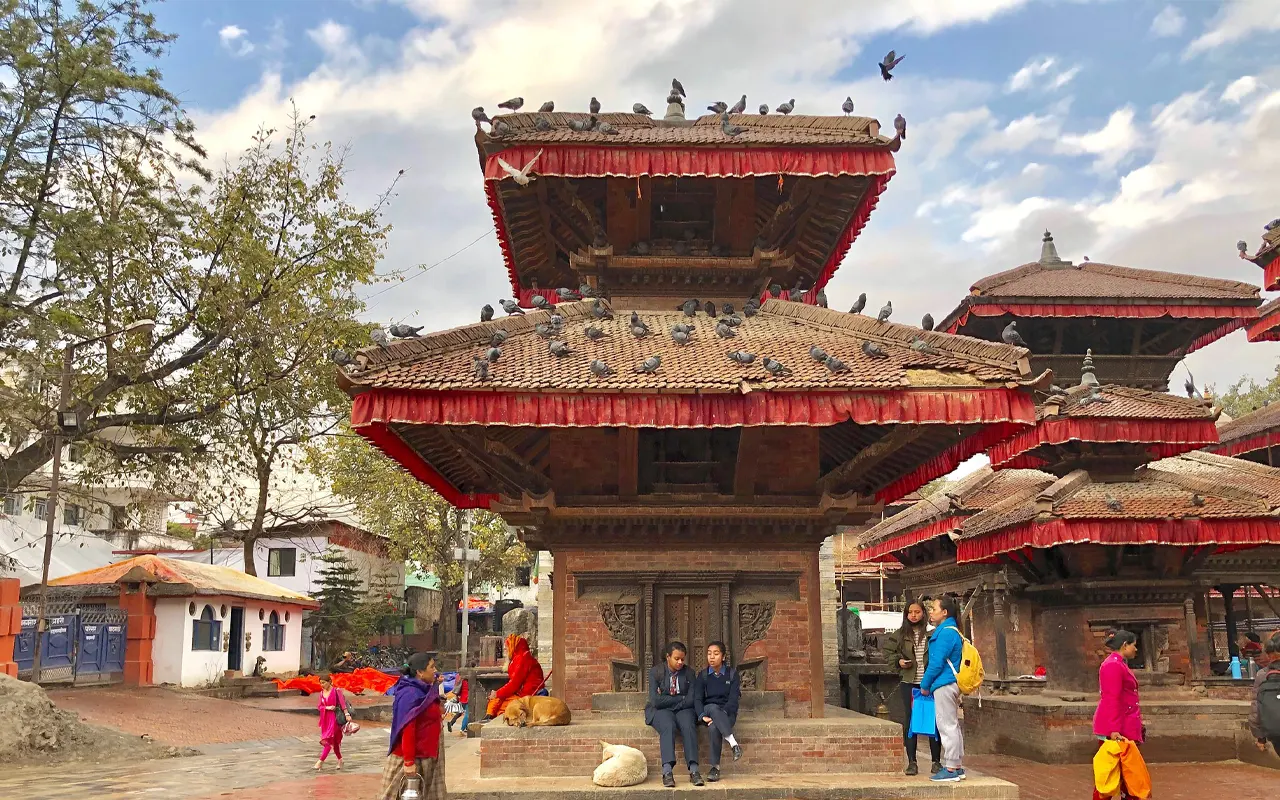
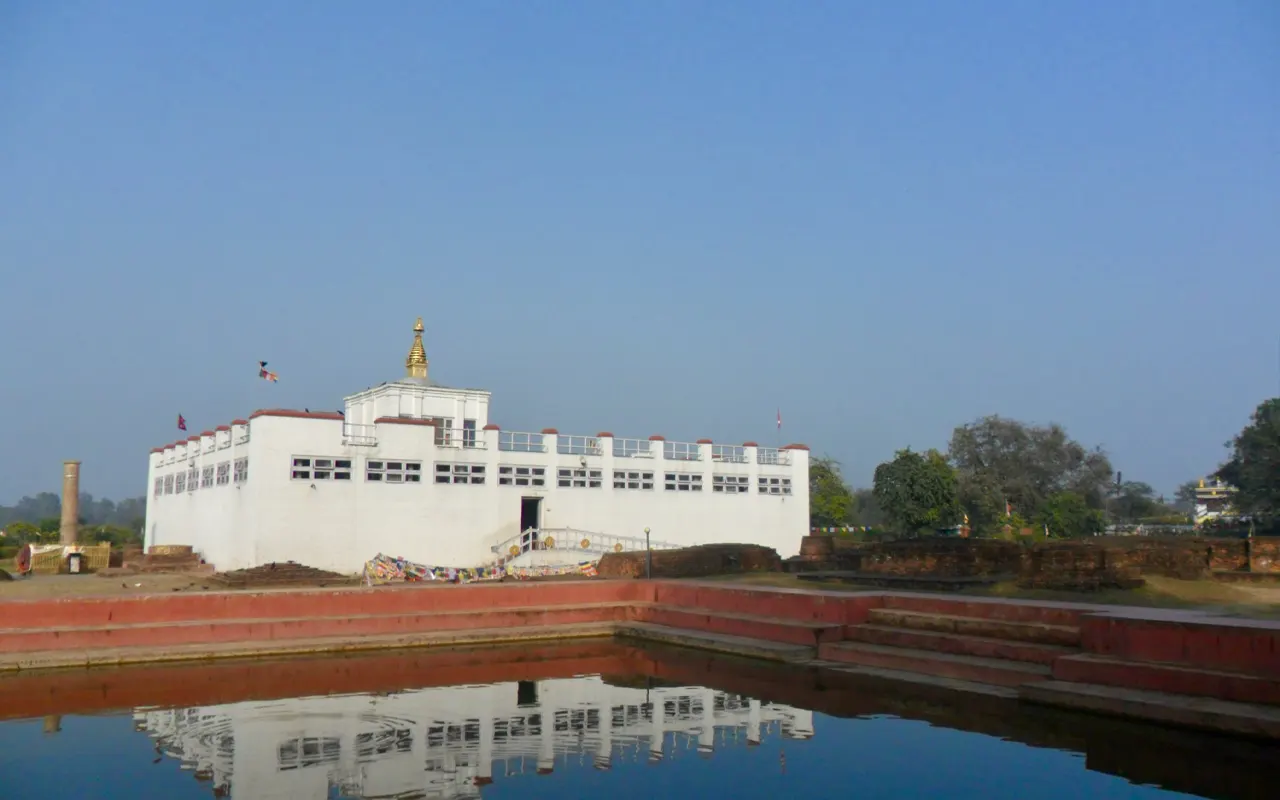
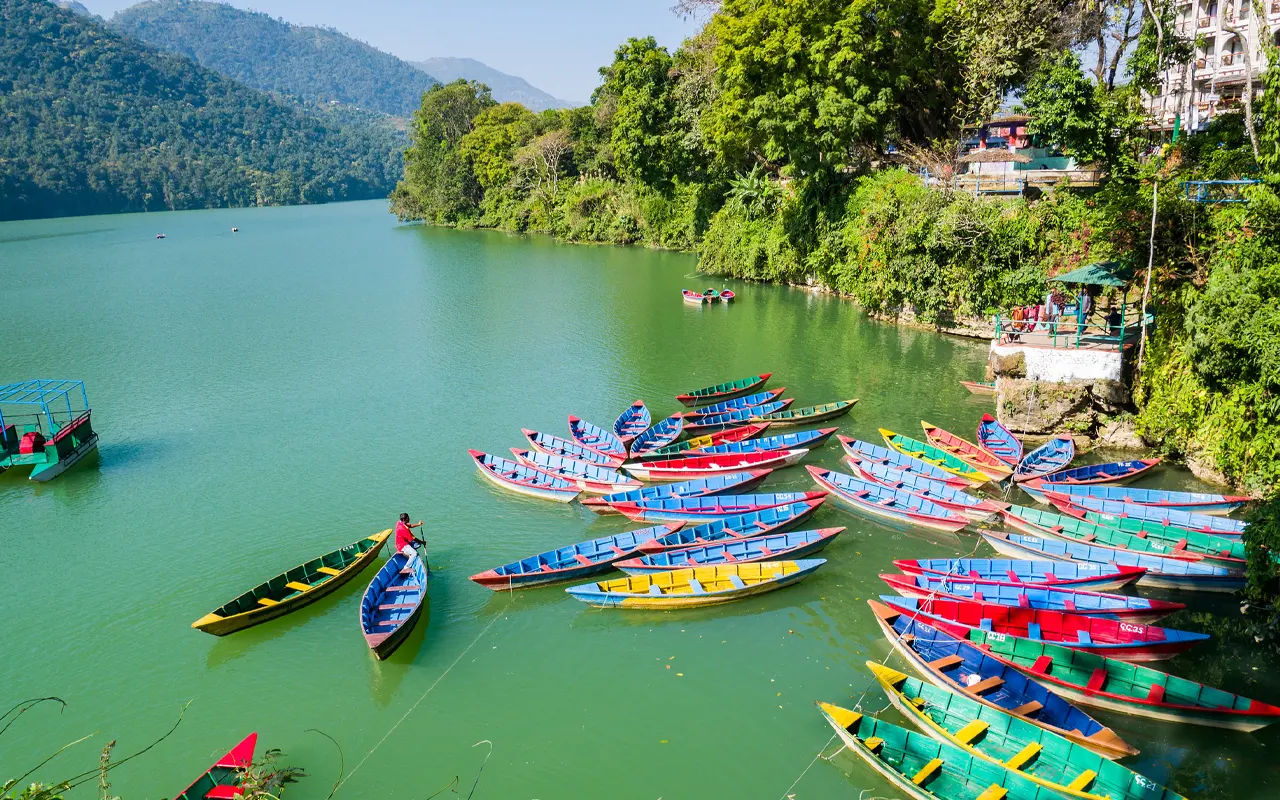
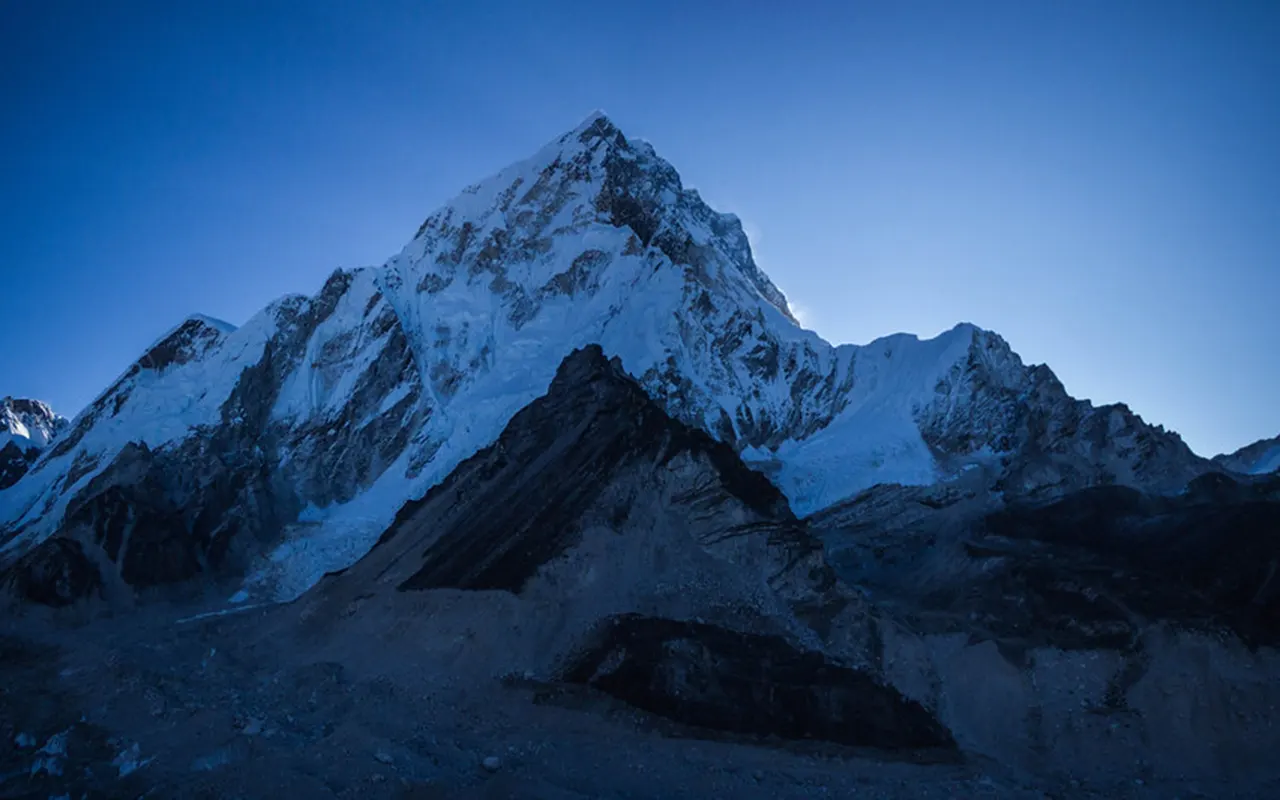
It is important not to take the entire nation to be unsafe due to flooding in certain districts. As per the recent updates from the tourism sector, Kathmandu, Pokhara, Chitwan and Lumbini have not been directly affected by the recent floods, while major trekking hubs like Everest, Annapurna, Manaslu, Mustang and Kanchenjunga are not directly impacted.
This doesn’t mean that travellers have to cancel their trip to Nepal just because of the flood. Rather, they should check their pre-planned path and adjust their course if it involves going through an affected corridor.
Current Status of Major Trekking Destinations
The description below is based on the most up-to-date route data from TAAN and the current tourism situation.
Destination
Current situation
What travelers should do
Everest Region
Safe and operational
Trek with normal weather and trail checks
Annapurna, Manang and Mustang
Safe and operational
Check road and weather conditions
Kanchenjunga
Safe and operational
Continue with normal preparation
Makalu
Safe and operational
Check local weather before departure
Manaslu and Tsum Valley
Safe, but some access roads are affected
Avoid the damaged Malekhu route and use confirmed alternatives
Langtang and Gosaikunda
Destinations remain safe, but the Trishuli approach is affected
Use an alternative approach or postpone until access improves
Helambu
Safe and accessible
Continue with normal precautions
Rolwaling
Currently safe
Confirm road and trail conditions
Dhaulagiri
Safe and operational
Monitor weather and access
Dolpa
Safe and operational
Check transportation before departure
Rara and Jumla
Safe for travel
Confirm road conditions
Far Western trekking areas
Safe for trekking and travel
Continue with normal precautions
Kailash Mansarovar via Kerung
Route affected and closed
Consider an alternative route or postpone
Which Areas Should Travelers Avoid?
The main concern is not all the tourist areas of Nepal but only some particular ones that are affected by the flood.
The road to Rasuwagadhi and Kerung is closed, which will impact overland travel to Kailash Mansarovar. Depending on the present border and travelling conditions, alternative routes are available via Kodari to Tatopani and Simikot to Hilsa and also by air from Lhasa to the Tibetan plateau.
Special care must be taken in the Trishuli and Bhotekoshi corridors too. Roads and bridges have been damaged in some areas and situations may rapidly become hazardous in the remaining monsoon season. Flooding and river erosion also closed off one section of the Kathmandu to Mugling road, so it is advisable to check road conditions a few hours prior to travel.
What About Langtang and Gosaikunda?
As for Langtang, Kyanjin Valley and Gosaikunda themselves, there is no danger as per the latest assessment of the trekking route. Access through the affected Trishuli and Betrawati corridor is the major issue.
So travelers should not presume a place is closed just because its approach is impacted. When necessary, trekking companies can consider alternative routes such as Sundarijal, Chisapani and Thadepati.
Nepal Travel Safety Tips After the Flood
For better Nepal travel safety, travelers should:
Look at road, trail and weather conditions just before you leave
Check with a registered trekking/travel agency for the most up-to-date access status
Avoid walking or driving close to rivers and unstable riverbanks
Be prepared for road/trail closures if they are announced at the last minute
Carry travel insurance that covers trekking, evacuation and trip interruption where applicable
Obey local officials/guides
Have copies of passports, insurance and emergency contacts
Travel by official transportation and registered travel/trekking firms
The Nepal Tourism Board recommends that tourists take services from authorized tourism service providers and offers the assistance of Tourist Police by calling 1144.
Are Other Parts of Nepal Good for Tourism?
Yes. Don’t assume that all of the country has been impacted by the floods.
Areas beyond the directly affected areas can continue to operate tourism, provided there are no constraints due to normal monsoon weather and road conditions. Some of the non-affected destinations can be considered for travel, such as Kathmandu, Pokhara, Chitwan, Lumbini, the Everest region, Annapurna region, Mustang, etc. Nepal Tourism Board still classifies Kathmandu, Pokhara, Everest, Chitwan and Lumbini as the primary tourist destinations of the country.
For those visitors who come to Nepal at this time, the choice of an unaffected place to visit will also help to boost local tourism and local businesses that are yet to open up.
Should You Cancel Your Nepal Trip?
The recent floods do not warrant the cancellation of Nepal travel for everyone. A better way would be to check your exact destination, access route and travel dates.
If the trip can be made through Rasuwa or the Bhotekoshi road or another road affected by flooding, delay or change the travel plans until all roads are safe to use. Do not assume the whole country is closed if your trip is to a place that hasn’t been affected.
The rescue and recovery efforts are going on. The tourism information desk has been created in the Nepal Tourism Board to arrange verified information and make official tourism information an important source for travellers and tour operators.
To sum up, Nepal is open for tourism in most parts of the country, but responsible tourism is at the top of the priority list at present times. Please consult the latest route conditions; do not go to directly hit areas and be prepared to adjust plans as needed.
Nepal is a good destination for travelers who want to spend several days exploring mountains, villages, forests, lakes and historic places. A trip doesn’t need to be a long journey. There are several options for the length of your walk, such as a 3-day walk, a week-long mountain walk, or a longer walk that includes trekking, sightseeing and wildlife viewing.
The most important factors for the best Nepal Multi Day Tours are time, fitness, destination and elevation. The country has developed trekking routes and has well-known trekking regions like Everest, Annapurna, Langtang and lesser-known regions like Manaslu, Mustang and Dolpo. Nepal Tourism Board says that the trekking routes are from lowland to the areas above 5000 m (16404 ft).
This guide includes some of the best multi-day trips in Nepal, along with suggested itineraries, travel seasons, preparation and permits, accommodations and how to pick the right trip.
What Are Multi-Day Tours in Nepal?
Multi-day tours in Nepal are tours that are not necessarily done in one day. These may include trekking, cultural tours, wildlife tours, road trips, or a mix of experiences.
For instance, you can explore Pokhara on foot and experience the beauty of the mountains for several days on a walking tour with stops in villages and teahouses.
Common types include:
Mountain trekking
Village and cultural tours
Wildlife and jungle trips are always both exciting and entertaining.
Scenic road journeys
Pilgrimage tours
Combined trekking and sightseeing itineraries
These can last from 3 to several weeks. For instance, Annapurna is offering from 3-day treks to 3-week-long trips.
Best Multi-Day Trips in Nepal
The following are practical options for travelers who have differing interests and travel time.
Specific times and heights are subject to change based on the route and itinerary chosen.
1. Ghorepani Poon Hill Trek
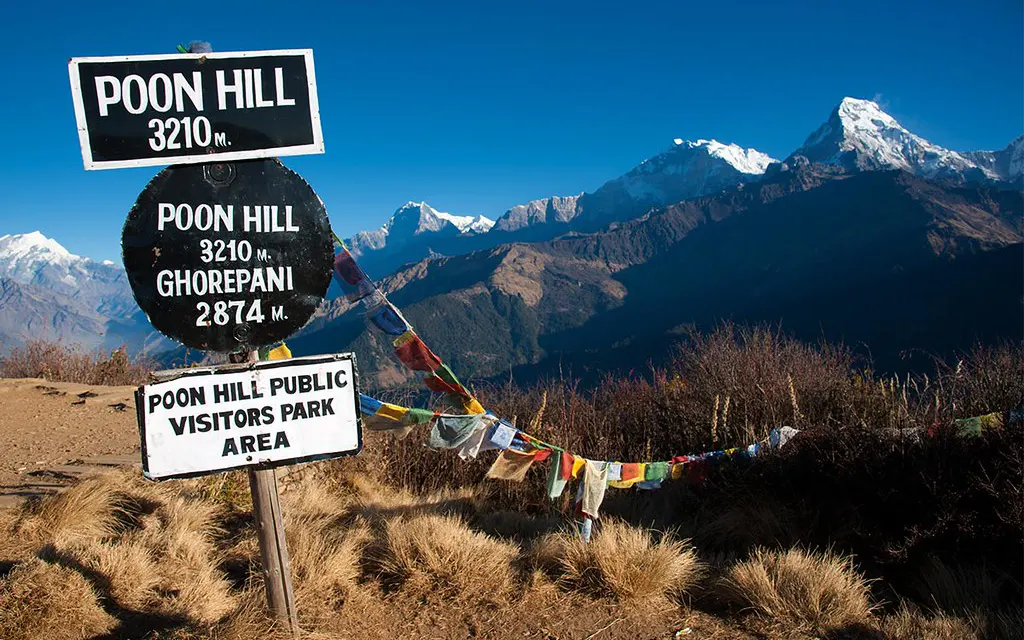
Ghorepani Poon Hill Trek is a good introduction to trekking in Nepal for people who have limited time. The trail passes through villages, forests, farmland and mountain viewpoints before reaching Poon Hill.
Starting from Pokhara, a typical route can include Tikhedhunga or Ulleri, Ghorepani, Poon Hill, Tadapani and heading back towards Pokhara.
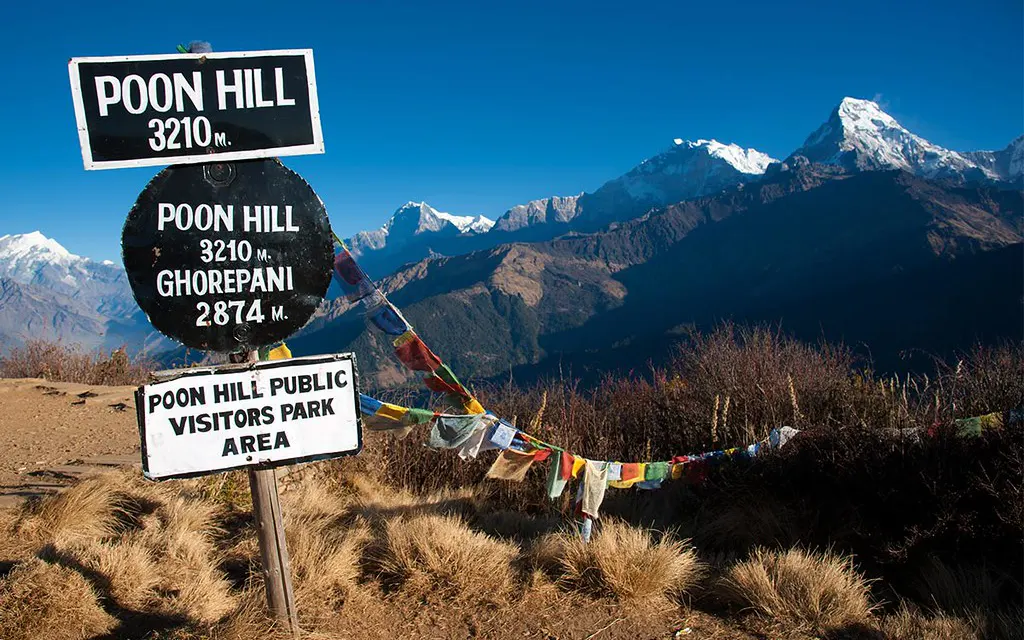
Poon Hill is about 3,210 m (10,531 ft), so the trek is much less demanding than routes that reach 5,000 m (16,404 ft) or higher.
Suggested 5 Day Itinerary
Day 1: Pokhara to Ulleri, trek to Ghorepani.
Day 2: Visit Poon Hill early in the morning and then trek to Tadapani.
Day 3: Tadapani to Ghandruk.
On Day 4, travel to the lower road point and head back towards Pokhara.
Day 5: Visit Pokhara or leave
It is a good option for those who wish to experience the mountains but are not ready to go on a two-week hike.
2. Langtang Valley Trek
Another alternative for a week or more is Langtang. The trail starts from a road trip going towards Syabrubesi and goes through forests, Tamang villages, rivers and even higher mountain settlements.
The trek then normally heads for Kyanjin Gompa and there is still time for short hikes up the valley. Langtang region is also the place where Tamang culture is found and provides access to Langtang National Park. March to May and October to November are favorable times to visit the region, according to the Nepal Tourism Board.
As the trail rises, the importance of proper acclimatization grows, as the Kyanjin area is approximately 3,870 m (12,697 ft).
Suggested 8 Day Itinerary
Day 1: Kathmandu to Syabrubesi
Day 2: Syabrubesi to Lama Hotel
Day 3: Lama Hotel to Langtang Village
Day 4: Langtang Village to Kyanjin Village
Day 5: Enriching with Kyanjin and local perspectives
Day 6: Kyanjin Gompa to Lama Hotel
Day 7: Lama Hotel to Syabrubesi
Day 8: Kathmandu Trip Back
3. Everest Base Camp Trek
For those who wish to journey far into the Khumbu region, the Everest Base Camp route is an extended option. The traditional trek usually begins by air to Lukla, followed by a trek through the villages like Namche Bazaar and Tengboche.
Namche Bazaar is around 3,440 m (11,286 ft), while Everest Base Camp is about 5,364 m (17,598 ft). The popular viewpoint of Kala Patthar is about 5,545 m (18,192 ft).
This isn’t just a longer walk every day, due to the altitude. Acclimatization days are integral to a good travel plan. According to the Nepal Tourism Board, the Everest region is a high-altitude trekking region and it mentions a few destinations: Namche, Tengboche, Gokyo Valley and Everest Base Camp.
Suggested 14 Day Itinerary
Day 1: Fly to Lukla and trek to Namche
Day 2: Trek to Namche
Day 3: Acclimatization in Namche
Days 4 to 6: Walk through Tengboche and Dingboche
Day 7: Acclimatization in Dingboche
Days 8 to 10: Lobuche, Everest Base Camp and Kala Patthar
Days 11 to 13: Trek back toward Lukla
Day 14: Fly back toward Kathmandu
The flight timetable may be subject to change due to flight and weather conditions and travellers are advised not to make strict schedules on return flights.
4. Annapurna Base Camp Trek
Those looking for a high mountain destination in a relatively tight package will enjoy the Annapurna Base Camp. The hiking route goes through villages, terraced farmland, forests and the Annapurna Sanctuary.
The base camp is about 4,130 m (13,550 ft). Usually the journey lasts about one week to twelve days depending on the origin, the means of transportation and resting days.
The Annapurna region has a large network of trails and teahouses, making it possible to create shorter and longer itineraries.
5. Annapurna Circuit Trek
If you’re looking for a longer journey, the Annapurna Circuit passes through several landscapes and communities. The trail slowly ascends from the lower valleys into the high mountain part and then descends into the Mustang side of the area.
Thorong La is about 5416 m (17,769 ft) and it’s a high-altitude trek, so take your time and pace yourself.
The snorkeling trips are generally of about 12 to 18 days’ duration, but can be longer. The road has altered parts of the old trail, so the hiker should pick a route that he or she wishes to walk.
6. Upper Mustang Tour
The Upper Mustang is a trek away from the greener areas of central Nepal. The land turns arid and rocky and villages and architecture are influenced by the Tibetan cultural region.
Lo Manthang sits at about 3,840 m (12,598 ft). Additionally, Upper Mustang is a restricted zone; special trekking permits are required for visiting. Nepal Tourism Board also confirms that a special permit is needed for a restricted area like Upper Mustang.
The trip can be conducted by road, trekking, or a mix, based on the package selected. This is ideal for those traveling through a high mountain area who would like to avoid daily hiking.
7. Chitwan Multi Day Wildlife Tour
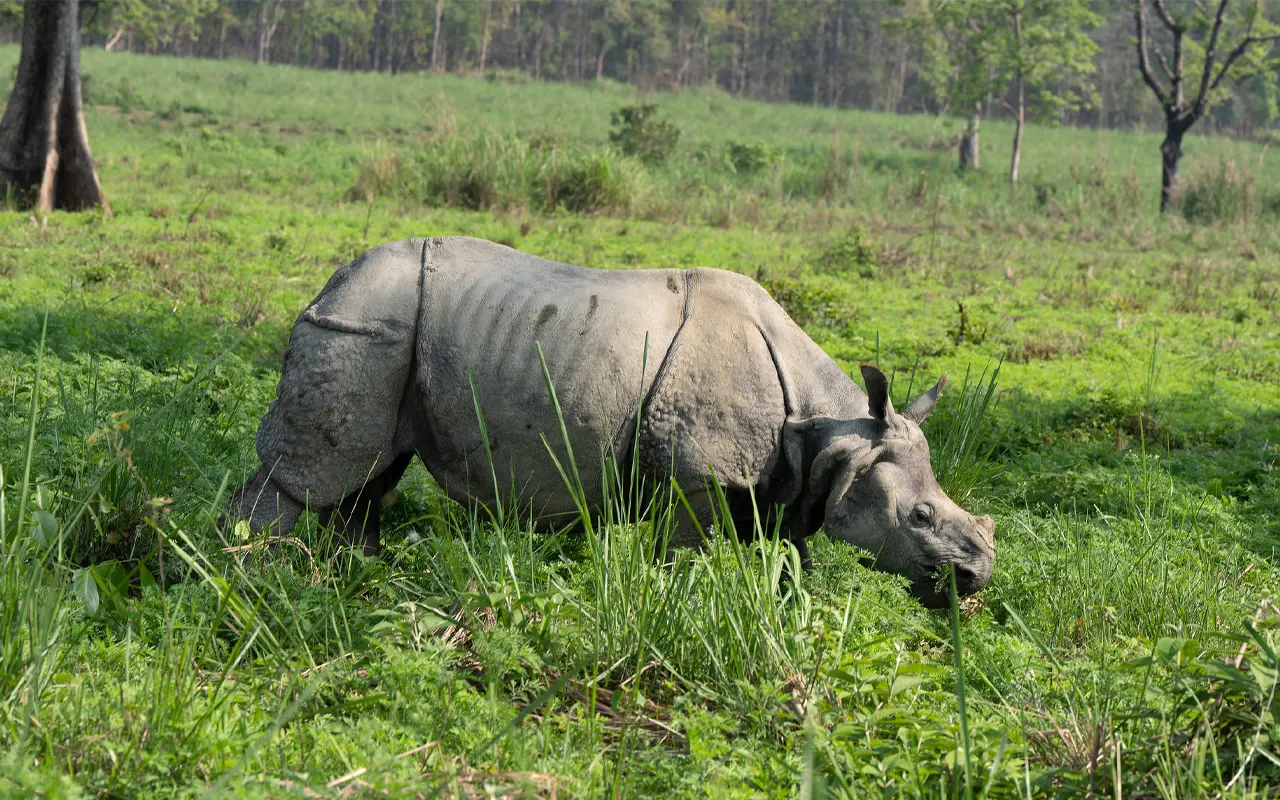
Not all multi-day trips in Nepal need to be to the mountains. For those wishing to spend their time with a touch of relaxation and adventure, including wildlife and forests, Chitwan is an ideal option.
A two- to four-day trip may feature a jungle safari, birding, village tours, canoeing and nature walks. Chitwan is located in the southern part of the lowland region of Nepal and enjoys a subtropical climate.
The typical three-day plan is:
Day 1: Explore the area around Chitwan
Day 2: Jungle and wildlife activities
Day 3: Morning activity and return toward Kathmandu or Pokhara
This can also take place before or after a hike in the mountains
Best Time for Multi-Day Trips in Nepal
The best season depends on the destination.
Spring (March-May): Good conditions, warmer weather and better mountain visibility for many trekking areas.
Autumn (September to November): This is typically a trekking season, with good weather and better mountain conditions.
Winter (December to February): Lower routes may still be suitable, but higher routes may be very snowy and cold.
Monsoon (June to August): Rain affects many trekking areas. The Upper Mustang region is in a rain shadow, however and can be considered in this period.
Please check the details of the route before booking as weather conditions can differ from region to region.
Permits and Guides
The following is a list of concessions available for destination permits. National park or conservation area entry permits, TIMS registration and special permits for restricted areas may be required by trekkers.
Currently, the Nepal Tourism Board has registered the routes where a licensed guide and an agency-issued TIMS card are required as per the applicable rules in the following regions: Everest, Langtang, Annapurna, Manaslu, Mustang and others.
Entry fees are also charged to protected areas.
Please note that permit requirements and fees may vary depending on the specific route; check before departure.
Accommodation, Food and Transport
Almost all of the trekking trails have teahouses or lodges. Rooms tend to be basic and the food will typically consist of local cuisine and traveller food. As far as lodging is concerned, Nepal Tourism Board mentions that there are lodges and teahouses all around the main trekking routes in Nepal.
The route is critical to transport. Some trips start with a road trip and others with domestic flights to a distant trailhead. Traditionally, the Everest route starts towards Lukla.
How to Choose the Right Multi-Day Trip
Take note of the following before you make a booking:
Available time: Consider taking a short path if it is fewer than 7 days.
Fitness: The longer and steeper the hikes, the fitter you have to be.
Maximum elevation: Check the highest sleeping and walking points before deciding.
Travel season: Weather can have a major effect on mountain routes.
Interests: Selection of Wildlife, Culture, Mountains or all three.
Comfort level: Some trips are of basic standard and are quite strenuous in terms of walking.
Acclimatization: It is important to have “rest days” at high altitudes.
Final Thoughts
Nepal Multi Day Tours can be customised according to the travel style and time of tour. The Ghorepani trek is an introduction to the trekking experience in the Himalayas and a trek to the Langtang and Annapurna mountains offers a longer stay in the mountains. Everest is perfect for people wanting to hike at high altitudes, while Chitwan and Upper Mustang will give you very different options for exploring Nepal.
Most critical is selecting an itinerary that is compatible with your available time, level of fitness, activities of choice and comfort at altitude. Knowing those factors, choosing a trip that lets you travel safely and have enough time to enjoy your destination, instead of rushing from place to place, is a lot easier.
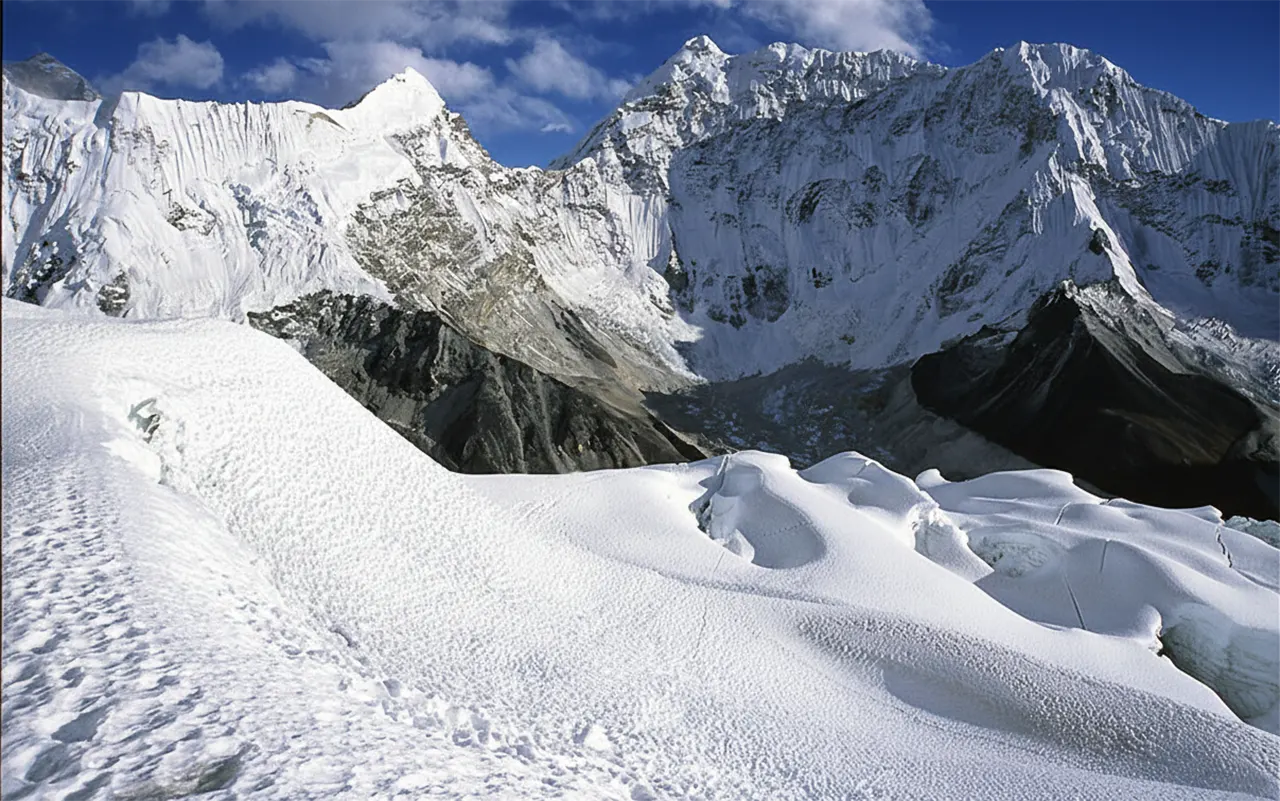
The Khumbu Icefall is one of the most dangerous sections on Mount Everest. It is a glacier that constantly changes, as all climbers have to cross the glacier from the Nepal side to reach the summit. This is an interesting and dangerous area as ice blocks are very high, crevasses are deep and the ice is very unstable. Despite being just a few kilometres in length, it is one of the toughest obstacles on any Everest expedition.
A lot of people ask themselves how deep the Khumbu Icefall is and why experienced climbers are so careful when climbing it. The answer is much more than a mere measure. The glacier is continually changing, moving and evolving in form, depth and condition daily. By understanding how it’s formed and why it acts like that, one can understand why crossing it is one of the most challenging parts of climbing the world’s highest mountain.
Where Is the Khumbu Icefall?
The Everest Icefall lies on the south side of Mt. Everest within the Sagarmatha National Park in Nepal. It starts just above the Base Camp of Everest (around 5364 m/17598 ft) and goes ahead to Camp I (around 6065 m/19898 ft).
This is a part of the Khumbu Glacier, which is the highest one in Nepal. The climbers on the South Col route will need to cross this glacier before entering the Western Cwm before reaching the summit. The icefall is thus the first significant obstacle upon leaving base camp and one of the most challenging parts of the trek.
How Deep Is the Khumbu Icefall?
The Khumbu Icefall is not a fixed depth as it is a moving glacier with crevasses, ice towers and uneven surfaces. The depth of some crevasses is only a few metres and others are over 45 to 60 m (148 to 197 ft) deep. In some areas, researchers think that a few crevasses extend deeper than the ones measured and that the depth of the crevasses cannot always be determined since the snow bridge may conceal the actual depth.
In many places, the glacier is several hundred metres thick. But the climbers’ primary worry is the depth of the crevasses they have to cross. One of these openings can often only be illuminated by darkness – since the bottom is not visible. Therefore, there is a constant need for caution and if someone makes a small mistake, it may have serious consequences.
The depth also varies with time. Old crevasse cracks heal as the glacier descends the hillside and new crevasse cracks form. Snow may sometimes fall across unsafe gaps and this will make them look solid when they are not.
How Was the Icefall Formed?
The Khumbu Icefall Route is possible because the Khumbu Glacier runs down an extremely steep part of the mountain. As the glacier flows downhill, the ice has to bend and break as it passes over the irregular surface.
Glacier ice moves like a very slow-flowing river, as opposed to solid rock. The outer parts of glaciers flow not at the same speed as the bottom, so there is stress within the glacier. This stress results in huge fissures and tall ridges of ice known as seracs.
There is no resting place for the movement. Changes occur within the glacier even in winter, but the rate of change is influenced by temperature. In warmer seasons, the terrain may be even more unstable when they melt and the ground becomes more active.
Why Is the Khumbu Icefall So Dangerous?
The Khumbu Icefall itself is deemed to be unsafe, as nothing in it will last long. As the glacier moves every day, cracks open and huge chunks of ice move. Climbers must not presume that a route that was safe yesterday is safe today.
The hazard from collapsing seracs is one of the greatest. They can remain safely and be a big tower of ice for weeks until they suddenly begin to break apart without warning. When they fail, they can drop large blocks of ice down the climbing route.
One of the major dangers is concealed crevasses. Snow bridges can form in deep openings, providing an illusion of safety for the individual, but collapse and cause the person to fall through. These gaps are crossed regularly by ladders held in place by ropes and demand full concentration of the climber.
In some areas avalanches pose a threat to climbers as well. Snow and ice may be blown up from the surrounding slopes, when there is heavy snowfall or higher temperatures. The icefall is compounded by several hazards so that when people cross it everyone has to be vigilant.
How Fast Does the Glacier Move?
The Everest Icefall is a surprisingly fast glacier. In the summer months when glaciers are in a state of flow, sections of the glacier may move about 0.9 to 1.2 m (3 to 4 ft) per day. This movement is continuous in changing the locations of crevasses and ice towers.
The safest crossing point can change even if one moves one meter laterally. Ropes that have been attached for one week might require adjustment the following week. Glaciers are always moving downhill and subject ladders to constant shifting across crevasses.
The constant motion is one of the reasons that it is not possible to just follow old maps or previous expedition tracks. The route is to be continually inspected and maintained during the climbing season.
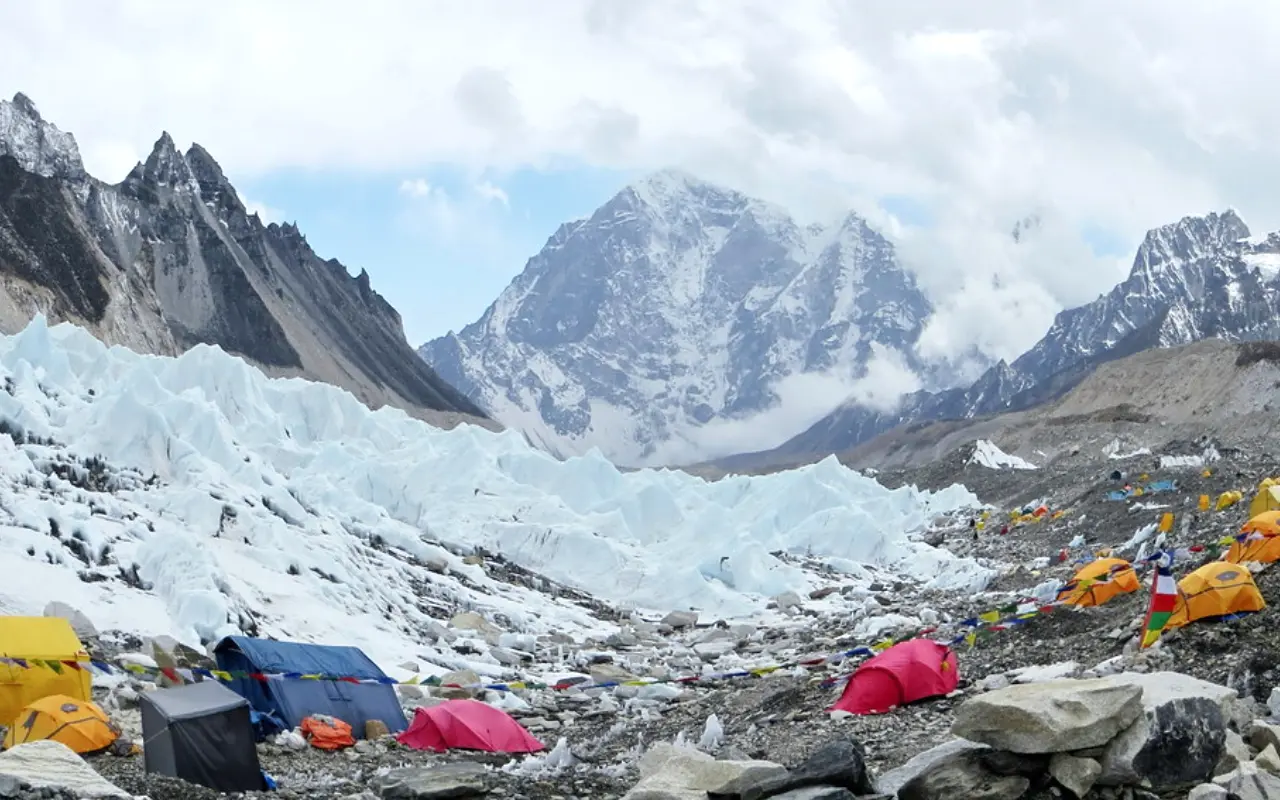
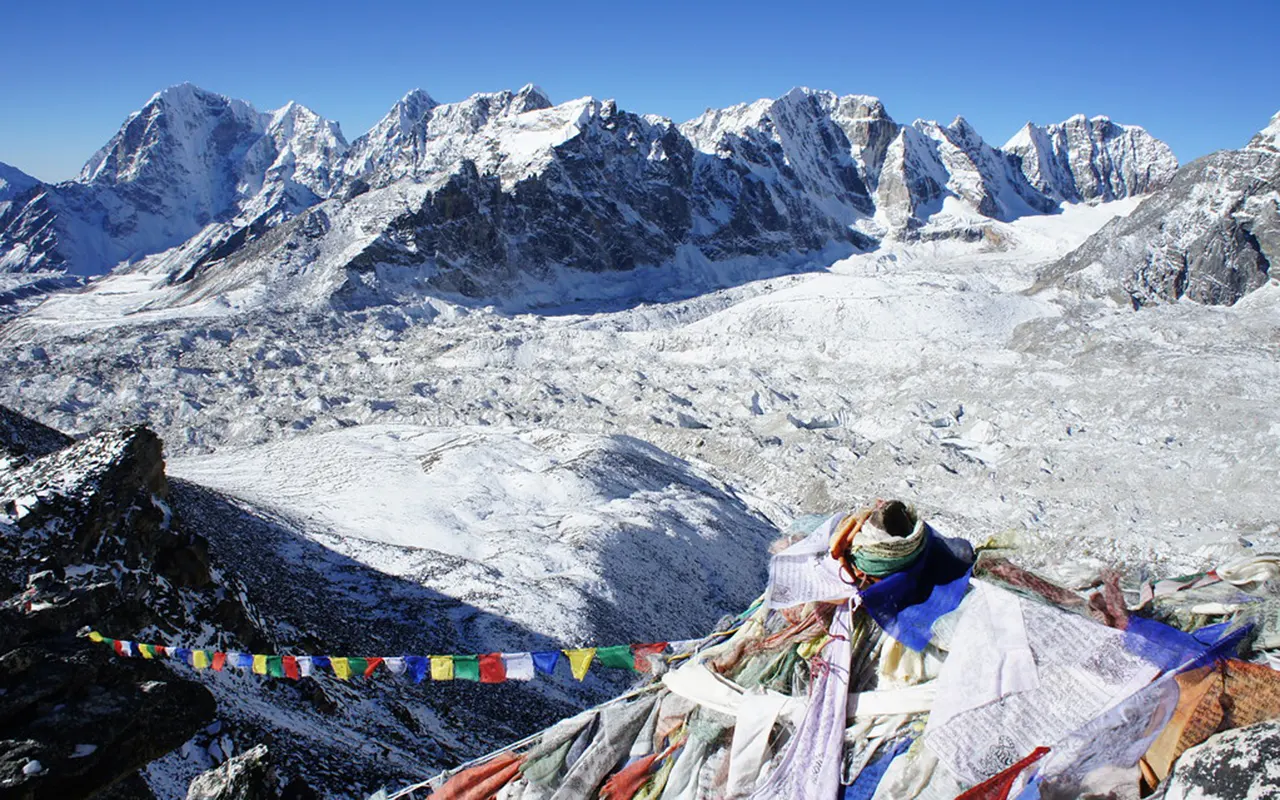
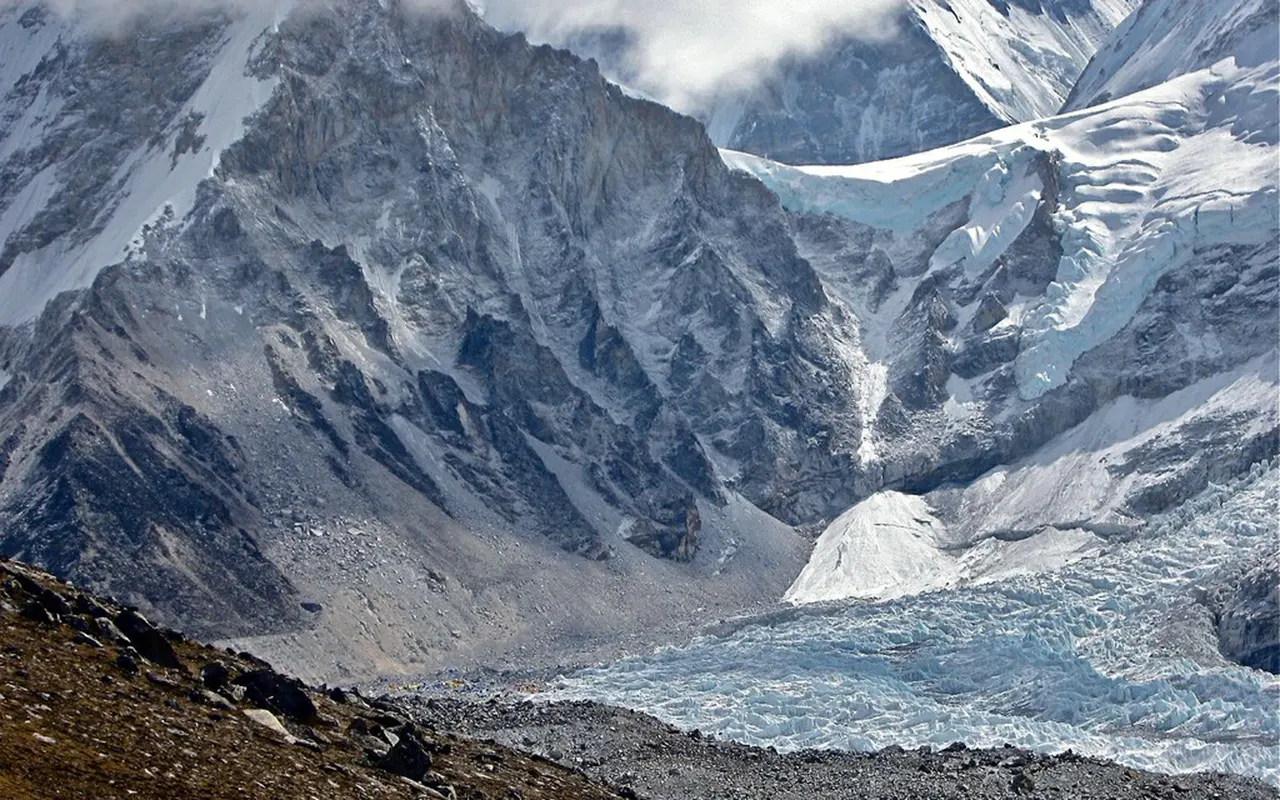
Khumbu Glacier, the gateway to Everest Base Camp.
Why Do Climbers Cross Before Sunrise?
The Khumbu Icefall Route is typically traversed very early in the morning, typically at about 2:00 or 3:00 am when the weather is cooler and the ice is more stable.
When the sun is shining, it expands a little bit, the snow becomes soft and the risk of falling ice rises. While early morning crossing will not eliminate all ice movement, it will lessen the chances of significant ice movement.
So, most climbing teams depart Everest Base Camp well before dawn. Their goal is to arrive at Camp I ahead of the hottest sunlight on the glacier.
How Do Climbers Cross the Icefall?
The Khumbu Icefall is a challenging climb that requires the use of specialized equipment and careful planning. Crampons on the bottom and harnesses and carabiners holding fixed safety ropes to the ice.
Aluminum ladders are used across crevasses and sometimes multiple ladders are joined together to cross larger gaps. The openings below these ladders can be very deep, so crossing these ladders requires balance and confidence.
Before most of the parties on the expedition, the route is set up and maintained by experienced Sherpas, called Icefall Doctors. They regularly check ladders and replace broken ropes and adjust the route as the glacier evolves. If it wasn’t for their constant vigilance, it would be even more hazardous to climb the icefall.
What Are the Icefall Doctors?
A dedicated team known as the Icefall Doctors normally maintains the Everest Icefall each climbing season. The highly experienced Sherpa staff members are in charge of setting up the safest possible route through the glacier.
Their work starts before climbers arrive at the EBC of Everest. They determine the optimum line through the constantly changing landscape, set ladders over crevasses, place fixed ropes and anchor them in place.
Throughout the season, they keep an eye on the glacier’s condition as the way may become unsafe at any moment. When new cracks crop up or ice blocks move, they repair or move segments of the path. The work they do has a significant impact on the safety of all South Col expeditions.
Can the Danger Be Completely Avoided?
The Khumbu Icefall is unlikely to be completely safe. While some risks are mitigated by modern climbing gear, weather forecasting and route management, no danger can be completely controlled by man.
All climbers know that weather can turn rapidly. While all these factors help keep danger to a minimum, they can’t eliminate it.
For many experienced mountaineers, the icefall is the most challenging and stressful section of the climb to Everest, being a combination of technical difficulties and natural hazards that are not always predictable.
Climate Change and the Future of the Glacier
Climate change is impacting the Khumbu Icefall Route as well. The Khumbu Glacier is affected by rising temperatures, which has an impact across the entire Himalayas.
Glaciers have been seen to be shrinking, moving and melting over the past few decades. Some parts of the glacier may experience increased instability during warm years, while other parts may experience it during cool years; however, in all years, the conditions are unstable.
The area is still being studied in an effort to determine the implications for future trips to the summit of Mt. Everest. But climbers and expedition organizers also make adjustments to schedules based on changing weather and glacier conditions.
Has the Icefall Seen Serious Accidents?
There have been several unfortunate accidents that have occurred in Everest’s climbing history at the Everest Icefall. Despite the best of planning, injuries and fatalities have resulted from falling seracs and collapsing ice towers and hidden crevasses.
The biggest accident was in 2014, when 16 Sherpa climbers were killed during a large serac collapse. The tragedy raised awareness of the unpredictable behavior of the glacier and brought the discussion on climbing safety and route management back to the forefront.
Despite improvements since then, the icefall remains a place of great respect to all those who venture on an expedition to the mountain.
Why Does Every Everest Climber Respect the Icefall?
The Khumbu Icefall is more than just a natural barrier. Reminds the climber that despite all their efforts and precautions, the forces of nature cannot be overcome by anything else.
The crossing of the glacier can be a test of patience, teamwork and total concentration. Each crossing of the ice and each step up a ladder requires an equal balance of confidence and caution. Many climbers say that getting to Camp I is a big accomplishment because it is one of the most dangerous sections of the entire trip.
Conclusion
The Khumbu Icefall is known not just for its stunning beauty, but also for its ever-changing form. The deep crevasse fields, the tall seracs, the changing ice surface and unpredictable ice flow make it one of the most dangerous places on Mount Everest. Many crevasses are 45 to 60 m deep or more, but the real problem is the glacier’s ongoing movement, not a specific depth.
With the improvement of climbing gear and route management, the Khumbu Icefall is still a location where experience, preparation and careful judgment are crucial. It is one of the most remarkable and difficult portions of the way to the summit, with every successful Everest climb relying on a safe crossing of this glacier.
Many travelers planning their first trip to the Everest region wonder about the Everest short trek vs Everest Base Camp Trek comparison. They desire to visit the Himalayan mountains and explore the views of the highest mountains in the world, they just are not sure whether they have time, the right fitness level or the experience to complete the entire Everest Base Camp Trek. They simply want a clear comparison before making their decision.
Over the years, we have guided many trekkers on both routes. There are those who are ready to take the entire Everest Base Camp Trek, and some are better suited with a shorter trek. A short trek is also a good way to begin your trip and experience before coming back to finish the entire Everest Base Camp Trek.
In this post, we will give you a clear and honest comparison of the Everest short trek vs Everest Base Camp Trek, so you can make the right choice for your situation.
Understanding the Two Options
The Everest Base Camp Trek
The classic Everest Base Camp Trek starts with a flight from Kathmandu to Lukla and then follows the trail north through Phakding, Namche Bazaar, Tengboche, Dingboche, Lobuche, and Gorak Shep before reaching Base Camp at 5,364 meters. Most well-paced itineraries run between 12 and 14 days return, including proper acclimatization days at Namche and Dingboche.
Along the way, trekkers also have the option to climb Kala Patthar at 5,545 meters, which gives one of the most well-known high-altitude viewpoints in the Himalayas. Many people consider Kala Patthar the true highlight of the journey because the view of Everest from the summit is very direct and clear, whereas from Base Camp itself, the mountain is partially hidden by the Khumbu Icefall.
This is a demanding trek. You are walking at high altitude for nearly two weeks. The daily distances are manageable, but the altitude gain and the cumulative effort over that many days is something your body will feel. It is achievable for most people who are reasonably fit and who prepare properly, but it is not casual.
Everest Short Trek Options
When people talk about an Everest short trek, they are usually referring to one of a few options. The most popular is the trek to Namche Bazaar and back, which takes around five to six days and reaches an altitude of 3,440 meters. Another well-loved option is the trek to Tengboche Monastery at 3,867 meters, which adds one or two more days to the Namche route.
A third option that has become very popular in recent years is the Everest View Trek, which includes a visit to the Hotel Everest View at Syangboche, sitting at around 3,900 meters. This route is designed specifically for people who want genuine high-altitude Himalayan scenery without the commitment of a full Base Camp journey.
All of these shorter options still begin with the Lukla flight and follow the same trail north from the airport, so the opening days of any Everest region trek are the same regardless of which route you choose.
How Long Do You Have? Matching the Trek to Your Time
Time is often the deciding factor, and it is the first thing we ask when someone contacts us and says they are not sure which trek to choose.
If you have seven to ten days available for the trek itself, an Everest short trek is a good fit. You have enough time to reach Namche, spend a day acclimatizing there, possibly push on to Tengboche or Khumjung, and return to Lukla comfortably without feeling rushed. You will not need to watch the clock on every trail day.
If you have twelve days or more, the full Everest Base Camp Trek becomes possible. A 14-day itinerary is our recommended length for first-timers because it includes two proper acclimatization days, which significantly reduces altitude-related problems. Some operators run 12-day itineraries, but we are honest with clients that these are tight and allow less buffer for delays or rest if someone in the group is not feeling well.
If your available time falls somewhere between eight and eleven days and you are set on getting as high as possible, we sometimes suggest a modified route that reaches Gorak Shep or Kala Patthar without fully completing the classic Base Camp visit. It is worth discussing this with us directly rather than trying to squeeze a 14-day trek into ten days.
Fitness and Experience: Being Honest with Yourself
The Everest short trek vs Everest Base Camp Trek comparison comes down a lot to fitness, and this is where we encourage every traveler to be genuinely honest with themselves before booking.
Who Is the Short Trek Best Suited To
The short trek options are well suited to people who are not regular hikers or trekkers but who are in reasonable general health. If your regular exercise involves walking, light cardio, or occasional weekend hikes, you can handle the route to Namche and Tengboche with proper pacing. The altitude at Namche (3,440m) is enough to cause mild symptoms for some people, but it is manageable for most with a good acclimatization plan.
The short trek is also a good choice for travelers who want to experience the Khumbu region but who have other physical limitations, whether that is age-related fitness, a recent injury, or simply limited experience at altitude. We have successfully taken guests in their late sixties and early seventies on the Namche and Tengboche routes.
If this is your first time above 3,000 meters, the short trek also gives you valuable information about how your body responds to altitude, which is useful if you plan to return for the full Base Camp journey in the future.
Who Is the Full Base Camp Trek Best Suited To
For the full Everest Base Camp Trek, we look for trekkers who are comfortable doing five to seven hours of walking per day on uneven terrain over multiple consecutive days. You do not need to be a runner or a climber. But you should be someone who exercises regularly and who has done at least some multi-day hiking before.
The days above Namche become genuinely demanding, not because the trails are technical, but because the altitude affects your energy levels significantly. A flat walk at 4,500 meters feels harder than a steep climb at sea level. Trekkers who underestimate this often find the stretch between Dingboche and Lobuche the most difficult part of the trip.
We recommend that anyone planning the full Base Camp trek does at least three months of consistent preparation beforehand. This should include regular cardio and long walking days with a loaded pack to prepare your body for what lies ahead.
Altitude: The Key Difference Between the Two Routes
This is the most important practical difference between the Everest short trek vs Everest Base Camp Trek, and it is worth spending some time on.
The short trek options top out between 3,400 and 3,900 meters. At these elevations, mild altitude symptoms like headaches or slightly disturbed sleep are possible, but serious altitude sickness is much less common. Most people acclimatize reasonably well with a steady pace and adequate water intake.
The Base Camp trek takes you above 5,300 meters. At this altitude, the risks are more significant. Acute Mountain Sickness, High Altitude Pulmonary Edema, and High Altitude Cerebral Edema are all possible if proper acclimatization is not followed. This is why a well-paced itinerary with built-in rest days is not optional on the Base Camp route. It’s a real safety requirement. Our guides are constantly monitoring trekkers for symptoms of altitude sickness throughout the trek.
We use pulse oximeters to monitor blood oxygen levels when necessary, and if someone has severe symptoms or low oxygen levels, we respond immediately with rest, descent or further assistance. We do not encourage anyone to continue with serious altitude sickness symptoms.
On the short trek options, we still take altitude seriously, but the risk profile is considerably lower. For travelers who are uncertain about how their body handles altitude, the shorter route is a sensible and safe introduction.
Cost Comparison: What to Budget for Each Option
Cost is another practical factor, and there is a meaningful difference between the two routes simply because of the number of days involved.
Everest Short Trek Cost
A well supported five to seven day Everest short trek, including the Lukla flight from Kathmandu, a licensed guide, porter, accommodation in teahouses, and all required permits, typically falls in the range of USD 700 to 1,100 per person depending on group size and season. Trekkers need the Sagarmatha National Park Entry Permit and the Khumbu Pasang Lhamu Rural Municipality Permit. These permits are usually included in organized trekking packages.
Everest Base Camp Trek Cost
The full Everest Base Camp Trek over 12 to 14 days with the same level of support runs approximately USD 1,200 to 1,800 per person for most international travelers. The extra days mean more teahouse nights, more guide and porter days, and more time in the national park. The Lukla flight cost is the same. Groups of four or more tend to sit toward the lower end of this range because fixed costs are distributed across more people.
What You Will Actually See: Setting Expectations
People sometimes assume that only the full Base Camp trek gives you real views of Everest. That is not accurate, and we want to clear this up.
On the short trek, you get excellent views of Everest, Lhotse, Ama Dablam, Thamserku, and many other major peaks from multiple points along the trail. The view from the Tengboche ridge on a clear morning is one of the finest mountain panoramas anywhere in the Himalayan region. The Hotel Everest View on the Syangboche route was built specifically because the views from that ridge are so good.
What you do not get on the short trek is the experience of standing at the foot of the Khumbu Glacier, walking through the high-altitude terrain above Lobuche, or summiting Kala Patthar. These are genuinely different and more immersive experiences. But they are not the only way to have a meaningful and visually rich time in the Khumbu.
We always tell our guests that the Everest region rewards you at every level. The views from Namche are real. The feeling of being in that environment is real. You do not need to reach 5,300 meters for the trip to be worthwhile.
Which One Should You Choose?
After everything we have laid out, here is our honest guidance based on what we see with our own guests.
Choose the Everest short trek if you have seven to ten days, are new to high altitude trekking, or want a first experience of the Khumbu before committing to the full route.
Choose the Everest Base Camp Trek if you have twelve or more days, are reasonably fit with some multi-day hiking experience, and want the full immersion including the high camps and Kala Patthar.
Do the short trek first if you are genuinely unsure. Many of our best Base Camp clients started with Namche or Tengboche and came back the following year knowing exactly what to expect.
Talk to us before deciding if your time or fitness falls in a grey area. We can suggest a modified route that works better for your specific situation than either standard option.
A Note from Our Team
Both treks offer a memorable experience in the Everest region. Many a traveler does not forget watching the sunrise over the mountains at Namche. It is also satisfying to arrive at Kala Patthar and have a close-up view of Everest. Every trek possesses its highlights and is worth taking part.
The best part is to select the trek which suits your time, fitness and travel interests. A shorter trek can be just as enjoyable if it suits your abilities, while the full Everest Base Camp Trek is a great choice if you are well prepared and have enough time.
Nepal is a dream destination for anyone who loves mountains, nature and outdoor adventures. Although many people think of trekking in Nepal as a difficult trek, there are a few treks that are suitable for beginners and will give an unforgettable experience in the Himalayas. These treks offer stunning mountain scenery, traditional mountain villages and easy tea house lodging and do not require advanced trekking skills or a weeks-long trek.
The trails are well-marked, and the hikes in Nepal are generally easy with moderate amounts of elevation gain, making them great for first-time trekkers, families, solo travelers, active seniors and anyone with a fair amount of fitness. Most can be done in a week or less and are great for those who don’t have much vacation to allocate.
Here are five of the easiest hikes in Nepal for novices. These routes provide a rewarding experience and are accessible for most travellers and are suitable for the enjoyment of a famous sunrise, walking through peaceful forests, enjoying local culture and the world’s highest mountains.
Why Choose an Easy Trek in Nepal?
An easy trek is the perfect introduction to the Himalayas. The walks are generally between 4 and 6 hours a day, and the trails are well-kept, so you can take your time and enjoy the ride. There are also some nice tea houses along the way, where you can get simple lodging, freshly prepared foods, and a way to experience the warm hospitality of local communities.
These hikes are also a great value. This means that they are shorter in duration and still offer excellent mountain views, with reduced transportation, accommodation, and guide fees. Forests and rivers, traditional villages and snow-covered peaks, easy treks offer a taste of Nepal without the rigors of the longer high-altitude trek.
Quick Comparison of the Five Easy Treks
Trek
Duration
Maximum Altitude
Difficulty
Best Season
Main Highlight
Ghorepani Poon Hill Trek
4 to 5 Days
3,210 m (10,531 ft)
Easy
Spring and Autumn
Sunrise over the Annapurna and Dhaulagiri ranges
Mardi Himal Trek
5 to 7 Days
4,500 m (14,764 ft)
Easy to Moderate
Spring and Autumn
Ridge trails and close mountain views
Langtang Valley Trek
7 to 9 Days
3,870 m (12,697 ft)
Easy to Moderate
Spring and Autumn
Tamang culture and alpine scenery
Everest View Trek
5 to 7 Days
3,880 m (12,730 ft)
Easy
Spring and Autumn
Everest panorama and Sherpa villages
Royal Trek
3 to 4 Days
1,730 m (5,676 ft)
Easy
Most of the year
Village life and Annapurna views
How to Choose the Right Trek for You
The selection of the right trek to choose from your choices is based on your fitness, the amount of time you have and the kind of experience you are looking for. Ghorepani Poon Hill Trek is the perfect trek for anyone who wants to take a short hike to see a famous sunrise and take in the mountain scenery. The Mardi Himal Trek is also recommended for those who want to stay away from the hustle and bustle of the more popular trails of the Annapurna range and enjoy more secluded and intimate experiences.
For those keen to experience the country as well as mountain landscapes, the Langtang Valley Trek is an excellent option. Everest View Trek is the perfect choice for anyone who has always wanted to see the mighty Everest but doesn’t have the time or stamina for more challenging routes. The Royal Trek is a great choice for those who do not have much time or want something more relaxed, as it is a great introduction to trekking routes, and it is an easy walk with traditional villages and beautiful Himalayan scenery.
Regardless of the path you take, choosing the right trek can lead you to a safe, comfortable and enjoyable experience in Nepal.
Top 5 Easy Treks in Nepal
Ghorepani Poon Hill Trek
The Ghorepani Poon Hill trek is one of the most popular short treks in Nepal and is also suggested to be a good trek for first-time trekkers. It lasts four or five days and provides a great mix of mountains, culture and walking.
The highest point is Poon Hill at 3,210 m (10,531 ft). The best time to reach the viewpoint is before dawn, when the sun begins to rise and slowly brings to light Annapurna, Dhaulagiri, Machhapuchhre and some other peaks.
The trail winds through the forests of rhododendron, through stone paths and traditional Gurung and Magar villages, where the trekkers can experience the hospitality of the locals. Comfortable accommodation and freshly prepared meals all along the way at the tea houses.
Typically, walks are 5-6 hours per day with mostly good trail conditions. There are numerous stone steps, but it’s gradual, so it’s good for beginners of reasonable fitness levels. The average Ghorepani Poon Hill Trek price is from USD 350 to USD 700, subject to the itinerary and the included services.
Mardi Himal Trek
For those who prefer more secluded hiking trails and views of the mountains, the trek to Mardi Himal is a great option. It is a five-to-seven-day trek which is quiet but still good for beginners with good fitness.
The highest elevation is at Mardi Himal View point (4,500 m or 14,764 ft). While this is the tallest of this list, with proper planning, many trekkers find this a comfortable hike. It starts in the woods and then makes it to the beautiful ridges with stunning vistas of Machhapuchhre, Annapurna South and Hiunchuli. You will never get bored on this trip as the scenery is continually changing, and there is no need to climb technically.
There are about 5-6 hours of walking each day and you’ll find simple but comfortable accommodation in the tea houses that line the way. The average price of a Mardi Himal trek is USD 450 to USD 850, depending on the package and the services provided.
Langtang Valley Trek
For those who are just beginning to hike in the Langtang Valley, this trek is perfect for them to enjoy the beauty of the mountains and get to know the cultural heritage. The trek is a seven-to nine-day trek located north of Kathmandu, which is not as difficult to trek as some of the other remote regions of Nepal and the atmosphere is not as hectic as some of the other trails.
The highest point is at Kyanjin Gompa (3,870 m /12,697 ft). Most hikes also head to Kyanjin Ri at (4,773 m /15,659 ft), where you can enjoy a broader view of the surrounding peaks before heading back to Kyanjin Gompa on the same day.
The trail goes through Langtang National Park, where forests slowly become replaced by alpine meadows, glacial rivers and areas for the grazing of yaks. Enjoy the traditional Tamang villages along the way, to Buddhist temples, and to the unique local culture. The highlight of the trek is Kyanjin Gompa, a peaceful area with breathtaking views of the mountains. Additionally, many visitors also visit the local yak cheese factory, which is a widely enjoyed attraction.
Typical walk duration is about 5-6 hours on well-established trails every day. There are parts that are uphill, but the moderate route and pleasant tea house lodging make this hike accessible for the beginner. Langtang Valley trek rates range from USD 500 to 900, depending on the trek program and services offered.
Everest View Trek
The Everest View Trek is a great option for those who wish to explore the Everest region but are not interested in the trek to Everest Base Camp. This is a five-to seven-day trek through the mountains, Sherpa people and relaxing tea house lodging.
The adventure starts with a scenic flight to Lukla, then follows the well-established trails to Namche Bazaar (3,440m /11,286ft), the main trading center of the Khumbu region. At the highest point of the trek, at Everest View Hotel (3,880 m or 12,730 ft), trekkers are in awe of the views of Mount Everest, Lhotse, Ama Dablam, Thamserku and several surrounding peaks.
The journey not only offers stunning views of the mountains but also provides an opportunity to experience the culture and traditions of the Sherpa people. The trip is full of cultural interest with Prayer flags, Monasteries, Mani walls and friendly mountain villages.
The typical trekking day will be 4 – 6 hrs along well-maintained trails. Namche Bazaar is located at a higher altitude than other beginner-friendly treks; this makes it highly recommended to take an acclimatization day there. The price of an Everest View Trek usually ranges from USD 900 to USD 1,500, primarily because most tours include domestic flights to Lukla.
Royal Trek
This is one of the easiest and shortest treks in Nepal. This 3 to 4-day trek is for beginner trekkers, family treks and time-challenged trekkers and is close to Pokhara.
The maximum altitude reached during the walk is 1730 m (5676 ft), so the risk of altitude sickness is very low. This path takes one through quiet villages, sloped farmland and wooded hills, providing stunning views of the Annapurna range, the Lamjung Himal and Machhapuchhre.
These walks take about four to five hours and are performed on fairly easy routes in the village, with no technical skills required. The soft tempo enables the trekkers to experience the local culture, traditional farming communities and the comfort of tea houses and local lodges at night.
The cost of a Royal Trek is generally in the range of USD 250 to USD 500, as it is one of the most budget-friendly trekking experiences in Nepal.
Best Time for Easy Treks in Nepal
The ideal time for easy treks in Nepal is spring (March-May) and autumn (September– November). The stable weather, comfortable temperatures and clear mountain views make these seasons great for beginners. Many hiking routes are also a lovely display of rhododendron color in the spring.
The winter season (December to February) is good for lower-elevation treks like the Royal Trek and Ghorepani Poon Hill Trek, with mornings and evenings being very cold. The monsoon season (June to August) is generally not good for first-time trekkers as the trails are muddy and there is frequent rainfall. Timing your trek right will make trekking in the Himalayas much safer and provide you with the best scenery.
Planning Your First Trek in Nepal
The period from March to May and September to November is a good time to visit Nepal for trekking, as there is little snow. It’s generally a stable, warm, and clear month for mountain visibility with these months. Lower elevation routes are ideal for winter, and the monsoon season can be rainy and slippery.
The majority of the treks suitable for beginners are four to six hours a day. It is helpful to get used to walking, light hiking or climbing the stairs before you depart so that it’s easier to enjoy the experience. This is also important to do while walking at a constant pace and staying well hydrated at higher elevations.
Bring comfortable hiking boots, warm clothes, a waterproof jacket, sunglasses, sun cream, a water bottle, any personal medications and a small daypack. Trekking poles can also be used for added support on steep inclines and declines.
Most trekking areas require permits. Annapurna Conservation Area Permit is required for the Ghorepani Poon Hill Trek, Mardi Himal Tre, and Royal Trek. For the Langtang Valley Trek, the Langtang National Park Entry Permit is required, and for the Everest View Trek, the Sagarmatha National Park Entry Permit and the Khumbu Pasang Lhamu Rural Municipality Permit are required. Permit requirements are subject to change; it is always best to verify the current requirements before travel.
It is highly recommended to hire a licensed guide. A guide can help you navigate the trip, be there to assist with safety issues, learn about the local culture, and help to deal with any unpredictable situations that may arise.
Frequently Asked Questions
What trail is the easiest one for a beginner in Nepal?
The Royal Trek is the most beginner-friendly trek, as it has gentle trails, low elevations, comfortable lodging and beautiful mountain views all along.
Is it possible for the beginner to trek in Nepal without experience?
Although Nepal is a hilly region with steep slopes, beginners can trek here by selecting appropriate routes, training for the trip and sticking to the services of licensed and experienced trekking guides throughout the journey.
Which of the easy walks has the best mountain views?
The Ghorepani Poon Hill Trek is a trek that provides a wonderful viewpoint of the Annapurna and Dhaulagiri ranges, which is the most popular viewpoint of the trek.
Which is the best season to undertake easy treks in Nepal?
Spring and autumn offer the ideal trekking season, with the weather stable and temperature mild, skies clear and mountains well visible throughout Nepal.
Is there someone who can lead the way on a simple path?
A licensed guide is recommended as they make navigation easier, can handle unexpected situations well, have local knowledge and make the journey safer.
What is the price of an easy trek in Nepal?
The price of the easiest treks ranges from USD 250 to USD 1,500, with the destination, duration, accommodation, transportation and services included.
Are children and seniors able to take easy treks in Nepal?
Yes, many easy walks are accessible to healthy children and active seniors if they are well prepared, have suitable itineraries and a comfortable walking pace.
What to take for an easy trek in Nepal?
Bring trekking boots, warm clothing, waterproofs, sun cream, sunglasses, personal medicine, a water bottle and a bag for a day pack.
Does altitude sickness pose a problem for easy hikes?
While on easier hikes, altitude sickness is less likely to be a problem, it is still crucial to acclimate, stay hydrated and rise slowly on all hikes.
What is the fitness level to undertake a simple trek in Nepal?
Moderate fitness is sufficient as most of the easy walks are 4-6 hours a day.
Conclusion
For those who are just starting to experience the trekking adventure in the Himalayas, Nepal is an excellent place. The trails are beginner-friendly, featuring stunning mountain scenery, charming local communities, cozy tea houses and established routes for all.
For stunning views of the sunrise, look no further than the Ghorepani Poon Hill Trek and for more tranquil hikes, try the Mardi Himal Trek. Langtang Valley trek offers you the alpine scenery and Tamang culture, while the Everest View trek will be a wonderful opportunity to enjoy the Everest region without going to Base Camp. The Royal Trek is a great option around Pokhara for those who prefer a short and relaxed trip.
Proper preparation and a well-planned itinerary will help ensure a safe and rewarding experience. We have a very experienced team who can help you with permits, customised trips, licensed guides and all aspects of your trip to the Himalayas.
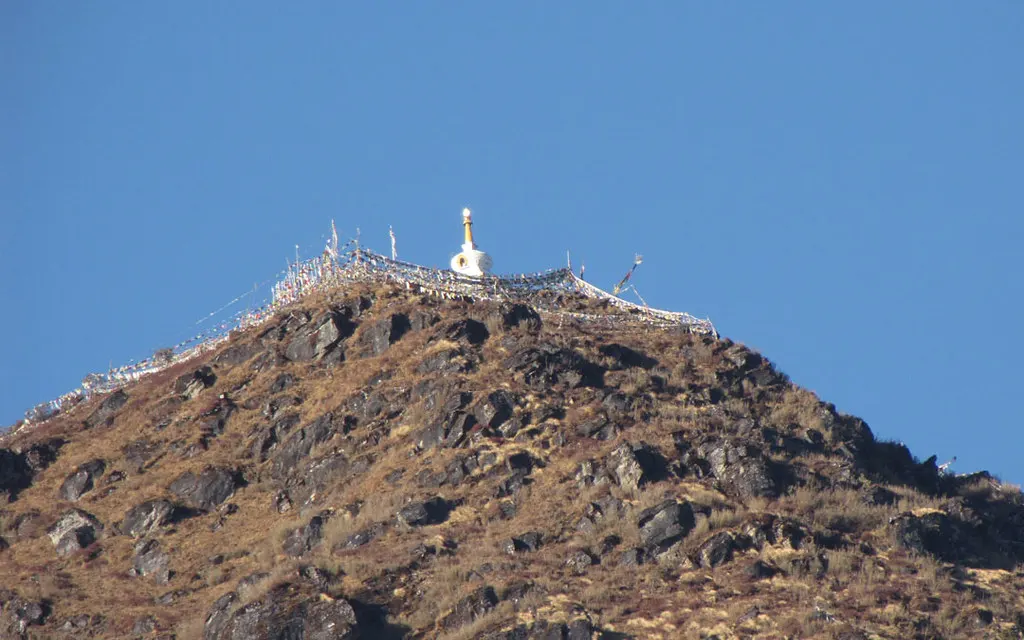
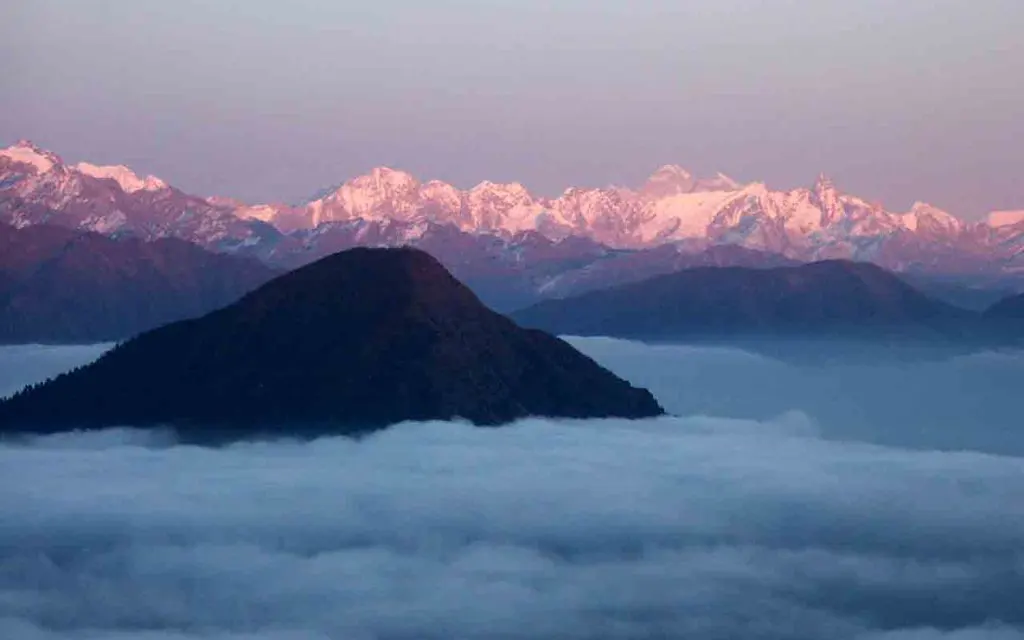
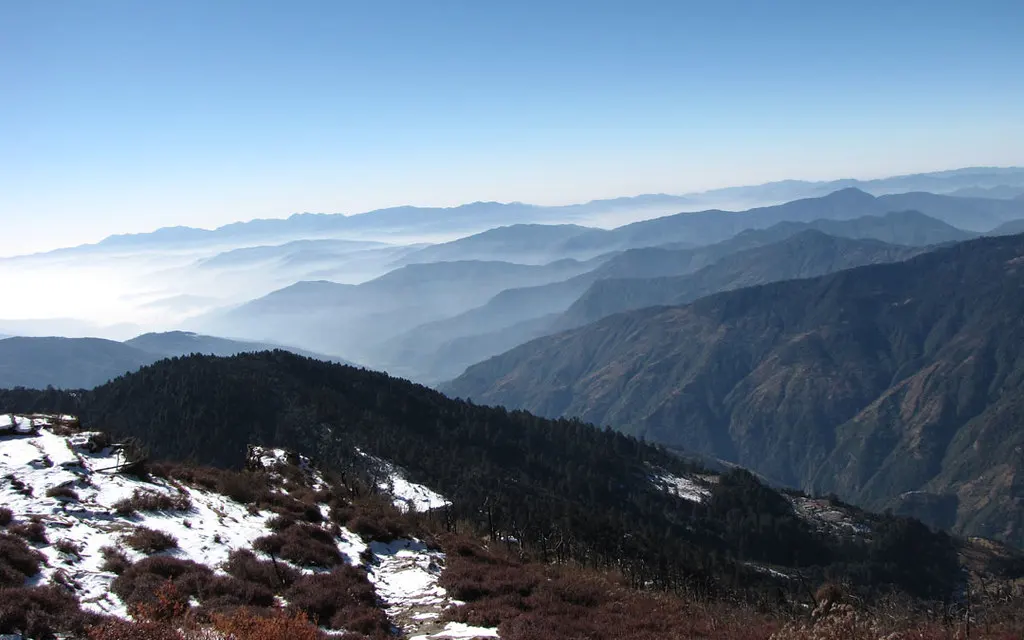
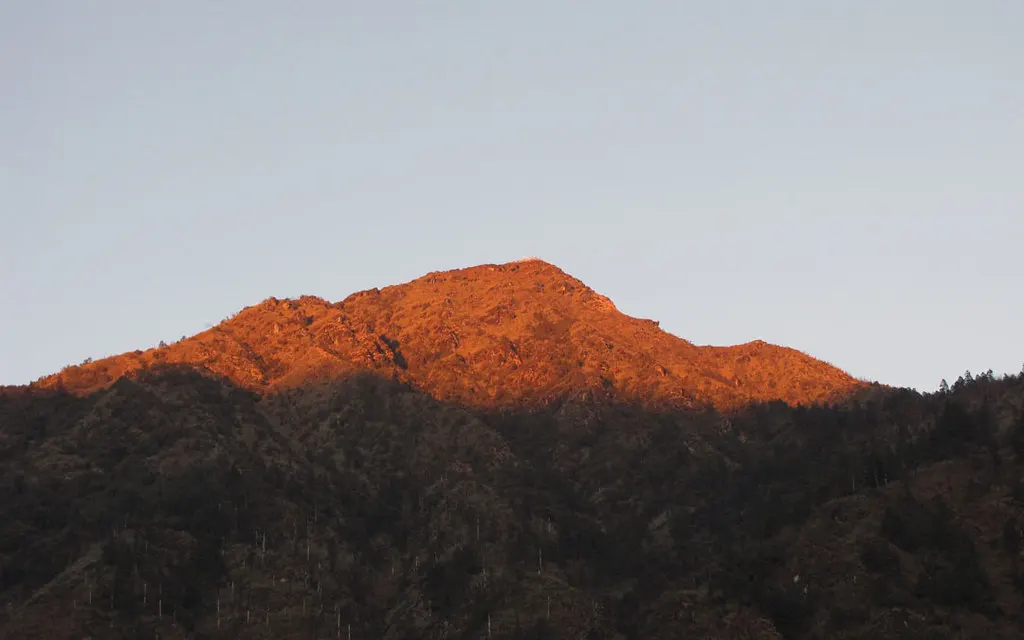
The Ama Yangri Trek is emerging as a short trekking adventure that tourists love the most in Nepal who want to experience mountains, local culture, and beautiful trails on a short trip without taking weeks in the Himalayas. Ama Yangri, the highest point in Helambu, is located in the Helambu Region of Sindhupalchok District, and offers a spectacular view of a number of Himalayan ranges.
Ama Yangri 3,771 m / 12,372 ft) is a sacred mountain to the Hyolmo people who are locals. The perspective appeals to both trekkers and pilgrims who come to experience the natural beauty and spiritual ambience of the region. This is in contrast to other well-known trekking trails in Nepal, which are quite noisy and crowded with trekkers, unlike this one, which is relatively quiet and provides the visitor with a more relaxed and natural mountain experience.
The increasing popularity of the Ama Yangri Trek is due to its ease of accessibility. The starting point can be reached from Kathmandu in a day drive, making it a great destination to visit on weekends. The trek is a mix of mountains, traditional villages, Buddhism, forests, and ridge walks within a brief duration.
Are you a beginner and want to have your first Himalayan trek, or is it that you are a seasoned hiker and want to explore a destination not so crowded? Then this guide is all you need to know. This article will assist you in planning an adventure that will be fulfilling, whether it is routes and permits, accommodation, weather, or the cost of the Ama Yangri Trek. Should you be heading to Helambu with Nomad Adventure Treks, this guide will provide valuable knowledge before you head away to the top of the highest viewpoint of Helambu.
Where is Ama Yangri?
Location Overview
Ama Yangri is in the Helambu of the Sindhupalchok District of Kathmandu, northeast. The mountain, which is encircled by forests and ridges, is an ascent to the traditional village of Hyolmo, Tarkeghyang. The primary entry point to the trek is Tarkeghyang, which is accessible by road either from Kathmandu (around five to seven hours) or by air. The region belongs to the larger Langtang area, and thus, it is a good place for tourists who would like to see mountainous landscapes near the capital.
Geographic Importance
The highest point of the Helambu region is Ama Yangri (3,771 m / 12,372 ft) high. Its high location gives broad perspectives of the Himalayan scenery around it, which include the Langtang, Ganesh Himal and the Jugal Himal ranges. The local Hyolmo community also regards the summit as a holy location, and it has cultural and spiritual value.
Why It Is a Hidden Gem
Ama Yangri has a very small number of visitors compared to other common trekking destinations like Everest and Annapurna. The less-travelled trails, vintage villages and tranquil setting make for a more leisurely trekking experience. Due to its low cost and accessibility, it is a great alternative for travelers seeking a Himalayan adventure without a long hike.
Why Choose Ama Yangri Trek?
Best Short Trek Near Kathmandu
The Ama Yangri Trek is easily accomplished in two or three days and is therefore the best fit for weekend travelers and those who do not have much time.
Stunning Himalayan Views
The peak presents spectacular sunrise scenery and snow-capped mountain ranges, which can be used to take great photos and sightseeing.
Cultural Experience
The trail goes through Hyolmo and Tamang settlements where the visitors may see monasteries, prayer flags, chortens, and enjoy the local traditions.
Beginner Friendly Trek
The Ama Yangri Trek is a good beginner, families and first-time trek as it has moderate trails and does not require technical climbing. Nomad Adventure Treks frequently suggests this pathway to tourists who need a convenient introduction to trekking in Nepal.
Ama Yangri Trek Route Overview
Common Starting Point: Tarkeghyang
Tarkeghyang, a conventional Hyolmo village (2,590 m / 8,497 ft) marks the starting point of most trekkers. The village is the primary entry to Ama Yangri and has some tea houses where one can stay overnight.
The Kathmandu drive is a scenic drive through picturesque hills, terraced farmland, and small villages to the village. The road trip by itself is a preview of rural Nepal and allows visitors to slowly adjust to the mountain environment after being accustomed to the city environment.
Main Route Breakdown
The normal route is a straight line. Trekkers start at Tarkeghyang and walk across pine, rhododendron-laden forests and other Himalayan trees. The trail gradually ascends to Ama Yangri Base and ridges to the summit.
Most visitors visit Tarkeghyang and then go back to the viewpoint via the same route. This would make navigation easy and enable trekkers to enjoy the scenery.
Alternative Routes
Other trekkers might prefer to reach the area via Shermathang, which is one of the other significant villages in Helambu. The path provides more cultural experiences and could be supplemented with other parts of the Helambu Trek.
Visitors who have more time can continue their trip with a longer Helambu circuit visiting several villages and monasteries in the area.
Trail Conditions
The trail is mainly made up of forest trails, rock stairs, and ridges. In spring and autumn, the weather is usually dry and agreeable. During winter, snow may accumulate at elevated levels, resulting in a stunning landscape, but necessitating additional care.
Monsoon season also leads to muddy and slippery areas, and at times, visibility is hampered by fog and cloud cover. It is always better to check the weather forecasts before traveling.
Detailed Day by Day Itinerary
2 Day Ama Yangri Trek Itinerary
Day 1: Kathmandu to Tarkeghyang
The trip starts with an early morning ride from Kathmandu to Tarkeghyang. It is located on the road passing through Melamchi and several rural settlements and ascends into the Helambu region. The drive is normally five to seven hours in case of good conditions in the road.
After reaching Tarkeghyang, one can visit the village and have an opportunity to visit the local monasteries. The old stone houses, prayer flags, and mountainous scenes make it welcoming. The night will be spent at a tea house where trekkers will have the opportunity to eat local food and get ready for the next day’s hiking.
The night stay at a height of about 2,590 m (8,497 ft) has offered a good starting point before climbing the summit.
Day 2: Tarkeghyang to Ama Yangri and Return
The second day starts earlier than the sun goes up. The trekkers take their early departure out of the village and take an ever-increasing trail through forests and ridges towards Ama Yangri.
The peak at around 3,771 m (12,372 ft) is in sight after a few hours of climbing. It is best done in the morning at sunrise when you are on top. The mountain ranges slowly come out of the darkness as the sun lights the mountains around the horizon.
Most of the visitors are busy taking photos, appreciating the serene environment, and looking around the prayer flags and religious buildings found near the viewpoint. The panoramic views can be seen on clear days stretching to Langtang, Ganesh Himal, Jugal Himal, and far-off snow-covered mountains.
Trekkers will then head down to Tarkeghyang after a magnificent view of the summit, then embark on the drive to Kathmandu. The majority of sightseers reach the capital in the evening, and complete one of the most rewarding short Nepal trekking trips.
Nomad Adventure Treks also offers regular departures throughout the year to those who would like to have organized transportation, guides, and local assistance. The company also assists the travelers to tailor their Ama Yangri Trek itinerary according to the available time and fitness.
3 Day Extended Itinerary (Optional)
Trekkers who have more time to spend can opt to take a three-day variant of the trek. This is a better alternative as there is time to acclimatize, take photographs, and tour the cultural attractions of Helambu.
Day 1: Kathmandu to Tarkeghyang
The trip begins with a beautiful ride from Kathmandu to Tarkeghyang. Upon reaching the village, trekkers will be able to spend the afternoon visiting local monasteries and mingling with locals. The stay over gives one a chance to learn the culture of the Hyolmo community as he or she prepares to go on the trek.
Day 2: Tarkeghyang to Ama Yangri Base Camp
The trail ascends slowly after breakfast in a forest and open ridges to Ama Yangri Base Camp. The path traverses prayer flags, small resting points, and spots that overlook the hills in the surrounding area. Camping is in a place near the summit will enable the trekkers to take a more relaxed hike up the mountain and will have a higher possibility of witnessing a magnificent dawn the following day.
Day 3: Summit and Return to Kathmandu
Prior to daylight, trekkers proceed to the top of Ama Yangri (3,771 m/12,372 ft). The view of the sunrise is commonly the best part of the trip. Once the group has seen the mountain panorama making photographs, they head down to Tarkeghyang and then drive back to Kathmandu.
This Ama Yangri Trek itinerary is a great trip that people wish to have since they are not in a hurry and can take additional time to enjoy the landscape.
Difficulty Level and Fitness Requirements
Trek Difficulty: Easy to Moderate
The Ama Yangri Trek is categorized as an easy-to-moderate trek that can be done by most healthy people. There is no technical climbing required, and no mountaineering experience or specialized equipment is needed to follow the route. The primary difficulty is the gradual uphill walk between Tarkeghyang and the top.
Though the walking distance is not that long there are parts of the path that consist of lengthy stone steps and constant ascent. Most people can easily manage the journey by taking frequent breaks and having a relaxed pace.
Altitude Considerations
The highest point of the trek reaches 3,771 m (12,372 ft). Some people might still have some mild altitude-related symptoms, including headaches or shortness of breath.
Since the trek begins in a rather high village and climbs slowly, the threat of severe altitude issues is minimal. However, trekkers ought to remain hydrated and not hurry.
Fitness Level Required
This trek will normally require a minimum level of fitness. The only requirement is that anybody who is comfortable walking several hours in hilly terrain can complete the route. This destination is frequented mainly by families, novice trekkers, and elderly tourists due to its ease of access.
Preparation Tips
An effective trek will be made more comfortable by a few weeks of walking, jogging, cycling or other cardiovascular exercise. It is also important to drink a lot of water during the journey. One night in Tarkeghyang, before the summit hike, will assist the body in adapting to the elevation and enhance the overall experience.
Best Time to Visit Ama Yangri
Spring (March to May)
The Ama Yangri Trek is a beautiful trek during spring. Rhododendron forests are in blossom, and clear weather conditions and moderate temperatures provide perfect conditions for trekking. New vegetation and mountainous landscapes make this time of year the favorite of nature enthusiasts as well as photographers.
Autumn (September to November)
Autumn is said to be the best time to visit Ama Yangri. The weather turns clear after the monsoon, and gives excellent views of the Langtang, Ganesh Himal and Jugal Himal. Trekking is pleasant during the season due to stable weather and pleasant temperatures.
Winter (December-February)
The cold weather in winter also causes snow towards the summit. Snowy landscapes make the trek more beautiful, and trekkers must be ready to face chilly dawns and icy sections on the trail.
Monsoon (June to August)
During monsoon season, it rains, the trails are muddy, and the visibility of the mountain is poor. Nevertheless, the mountains are green and fertile, and the routes are empty with a reduced number of tourists.
Recommended Season
The best overall trekking experience is fall, and spring is a good option as well due to clear views, agreeable weather, and colorful landscapes.
Permits and Entry Requirements
The criteria of the permit issued to the Ama Yangri Trek may change based on the trail chosen and the prevailing local laws. Customers are always advised to verify the most current requirements.
Permits related to the protected areas might be needed on some trekking routes within the larger Helambu and Langtang area. In some villages or municipalities, there can be local entry fees as well.
The Kathmandu tourist offices or the authorities can typically issue permits before the start of the trek. At checkpoints along the route, it may incur fees in certain instances. Trekkers who book via Nomad Adventure Treks are usually helped with the permit application part, so that by the time the trip kicks off, all the required documents have been ready.
It is commonly advisable to carry a copy of your passport and a couple of passport-size photos with you when obtaining trekking permits in Nepal.
Accommodation and Food Options
Tea Houses in Tarkeghyang
There are primarily locally run tea houses and guesthouses along the Ama Yangri Trek. These are simple yet comfortable rooms that are fit to stay a few days.
Lots of rooms have plain beds, blankets, and shared bathrooms. Although luxury facilities are not very abundant, the friendly nature is one of the most significant things about the travelling experience.
Food Availability
Eating choices are usually simple yet satisfactory. The traditional meal of Nepal, Dal Bhat, which is rice, lentil soup, and vegetables, is very common and offers great energy for trekking.
Noodles, fried rice, soups, Tibetan bread, momos, or even seasonal vegetables can also be found by the visitors. Hot drinks such as tea, coffee, hot lemon, and many more are usually served during the day.
Costs Overview
There is still affordable accommodation in the local tea houses, and this is in comparison with most of the trekking destinations. Food is affordable, but it can become a bit more expensive with the altitude because of the transport costs.
The total Ama Yangri Trek price is not very high due to the shortness of the tour and the ease of reaching Kathmandu.
What to Expect
Tourists are supposed to receive basic amenities as opposed to luxury services. The availability of power, cell phone networks, and the internet can change based on the location and weather. Nevertheless, despite such restrictions, tourists frequently enjoy the kind hospitality of local families.
What to See on the Trek
Ama Yangri Summit Views
The climax is certainly the best part of the trek. The viewpoint is 3,771 m (12,372 ft), giving a panoramic 360-degree view of the Himalayas. The peaks surrounding turn into the colors of gold, orange, and pink, which makes the picture memorable by Sunrise.
Natural Attractions
The path goes on through the woods with pine, oak, and rhododendron trees. Trekking in different seasons can expose the trekkers to colorful wildflowers, birds, and small wildlife. The scenic diversity of the journey is enhanced by rolling hills, valleys, and ridgelines.
Cultural Highlights
The Helambu area is a stronghold of Buddhist culture. There are monasteries, chortens, prayer wheels, and colored prayer flags all over the territory. Tarkeghyang is a significant cultural hub where one can get to understand the culture.
Photography Opportunities
Along the path, photographers discover innumerable topics. The view of sunrise, mountain ranges in the distance, village life, scenery, and architecture of the monasteries are all good prospects to create memorable shots.
Packing List for Ama Yangri Trek
Packing wisely can make your Ama Yangri Trek more comfortable and enjoyable. Due to the change in weather in the mountains being very fast, the best way is to dress in layers. To keep you warm in changing conditions, a moisture-wicking base layer, a warm fleece or insulated jacket, and a waterproof outer layer will keep you comfortable.
It is necessary to have good-grip trekking shoes to use on mountain paths and steps. Bring a small backpack with a water bottle, sunglasses, trekking poles, and a headlamp to hike in the morning. Sunscreen, lip balm, personal medicine, and a simple first aid kit are also suggested. Bring a pack, but don’t forget to bring all you need to have a safe and enjoyable hike.
Cost Estimate for Ama Yangri Trek
Among the largest strengths of the Ama Yangri Trek is that it is affordable. The traveler is also able to do this tour with a relatively low budget when compared to longer trekking routes in Nepal and still have the opportunity to view impressive mountain scenery as well as cultural experiences.
Transportation Cost
The highest cost is normally transportation. The most cost-effective are the public buses and shared jeeps between Kathmandu and Tarkeghyang. Those who want more comfort usually rent a personal jeep, which offers a more comfortable and faster trip, particularly in groups.
The cost of transportation may fluctuate based on the time of year, type of vehicle, and size of the group. Travelers with Nomad Adventure Treks usually prefer individual transport options that help ease the logistics and time wastage.
Food and Accommodation Cost
Tarkeghyang accommodation is most of the time affordable. Simple rooms offered by basic tea houses are at a low price, and meals are affordable compared to most of the well-known trekking areas.
The average expenses per day, consisting of food and accommodation, will be in the form of breakfast, lunch, dinner, tea, and accommodation. Costs can be slightly high during high seasons of trekking when there are more visitors.
Guide and Porter Cost
Guide hiring is not mandatory, but it is advisable for those travelers who wish to learn more about the area and have local knowledge. Guides may offer information regarding the culture, history, and the trails of the area besides assisting in making the trekking effort easier.
This is not a very long walk, and porters are not needed; however, some visitors opt to employ them as a convenience.
Total Budget Estimate
The total cost of the Ama Yangri Trek may not be very high for independent travelers who use public transport. Those who will use their own means of transport, guides, and other services will need a bigger budget.
A budget trek will be appropriate to fit the traveler that wants a cheap weekend adventure, and the guided trek will be more convenient, have more local knowledge, and be more organized. The final Ama Yangri Trek price will be highly based on the transportation options and the inclination of professional trekking services
Safety Tips and Travel Advice
Weather Awareness
The weather is subject to change in the mountains. Clouds, rain, or strong winds can occur unexpectedly even when forecasts show clear skies. Before getting into trouble, it can also be a good idea to check the local weather updates to avoid unnecessary troubles.
Altitude Safety
Even though Ama Yangri is not high (3,771 m (12,372 ft)), trekkers should be aware of how they feel when climbing up. Ensuring that one takes sufficient water intake, a stable pace, and frequent breaks can help in minimizing the chances of experiencing altitude-related discomfort.
Trail Safety
The path is usually clear, and visitors are advised to follow the marked paths when it is foggy. Slippery areas can be experienced following rain and snow. Trekking poles may be used to offer extra support on sharp downs.
Respecting Local Culture
Helambu is very culturally and religiously inclined. When entering monasteries, visitors are required to wear good clothes and must never take pictures without permission before taking pictures of locals.
Prayer flags and chortens, as well as religious monuments, should be respected. Adherence to local traditions contributes to establishing favorable relations between tourists and locals.
Why Ama Yangri is Perfect for Weekend Travelers
A lot of tourists would like to see the Himalayas, but they lack time to take a long journey. The Ama Yangri Trek is an ideal solution as it offers mountain scenery, local culture, and rewarding hiking in just a few days.
Its proximity to Kathmandu in terms of location means that visitors do not have to travel to the city and then have a complex travel arrangement to the trailhead. It is perfect even for busy professionals and students, not to mention the travelers who have limited vacation time due to its short length.
The trek is also quite cheap in contrast to most popular paths in Nepal. The accommodation, transportation, and food expenses are affordable; hence, one can have a memorable Himalayan experience even without a huge amount of money.
Photographers enjoy the sunrise scenes on the peak, whereas beginners enjoy a moderate challenge. These merits render the Ama Yangri Trek one of the most feasible brief trips that can be undertaken in Nepal.
Frequently Asked Questions
What is the length of Ama Yangri Trek?
The trek can be done within two to three days. The majority of travelers opt to take the two-day typical itinerary, with some taking a three-day itinerary, which is less hectic.
Is Ama Yangri suitable for beginners?
The trek is deemed to be simple and moderate, and does not entail technical climbing abilities. Individuals of average fitness are able to go through the route with relative ease.
How high is Ama Yangri?
The highest point in the Helambu region is Ama Yangri, which is around 3,771 m (12,372 ft).
Am I capable of doing the trek on my own?
Yes, numerous trekkers do it on their own. It is possible to hire a guide that can make the experience more rewarding by offering local knowledge and support.
Does it snow in winter?
Yes. During winter, it can snow at the summit and in those parts of the trail that are higher. Each year the conditions are different based on the weather patterns.
How much does the trek cost?
The overall Ama Yangri Trek price varies according to the mode of transport, lodging options, and whether you hire a guide or not.
Conclusion
The Ama Yangri Trek is a good option for those who want to enjoy the Himalayas but do not want to spend weeks in the forest. The viewpoint stands at 3,771 m (12,372 ft) with expansive views of Langtang, Ganesh Himal and Jugal Himal, and a sunrise to remember. The trek is a mixture of nature, traditional Hyolmo culture, Buddhist heritage, and relaxing mountain trails in a short and convenient trip.
It is also close to Kathmandu and, therefore, ideal for weekend travelers and beginners. Through Nomad Adventure Treks, the visitors are offered a well-organized adventure as they explore one of the best viewpoints in Helambu.
Ghorepani Poon Hill trek package cost is probably among the early considerations made by tourists when they plan this most popular Himalayan adventure. It might also be a good idea to know what you will spend to make a realistic budget and decide on the type of trekking which will be best suited to your travel needs. Be it a low-cost trek, an average guided group, or a more comfortable personal adventure, having an understanding of what it costs will make your organization a lot easier.
Ghorepani Poon Hill Trek is a short trekking path in Nepal which is one of the most popular ones. It is located in the Annapurna region and provides a perfect blend of breathtaking mountain views, a rich local culture, and trekking trails that are easily accessible. The climax of the trek is the sunrise view of Poon Hill 3,210 m (10,531 ft), from which trekkers will have a panoramic view of the Annapurna and Dhaulagiri mountain ranges. The trail also traverses through the conventional Gurung and Magar villages, gorgeous rhododendron forests, terraced agricultural lands as well as picturesque hillside villages, making it an unforgettable trekking adventure.
The affordability of the trek is one of the factors that have made the trek popular, over the more remote and expensive trekking routes in Nepal. The overall Ghorepani Poon Hill Trek Package Cost may vary based on a number of factors. The final budget depends on transportation options, quality of accommodation, guide/porter services, cost of food, time of year of traveling, and length of itinerary. Those who would rather use local buses, simple tea houses, and simple food will be able to complete the trek at a lower price, and people who would like to use personal transportation, improved lodges, and personal services must expect to pay more.
Overall costs may also depend on the season to travel. The most popular trekking seasons are spring and autumn due to their stable weather conditions and clear views of the mountains. In these high seasons, there is high demand for accommodation and transportation, and guide supply might be low. The trekkers can visit at less busy times and even have reduced rates.
A Ghorepani Trek Package Nepal is a professionally organized tour that is opted by many travelers due to its convenience in planning. Trekking packages usually cover the permits, transportation, accommodation, guide services, and logistical support, and trekkers do not have to worry about the daily arrangements but enjoy the trek. Prices of packages may vary, depending on the number of services and may be as low as a budget-friendly group departure and as luxurious as a personal trek.
This guide gives a list of the Ghorepani Poon Hill Trek Package Cost of 2026 and 2027 in detail in terms of permits, transportation, accommodation, food, guide and porter costs, travel insurance, and other relevant costs. It is important to know these costs prior to you travelling, so that you can be able to budget accurately, spend wisely, and have a safe, comfortable, and enjoyable time trekking in one of the most scenic areas in Nepal.
Ghorepani Poon Hill Trek Cost Overview 2026-2027
The overall Ghorepani Poon Hill Trek Package Price varies greatly and is largely determined by the comfort and services you select. Independent trekkers traveling by local transportation and simple teahouses can finish the trek quite cheaply, compared to those who make purchases on the basis of guided tours in which they are provided with more comfortable housing.
The table below estimates realistically for 2026 and 2027:
Trek Style
Estimated Cost Per Person
Budget Trek
USD 250–450
Standard Trek
USD 450–750
Comfortable Trek
USD 750–1,100
Private/Luxury Trek
USD 1,100–1,800+
There are various aspects that influence the end cost. One of the most important is trek duration. The longer the itinerary, the higher the accommodation, food and guide costs. The size of the group is also a significant factor, since the cost of transportation and a guide can be divided between the participants.
Guided and independent trekking have a huge influence on costs. Many trekkers will pay extra money to obtain a guide since he or she increases their safety, guides them, and improves their cultural knowledge.
Prices are also affected by seasonality. In spring and fall, there is a shortage of accommodation and an increase in the demand for transport. Furnished rooms and nice lodges can be a bit pricier during these peak seasons of trekking.
Another difference that is evident is transportation decisions. The lowest cost is by using public buses, whereas flights and personal vehicles make it more convenient but add to the total budget.
Despite these differences, the Ghorepani Poon Hill Trek Package Cost is relatively cheap compared to most other Himalayan trekking trails. This is among the reasons why thousands of tourists keep flocking to the trek annually.
Ghorepani Poon Hill Trek Permit Costs
All trekkers have to pay a permit fee to access the Annapurna region. These permits are used to facilitate conservation, trail preservation, environmental protection, and visitor management.
The main permit to be obtained to complete the trek is the Annapurna Conservation Area Permit (ACAP). The present permit fee for the trekker is NPR 3,000, which is roughly USD 22-25 based on the exchange rates.
Permit
Cost
ACAP Permit
NPR 3,000
SAARC Nationals ACAP
NPR 1,000
Nepali Citizens
NPR 100
The largest protected region in Nepal is the Annapurna Conservation Area and is home to a variety of ecosystems, traditional settlements, forests, and mountain scenery. The conservation and local development projects are directly funded by revenue generated by permit fees.
Trekkers are also expected to be updated on the requirements of TIMS. The trekking rules in Nepal are sometimes subject to change, and the needs may differ with each case where the tourists might be trekking alone or using an agency. It is highly advisable to check up on existing regulations before traveling.
In Kathmandu or Pokhara, permits are available at designated offices. The majority of trekkers who reserve a Ghorepani Trek Package Nepal with a licensed trekking company have permits as an inclusion in the package.
The requirements of the applicants are usually a copy of the passport, valid visa information, and a passport photo. It may be convenient to carry both digital and printed copies of the documents that are important and simplify the process of permit application.
The Permit fees are a minor part of the Ghorepani Poon Hill Trek Package Cost, but they are necessary to have access to the trekking area legally.
Transportation Costs for Ghorepani Poon Hill Trek
The second-largest expense after guides and accommodation is transportation. The majority of trekkers start off in Kathmandu and then head to Pokhara, the major trekking entry point in Nepal.
Kathmandu to Pokhara Transport
The most economical alternative is tourist buses. The trip lasts about 7-9 hours based on the road conditions and traffic.
Transportation
Cost
Tourist Bus
USD 10–15
Deluxe Tourist Bus
USD 15–25
Domestic Flight
USD 90–130
Private Car
USD 120–180
Private Jeep
USD 180–300
The tourist buses offer a cheaper alternative and are popular amongst the backpackers. Deluxe buses are better furnished, have more comfortable seats, air conditioning, and other onboard amenities.
Local flights save a lot of time, approximately 25-30 minutes of travel. Flights are more costly, but offer spectacular views of the Himalayas and save on travel time. Individual cars suit families, groups, or travelers who would want to have more flexibility and comfort.
Pokhara to Trek Starting Point
The trekkers go by road from Pokhara to Nayapul, Birethanti, Ulleri, or Banthanti, according to their preferred itinerary.
Route
Cost
Shared Jeep
USD 10–25
Private Jeep
USD 60–120
Local Bus
USD 3–8
Itineraries that start at Ulleri or Banthanti are used by many contemporary itineraries, shortening the time spent walking and spending as much time as possible in mountain vistas.
During high trekking seasons, transportation expenses may change according to the seasons, especially during the peak seasons. Including these costs in the total Ghorepani Poon Hill Trek Package Cost will provide a more precise budget.
Guide and Porter Costs in 2026-2027
One of the most crucial choices when organizing a trek in Nepal is to hire a guide. Even though the Ghorepani Poon Hill trek is thought to be comparatively straightforward in relation to the other, lengthier, Himalayan trips, a great number of travelers hire professional guides to stay safe, be aided in navigation, and gain local insights, as well as cultural understanding.
Over the last few years, the price of a licensed guide has risen slowly because of rising wage costs, training, and the rising demand during peak trekking seasons. In 2026 and 2027, the following average rates can be anticipated by the trekkers:
Service
Daily Cost
Licensed Guide
USD 25–35
Experienced Senior Guide
USD 35–50
Porter
USD 18–25
Guide-Porter
USD 20–30
The work of a licensed guide is usually to guide, provide accommodation, check permits, do daily planning, and connect with the local communities. Most tourists believe that having a guide adds to the entire trekking experience as they can learn about the local culture, history, wildlife, and mountain geography.
Porters come and deliver trekking gear to the trekkers so that they can have less weight in their backpacks and enjoy their trek. The weight for most of the porters is between 20-25 kg (44-55 lbs) and is normally shared by two trekkers.
Guide-porter service is also gaining popularity with low-end travelers. This service has a combination of guiding and portering and is less expensive than getting the two services individually.
Tipping is also a factor that should be taken into account. Tipping is not compulsory but is highly valued in the trekking business of Nepal. In the case of an average four or five-day trek, most trekkers pay between USD 30-60 to the guides and USD 20-40 to the porters depending on the quality of services and the size of the group.
Guide fees are usually part of the package price of travelers who book a Ghorepani Trek Package Nepal. The services that are provided should always be confirmed during the booking. Guide and porter costs may create a large part of the overall Ghorepani Poon Hill Trek Package Cost, but many trekkers believe it is a worthwhile investment for a safer and more enjoyable trip.
Accommodation Costs on the Trek
The traditional tea houses are mainly used to offer accommodation along the Ghorepani Poon Hill trail. These lodges have simple, yet comfortable rooms and are a true Himalayan trekking adventure.
The majority of rooms are shared by at least two people and have simple bedding. The higher the elevation, the less there is, and yet this trek is quite comfortable compared to the remote trekking paths.
The average accommodation costs for 2026 and 2027 are shown below:
Accommodation Type
Cost Per Night
Basic Tea House Room
USD 5–10
Standard Room
USD 10–15
Attached Bathroom Room
USD 15–30
Premium Lodge
USD 30–80+
Tea houses usually have lower room rates when the guests take meals at the same place. This is a custom in the trekking areas of Nepal.
Prices of accommodation differ depending on the village. Popular and bigger destinations also tend to be a little bit higher in the high trekking seasons.
Village
Typical Room Cost
Tikhedhunga
USD 5–10
Ulleri
USD 5–12
Ghorepani
USD 8–20
Tadapani
USD 8–18
Ghandruk
USD 8–25
One of the busiest overnights on the trek is Ghorepani 2,874 m (9,429 ft). In spring and autumn, rooms can be occupied fast, as there are a lot of visitors. During these seasons, reservations are quite advisable.
Upgraded lodges in Ghandruk 2,012 m (6,601 ft) and in some villages along the way are available to those travelers who want a higher level of comfort. These properties can provide attached bathrooms, better dining services, hot showers, and better-quality rooms.
The accommodation part of the Ghorepani Poon Hill Trek Package Cost is affordable relative to trekking sites in numerous other nations, and the route is appealing to both low-end and middle-end travellers.
Food and Drinks Cost During the Trek
A large percentage of the trekking costs consist of food costs. Since everything has to be brought up to the mountain villages, the prices slowly rise with the altitude.
The majority of tea houses offer great menus which include Nepali and international food. Although prices of food increase a bit as you ascend, there is still a surprisingly good range of food along the way.
Breakfast Costs
Breakfast is another significant aspect of trekking days, which supplies energy for a number of hours of walking.
Breakfast Item
Average Cost
Tibetan Bread
USD 3–5
Pancakes
USD 4–6
Eggs
USD 2–5
Porridge
USD 4–6
Muesli
USD 4–7
Lunch and Dinner Costs
Trekking foods are popular like dal bhat, fried rice, noodles, pasta, soups, and potatoes.
Meal
Average Cost
Dal Bhat
USD 5–8
Fried Rice
USD 5–8
Noodles
USD 4–7
Pasta
USD 6–9
Pizza
USD 7–12
Dal bhat is the most affordable and satiating. Numerous tea houses offer the option of free refills of rice, lentil soup, and vegetables, which makes it great value among trekkers.
Drinks and Beverages
Beverage
Cost
Black Tea
USD 1–3
Milk Tea
USD 2–4
Coffee
USD 2–5
Soft Drinks
USD 2–5
Bottled Water
USD 1–4
Buying bottled water along the trek might end up adding high costs. It is typically more cost-effective and environmentally friendly to carry a reusable bottle and use purification tablets or filtration.
The budget of most trekkers on food and beverages is about USD 20-35 a day, depending on hunger and the food options. This is a significant part of the total Ghorepani Poon Hill Trek Package Cost, over a normal four to five days itinerary.
Additional Trekking Expenses
Whereas most of the costs are covered in permits, transportation, accommodation, and food, other costs should be in your budget.
Travel Insurance
All trekkers are highly advised to have travel insurance. Ideally, policies should include activities like trekking, emergency medical care, and helicopter evacuation.
Insurance Duration
Estimated Cost
1–2 Weeks
USD 40–100
2–4 Weeks
USD 80–200
Trekking Equipment Rental
Pokhara and Kathmandu have cheap equipment rental services.
Equipment
Rental Cost Per Day
Sleeping Bag
USD 1–3
Down Jacket
USD 1–3
Trekking Poles
USD 1–2
Duffel Bag
USD 1–2
Trail Services
Service
Cost
Hot Shower
USD 2–5
Device Charging
USD 1–3
WiFi Access
USD 2–5
Most tea houses would charge these services separately, especially in the higher villages. The daily costs can be significantly raised by frequent charging of devices and frequent use of the internet.
The travelers who will require buying the trekking equipment instead of renting the equipment will have to allocate extra money. But even in this case, when the trek is short, it can be more economical to rent equipment.
In estimating your Ghorepani Poon Hill Trek Package Cost, it would be a good idea to set aside a extra budget of USD 50-100 to cover unforeseen costs.
Ghorepani Poon Hill Trek Cost by Itinerary Length
The duration of your itinerary will also determine the total cost of your trek. Extending the trip will mean extra accommodation, meals, and guide services.
Duration
Budget Trek
Standard Trek
3 Days
USD 220–350
USD 350–550
4 Days
USD 250–450
USD 450–700
5 Days
USD 300–550
USD 550–850
6 Days
USD 350–650
USD 650–1,000
The four-day itinerary is the most desirable option as it is affordable, comfortable, and has sightseeing prospects.
Tourists who are more culturally oriented prefer a five or six-day program which includes some extra days in Ghandruk and other neighboring villages. These additional itineraries make the Poon Hill Trek Package Price 2026-2027 higher but offer a more enriching experience.
The Ghorepani Poon Hill Trek Package Cost remains a great value despite the number of days, as compared to most of the trekking locations in the world.
Cost Comparison: Independent Trek vs Guided Trek
Whether to walk on their own or employ a guide is one of the most frequent questions tourists pose. They both have benefits, and the decision to select either is based on the budget, experience, and individual choices.
Independent trekking is usually cheaper since there are no guide or porter fees. Trekkers are only required to pay for permits, transport, accommodation, meals and personal expenses.
Expense Category
Independent Trek
Guided Trek
Permits
Included
Included
Accommodation
Self-arranged
Usually arranged
Navigation
Self-managed
Guide assistance
Safety Support
Limited
High
Cultural Information
Limited
Extensive
Cost Range
Lower
Higher
Independent trekkers usually have more freedom and flexibility. They can walk at their own pace, select accommodation on their own, and can change their itinerary when they feel the need to do so. But they will have to take care of all the logistics.
The guided hikes are more structured. Guides help to plan the routes, arrange accommodation, communicate locally and in case of an emergency. Guided Trekking is more relaxed and easier to the first-time visitor to Nepal.
Even though a guided trek adds to the total Ghorepani Poon Hill Trek Package Cost, it is often believed by the travelers that the extra aid is worth the added cost. A guide can offer the best overall value to beginners, families, and solo travelers.
Sample Budget Breakdown for Different Travelers
The amount of money spent on travel also differs significantly with the mode of travel. The 2026 and 2027 realistic estimates are given in the following.
Backpacker Budget
The trek can be done at a relatively low cost by a budget-conscious traveler who travels by local buses and consumes simple meals and drinks in simple tea houses.
Expense
Estimated Cost
Permits
USD 25
Transportation
USD 30
Accommodation
USD 35
Food & Drinks
USD 100
Miscellaneous
USD 40
Total
USD 230–350
Mid-Range Trekker
This option includes comfortable accommodation, a guide, and more convenient transportation.
Expense
Estimated Cost
Permits
USD 25
Transportation
USD 80
Guide
USD 120–160
Accommodation
USD 60
Food & Drinks
USD 120
Miscellaneous
USD 50
Total
USD 450–750
Private Trekker
Tourists who want to be as comfortable as possible might opt to use their own means of transportation, better accommodation, and specialized services.
Expense
Estimated Cost
Permits
USD 25
Private Transport
USD 250
Guide
USD 150–250
Porter
USD 80–120
Accommodation
USD 150–300
Food & Drinks
USD 150
Miscellaneous
USD 100
Total
USD 1,100–1,800+
Family Trek Example
Shared costs of transportation and accommodation are common in a family that consists of two adults and two children.
Expense Category
Estimated Cost
Permits
Varies by age
Transportation
USD 200–350
Guide
USD 150–250
Accommodation
USD 200–400
Food
USD 250–500
Total Family Budget
USD 1,000–2,000+
The Ghorepani Trek Package Nepal is often preferable due to the fact that logistical preparations are simplified when handled by a domestic trekking company.
Best Ways to Save Money on the Ghorepani Poon Hill Trek
Ghorepani Poon Hill Trek Package Cost can be cut down to a considerable amount through clever planning. Trekking during the shoulder seasons is one of the easiest ways of saving money. Prices will be reduced compared to the busy spring and fall months, and trails not as busy.
Group departure also helps to save on costs, as the guide fees and transportation costs are shared among the participants. Numerous trekking firms give group discounts for large numbers.
Another viable method of reducing transportation costs is to use common jeeps rather than individual cars. Similarly, renting trekking gear in Kathmandu or Pokhara is, in most cases, significantly cheaper than buying new gear.
The reusable water bottle and water purification system are useful in preventing the need to buy bottled water several times during the trek. Drink expenses are fast accumulating, and this slight change can help to save a considerable sum of money.
Daily expenditure can also be minimized by the selection of local meals over imported foods like dal bhat. Dal bhat is hearty, healthy, and in most cases comes with a free refill, so it is the cheapest meal on the trail.
Using a local agency which is well known can also be a better bargain than to do it all individually. A lot of package deals provide permits, guides, accommodation, and transport at lower competitive prices, which lowers the cost of the entire Ghorepani Poon Hill Trek Package.
Why the Ghorepani Poon Hill Trek Is Worth the Cost
Although the trek is among the cheapest treks in Nepal, the rewards are spectacular. The most popular tourist attraction is the famous panoramic view seen in Poon Hill at the height of 3,210 m (10,531 ft), where one can see the panoramic view of the Annapurna and Dhaulagiri mountain ranges.
On clear mornings, trekkers can admire peaks such as Annapurna South at 7,219 m (23,684 ft), Hiunchuli at 6,441 m (21,132 ft), Machhapuchhre at 6,993 m (22,943 ft), and Dhaulagiri I at 8,167 m (26,795 ft).
In addition to mountainous landscapes, the path traverses lovely rhododendron forests especially in spring when the hillsides are decorated by colorful flowers. Another rich cultural group that Trekkers get to experience are the communities of Gurung and Magar, whose villages enrich the journey with their cultural heritage.
The Ghorepani Poon Hill Trek Package Cost is one of the best deals that first-time hikers and experienced trekkers can have since this is an amalgamation of mountain scenery, cultural exploration, comfortable lodging, as well as a moderate level of trekking.
Frequently Asked Questions
What will the Ghorepani Poon Hill Trek cost in 2026 and 2027?
The medium cost of the Ghorepani Poon Hill Trek Packages is around USD 250-450 (including the budget trekkers), USD 450-750 (including the standard trekkers), and USD 1,100-1,800 or more (including the private trekking experiences).
Does it come with trekking permits?
In most trekking packages, necessary permits are included. Nevertheless, the travelers would always want to know precisely what is included before they make a booking.
Is it necessary to hire a guide?
Rules are subject to modification, and therefore trekkers are advised to ascertain the current requirements before leaving. Most visitors will select guides at their convenience despite the laws.
How much money do I need to bring on the trek?
The amount of USD 20-40 of Nepalese Rupees that one carries per day after prepaid costs is usually enough to get him or her through meals, drinks, showers, charging devices, and personal purchases.
Do we have ATMs along the way?
There are no ATMs readily accessible in the trekking trail. Before the trek, trekkers are encouraged to withdraw enough money in Kathmandu or Pokhara.
How can you do the trip the cheapest?
Traveling by local transport, lodging in basic tea houses, local meals, and sharing guide costs with other trekkers give the lowest total costs.
What is the recommended tipping amount to give to guides and porters?
Guides and porters are usually charged USD 30–60 USD and USD 20- 40, respectively, depending on the duration of the trek, say four to five days. This will be determined by the quality of services and size of a group.
Am I able to trek on my own?
Yes you may be able to trek independently but check the latest trekking regulations before your trip.
How much money is spent every day on the trek?
The average trekker will spend around USD 20-35 a day on food, beverages and personal expenses, excluding lodging charges or guide charges.
Is it a family-friendly and beginner-friendly trek?
Yes. The trail is popularly regarded as one of the most beginner-friendly treks in Nepal and can be attempted by various families that have moderate fitness.
Conclusion
Ghorepani Poon Hill Trek is one of the best and cheap trekking in Nepal. It boasts breathtaking Himalayan views, friendly mountain villages, rhododendron forests of rainbow colors and a moderate level of trekking, making it an excellent value for all classes of travelers.
The overall Ghorepani Poon Hill Trek Package Cost depends on the way of traveling, the length of the itinerary, accommodation needs, mode of transport and the need for a guide. The trip can be made by budget trekkers with USD 250-450, and the average package costs USD 450-750. More comfortable and individual services will be more expensive for travelers.
In the process of budgeting, be sure not to forget to include permits, transport, accommodation, meals, guide or porter fees, travel insurance and miscellaneous expenses. Proper planning will aid in avoiding surprises and make the trekking experience less challenging.
The experience you go through on this wonderful Himalayan adventure, be it a low-end adventure or a fully-fledged Ghorepani Trek Package Nepal will definitely outweigh the cost. The Poon Hill Trek Package Price 2026-2027 remains one of the best deals out there in Nepal for travelers comparing Nepal trekking destinations.
When you are planning your next Himalayan adventure, you can call a reputable local trekking company, ask them to prepare you a tailor-made itinerary or a guided package to make your adventure safe, comfortable and memorable.
To most visitors, a trek to the Everest Base Camp is not just a walk in the Himalayas. It is a personal destination, a physical test and a chance to be near the highest mountain on Earth. Trekking in the Khumbu Valley of Nepal, walking on suspension bridges across deep rivers, past charming Sherpa villages, and past snow-capped peaks on a daily basis provides memories that linger with the trekkers long after the trip has been completed. It is the dream of people all over the world to reach the Everest Base Camp at an altitude of 5,364 m (17,598 ft) and each year thousands of trekkers come to Nepal to enjoy this popular journey.
Several trekkers take years to plan this trip and only come to Nepal. There are those who travel to have adventure and others who travel to physically and mentally test themselves. The path takes one through well-known Sherpa villages, Buddhist monasteries, forests, glaciers and mountain valleys that are totally unlike what one experiences on a daily basis at home. To most individuals, the experience of trekking to the Everest Base Camp at an elevation of 5,364 m (17,598 ft) is a very personal experience as opposed to a mere travel experience.
Although it is easy to anticipate the excitement of planning the trip, most travelers soon come to the realization that the Cost of the Everest Base Camp Trek can widely fluctuate based on the type of travel, the level of comfort, the time of the year, and services offered in the trip. There are trekkers who opt to take a simple tea house trek with simple facilities and others opt to go to more comfortable lodges and having their own guides and even helicopter pick ups at the mountains. Due to this fact, the total Everest base camp trek budget does not have one answer.
The cost should be planned adequately since the Everest region is remote and sometimes the weather conditions may pose unforeseen costs. Delays of Lukla flights, additional nights of accommodation, renting of gear, travel insurance, price of food at elevated altitudes, and services of guides all influence the total cost of the Everest trek. When you plan their budget properly, travelers tend to have a better time as they know what to expect when they arrive in Nepal.
The Everest area is quite unlike most of the normal travel areas. The villages above Lukla at 2,860 m (9,383 ft) are not connected by any roads, which means that nearly all items are brought up to the mountains by porters, yaks, or helicopters. This influences the cost of food, lodging, and the basic supplies along the route. Even basic supplies get costlier when trekkers ascend to higher elevations.
This blog details all the significant costs associated with the trek straightforwardly and understandably. You may be planning a reasonable adventure trip, a comfortable mid-range adventure, or a luxury Himalayan trek, and this article will assist you in understanding the price of the Everest base camp trek.
At the end of this guide, you will understand a lot better the Everest Base Camp Trek Cost in 2026 and how to plan your trip safely, realistically, and confidently.
Quick Cost Overview Table
It is good to know the average cost of various kinds of trekkers before breaking down the various expenses. Everest Base Camp Trek Cost depends largely on the kind of experience you desire in the trip. Some want to have a basic and cheap trek with basic tea houses and shared facilities, and some want to have upgraded facilities, personal support staff, and helicopters.
Trek Style
Average Cost (USD)
Budget Trek
$1,200 to $1,800
Mid Range Trek
$2,000 to $3,500
Luxury Trek
$4,500 to $7,000+
A budget trek is typically best suited to independent travelers, backpackers, and individuals who are okay with staying in simple tea houses on the trek. These trekkers tend to hire gear in Kathmandu, have simple meals, and trek in small groups to minimize the Everest base camp trek cost. The average duration of most budget itineraries is about 12-14 days based on the acclimatization plans.
The most popular first-time visitors to Nepal take a mid-range trek. This type of style normally entails a guide, porter, domestic flights, permits, accommodation, and meals. Visitors who select this alternative usually desire comfort and yet retain the Everest trek affordable. The mean length is approximately 12-15 days.
Luxury treks are tailored to satisfy those travelers who require additional comfort on the trip. These packages usually comprise premium lodges, personalized guides, Kathmandu luxury hotels, and helicopter returns. Upgraded tea houses can also be occupied by luxury trekkers in such villages as Namche Bazaar at 3,440 m (11,286 ft) and Dingboche at 4,410 m (14,468 ft).
These various trekking styles make it easier since the traveler can then formulate a more realistic price estimate of the Everest base camp trek before deciding to travel.
What Affects the Everest Base Camp Trek Cost?
Most of the travelers get shocked after viewing the way trekking prices differ among various companies and itineraries. The Everest Base Camp Trek Cost is based on a number of key factors, and by knowing them at an early stage, the traveler can plan their budget better.
Trekking Season
The Everest base camp trek budget is greatly influenced by the trekking season. The most active trekking seasons are spring (March to May) and autumn (September to November) since the climate is generally more predictable and the mountain scenery is more visible. These months are very high in terms of Lukla flights, accommodation, and guide services, which add up to the overall cost of the Everest trek.
The winter and monsoon seasons tend to be cheaper due to the low number of trekkers visiting the area. But above Lobuche at 4,940 m (16,207 ft), winter temperatures can drop to very low levels, and monsoon rains frequently cause flight delays and low visibility.
Solo vs Group Trekking
Going solo is normally costlier than walking in a group. Individual trekkers bear the entire amount of guides and porters themselves, whereas group trekkers are able to share the expenses. Numerous local trekking firms run group departures, and this contributes to lowering the cost of the Everest base camp trek among individuals.
Group trekking is more social, particularly when first-time trekkers wish to have company on the many days on the trail.
Guided vs Independent Trekking
As much as it might appear cheaper at first, many travelers have found out that agency packages might save them money and eliminate stress. Guided treks are commonly a package of permits, flights, accommodation, meals, and airport transfers.
Guides are also used for directions, managing the altitude, and communicating in remote villages. This assistance makes this trip to the Everest Base Camp more valuable to many travelers.
Trek Duration
The longer itineraries inevitably lead to an Everest base camp trek budget as trekkers spend more money on accommodation, meals, and guide services. But, slower itineraries increase the process of acclimatization and minimise the chances of altitude sickness.
The majority of the typical itineraries take 12-14 days, although some trekkers opt to take lengthy tracks that include Gokyo Lakes or Cho La Pass.
Comfort Level
The cost of the Everest trek is highly influenced by the choice of comfort. Cheap tea houses are basic and simple, whereas high-quality lodges provide heated rooms, attached bathrooms, and improved food services. The price in the Everest base camp trek will be significantly higher when travellers opt to stay in luxury accommodation during the trek.
Helicopter Return Options
Some trekkers opt to fly back from base camp once they have reached Everest Base Camp or Kala Patthar at 5,545 m (18,192 ft). It is the least time-consuming and physically demanding option, but it makes the Everest Base Camp Trek Cost much more. Shared helicopter returns are cheaper than private charters, but they still add a large amount to the final trekking budget.
Nepal Visa and Trekking Permit Cost
Any foreigners who visit Nepal to see the Everest region are required to obtain a tourist visa and trekking permits before starting the trek. They are fixed costs and a significant aspect of the Everest base camp trek budget.
The majority of visitors get their Nepal tourist visa upon entering Tribhuvan International Airport in Kathmandu. This is usually an easy process, but tourists are advised to bring along passport photos and money in United States dollars to save them on the trip.
Permission or Visa
Approximate Cost.
Nepal Tourist Visa (15 Days)
30.
Nepal 50-day Tourist Visa (30 Days)
50.
Visa Nepal Tourist Visa (90 Days)
125 USD.
Sagarmatha National Park Permit
Approx. 23.
Khumbu Pasang Lhamu Permit
Approx. $15.
TIMS Card (if required)
$10 to $20
The majority of trekkers opt to buy a 30-day visa as it provides sufficient time to complete the trek and extra days in Kathmandu before and after the trek.
A Sagarmatha National Park Permit is a necessity since the Everest Base Camp falls within a national park territory. This permit is normally inspected around the village of Monjo at 2,835 m (9,301 ft). Unauthorized trekkers can either be denied entry into the area or pay penalties at checkpoints.
Another obligatory charge on visiting the Everest region is the Khumbu Pasang Lhamu Rural Municipality Permit. This money is used by the local authorities to maintain trails and to develop tourism.
Some trekking agencies cover the permits in the package price, whereas in some packages, trekkers are requested to pay them separately. Before booking, travelers should always ensure that they confirm this, as permits are a required aspect of the Everest Base Camp Trek Cost.
Regulations about the TIMS card tend to vary, particularly when guided treks are involved. Before traveling, travelers are advised to look at the most up-to-date regulations.
The Everest region has strict permit checkpoints, and therefore, trekkers are advised to carry original documents at all times during the trek.
International Flight Costs to Nepal
The international airfare can be one of the largest costs involved in the Everest Base Camp Trek Cost, particularly to those who are flying into Europe, North America, or Australia. The prices of flights are based on how far a person is travelling, the airline, the time of year, and early bookings.
Visitors from Asian countries tend to pay a lot less in terms of airfare than travelers from faraway countries. Indian, Thai, Malaysian, and Singapore flights are usually cheaper due to shorter routes and frequent flights between the countries.
European and Australian tourists tend to have lower prices than those who travel between North America, as the routes are longer and may have several stops.
Reserving international flights 3-6 months before departure normally assists travelers in getting better prices. The trekking seasons in spring and autumn are more costly to fly to Kathmandu due to the number of trekkers who come to Nepal during these seasons.
The flexibility of the travel dates may also help to lower the budget of the Everest base camp trek since it is sometimes less expensive to fly on weekdays than on the weekend.
In their effort to reduce the cost of the Everest trek, travelers usually use a connecting flight via cities such as Doha, Dubai, Delhi, Bangkok, or Kuala Lumpur. Flights to Kathmandu are regular by airlines like Qatar Airways, Air India, Thai Airways, and Turkish Airlines.
It is important to check baggage allowances, as trekking equipment may add a lot of weight to the luggage.
Departure Region
Average Return Flight Cost
United States and Canada
$800 to $1,500
United Kingdom and Europe
$500 to $1100.
Australia and New Zealand
$700 to $1300.
India
$100 to $300
Southeast Asia
$150 to $400
The airfare to the international destination is different from the domestic flight to Lukla, which the trekkers should also book before the start of the Everest trek. Due to the frequent delays in the flights in the mountains, most of the travelers extend their trip to Kathmandu by a day or two.
Lukla Flight Price and Helicopter Options
The flight to Lukla is considered one of the most valuable components of the Everest Base Camp Trek cost, as nearly all trekkers have to rely on air transport to get to the Everest area. The Tenzing Hillary Airport, also known as Lukla Airport, is located at an altitude of 2,860 m (9,383 ft) with a short mountain runway and unpredictable weather patterns.
A one-way flight between Kathmandu and Lukla normally costs between $180 and $230 per person. There are usually round-trip tickets costing between $350 and $450 based on the season and availability of the airline.
With the high season trek, in spring and fall, numerous Lukla flights don’t fly straight out of Kathmandu. Rather, tourists take a four to five-hour drive to Ramechhap Airport before flying to Lukla. The given system was launched to alleviate air traffic congestion in Kathmandu during the high trekking season.
Delays due to weather are very frequent in Lukla since the visibility on the mountain varies rapidly. Flight schedules are often impacted by strong winds, clouds, rain, and snowfall. In some instances, trekkers spend an extra day or two before flying.
The other alternative of getting to or out of the Everest region is through helicopter flights. The shared helicopter systems have become popular in recent years. The cost of renting a helicopter privately would be high, and to some trekkers, sharing it would be cost-effective. The average price of shared helicopter flights ranges between $500 and $1000 per person, based on the number of passengers and the weather.
Some trekkers opt to use a helicopter back once they have reached the Everest Base Camp at 5,364 m (17,598 ft) or Kala Patthar at 5,545 m (18,192 ft). The alternative will save a couple of days of walking and will also provide breathtaking mountainous scenery. But it adds a lot of cost to the total cost of the Everest Base Camp Trek.
Everest Base Camp Trek Package Cost
The Everest Base Camp Trek Cost is influenced by one of the biggest decisions of choosing the correct trekking package. Nepal Trekking Companies have a huge variety of different packages, including basic low-budget tours, and luxurious trips to the highest-quality lodges and helicopter return.
Backpackers and younger travellers prefer to use budget packages that ensure that the Everest base camp trek budget is kept to the bare minimum. Such packages are usually priced between $800 and $1,300. These typically involve permits, Lukla flights, the basic tea house lodging, and shared guide or porter service.
The most popular trekker packages are the standard trekking packages, which are offered to first-time trekkers. The packages are usually between $1,500 and $3,000, depending on the company, the number of people, and the season. A basic package typically covers the permits, domestic flights, lodging, meals on trek, guide services, porter service, and airport transfers in Kathmandu.
Luxury packages are made to attract travelers who desire to be more comfortable in the mountains. These treks can range from $4,500 to $7,000 or even more. A luxury package might also include the high-quality lodges with their own bathrooms, finer cuisine, luxurious hotels in Kathmandu, personal transport, and helicopter return services.
Compared to group departures, private treks are pricier since the travelers have to pay for their guide and porter services. Nevertheless, the flexibility in walking speed, days of rest, and itinerary alterations is available in the case of private trips.
Departures in groups contribute to the Everest Base Camp Trek Cost being cheaper, as the trekkers pay the guide and porter costs collectively. Becoming part of a group also makes the long trekking days a more social event.
The majority of trekking packages cover permits, lodging, guiding services, domestic flights, and transportation. Nonetheless, air travel between countries, Nepal visa, travel insurance, tips, snacks, hot showers, Wi-Fi, and charging, and personal gear are almost always not included in the overall package cost.
Accommodation cost on the trek
The Everest Base Camp Trek Cost includes accommodation as a significant aspect since during the trip, trekkers will spend almost two weeks in tea houses located on the path. Tea houses are tiny mountain lodges run by the locals and have simplified rooms, food, and rest spots for the trekkers in the whole region of Everest.
In lower elevations, such as Phakding of 2,610 m (8,563 ft) and Namche Bazaar of 3,440 m (11,286 ft), there are more comfortable and well-equipped tea houses. When trekkers climb upwards to Lobuche at 4,940 m (16,207 ft) and Gorakshep at 5,164 m (16,942 ft), accommodation is less fancy since it is hard to deliver supplies to these isolated villages.
The tea house rooms are typically a single-bed, a two-bed, a pillow, a blanket, and an ordinary piece of wooden furniture. There is a tendency to share a bathroom with other trekkers, particularly at higher altitudes. The prices of the rooms are usually between $5 and $15 in the less popular villages and up to $20 to $30 at the more popular places during the busy season.
Some villages like Namche Bazaar and Dingboche at 4,410 m (14,468 ft) have attached bathrooms, although these are scarce and very costly. Those trekkers who require their own bathrooms are likely to have a higher Everest base camp trek budget as the rooms will be updated above Tengboche at 3,860 m (12,664 ft).
Another consideration in the trek is heating. The majority of tea-houses simply heat up the dining room on a central stove with yak dung or wood. Bedrooms tend to be unheated, and temperatures at night could be very low at high altitudes.
Single room requests also might add to the Everest trek price, particularly on the days when the tea houses are full.
Food and Drinking Water Cost
Food and drinking water are among the major daily costs of the trek and constitute a large portion of the Everest Base Camp Trek Cost. The cost of food rises steadily with the altitude as all the food has to be taken to the mountains by the porters, yaks, or helicopters.
Dal bhat is usually the best value meal on the trek. This is a typical Nepali dish, which entails rice, lentil soup, vegetables, and pickles. Numerous tea houses may provide unlimited refills, which are full and affordable to the trekkers who need to fit their budget to the Everest base camp trek.
Surprisingly, most of the tea houses have very huge menus given the isolation of the Everest region. Along the way, trekkers normally get rice, noodles, soups, pancakes, eggs, potatoes, pasta, fried rice, and Tibetan bread.
Vegetarian food is highly prevalent since it is not easy to transport meat to elevated places without compromising safety. Most guides also suggest that it is advisable not to eat meat above Namche Bazaar at 3,440 m (11,286 ft) since conditions of storage become less predictable at altitude.
Food and drinks like coffee, snacks, and soft drinks are more expensive as the altitude increases. A cup of coffee in Gorakshep at 5,164 m (16,942 ft) may cost $4 to $6.
Expense per day
Approximate Cost
Breakfast
$5 to $10
Lunch
$6 to $12
Dinner
$8 to $15
Snacks and Drinks
5 to 15.
Drinking Water
$3 to $8
Daily Total
$25 to $60
Budgeting food costs allows hikers to have a realistic Everest Base Camp Trek Cost without compromising the safety or energy on the trek.
Guide and Porter Cost
Guide and porter services form a significant component of the Everest Base Camp Trek Cost as they enhance the level of safety, comfort, and quality of the trekking experience.
A licensed trekking guide will normally charge between $25 and $40 a day, depending on their experience, language skills, and the season of the year. During the trek, guides assist in navigating, providing accommodation, altitude control, and in times of emergency.
The average price of a porter is $20 to $30 a day. The porters are allowed to carry a maximum of 20 kg (44 lbs), but ethical trekking firms attempt to keep the weight to safer levels.
Another alternative to budget trekkers is guide porters. These people are also guides and porters, who carry lighter bags as well as assist in navigation and communication in the locality.
In Nepal, an essential aspect of trekking is tipping. Tips are a source of earnings for many guides and porters.
Employing locals is also directly beneficial to mountain communities. The Everest region is a major source of earnings through tourism, and a good number of families rely on the trekking business.
Trekking Gear and Equipment Cost
One of the most crucial aspects of the Everest Base Camp Trek Cost is trekking equipment, since the weather in the Himalayas may alter quite rapidly.
Quality trekking boots are among the most essential items that they can buy since the trails have rocky trails, steep ascents, and long walking days. Ankle-support waterproof boots prevent injuries and keep feet dry during the rain or snow.
It is also important to wear warm clothing as the temperatures around the Everest Base Camp (5,364 m 17,598 ft) at night are frequently below freezing point.
Proper clothing layering is extremely essential when climbing Mount Everest since the temperatures vary as the day goes on. Mornings and evenings are generally very chilly, and afternoons in the sun during the walking hours can be quite warm.
Most trekkers save money on the Cost of the Everest Base Camp Trek by not purchasing all the equipment but renting it in Kathmandu. Kathmandu has hundreds of trekking shops in the Thamel area that rent out trekking equipment for both short and long treks.
Among the significant factors that trekkers should consider is that fake outdoor gear is extremely widespread in Thamel. Most jackets and sleeping bags are of low-quality imitations of famous international brand names.
Emergency Rescue and Travel Insurance Cost
One of the most significant components of the Everest Base Camp Trek Cost is the travel insurance, since in the mountains, a medical emergency may be too costly.
One of the most frequent medical issues of the trek is altitude sickness. Some trekkers report having headaches, nausea, dizziness, difficulty breathing, and severe fatigue with an increase in altitude.
In the Everest region, the cost of a helicopter rescue can be as high as $5000 to $20000, depending on the weather, location, and the medical condition.
The majority of the trekkers pay a range of $100 to $250 for holistic travel insurance covering high altitude trekking in Nepal.
The tourists are advised to scrutinize their insurance cover to ensure that it covers trekking beyond 5,000 m (16,404 ft), helicopter rescue, medical attention, cancellation of the trip, and emergency rescue.
Hidden Costs Most Trekkers Forget
When planning the cost of the Everest Base Camp Trek, many trekkers only consider the permits, flights, and accommodation. Nevertheless, minor daily costs can pile up fast on the way and enlarge the ultimate budget more than had been anticipated.
One of the most frequent hidden expenses of the trek is charging electronics. In the higher altitude tea houses, charging is charged between $2 and $5 to charge phones, cameras, or power banks.
Another additional cost that most of the travelers overlook when preparing their budget for their base camp trek to Everest is WiFi.
Hot showers are also costly on the Everest trek. Showers at lower villages are not that expensive, whereas on the trail, they increase in cost.
Numerous trekkers also use up more cash than anticipated when they sleep in such villages as Namche Bazaar at 3,440 m (11,286 ft). Travelers frequent bakeries, coffee shops, gear stores, and souvenir shops during acclimatization days.
One of the largest unseen expenses in the Everest region is the Lukla flight delays.
Sample Everest Base Camp Trek Budget
Many tourists will be more likely to understand the cost of the Everest Base Camp Trek by reviewing realistic sample budgets.
Budget Traveler Example
Type of expense
Estimated cost
International Flights
$700
Lukla Flights
$400
Permits and Visa
$100
Accommodation
$200
Food and Water
$350
Shared Guide Porter
$300
Gear Rental
$100
Insurance
$150
Miscellaneous Expenses
$150
Total
Approx. $2,450
Example of Mid-Range Traveler
Cost of Expense
Approximate Cost
International Flights
$900
Standard Trekking Package
$2,200
Insurance
$200
Gear Buy and Rental
$250.
Snacks and Personal Expenses
$250
Tips
$150
Total
Approx. $3,950
Luxury Traveler Example
Expense Category
Approximate Cost
International Flights
$1,200
Luxury Trek Package
$5,500
Premium Insurance
$300
High End Gear
$500
Personal Expenses
$400
Tips
$300
Total
Approx. $8,200
These instances demonstrate that the various travel styles have significant implications on the overall cost of the Everest Base Camp Trek.
How to Reduce Your Everest Base Camp Trek Cost
The Everest Base Camp Trek Cost may seem expensive initially; however, one can cut the costs smartly without compromising on safety or overall experience.
During the low-season winter or early monsoon months, traveling can usually reduce the cost of accommodation and the cost of flights.
One of the simplest methods of reducing the budget of the Everest base camp trek is by sharing a porter with another trekker.
Renting equipment in Kathmandu rather than purchasing new gear that will cost a lot also contributes to lowering the cost of the Everest trek.
Booking with a trekking agency in Nepal that is based locally is usually cheaper than with international companies.
Another effective measure to save money is to carry a reusable water bottle, topped with purification pills or filters.
Is Everest Base Camp Trek Worth the Cost?
Most of the travelers take months pondering the Everest Base Camp Trek Cost before making a final decision on whether the trip is worth the money, time, and physical exertion. The answer is yes to most people who undertake the trek.
The Everest area has a lot more than just being close to the highest mountain in the world. The experience will involve visiting the traditional Sherpa villages, walking across suspension bridges across deep valleys, visiting Buddhist monasteries, and seeing mountain scenery that varies on a daily basis.
The trek is physically challenging, particularly at a higher altitude where the air is thinner, and temperatures are cooler.
The journey is also mental, as many trekkers describe it as more of a challenge than just physical. Life on the trail is very easy. The everyday activities involve walking, eating, sleeping, and acclimatizing to altitude.
To adventurers who like being out in the wild, enjoying nature, and taking on a personal challenge, the Everest Base Camp Trek Cost can be perceived as an investment in a once-in-a-lifetime experience and not just an additional cost of a holiday.
Final Conclusion
The Everest Base Camp Trek Cost is among the most crucial steps that should be carefully planned before traveling to Nepal. This may change significantly based on the type of trekking, level of comfort, time of the year, and services involved in the trekking.
A complete knowledge of the Everest base camp trek budget assists the travelers in avoiding stress and financial surprises on the trek.
Although a lot of individuals think about lowering the price of the Everest trek as much as they can, safety should always be a higher priority than the price.
Everest Base Camp Trek Cost is not merely the amount of money it costs to reach a destination. The price of the mountain culture experience, the challenge of personal boundaries, and the walk in one of the most renowned trekking areas in the world.
To most travelers, it turns into the most fulfilling trip of their lives.
Frequently Asked Questions
How much is the average Everest Base Camp Trek in 2026?
The average cost of the Everest Base Camp Trek typically costs between $1,500 and $4,500 based on the mode of travel, the time of the year, the level of accommodation, and the guiding services.
Is it possible to do the Everest Base Camp trek as a beginner?
Yes, beginners can make the trek without any problem with good preparation and a slow itinerary.
How much money should I bring on the trek?
On average, trekkers bring with them between $400 and $700 to feed, drink, pay charges, tip, and cover other emergency damages incurred over the course of the trek.
Does the trail to Everest have WiFi?
Yes, there is a WiFi connection in most tea houses, particularly at Namche Bazaar, which is 3,440 m (11,286 ft).
Are there ATMs along the trail?
ATMs are mainly available in Lukla and Namche Bazaar.
Which is the cheapest month for the Everest trek?
The winters, such as in December and January, are generally a lower season since few trekkers are present.
Will I be able to use credit cards on the trek?
There are tea houses and stores in Namche Bazaar that accept cards, with the majority accepting cash.
Do guides and porters have to tip?
Tipping is not a formal requirement, but a high expectation in Nepal.
What is the temperature at the Base Camp of Everest?
At colder times, the night temperatures can drop below -15 degrees Celsius at the base camp at 5,364 m (17,598 ft).
Am I able to recharge my phone during the trek?
Yes, in the majority of tea houses, they have phone and camera charging services at an additional cost.
What is the cost of coffee on the trek?
The higher the altitude, the higher the price of coffee.
Should I purchase travel insurance to go to Everest?
Yes, travel insurance is very important since helicopter rescue and emergency medical services in the mountains can be very costly.
Is it usual to have altitude sickness when trekking?
Yes, altitude sickness is a common problem with many trekkers, particularly above Namche Bazaar at 3,440 m (11,286 ft).
What is the average duration of the Everest Base Camp trek?
The typical itineraries take 12-14 days.
Are elderly tourists able to do the Everest trek?
Yes, a lot of older trekkers manage to complete the route every year with the right training and sufficient acclimatization days.
What would happen in case of Lukla flight cancellations?
When the weather is bad, the trekkers have to wait and book the next flight.
Are there hospitals along the Everest trail?
In villages, such as Namche Bazaar at 3,440 m (11,286 ft) and Pheriche at 4,371 m (14,340 ft), there are basic medical clinics.
Nepal is one of the most beautiful travel destinations in Asia, and 2026 is a great time to visit. There are mountains, temples, lakes, jungles, and a rich culture, meaning that there is a lot of experience that Nepal can provide in a single trip. To explore the best of the country and not consume more than a few weeks, the 10 Days Nepal Tour Package is a clever and popular option among travelers.
The duration of 10 days would be sufficient to see the best things in Nepal at a leisurely rate. You are able to visit the cultural heritage of Kathmandu and the serene beauty of Pokhara, and go on a wildlife adventure at Chitwan. Lumbini, Nagarkot, or light adventure activities are also included in some of the packages in case the travelers desire something additional. This renders Nepal an ideal destination for couples, families, first-time travelers, and even elderly travelers.
Travel in Nepal will only be more attractive in 2026, as the country will have a better tourism service, better roads and flights, and more package choices based on different budgets. A package is available to suit your needs, whether you want to have a budget-friendly vacation, an escape to another culture, a family getaway, or a luxury one.
This guide will discuss the 10 Days Nepal Tour Packages bestseller in 2026 and its various Trip ideas, attractions, and their cost to enable you to select the appropriate one.
Why Choose 10 Days Nepal Tour Packages?
The 10 Days Nepal Tour Packages would be ideal for people willing to have a comfortable and balanced experience of Nepal. Nepal is highly diverse in terms of landscape, with the high Himalayas on one hand and the lowland jungles on the other hand; thus, any form of movement between two locations may take a long time. This is the reason why the 10 days trip is deemed to be the most appropriate time to see the key attractions without being in a hurry.
The Nepal 10 Days Nepal Tour Packages cover most of the destinations in Nepal, including Kathmandu, Pokhara, and Chitwan. Kathmandu has some ancient temples, heritage sites, and local culture. Pokhara is full of beautiful lakes, mountainous views, and a relaxing environment. Jungle safari and view of some rare animals, such as rhinos and various birds, can be seen in Chitwan.
The second factor that encourages travelers to choose the 10 Days Nepal Tour Packages is the simplicity of traveling. The 10 day itinerary is enough time to relax, acclimate to the new surroundings, and visit every destination in the right way. It particularly fits families, couples, older travelers, and those who are first-time visitors.
These packages are also value-priced. Culture, nature, adventure, and comfort are all available under one carefully developed trip at a convenient cost.
Quick Comparison of Top 6 10 Days Nepal Tour Packages
Package Name
Destinations Covered
Best For
Approx. Price Range (USD)
Classic Nepal Tour
Kathmandu, Pokhara, Chitwan
First-time travelers, Families seeking a balanced overview
$700 – $1,200
Complete Nepal Tour
Kathmandu, Pokhara, Chitwan, Lumbini
Cultural travelers, Spiritual seekers, History enthusiasts
Young travelers, Adrenaline seekers, Active groups
$850 – $1,450
Top 6 Best 10 Days Nepal Tour Packages for 2026
The list of available options is quite extensive, but the most appropriate 10 Days Nepal Tour Packages in 2026 is going to be tailored to various kinds of travelers. All these six packages embrace everything, whether it is culture, nature, adventure, or luxury, in a straightforward and well-planned manner.
1. Classic Nepal Tour (Kathmandu–Pokhara–Chitwan)
The Classic Nepal Tour is the most favored among all the 10 Days Nepal Tour Packages. It is ideal in the case of first-time visitors. The tour begins in Kathmandu, where you visit popular heritage sites such as the Pashupatinath, the Boudha Stupa, and the Durbar Square.
Then you go to Chitwan National Park to do the jungle safari, the wildlife, and the local cultural experience. Then you go to Pokhara, which is a serene city with lakes and mountainous scenery. Other activities, such as boating in Phewa Lake and sunrise viewing at Sarangkot, are also done.
With this package, Nepal is fully experienced within a short period.
2. Complete Nepal Tour (with Lumbini)
In this package, the birthplace of Lord Buddha, Lumbini, is included in the traditional path. It is among the most significant 10 days Nepal Tour Packages for cultural and spiritual tourists.
You visit temples in Kathmandu, wildlife in Chitwan, and later come to the peaceful gardens and monasteries of Lumbini. Then you take some rest in Pokhara and go back to Kathmandu.
It is perfect for people who desire traveling and spirituality.
3. All Nepal Experience Tour (with Nagarkot)
It is also one of the most scenic 10 days Nepal Tour Packages. It has Nagarkot, which is a hill station that has Himalayan views.
You also have time in Kathmandu, Chitwan, and Pokhara, where you can view the sunset and the sunrise over the mountains. You may also pay a visit to Bhaktapur.
The package fits best for couples, photographers, and anybody who appreciates nature and views.
4. Cultural and Heritage Nepal Tour
This is a more culturally and historically oriented package as opposed to adventure oriented. This is one of the 10 Days Nepal Tour Packages that is suitable for tourists who require more insight into Nepal traditions.
You get to sightsee Kathmandu Valley with all the key Durbar Squares. Next, you go to Bandipur, which is a traditional hill town, and Rupakot to see the serene mountain scenery. Pokhara, too, is not left out, but in a laid-back manner.
It will be a very good option among older tourists and culture enthusiasts.
5. Nepal Tour with Light Adventure
This is one of the most thrilling 10 Days Nepal Tour Packages, in case you like adventure. It is a mixture of adventure sports and sightseeing.
It begins with Kathmandu and then rafting the Trishuli River. You may paraglide, zip, or bungee jump in Pokhara. Trek to Dhampus or Australian Camp (a short one) is also included.
Young tourists and lovers of adventure prefer this package to get more action in their trip.
6. Luxury 10 Days Nepal Tour Package
Luxury Nepal Tour Package is the best choice among 10 Days Nepal Tour Packages. It provides comfort, privacy, and premium services.
You spend nights in Kathmandu, Pokhara, and Chitwan in 5-star hotels. Travelling is either by domestic flights or personal vehicles. They include special experiences such as the Everest mountain flights, spa treatments, and private tours.
This is an ideal package for honeymooners and luxury travelers who would desire an easy and carefree vacation.
Each of these 10 Days Nepal Tour Packages is aimed at providing Nepal with a full-time experience within a limited period. You have the freedom to select depending on your interest, budget, and how you are going to travel.
Price Guide for 10 Days Nepal Tour Packages (2026)
10 Days Nepal Tour Packages in 2026 will depend on the type of travelling, the level of comfort of the traveler, and the services being offered. Such packages fall into three broad categories, which are budget, standard, and luxury.
The cost of the budget packages is approximately USD 500-800 per person. These are basic hotels (2-3-star hotels) and traveling in tourist buses. They are cheap but could require extensive commuting and a reduced number of meals.
The most popular one is the Standard 10 Days Nepal Tour Packages, which costs between USD 800 and USD 1,200. It includes 3 or 4-star hotels, personal cars, and sightseeing tours. In some cases, it includes one domestic flight to save time.
Luxury packages are about USD 1500 and may exceed 3000. These have 5-star accommodation, domestic flights, personal transportation, and luxury tours such as the Everest View Flight and spa.
There are a number of variables that influence the price. It is costlier to travel during the high seasons, such as spring and autumn. The cost is also altered by hotel quality and mode of transport. Flights are more expensive and time-saving in contrast to the road. The size of the group is also important, as the group will reduce the price per head.
On the whole, it can be stated that Nepal is a very cheap and easy destination, as the 10 Days Nepal Tour Packages can be selected according to any budget.
What’s Included in These 10 Days Nepal Tour Packages?
The 10 Days Nepal Tour Packages are developed in such a way that it makes your visit to Nepal simple and hassle-free. It is good to know what is included for you before booking in order to save additional expenses in the course of your journey.
One of the elements of these packages is accommodation. You are normally given 9 nights stay on a twin-sharing basis. Hotels may be as little as 3-star, or as expensive as 5-star resorts.
Most 10 days Nepal Tour Packages also include transportation. This includes airport drop-off and pick-up, and intercity travel. You can use a private vehicle or can use domestic flights because they are quicker and much more comfortable to travel.
Another important addition is professional guides. A guided sightseeing of such sites as Kathmandu and Pokhara will be provided to you by a licensed English-speaking guide. At Chitwan, there are master naturalists under whose guidance jungle activities are conducted.
The entry fees and permits are usually paid. This covers entry fees to UNESCO sites and national park permits, which saves on time and cash.
Meals are partly included. Breakfast is included every day, and full meals are commonly offered in Chitwan. Welcome and farewell dinners are also available in some of the packages.
In general, 10 Days Nepal Tour Packages offer excellent value, and it has both basic services and basic services that should be encountered to have a good travel experience.
Best Time to Book 10 Days Nepal Tour Packages
The time is very crucial to be selected when making up plans covering 10 Days Nepal Tour Packages. Nepal has varying seasons, and every season presents a different traveling experience.
One of the most suitable months to visit is Spring (March to May). The atmosphere is hot and lovely, and the hills abound with colorful rhododendron flowers. It is also an ideal season to enjoy sporting activities such as rafting and wildlife safari since animals are more visible in certain places, such as Chitwan.
Another popular season of the 10 Days Nepal Tour Packages is Autumn (September to November). The skies have been cleared following the monsoon, and the views of the mountains are excellent. Such events as Dashain and Tihar are also great festivals during this season, so your visit will be more cultural and vibrant. Nevertheless, it is high season and you ought to make an early reservation.
A good budget traveler should choose winter (December to February). It is colder, particularly in the mornings and evenings, but the days are sunny and peaceful. You have the option of lower prices and fewer people.
Most travelers would not like the monsoon (June to August). The weather may be unfavorable, such as heavy rains that may ruin travel plans and conceal mountain sites.
All in all, it is best to take 10 Days Nepal Tour Packages during the spring and the autumn.
Tips to Choose the Right 10 Days Nepal Tour Package
When selecting the appropriate 10 days Nepal Tour Packages, one can make the trip enjoyable and hassle-free. There are numerous alternatives, and before making a reservation, it is pertinent to consider some of the most important details.
To begin with, review the itinerary against your comfort level. Some tours involve long-distance road trips of 6-8 hours. In case that is exhausting, then opt to use the 10 Days Nepal Tour Packages, which includes domestic flights to save on time and energy.
Never leave out what is included and what is not included. Not all packages may include entry fees, permits, or activities, which are cheaper in nature. Ensure that such expenses as national park charges and Chitwan safari activities have been factored in so that people do not incur additional expenses in the future.
A reputable tour operator should be selected. Make reservations with companies that are listed with the Nepal Tourism Board. This guarantees superior service, safety, and assistance in case of delay or amendments along the way.
Seek flexible packages. Nepal Tour Packages 10 Days Good can be customized. You may include such activities as paragliding in Pokhara or the Everest mountain flight in Kathmandu, according to your time and budget.
These are the few things that you can keep in mind in order to select a package that suits your budget, comfort, and way of travelling.
Conclusion
Nepal is emerging as one of the most interesting traveling destinations in 2026, and 10 Days Nepal Tour Packages are the best way to visit it. These packages are well-crafted so as to provide you with the full experience of the country within a limited period of time. It is possible to see both Cultural Kathmandu, the beauty of nature in Pokhara, and the wildlife of Chitwan during the same trip.
The 10 Days Nepal Tour Packages are of various kinds. You may have an adventure tourism, cultural tourism, or a luxury holiday using high-quality services. Irrespective of the kind of traveler, there is something special about Nepal.
In the year 2026, tourism services will be improved, and their popularity will increase; therefore, you should plan your trip in time. Reservation will assist you to secure superior hotels, flight tickets, and value in general.
Consider your budget, level of comfort, and interests before settling on your package. This will assist you in identifying the ideal itinerary to suit you.
It is time to start planning your trip. Browse through the existing 10 Days Nepal Tour Packages, select the one that best fits you, and call a reputed tour operator to make the booking of your Nepal adventure in 2026.
FAQs
Are travelers required to have a visa to Nepal?
Yes, a tourist visa is needed by the traveler, and it can be issued on arrival or through the Nepal embassy in your home country before entering Nepal using the formal checkpoints.
Should Nepal tours be insured?
In Nepal tours, travel insurance is essential and covers medical emergencies, cancellation of the trip, as well as unforeseen events such as flight delays or injuries.
Does Nepal have a large number of ATM and card facilities?
The ATMs are found in the major cities, but there are very few in the rural areas, and therefore, it is important to carry enough cash when traveling.
Will Nepal be safe as a solo destination in 2026?
Solo travelers are usually safe in Nepal, and its people are friendly, and the country has well-developed infrastructure in the tourist sector, but basic rules should be observed.
What are the kinds of clothes should travelers pack in Nepal?
Travelers are advised to carry layered clothes, such as light clothing during the daytime and warmer items during the mornings, evenings, and places with low altitudes, such as the mountains.
Will the internet and mobile networks be good throughout the tour?
There is internet in cities and hotels, but the internet may be low bandwidth or slow in remote places such as Chitwan jungles or hill areas.
Is it possible to meet the dietary needs on Nepal tours?
The vegetarian and vegan dietary preferences, as well as the basic ones, can be met in most of the hotels and restaurants, yet it is better to notify tour operators about it beforehand.
Should there be tipping for guides or porters during Nepal tour packages?
It is customary to tip during Nepal tourism, particularly to the guides and drivers, but the value of the tip differs according to the quality of the service and the preference of the traveler.
Do you need any vaccinations to travel to Nepal?
There are no compulsory vaccinations, though travelers are advised to see doctors about vaccines that are recommended, such as hepatitis, typhoid and routine vaccinations.
What is the currency, and is it easy to exchange foreign currency?
The unit of account in Nepal is the Nepalese Rupee, and the exchange of foreign currencies is easily conducted at the banks, hotels and authorised exchange counters within the cities.
Everest Base Camp Trek is amongst the most famous trekking adventure in the world. Every year thousands of travelers come to Nepal to take a stroll through this beautiful region of Khumbu and visit the foot of the highest mountain on Earth, Mount Everest. The trip goes through traditional Sherpa villages, suspension bridges, high mountain valleys and fantastic Himalayan scenery.
Trekkers who undertake this trek enjoy not only stunning landscapes but also the colorful culture of Everest region. The trail is memorable every step down to the bustling town of Namche Bazaar to the quiet monasteries of Tengboche.
However, choosing the Everest Base Camp Trek Best Time is extremely important for a successful journey. The high Himalayas weather is prone to change very quickly and even the season you select may result in difference in visibility, trail conditions, security and the overall comfort of your trek.
Everest region will experience 4 major trekking seasons annually. Such seasons are spring, summer or monsoon, autumn and winter. Every season is associated with a different trekking experience that has its own pros and cons.
Knowledge of these seasonal variations can guide the trekkers to plan their journey better. Certain seasons are more beautiful and pleasant in terms of mountain views and more stable weather, others are less noisy and unique landscapes.
This guide explains the Everest Base Camp Trek Best Time by exploring the weather conditions, trekking atmosphere, and advantages of each season. By familiarizing themselves with these seasonal changes, trekkers can better decide the time that will work best for them based on their travel objectives and experience level.
Why Choosing the Right Time for the Everest Base Camp Trek Matters
Choosing the correct season for the Everest Base Camp Trek is an important part of the trip planning. Trekking in the Himalaya is associated with high altitude environments where the weather conditions might have a strong impact on the journey or trek.
The weather condition in the high Himalayas is one of the greatest reasons why timing is significant. Everest region is a place that experiences different temperatures, snowfall and wind conditions in different seasons of the year. The predictable weather also ensures that trekking is easier and safer, whereas the unpredictable weather may lead to inconveniences on the way.
Mountain visibility is the other important consideration. This area also attracts many trekkers to have excellent glimpses of the Mount Everest along with other Himalayan giants such as Lhotse, AmaDablam, Nuptse and Thamserku.
During certain seasons the skies are clearer, which enables trekkers to enjoy panoramic views of the mountains almost every day.
The trekking trails also vary in terms of their conditions with the change of the season. The trails are usually stable and easy to walk in during dry seasons. Conversely, during the monsoon months, it may be wet and cause certain areas to become slippery and muddy.
Crowd levels are another factor that affects the trekking experience. Popular seasons like spring and autumn receive a great number of trekkers from around the world. This makes for a lively atmosphere along the trail but also means that teahouses and lodges can get busy.
Accommodation availability is closely related to the trekking season as well. In the peak trekking months it is often necessary to book lodges and flights in advance. During the low seasons, trekkers might discover that they have more room when it comes to accommodation and services.
Ultimately, choosing the Everest Base Camp Trek Best Time helps ensure a more enjoyable and smoother trekking experience. You have the option of selecting a season based upon your expectations and thereby take advantage of the mountain views, safety and comfort considerations in such an amazing Himalayan trip.
Overview of Everest Base Camp Trek Seasons
The Everest region have four main trekking seasons. Each season has its own weather patterns, landscapes and trekking conditions.
Understanding these seasonal differences helps travelers decide the Everest Base Camp Trek Best Time for their adventure.
Spring (March–May)
Spring is said to be one of the best seasons to trek in the Everest region. The weather gradually gets warmer after winter, and the skies are often of good clarity.
During this time of year the trails are bustling with trekkers from all over the world. One of the most beautiful things about trekking during spring is the forests of blooming rhododendrons that fill the hillsides with shades of red and pink.
Summer/Monsoon (June–August)
Summer in Nepal is also the time of monsoon. During these months the Everest region receives regular rainfall, especially in the lower parts.
Clouds and rain may reduce the view of the mountain, but the landscape is lush and green. Fewer trekkers visit during this season, which means the trails are less crowded.
Autumn (September–November)
Autumn is widely regarded as the Everest Base Camp Trek Best Time for many trekkers. After the monsoon rains clear the atmosphere, the skies are bright and steady.
The weather is generally comfortable and visibility of the Himalayan peaks is excellent. This is a very popular season for trekkers due to its assured weather and stunning environment.
Winter (December–February)
Winter is the time of colder temperatures in the Everest region. It may rain as snow in higher parts of the trail, notably near Everest Base Camp and Kala Patthar.
Although the weather is colder, the winter season has peaceful trekking paths and beautiful snow-covered landscapes. Trekkers who like to be alone tend to take this season.
Each one of these seasons provides a different experience for trekking. Understanding their characteristics helps travelers identify the Everest Base Camp Trek Best Time that suits their preferences and trekking style.
Everest Base Camp Trek Spring (March-May)
Spring is mostly considered as one of the best seasons to have a trek to Base Camp Everest. Following the cold winter days the weather becomes progressively warmer and the trekking conditions seem to be more comfortable.
Many trekkers believe spring represents the Everest Base Camp Trek Best Time because of the stable weather and beautiful scenery found along the trail.
Temperatures during the springtime are quite comfortable, particularly in the lower villages like Lukla, Phakding and Namche Bazaar. As trekkers ascend higher into Dingboche and GorakShep the air cools, but the daytime trekking conditions are generally good.
One of the very special features of spring trekking is the blooming rhododendron forests. These colorful flowers grow all over the hillsides in the Khumbu region and form colorful landscapes along the trail. Walking through these forests gives a special charm to the way.
Spring also provides excellent mountain visibility. Trekkers can enjoy good views of famous Himalayan peaks such as Mount Everest, Lhotse, AmaDablam and Thamserku. These views often seem to be incredibly beautiful in the early morning when the sky is bright and calm.
Another benefit of the spring is the vibrant trekking atmosphere. The Everest region attracts many climbers and trekkers during this season as well as mountaineers who are to do the Everest expeditions. This makes the villages like Namche Bazaar an adventurous and vibrant place.
However, due to the amazing popularity of spring, the trails can be busy during peak weeks. Lodges and teahouses can be busy so it is advisable to book accommodation early if you are planning your trek.
Despite the crowds, many travelers still consider spring to be one of the most reliable options when deciding the Everest Base Camp Trek Best Time.
Everest Base Camp Trek in Summer/Monsoon (June–August)
Summer in Nepal is synonymous with the monsoon season, which is associated with more rainfall in many parts of the country. During this weather there are frequent clouds and occasional rain showers and the humidity is higher in the lower elevations of the Everest region.
Because of these weather patterns, fewer trekkers choose this season when planning the Everest Base Camp Trek Best Time.
Rainfall in the monsoon months sometimes makes sections of the trail muddy or slippery. Trekkers must walk carefully and carry adequate waterproof clothes to be comfortable in wet weather.
Cloud cover may also have an effect on the visibility of mountains. On some days the high Himalayan peaks might not even be visible in the clouds, especially in the afternoon hours.
Another challenge of the monsoon season is the threat of flight delays to Tenzing–Hillary Airport in Lukla. There are also weather conditions that will delay flights that can influence the timetable of trekking.
There are however, special advantages to trekking in the monsoon season. The scenery turns green and fertile and the trees look alive following frequent rains. Waterfalls along the trail are greater and more impressive at this time.
Also, the trekking trails are much less noisy, as there are not many tourists in the area at this period. It could appeal to travelers who enjoy spending time alone.
While summer may not be considered the most common Everest Base Camp Trek Best Time, it can still offer a rewarding experience for trekkers who are comfortable with occasional rain and flexible travel plans.
Everest Base Camp Trek in Autumn (September – November)
Autumn is usually regarded as the best time of the year to trek in the Everest region. After the monsoon rains are over the atmosphere is clear and fresh. The sky is normally bright blue and the views from the mountains are usually very sharp.
For many travelers, autumn represents the Everest Base Camp Trek Best Time because of its balanced weather and stable conditions.
The temperatures in autumn are very comfortable for trekking. In the lower sections like Lukla and Namche Bazaar the day time temperature is quite pleasant to take a walk. As trekkers ascend further into the mountains to Dingboche and Lobuche, the air gets cooler, although the weather is generally stable.
One of the greatest attractions of Autumn Trekking is the clear view of the Himalayan mountains. Trekkers during the trek will often have uninterrupted views of Mount Everest, Lhotse, AmaDablam and Nuptse all along the way. Early mornings and evenings are especially beautiful with the mountains glowing in golden light.
Autumn is also the exciting time culturally in Nepal. Important festivals like Dashain and Tihar are held during this season. Trekkers traveling through villages may experience festive decorations, family gatherings and traditional celebrations that add cultural dimension to the journey.
Because autumn is the period of such ideal conditions for trekking, it is visited by a large number of people from all over the world who come here for trekking. Trails, lodges and viewpoints may be busy during peak weeks, particularly during October.
Despite the crowds, autumn remains one of the most popular choices when considering the Everest Base Camp Trek Best Time.
Everest Base Camp trek in Winter (December – February)
The winter season is a quieter and a peaceful season in the Everest. The trekking paths are not very crowded as such that the travelers can enjoy the Himalayas in a peaceful and quiet atmosphere.
For trekkers who enjoy solitude and dramatic winter scenery, this season can also be considered a possible Everest Base Camp Trek Best Time.
Temperatures in winter are sometimes quite cold, especially at the higher elevations. Villages like Dingboche, Lobuche and GorakShep regularly face freezing cold temperatures during the night. The upper sections of the trail can also receive snowfall.
However, the winter landscape provides great beauty. Snow-capped mountains and frozen valleys make for impressive sights that are hard to forget for many trekkers. The clear winter skies can also give excellent mountain visibility on many days.
Another benefit of winter trekking is the peaceful environment on the trails. There are fewer people traveling to the region, which could mean that trekkers enjoy quieter lodges and less crowded viewpoints like Kala Patthar.
There are also some hurdles to overcome. Extremely cold weather takes the right winter clothing and preparation. Some smaller lodges in remote villages may be open with limited services during the coldest months.
Despite these challenges, winter trekking can be a rewarding adventure for those who are well prepared to return. With careful planning, winter may offer a unique alternative when searching for the Everest Base Camp Trek Best Time.
Month by Month Guide to Weather at Everest base camp Trek.
Understanding the weather conditions for each month can help trekkers choose the Everest Base Camp Trek Best Time according to their preferences.
January : January is one of the coldest months of the Everest region. Snowfall is not uncommon at the higher elevations and temperature may drop considerably at night. The trails are very quiet, which is appealing to trekkers who want to have some alone time.
February : February is still cold but the conditions gradually improve towards the end of the month. Some early spring trekkers begin arriving in this time.
March : March is the time when the spring trekking season starts. Temperatures become more comfortable and the trails gradually become busier with the trekkers.
April : April is one of the most popular months for Everest Base Camp Trek. The weather is generally stable and the rhododendron forests start blooming.
May : May is a good month for warm temperatures and good mountain visibility. It is the last month of the trekking season (spring season) before the monsoon weather starts.
June : June marks the beginning of the monsoon season. Rainfall increases and clouds may often cover the mountains.
July : July is the peak month of the monsoon. Heavy clouds and rain are common, but the landscape is lush and green.
August : August still receives monsoon conditions, though rain may start diminishing towards the end of the month.
September : September is the beginning of the autumn trekking season. The skies slowly clear after the monsoon rains and trekking conditions are better.
October : October is one of the best months for trekking to Everest Base Camp. Clear skies, stable weather, and comfortable temperatures are all factors that bring a large number of trekkers.
November : November is also excellent trekking weather with clear mountain views. Temperatures start to fall towards the end of the month.
December : December is the start of the winter. The trails start to quiet down and snow could be seen in the higher regions.
Best Time for Everest Base Camp Trek Based on Traveler Type
Different travelers have different objectives to go to Everest region. Understanding your priorities can help determine the Everest Base Camp Trek Best Time for your journey.
Best Time for Beginners
For a beginner, stable weather and comfortable temperatures are very important. The best months for new trekkers are April, May, October and early November.
These months provide certain reliable weather and clear mountain views along with well-maintained trekking trails.
Best Time for Photography
Photographers frequently seek out clear skies, dramatic lighting and stunning mountain scenery. The best months for photography are usually October and November.
During these months the atmosphere is very clear after the monsoon season and photographers can get sharp and vibrant scenery of the Himalayas.
Best Time to Avoid Crowds
Trekkers who want to take the less crowded trails may opt for the shoulder seasons such as late November, early March or winter months.
During these times the number of trekkers is less which makes trekking more peaceful.
Best Budget-Friendly Time
Traveling during the off-season may help in reducing costs on flights and accommodation. The monsoon months and the winter months are sometimes the times that provide lower prices due to the lack of tourists visiting the region.
Although these seasons may have more difficulties, they can still be good for experienced trekkers seeking their own different adventure.
Temperature and Weather in Everest Base Camp
Temperature of Everest region varies significantly depending upon the altitude and the season. Lower villages such as Lukla and Namche Bazaar have a lower temperature than the higher areas of GorakShep and Everest Base Camp.
During the popular trekking seasons in the spring and autumn, daytime temperatures in the lower elevations are typically between 10°C and 15°C. Night temperatures can get very close to freezing, particularly at higher altitudes.
At Everest Base Camp itself, the temperature is usually much lower. Night-time temperatures may drop below -10C in colder months.
The weather also quickly fluctuates in the mountains. Even sunny mornings may turn out to be cloudy afternoons particularly in monsoon months.
Due to such variations, Trekkers ought to pack clothes that are suitable on warm days on the hiking trail and cold mountain nights.
Understanding these conditions helps travelers plan their journey and choose the Everest Base Camp Trek Best Time more confidently.
Tips for Choosing the Best Time for the Everest Base Camp Trek
Selecting the right time to go for trekking takes the help of careful planning. Several factors should be considered before deciding the Everest Base Camp Trek Best Time.
First, consider your experience of trekking and your level of physical fitness. Beginners might like to have stable seasons like spring or autumn when the weather conditions are more predictable.
Checking the weather forecast before your trip can also help you prepare better for mountain conditions.
During peak trekking seasons it is recommended to book the flights and lodges at Lukla in advance as the accommodating accommodation in villages with popularity can fill up quickly.
Packing the right clothing is another important step. Trekkers should carry warm layers, waterproof jackets and comfortable trekking gear suitable for mountain weather conditions.
Proper preparation helps make for a safer and more enjoyable trekking experience.
Conclusion
The Everest Base Camp Trek is one of the best trekking experiences in the world. Choosing the right season can have a huge impact on the quality of the journey.
Spring and autumn are generally considered to be the most suitable seasons, due to the stable weather, comfortable temperatures and clear mountain views.
However, each season offers a different experience in Everest region. Monsoon months give you a more green landscape, with fewer trekkers, and winter gives you peaceful trails and dramatic snow-covered scenery.
Ultimately, the Everest Base Camp Trek Best Time depends on your personal travel goals, experience level, and preference for weather conditions.
With proper preparation and careful planning, trekkers can enjoy this extraordinary Himalayan adventure in many different times of the year.